Connect with us

%

Spain’s New 400 Phone Rule Starts Saturday

Published

on

spain’s-new-400-phone-rule-starts-saturday

Spain introduces new 400 phone numbers to identify sales calls from October 17. Credit : Andrii Iemelianenko, Shutterstock

If you live in Spain and regularly receive unwanted sales calls, a new rule coming into force on Saturday, October 17, could make them easier to identify. Companies covered by the legislation will have to use nine-digit telephone numbers beginning with 400 when making commercial calls.

The measure is designed to help consumers distinguish commercial calls from other communications, rather than ban telemarketing altogether. The rules were formally established in a government resolution published in Spain’s Official State Gazette (BOE) on April 16, giving telecoms operators and businesses six months to prepare.

Similarly, commercial telephone calls will now be regulated in a dedicated nine-digit number, and this will enable subscribers to distinguish between commercial calls and ordinary calls and customer services.

However, the legislation includes exceptions, and a call from a 400 number should not automatically be regarded as fraudulent.

What changes for sales calls in Spain from October 17?

Under the new system, companies affected by the law must use the telephone numbers starting with 400 when making business calls to potential customers.

This change is to make the phone call more easily understandable before you even pick up the receiver.

Sales calls could come from different phone numbers in the past, which made it difficult for consumers to distinguish between legitimate calls and marketing calls or scams.

According to the resolution of the Spanish government, which is in the BOE, the 400 series has been specially reserved for commercial calls. The new law establishes a six-month period of implementation, from the date of its entry into force on April 17.

October 17 marks the deadline when the new numbering requirements are due to become fully operational.

Speaking at the Foro CREO event on October 14, Minister for Digital Transformation Óscar López explained that this measure will apply to any company that contacts people who are not their customers to offer their products and services.

The minister explained that the consumers would then recognize the purely commercial nature of these calls, and could therefore choose whether or not to answer them.

The rules are not meant to mean that every call from a company has to begin with 400.Customer service calls are treated separately. Depending on the kind of call, companies use geographical telephone numbers, designated short numbers or the 800 and 900 ranges.

The National Markets and Competition Commission (CNMC) has also explained that the legislation allows certain businesses and circumstances to be exempted from it.

Can you call back a 400 number or block sales calls?

One of the most important changes in the new numbering system is that 400 numbers can only be used to make outgoing calls.

The BOE resolution expressly prohibits incoming calls to these numbers. To be clear, if you don’t answer a call from a number beginning with “400,” you won’t be able to call it back.

The numbers are used exclusively for commercial communication and may not be used for ordinary customer service numbers.

There is also a clause in the law enabling the telephone companies to offer subscribers the possibility of blocking calls from the 400 number range.

However, the law speaks of the ‘option’ that service operators can offer upon request, not the automatic blocking that every service provider must have. To avoid such calls, people should ask their telephone service provider if they block the number 400.

Also, consumers should note that a prefix known to the public is no guarantee that the caller is reliable.

If you receive an unexpected call, you should not give out any bank details, passwords or PINs. If a person claims to be from your bank, the power company, the telephone company, or other company, hang up immediately and contact the company independently at the official telephone number of the company.

What happens if a company keeps calling from another number?

The new rules are supposed to make it easier to identify the commercial calls, and prevent businesses from using other numbers for the same purpose.

According to the Ministry for Digital Transformation, telephone companies are supposed to block commercial calls that do not comply with the new rules on calling.

The CNMC is responsible for supervising the allocation and use of the 400 range, alongside the responsibilities of other relevant authorities.On October 14, Óscar López also explained that consumers receiving calls from other telephone numbers can also inform the CNMC about suspected abuses.

However, because the legislation provides for certain exceptions, not every commercial call made from a different prefix necessarily constitutes a breach of the rules.

This new measure, which is part of the Spanish fight against telephone fraud and for greater transparency in communication, is to be found in a new scheme for detecting telephone fraud.

The government had already introduced a number of measures to tackle telephony fraud, including a prohibition on suspicious telephone traffic and stricter controls over the identification of SMS senders.

Anti-fraud measures were said by Óscar López  to have blocked more than 400 million calls and 32 million messages in the course of the campaign. The 400 range adds another layer of protection by making it possible to differentiate more clearly between commercial calls and ordinary communications.

%

Málaga Surgeon Calls For E-Scooter Driving Tests As Crashes Leave Riders Needing Surgery

Published

on

malaga-surgeon-calls-for-e-scooter-driving-tests-as-crashes-leave-riders-needing-surgery

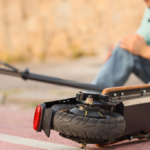
Helmets are compulsory, but e-scooter riders in Spain still don’t need to pass a test. Credit: Pixel-Shot / Shutterstock

E-scooter riders in Spain now need a helmet, insurance and a spot on the official register, yet nobody checks whether they can actually ride their vehicle properly or handle the traffic on the road. A Málaga surgeon who operates on riders after the worst crashes thinks that gap needs closing.

A surgeon wants riders tested like other road users 

Rafael López Arévalo, head of orthopaedic surgery and traumatology at Hospital Quirónsalud Málaga, believes e-scooter riders should have to pass a test comparable to the ones other road users face before they head out among cars, buses and vans.

His case is built on what he’s seeing in theatre. He estimates that 30 to 40 per cent of the e-scooter accident patients his team treats end up needing surgery, with some of the more complex fractures potentially affecting their ability to work further down the line.

That’s an estimate for the patients who reach his team, though, and not a figure for every scooter crash in Málaga. Earlier University of Málaga research found bruising was by far the most common injury among scooter patients seen in emergency departments. 

Riders are sharing the road with cars

Since January 2021, e-scooters have been banned from pavements across Spain and capped at 25km/h, which moved riders off the pavement and onto the road alongside motor traffic. López Arévalo’s argument is about whether riders really understand what that involves. Plenty of people hop on with the attitude of ‘it’s only a scooter, how hard can it be?’, and a test is designed to challenge exactly that assumption. 

For parents whose teenagers ride to school, commuters weaving through the city and residents stepping off the kerb as a scooter comes the other way, it’s a question that comes up every single day.

What the university research did and didn’t find 

The University of Málaga (UMA) study behind EWN’s August coverage analysed more than 400 patients treated in emergency departments between 2018 and 2022, and it also looked at what changed once scooters moved onto the road.

Pedestrians being knocked down fell from 10.9 per cent of cases to 5.2 per cent, while collisions with motor vehicles rose from 8.8 per cent to 18 per cent. However, the researchers said in their January release that they hadn’t seen any increase in the overall severity of injuries, despite those extra collisions.

So the research doesn’t show that moving riders onto the road made injuries worse. The surgeon’s estimate is a separate observation, based on the patients his own team is treating now.

Helmets are compulsory, but there’s still no test 

Since Thursday October 1, riders across Spain have had to wear a certified helmet, with fines of around €200 for those who don’t. The scooter itself must also be registered with the DGT (Spain’s traffic authority) and insured. However, there’s still no test or licence needed to ride one. 

Until that changes, riders’ best protection is the helmet and the 25km/h limit they’re already bound by. UMA’s researchers go a step further and recommend full-face helmets, as so many of the fractures they recorded were to the face and jaw.

Continue Reading

%

La Cala Lions Go Showbiz For 2027 Charity Calendar

Published

on

la-cala-lions-go-showbiz-for-2027-charity-calendar

La Cala Lions 2027 calendar now on sale. Credit: La Cala Lions

La Cala Lions have swapped their familiar blue shirts for show-stopping costumes in a hilarious new 2027 calendar that recreates some of the best-loved musicals of stage and screen.

Titled ‘La Cala’nder Girls!, the calendar features members of the Mijas-area charity club posing as characters from famous productions including Sister Act, The Sound of Music and Mamma Mia!. The big question is whether you can work out which Lion is which!

Known for their tireless fundraising for local good causes and for bringing British expats and Spanish residents together, the Lions have come up with a fun way to raise money while giving supporters something to smile about throughout the coming year.

A Christmas present with a difference

With Christmas approaching, the calendar could be the perfect stocking filler or present for anyone who knows the Lions and their work in the local community.

Production of the calendar has been supported by sponsors Bobby Jones and Spikes, Ibex Insurance, Bar Tuta, Legends Bar and Bridges Bar, whose backing is celebrated through this light-hearted project.

La Cala Lions president for 2026/27, Sandie Tavendale, paid tribute to the people who helped make the calendar possible, particularly John Sharples and Lynne Armitage, whose time and commitment were essential to the project.

She also thanked the club’s volunteers, whose work keeps its charity shops and fundraising activities running successfully, as well as the sponsors who continue to support its efforts.

Where to get your 2027 calendar

The ‘La Cala’nder Girls! 2027 calendar is available from the La Cala Lions Charity Shop in La Cala de Mijas and wherever members of the Lions are out and about, for just €10.

Whether you are a regular supporter, a local resident or simply looking for an amusing Christmas gift, the calendar offers a chance to enjoy some musical theatre nostalgia while supporting the club’s charitable work.

And with a different showbiz-inspired picture to enjoy as the months pass, what better way to start 2027?

Dancing for Dementia

Don’t forget that on October 22 there is Strictly Olivia’s, Dancing for Dementia, fundraising event for the Lions Alzheimers Group. There will be dinner, dancing & entertainment, for a fantastic fundraiser.

Latin American & Ballroom Dancing display with the sensational Alberto Andrada, professional dancer with his enigmatic and glamorous students Jaks and Renate. Join in with Alberto on the Dance floor later and learn some sexy dance moves!

Tickets cost just €60 (€10 of which goes directly to the charity). Call +34 952 494 935 to reserve, or WhatsApp +34 608 784 367. 7 o’clock sharp start.

Continue Reading

%

Low-Cost Airlines Defy Fuel Crisis As Millions Flock To Spain’s Airports

Published

on

low-cost-airlines-defy-fuel-crisis-as-millions-flock-to-spain’s-airports

If you have tried booking a flight to or from Spain this year, you may have noticed that the appetite for air travel has not gone away, even as airlines face rising fuel bills and uncertainty over the conflict in the Middle East. Millions of passengers have continued to pass through the country’s airports, with budget airlines playing a major role in keeping traffic moving.

Spain’s airports handled a record 257.2 million passengers between January and September 2026, an increase of 4.1 per cent compared with the same period last year. The latest figures underline how strongly low-cost carriers have contributed to demand during the busy summer travel season.

Ryanair leads the low-cost race

Ryanair remained Spain’s busiest low-cost airline during the July-to-September period, carrying 18.51 million passengers, up 1.9 per cent on the previous year. Vueling followed with 10.69 million, an increase of 5.4 per cent, while easyJet carried six million, up 1.2 per cent. The strongest growth came from smaller competitors. Wizz Air increased passenger numbers by 43.7 per cent, reaching the top ranks of airlines operating in Spain.

Volotea grew by 17.5 per cent, Jet2 by 10 per cent and Iberia Express by 9.4 per cent. The figures show that the summer increase was not confined to Spain’s three biggest low-cost operators. The airlines have benefited from demand for flights linking Spain with other European countries, including holiday destinations. Spain has also attracted travellers seeking a destination perceived as safer amid geopolitical instability, according to the Cinco Días report.

Fuel costs put pressure on airlines

The rise in passenger numbers has come as airlines contend with a steep increase in operating costs. European jet fuel prices rose by 122 per cent over a year, according to indices compiled by the International Air Transport Association (IATA) and cited by Cinco Días. The conflict in the Middle East has added to uncertainty over fuel prices and airline planning.

The pressure is already shaping decisions. Ryanair has adjusted capacity at several regional Spanish airports while focusing on larger airports and popular sun-and-beach destinations. IAG, the parent company of Iberia and Vueling, has also sought to contain capacity to limit the impact of higher kerosene costs.

The financial strain is particularly visible among smaller operators. Wizz Air reported losses for its first fiscal quarter, which ended in June, while Volotea has entered preliminary creditor-protection proceedings as it works to restructure its debt. Both still ranked among the 20 largest airline operators in Spain during the summer period.

Spanish airports continue to grow

The increase in low-cost traffic formed part of a wider rise across Aena’s Spanish airport network. In September alone, airports handled 31.7 million passengers, 4.2 per cent more than in the same month of 2025. Aircraft movements rose by 5.3 per cent, although freight volumes fell by 5.7 per cent.

Madrid-Barajas recorded 6.3 million passengers in September, up 6.6 per cent year on year. Barcelona-El Prat handled 5.4 million, while Palma de Mallorca recorded 4.2 million. Málaga-Costa del Sol also saw a strong month, with 2.8 million passengers, an increase of 6.8 per cent.

For travellers, the figures show that demand for flights to and from Spain remained strong through the main summer season. For airlines, however, more passengers have not removed the challenge of keeping flights profitable as fuel and geopolitical risks continue to weigh on the industry.

Continue Reading

Trending

Copyright © 2017 Spanish Property & News