Connect with us

%

Spain Tour De France Fans Warned Extreme Heat Could Force Cancellations For First Time In History

Published

on

spain-tour-de-france-fans-warned-extreme-heat-could-force-cancellations-for-first-time-in-history

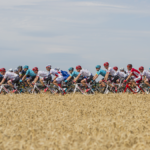
Tour de France fans in Spain could face extreme heat as well as road closures and cancellations. Credit: Radu Razvan / Shutterstock

Cycling fans lining Cataluña’s roads this weekend may face more than traffic closures and crowds. As Spain and France brace for another surge of extreme heat, Tour de France officials have raised the possibility of route changes, earlier starts or even the race’s first heat-related stage cancellation.

Roadside fans in Cataluña face heat as well as road closures and disruptions

The Tour de France begins in Barcelona on Saturday, July 4, but the first drama of the race may not come from the race itself.

Extreme heat across Spain and France has pushed rider and spectator safety into the centre of race planning, with officials openly discussing how the world’s most famous cycling event could be affected if temperatures become dangerous.

The opening three stages run through Cataluña. Stage one is a 19.6km team time trial in Barcelona, finishing at Montjuïc. Stage two runs from Tarragona to Barcelona on Sunday July 5, while stage three leaves Granollers on Monday July 6, and heads into the Pyrenees towards Les Angles in France.

For cycling fans travelling to the roadside, the concern is not only whether the peloton can continue. It is also about standing for hours in crowded streets, reaching viewing points during road closures, finding shade and getting away safely if conditions become too much.

How the extreme heat could change the Tour de France route

The Tour has been disrupted before by war, strikes, civil unrest, bad weather and the pandemic. However, according to Guardian reporting from Barcelona, a stage has never previously been cancelled because of extreme heat.

Thierry Gouvenou, the Tour’s technical director, told the paper that the risk was “very much” on organisers’ minds, while temperatures as high as 44C have been forecast in parts of Spain and France in the coming days.

Professional cycling now has a formal High Temperature Protocol under the Union Cycliste Internationale (UCI), the sport’s world governing body. The protocol allows emergency discussions when high temperatures pose a risk, and can lead to measures such as shaded start areas, cold drinks and ice during the race, extra refuelling motorbikes, adjusted start times, neutralised sections or route changes.

The UCI says final decisions depend on local conditions and the people involved in the emergency meeting. That means there is no automatic cancellation point based on a single temperature reading.

Sunday’s Tarragona to Barcelona stage falls in the heatwave window

Sunday’s second stage is the one attracting the most attention. It covers 168.5km from Tarragona to Barcelona, with the official Tour schedule listing a neutralised start at 1.45pm and an expected finish at 5.26pm.

Those hours are of course the hardest to manage due to the heat, especially on exposed roads, crowded pavements and urban areas where tarmac and buildings hold and reflect the warmth.

For the riders, heat stress can affect many aspects of their performance, from concentration, to hydration, circulation and the body’s ability to cool itself. For spectators, the risk lies especially among older people, children, people with heart or respiratory conditions and anyone waiting in direct sun without enough water.

Barcelona’s official Grand Départ mobility advice already asks spectators to check traffic updates before travelling, use public transport where possible, stay in designated areas, bring water, wear light clothing and protect themselves from the sun. In an emergency, Spain’s emergency number is 112.

Spain’s heat risk map can change street by street

Spain’s weather warnings and health warnings are not exactly the same thing. The Agencia Estatal de Meteorología (AEMET), Spain’s state weather agency, issues meteorological alerts for adverse weather. The Ministry of Health also runs a heat-health system called Meteosalud, which divides Spain into 182 health risk zones.

Meteosalud looks at how high temperatures affect health in each area, not just how hot the thermometer appears. The ministry’s map can be searched by province and municipality, making it useful for residents and visitors checking a specific town before travelling.

On Friday, July 3, El País, using Ministry of Health and AEMET data, reported hundreds of Spanish municipalities under heat-related health risk alerts, with the highest concern concentrated in parts of inland and southern Spain. AEMET has also warned that another rise in temperatures could affect much of the country from the weekend, with parts of the south-east potentially reaching 42C to 44C early next week.

That does not mean every Tour viewing point in Cataluña will face the same level of danger. Coastal areas, inland valleys, city streets and mountain sections can all feel different. Spectators must bear in mind to check local warnings on the day, and not rely only on a national forecast.

Race plans now depend on heat, roads and emergency services

For now, no Tour de France stage has been cancelled because of the latest heat risk. Any change would depend on race officials, UCI representatives, local authorities, emergency services, medical teams and the latest conditions on the route.

Small adjustments may be more likely than full cancellation, such as extra cooling measures, changes to food break rules, altered start arrangements or shortened sections. However, the fact cancellation is even being discussed shows how quickly the extreme heat being felt in Europe is affecting European sporting events.

For people planning to watch the Tour in Spain, the event should be treated like a heat-risk day as well as a sporting occasion: check the route, check municipal heat alerts, avoid long waits in full sun, carry water, choose shaded or accessible viewing spots when possible and follow instructions from police, volunteers and Civil Protection staff.

%

Spain Family Reunification Rules Changed

Published

on

spain-family-reunification-rules-changed

Spain’s Supreme Court has ruled that some family reunification applications require an individual assessment rather than an automatic refusal. Credit : antoniodiaz, Shutterstock

For many foreign residents in Spain, one of the biggest worries during an immigration application is the fear of receiving a refusal because of something in their past. A new ruling from the Spanish Supreme Court could make an important difference in some of those cases. The court has decided that the authorities cannot automatically refuse certain residence permits or family reunification applications simply because the applicant has a criminal record when protected family rights are involved.

The judgment, made public on Monday, July 13, leaves most of Spain’s new Immigration Regulation (Reglamento de Extranjería) intact, but it also redraws the line on several issues affecting families, children and foreign nationals living in Spain. While the ruling does not remove criminal records from the immigration process, it does require officials to look at the circumstances of each case instead of applying an automatic refusal.

For thousands of families already living in Spain, or hoping to reunite here, that distinction could prove significant.

What has actually changed?

Much of the attention has focused on one part of the judgment.

Under the new Immigration Regulation, some residence applications could be rejected simply because the applicant had a criminal record. The Supreme Court has now ruled that this approach cannot be applied automatically in cases involving family reunification or other situations where protected family rights or European Union rights are at stake.

That does not mean a criminal record no longer matters.

Instead, immigration authorities must now assess each application individually before making a decision.

In practice, that means officials will have to consider the wider circumstances rather than relying on a single factor. The existence of previous convictions remains relevant, but it can no longer be the only reason for refusing an application where important family rights are involved.

For applicants, that offers something many immigration cases have lacked in the past: the opportunity for their personal situation to be properly examined.

Every case will still be decided on its own facts, but the process should now involve a fuller assessment instead of an automatic administrative decision.

Children are at the centre of several other changes

The judgment goes much further than family reunification.

Several parts of the regulation affecting foreign children have also been struck down after the court concluded they failed to give enough weight to the best interests of the child, a principle recognised in both Spanish and international law.

One example concerns children who were married.

The previous rule could prevent certain residence authorisations from being granted simply because a minor was married. The Supreme Court considered that approach incompatible with protecting vulnerable children.

The judges specifically noted that such a restriction could end up harming young people who had been forced into marriage rather than protecting them.

Another change affects children who were born in Spain.

The court removed restrictions that could disadvantage minors who had temporarily left the country for justified reasons. According to the ruling, those departures should not automatically prevent them from accessing certain residence permits.

The judges also examined situations involving guardianship and child protection arrangements established outside Spain.

Until now, some families encountered difficulties because those protective measures had not been created under Spanish law.

The Supreme Court ruled that Spain must recognise child protection measures adopted by foreign authorities whenever international agreements require it to do so.

For families who have already gone through legal procedures abroad before moving to Spain, that could remove an obstacle that previously complicated residence applications.

Most of Spain’s immigration reform remains unchanged

Although several provisions have been cancelled, the court has not overturned the government’s immigration reform.

In fact, the judges expressly supported what they described as the regulation’s general structure.

That means the new framework introduced by the government largely remains in place, including the updated rules on arraigo, which provide different pathways for certain foreign nationals to regularise their immigration status after meeting specific legal requirements.

The ruling also leaves unchanged the provisions affecting people seeking international protection that were included in the new regulation.

In other words, this is not a complete rewrite of Spain’s immigration system.

Instead, the Supreme Court has identified specific parts of the regulation that it believes went beyond what the law allows, particularly where family life and children’s rights are concerned.

What does this mean if you’re applying for residence in Spain?

For anyone currently preparing an immigration application, the judgment is worth understanding, but it should not be misunderstood.

It does not create an automatic right to residence. It does not erase criminal records and it does not guarantee that family reunification applications will now be approved.

What it does is require immigration authorities to make a more careful assessment in certain situations.

If family unity, the rights of a child or rights linked to European Union law are involved, officials must now look at the whole picture before reaching a decision.

That may sound like a technical legal point, but for many families it could have practical consequences.

Immigration decisions often shape where parents and children live, whether families remain together and whether someone can build a future in Spain. The Supreme Court’s judgment recognises that those decisions should not always depend on a single administrative criterion.

The ruling also reflects a broader principle that runs throughout Spanish and European law: family life deserves particular protection, especially when children are involved.

For foreign nationals already living in Spain, or planning to move here with relatives, the decision provides greater legal clarity. The immigration rules themselves have not been rewritten, but the way some of the most sensitive applications must be examined has changed.

From now on, where protected family rights are at stake, each case must be judged on its own circumstances rather than by applying an automatic refusal from the outset.

Continue Reading

%

Ryanair Plane At Lanzarote Gaffe Raises Eyebrows

Published

on

ryanair-plane-at-lanzarote-gaffe-raises-eyebrows

Errant wheel rolls away from Ryanair plane, chased by van. Credit: Live Lanzarote Webcam

Those who jet off regularly to the Canary Islands can breathe easy after quick-thinking airport crews stopped a runaway Ryanair wheel in its tracks on Saturday night. Staff at Cesar Manrique–Lanzarote sprang into action with service vehicles to corral the rogue tyre before any trouble started, carefully making sure flights continued without a hitch. Frequent travellers from the UK or elsewhere appreciate such a quick response that maintains confidence in holiday connections many rely on year-round.

A runaway wheel leaves mouths wide open on social media

Videos shared widely captured the tyre trundling across the airport platform area late on July 11. Airport operator Aena confirmed it came from a Ryanair aircraft yet stressed no disruption hit operations at the busy spot. But they would, wouldn’t they?

Workers moved fast to prevent contact with other planes, vehicles or people nearby, one quick-thinking airport worker racing after the errant wheel in a van, and literally playing football with the wheel to dribble it back to where it should be. Local webcam footage described the moment as pure slapstick, and many viewers agreed it felt more like a comedy sketch than serious drama. But shouldn’t we be concerned?

El momento en el que un neumático de la compañía Ryanair atraviesa parte de la zona operativa del aeropuerto de Lanzarote durante este fin de semana. El suceso hizo que varios vehículos de trabajadores del aeropuerto se movilizaran para evitar que la goma siguiera rodando, aunque… pic.twitter.com/FjTdgpIJZk

— RTVC (@RTVCes) July 13, 2026

Other aircraft parts that took surprise trips this year

British Airways saw one of its Airbus A350 main landing gear wheels drop shortly after leaving Las Vegas back in January. The crew completed the long haul to London Heathrow smoothly with passengers none the wiser until later reports emerged. Similar events stay rare but grab attention when they occur, quite naturally. Aviation experts say modern planes handle such losses well thanks to robust engineering and multiple backup systems on landing gear.

Safety measures reassure regular flyers

Expats planning more trips to the islands can get a little extra peace of mind from these stories. Authorities investigate every case thoroughly while airlines keep strong maintenance schedules. Passengers continue boarding flights in normal numbers because incidents like the Lanzarote wheel rarely lead to bigger problems…. We hope!

Ground teams across Europe train precisely for unexpected events and prove their value time after time. Travellers from international destinations enjoy convenient routes without letting occasional bizarre moments spoil the excitement of getting away. Everyone involved at Lanzarote deserves credit for turning potential chaos into harmless entertainment that still goes to show how safely air travel runs day in day out.

Continue Reading

%

Be A Good Neighbour And Help Beat The Heat

Published

on

be-a-good-neighbour-and-help-beat-the-heat

The stifling streets of Marbella. Credit: Migeli Barrios – Shutterstock

Many people from northern Europe move to Spain in order to escape cold winter weather and to enjoy the perceived health benefits of warm weather.

Whilst this is generally a viable plan, few have considered the potential health problems caused by heatwaves which are becoming more regular and extreme thanks in part to Global Warming.

At the same time many of those who are younger are able to adapt to this violent change in temperature and can often afford fans and air conditioning, this is not so easy for older people who may exist on a small pension.

Dangers of the hot season for over 65s

The shocking truth is that in June 1,028 people in Spain are estimated as having died due to the heat and of those 1,022 were aged 65 or above with 97 per cent of deaths believed to have been caused by the worsening of pre-existing conditions rather than heat stroke.

Practical advice for expats in Spain

There are some relatively simple ways of trying to cope with the heat both within the home and by taking action to cool the body.

Passive cooling prevents the sun from turning your property into an oven, so keep blinds, curtains, and shutters closed on sun-facing windows during the day and if you have electric fans or air conditioning, do consider using them despite the potential cost.

If temperatures drop in the evening, open windows on opposite sides of your home to create a cooling cross-ventilation and try not to leave too many electrical items (including ovens) on as they obviously generate heat.
Individuals need to be aware that if they are over-heating, they can place a wet cloth or cold pack on neck, armpits, and wrists to quickly cool the blood circulating through their body.

What not to do in a Spanish summer

Try to sit away from direct sunlight, place your feet in a basin of cold water and if you have an electric fan, place a bowl of ice or a frozen bottle of water in front of it in order to circulate chilled air.

Do not take ice cold showers as they can cause blood vessels to restrict, actually heating the body but regular short showers in tepid water will be a benefit.

As can be seen from the figures, the elderly are most at risk, especially if they live alone, so Age Concern Marbella and San Pedro urges anyone who has an elderly friend or neighbour to spare the time to just check that they are ok and if, they find them suffering from the heat, then don’t hesitate to call 112 or in a real emergency 061 in order to obtain medical assistance.

Age Concern Marbella and San Pedro is dedicated to assist the elderly living in the area and is always looking for volunteers or sponsors so that we can continue to keep helping those who need it.
To find out more about our services visit www.ageconcernmarbella.com.

Continue Reading

Trending

Copyright © 2017 Spanish Property & News