
Housing politics
Spanish government plans another housing decree, because the last one worked so well


The Spanish government is preparing another Royal Decree-law on housing this July, with more intervention in the rental market and more uncertainty for landlords. Property owners in Spain might be forgiven for wondering what new surprise awaits them next.
The government has confirmed plans to approve a new housing package in July by Royal Decree-law, a fast-track legislative tool meant for urgent and exceptional situations. Once approved, the decree would take immediate effect, but would still need to be ratified by Parliament within 30 days.
That means, if it is approved towards the end of July, the political battle over its future could drag on until after the summer. In the meantime, landlords and tenants will once again be left trying to work out which rules apply, for how long, and what happens if Parliament later rejects them.
Another decree, another layer of uncertainty
We have been here before.
The previous Royal Decree-law 8/2026, approved in March, included an extraordinary two-year extension for some rental contracts and a 2% cap on annual rent increases. It was in force from 22 March until 28 April, when Parliament refused to ratify it.
That short-lived decree has left a legal mess behind it. Tenants and landlords are now arguing over who was entitled to request the extension, whether requests made during the decree’s brief life still count, and what happens to contracts expiring after the decree was rejected. Lawyers, naturally, are sharpening their pencils.
What the new decree is expected to include
The new package from the Housing Ministry led by Isabel Rodríguez (pictured above) is expected to revisit many of the same ideas, including rental contract extensions, restrictions on annual rent increases, regulation of seasonal and room rentals, tax incentives for landlords who reduce rents, and a requirement for rental contracts to be in writing.
It is also expected to include measures aimed at tourist rentals, including raising VAT on holiday lets to 21%, plus vague promises to boost affordable housing and speed up administration.
The government will present this as a balanced package to lower rents, protect tenants, fight fraud, and increase supply. That is the theory.
The practical effect may be something else entirely: more rules, more confusion, more litigation, and fewer owners willing to put property into the long-term rental market. Spain’s housing shortage will not be solved by making ownership riskier and less predictable, though that does appear to be the chosen experiment.
A regulatory spiral
Every new housing law in Spain seems to create unintended consequences that then require more regulation to fix. Rent controls push properties out of the long-term market, so the government targets seasonal lets. Owners move to tourist rentals, so tourist rentals are taxed and restricted. Investors hesitate, supply falls, rents rise, and the government concludes that still more intervention is needed.
Round and round it goes.
For foreign owners and investors, the wider message is hard to miss. Each individual measure may not be enough to trigger panic, but the cumulative effect is to weaken private property rights and increase the cost, risk, and hassle of owning property in Spain.
Political risk
This is what you might call political risk. Spain remains a wonderful place to live and own a home, but the risk attached to owning property here is ticking up, one regulation at a time. The short-term rental registry debacle is a recent example: more bureaucracy and cost for owners, only for the courts to strike it down. EU membership limits how far Spain can go in weakening property rights, but the direction of travel is not encouraging, especially for foreign owners and investors.
Everyone has a different tolerance for political risk. If yours is wearing thin, and recent developments are bringing forward your decision to sell, the best place to start is with a personalised SPI market report to understand your local market. Fill in the form below to find out more.
Personalised Market Report






France’s “temporary” rent controls are proving remarkably permanent. As politicians debate extending them, the French experience offers an important lesson for Spain—and anyone interested in housing policy.
Most people have no idea where rent controls exist. Unless you happen to live there, it’s not the sort of policy that makes international headlines.
Most property owners in Spain don’t even realise that rent controls are already in force in Catalonia and a handful of other municipalities. Fewer realise that France has gone much further than Spain, with dozens of cities operating rent controls introduced as a supposedly temporary experiment. As is so often the case with government intervention, temporary measures have a habit of becoming permanent.
A recent article in the French daily Le Figaro offers an interesting snapshot of where the debate now stands.
A political battle over ending rent controls
The article reports that the newly elected president of the Lyon metropolitan authority wants to abolish rent controls in Lyon and neighbouring Villeurbanne, arguing they are counterproductive.
“The people who benefit are those already installed,” she argues. “Show me that rent controls house more people. Our priority should be restarting the construction of new homes.”
Supporters see rent controls as protection against rising rents in expensive cities and preventing ‘gentrification’. Critics argue they merely redistribute a shortage, helping incumbent tenants whilst making it harder for everyone else to find accommodation.
Once rent controls are introduced they become politically difficult to remove. Tenant groups quickly become dependent on them, politicians become reluctant to withdraw them, and what was sold as an emergency response gradually becomes part of the permanent regulatory landscape.
France’s experiment, introduced under the 2014 ALUR law, now covers 69 cities and the national government is considering extending or continuing it beyond its planned expiry.
The real problem isn’t rents
The argument made by Lyon’s new leadership is one SPI readers will recognise.
- High rents are not the underlying problem. They are the symptom.
- The real problem is that demand for housing exceeds supply.
- When that happens, rents are simply the price signal reflecting scarcity.
The obvious question is why housing has become so scarce across much of Western Europe.
One answer rarely acknowledged by politicians is that governments have spent decades steadily making residential property investment less attractive. Higher taxes, stricter regulations, tougher energy standards, greater legal risks, increasing tenant protections, longer eviction processes and lower expected returns all reduce the incentive to build, buy or let homes.
Like the proverbial frog in slowly heating water, each individual measure appears manageable. Taken together, they gradually squeeze private investment until fewer rental homes are built or remain in the market.
The mood in France
The comments beneath the Le Figaro article illustrate just how widespread this perception has become amongst many French readers.
One commenter argued that “if you freeze rents, you won’t have landlords left”, while another said they would “never again invest in rental property” because of political hostility towards landlords and a legal system that increasingly favours tenants.
Several pointed instead to taxation and regulation as the real drivers of rising housing costs, arguing that lower taxes and fewer barriers would encourage investment, increase supply and ultimately reduce rents through competition.
Of course, reader comments are not scientific evidence, but they do provide a useful window into the growing frustration of many property owners who feel they are being blamed for a housing crisis they believe has been created by decades of political decisions.
The same debate across Europe
France is hardly unique. Spain has introduced rent controls in Catalonia and other designated stressed markets. The UK has steadily increased regulation, taxation and restrictions on private landlords whilst debating further tenant protections.
Different countries, different political systems, but remarkably similar thinking.
The uncomfortable question for policymakers is whether continually making rental investment less attractive can ever increase the supply of rental housing. The answer is, of course not.
Rent controls undoubtedly benefit some sitting tenants, particularly those already established in desirable locations. But they do little for would-be tenants trying to enter the market for the first time. Without a significant increase in housing supply, rent controls simply ration scarcity rather than solving it.
And that’s why I keep an eye on France. It may offer a preview of where housing policy elsewhere in Europe is heading.
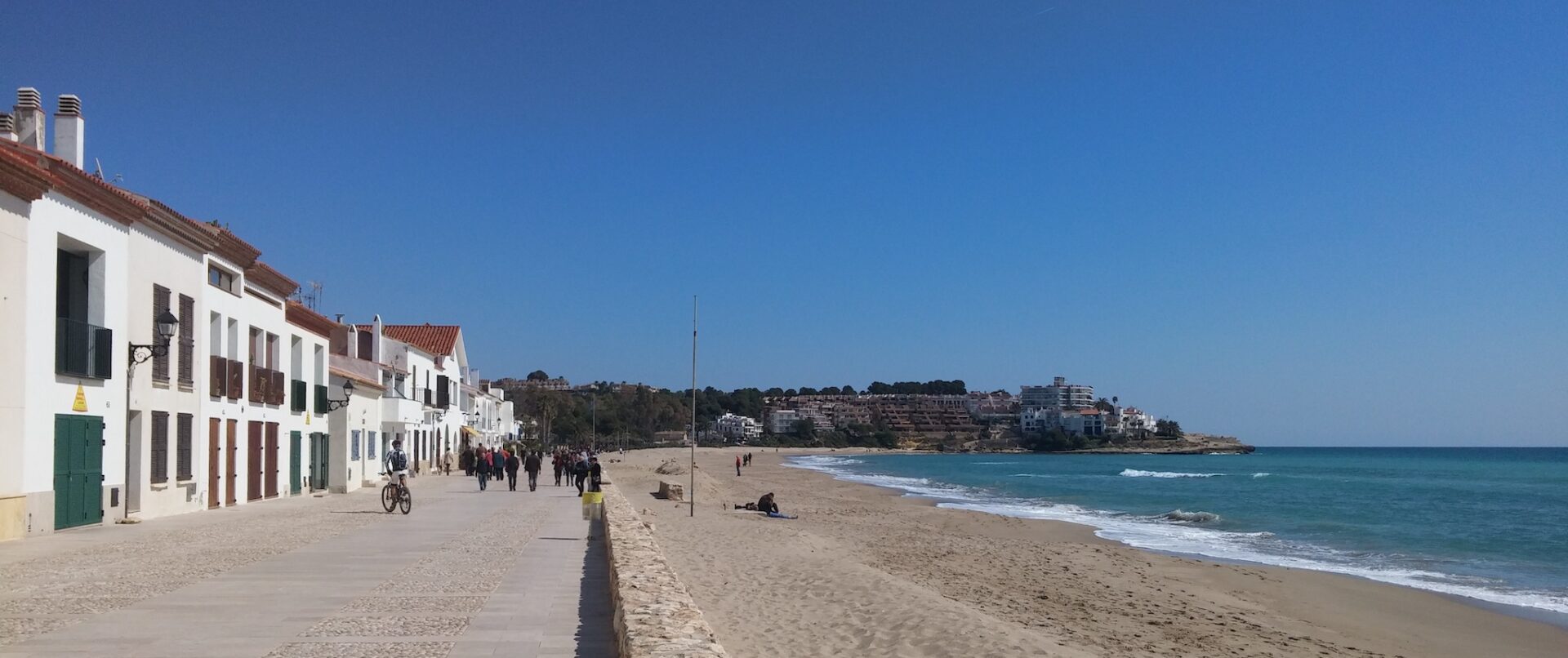
Foreign buyers are once again in the Spanish media spotlight, this time blamed for pushing coastal and island property prices beyond the reach of many Spaniards. The diagnosis is partly right. The implied cure is where things get more complicated.
El País, one of Spain’s biggest newspapers and a reliable voice of the Spanish Left, has turned its attention to the impact of foreign buyers on the housing markets of the coast and islands.
The thrust of the is simple enough: foreign demand has hit record levels, foreign buyers have more money than the average Spaniard, and in places like the Costa del Sol, Alicante and the Balearics they are helping drive prices beyond the reach of the Spanish middle class looking for a second home by the sea.
None of that is exactly wrong. According to the figures cited, foreign buyers completed close to 100,000 home purchases in Spain in the 12 months to the first quarter of 2026, a record (true, but also starting to fall). Alicante stands out, with almost one in two homes sold to a foreign buyer, followed by Málaga, the Balearics and Santa Cruz de Tenerife with foreign market shares above 26%.
When a buyer with higher purchasing power enters a market with limited supply, prices rise. Such is life.
But what is the alternative?
The political subtext, however, is harder to ignore. In Spain’s current housing debate, foreign buyers are increasingly framed as part of the problem: outsiders with deeper pockets pricing locals out of their own country.
So what is the proposed solution? Ban foreign buyers? Or at least ban the ones the Government can more easily target, such as non-EU, non-resident buyers?
That might reduce demand in some second-home markets. It might even make some coastal properties cheaper, allowing a few more Spanish households to buy a second home by the sea. But it would not solve Spain’s real housing problem, which is the shortage of affordable homes where people actually need to live and work, especially in cities and employment centres.
It would also come with costs. Foreign buyers bring wealth into Spain. They support local businesses, generate tax revenue, create liquidity in otherwise illiquid housing markets, and sustain many coastal economies. Without them, some areas would be cheaper, yes, but also poorer.
Foreign money is not the only reason homes are expensive
There is another issue that rarely gets the same attention in this debate: Spain’s high transaction costs.
Buying a home in Spain is expensive before you even get to the price of the property. Transfer tax, stamp duty, notary, registry and professional costs all add up, and these costs hit buyers with lower budgets hardest. They also make buying and selling more risky by raising the cost of entry and exit.
Yet you do not often hear El País calling for lower property taxes to make home-buying more affordable for ordinary Spaniards. Funny, that.
Foreign buyers do push up prices in the markets where they concentrate. But blaming them is easier than confronting the harder questions: why Spain builds too little housing where people need it, why transaction costs are so high, and why policy keeps attacking demand instead of fixing supply.
Foreign buyers are part of the story. They are not the whole story.
Spanish government plans another housing decree, because the last one worked so well
Antonio Banderas returns as guest of honour at Marbella’s star-studded charity gala
Little Cuba festival is back with new date and schedule in Torremolinos
Dinosaurs are roaring over to Estepona this summer in a massive 5,000m² exhibition

Real Estate Agents In Barcelona Are Using AI To ‘pimp Up’ Dilapidated Homes – And It’s Not Illegal
Local community gets ready for its annual Calahonda Day celebration on June 27


-
Costa del Sol2 weeks ago
Dinosaurs are roaring over to Estepona this summer in a massive 5,000m² exhibition
-
 ai generated property listings2 weeks ago
Real Estate Agents In Barcelona Are Using AI To ‘pimp Up’ Dilapidated Homes – And It’s Not Illegal
-
Costa del Sol2 weeks ago
Local community gets ready for its annual Calahonda Day celebration on June 27
-

 Abelardo de la Espriella2 weeks ago
Resultados Elecciones Colombia 2026, En Vivo | De La Espriella, Nuevo Presidente De Colombia, Según El Preconteo De Votos
-

 Andalucia2 weeks ago
More Than One Home Is Squatted Every Day In Malaga Province As PP Calls For 24-Hour Evictions And Bill Cut Offs
-

 Uncategorized1 week ago
Red Bull set for radical new design in desperate bid to keep Max Verstappen
-

 Comisiones Obreras2 weeks ago
CC OO Advierte De Que Impulsará Movilizaciones Y Huelgas Ante El Bloqueo Patronal Al Acuerdo De Convenios
-

 Andalucia2 weeks ago
Historic June Heatwave Forces Mass Cancellations Of Beach Bonfires On Usually Raucous San Juan Celebrations Over Forest Fire Fears