Connect with us

%

Spain’s Ceuta Border Farce: Did Officials Look The Other Way?

Published

on

spain’s-ceuta-border-farce:-did-officials-look-the-other-way?

Floods of Moroccan residents invate Ceuta. Credit: Visigrad X

Spanish politicians finally admitted Friday night that more than 50,000 people mostly male, crossed from Morocco into Ceuta in a matter of hours. Local provincial president Juan Jesus Vivas put the number closer to 60,000. Nearly 48,300 had apparently already walked or swam back by early evening, leaving only about 2,000 still inside the enclave. However, those figures have not yet been independently verified. Fifty-seven people died in the crush and the water.

What remains is a deep sense of anger that any of this was allowed to happen at all.

How the human flood began

Young men, some still in swimming trunks and flip-flops, simply walked or swam around the Tarajal breakwater and border fence on Thursday. Border guards were overwhelmed within minutes. Reception centres filled past breaking point. Parks and streets became open-air camps. Shops slammed shut as groups were filmed looting. Residents reported broken doors, stolen goods, fights in the street and groups of foreigners demanding food or phones.

🚨#BREAKING: The Moroccan Muslims who have invaded the small Spanish city of Ceuta are now BREAKING INTO STORES by the HUNDREDS.

Police are completely overwhelmed.

Migrants can be seen running from one store to the next, grabbing items and running.

WHERE IS THE MILITARY?!!!!! pic.twitter.com/NjqQAI4zgD

— Matt Van Swol (@mattvanswol) July 31, 2026

Spanish police took scores of calls about clashes between the newcomers and locals. Army units and extra officers arrived late, after the damage was already done.

Prime Minister Pedro Sanchez flew in on Friday, called the whole episode a “violation of Spanish territory“, blamed trafficking gangs and a recent Supreme Court ruling, then promised quicker returns and a line of buoys in the sea. Residents who met him outside the heliport and the town hall could not hold back their frustration. They told him exactly what they thought of the government’s performance on immigration and protecting the borders. And it was not pretty.

Why this should never have happened

A Supreme Court decision earlier this month ruled that people intercepted at sea, for example, in a small boat, could not be turned straight back to where they came from. Word of that ruling spread fast on social media, and traffickers and rumour-mongers seized on it. Moroccan forces on the other side of the fence appeared to do very little to impede the illegal emigrants until the crowds were already moving. Some, even appeared to be facilitating it at first.

Spain has lived through previous border crises with mass runs at breaching the border. Lessons from those situations were said to have been learned. Instead, a tiny enclave of 83,000 people was left to cope with a human tide the size of a small city while Madrid reacted after the event.

Many in Ceuta spent Thursday night and Friday morning locked indoors, watching foreigners fill their streets. Local festivals planned for the weekend were cancelled. Businesses lost a full day’s trade. Anger in the population is raw and justified. Shops and services are said they will stay closed until after the weekend for safety reasons.

Mainland Spain stays clear … for now

Ceuta sits on the North African coast, separated from the Spanish mainland by the Strait of Gibraltar. No large groups from this particular crossing have appeared in Andalucia, Madrid or the Costa del Sol. Spanish authorities say the returns are continuing and the border is now under tighter control.

Mainland residents face no immediate risk from the people who entered Ceuta this week. That fact should bring some relief. It does not erase the disgrace of how easily the enclave was breached.

Questions that still need answers

Who left the border exposed after the Supreme Court restricted summary returns at sea? Why were Moroccan forces so slow to act on their side of the fence? How many more times will Spanish towns and cities be left exposed while politicians issue statements after the event?

Residents in Ceuta are already asking those questions. Expats and mainland Spaniards watching the footage have every right to ask them too. A country that cannot protect a small piece of its own territory has a diplomatic problem far bigger than one chaotic Thursday.

Security Alert:  The arrival of thousands of migrants from Morocco to Ceuta and hundreds to Melilla in the past 24 hours may lead to unpredictable and dangerous situations. Spain has deployed the Spanish military to contain the developing situation, together… pic.twitter.com/X0j74vvZ3U

— U.S. Embassy Madrid 🇺🇸🇪🇸 (@USembassyMadrid) July 31, 2026

%

The City So Huge It Rivals A Country: Nearly Twice Poland’s Population Lives Here

Published

on

the-city-so-huge-it-rivals-a-country:-nearly-twice-poland’s-population-lives-here

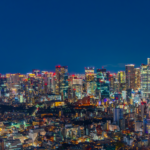
The result is a human concentration rarely seen anywhere else on the planet. Photo credit: Torjrtrx/Shutterstock

Imagine a city so enormous that its population could fill an entire European country, and then still have millions of people left over. That city is Tokyo, Japan, where the sprawling metropolitan area is home to around 37 million people, a population on the scale of almost twice the number of people living in Poland. 

The Japanese capital has become one of the most extraordinary examples of urban growth on Earth, with millions of residents packed into a vast network of neighbourhoods, business districts and surrounding cities that stretch far beyond the image many visitors have of central Tokyo.

A city bigger than some countries

Tokyo itself is home to around 14 million residents, but the true size of the city becomes clear when looking at the wider metropolitan area. This enormous urban zone includes surrounding areas connected by one of the most advanced transport systems in the world. The result is a human concentration rarely seen anywhere else on the planet.

The population of Greater Tokyo is comparable to the size of an entire nation. Poland, with a population of around 38 million people, has fewer residents than the number of people living across Tokyo’s vast metropolitan region.  For comparison, many major world cities that appear huge on a map are far smaller when measured by population. Tokyo’s urban area remains one of the largest population centres ever created.

From fishing village to global giant

Tokyo’s rise is even more remarkable considering its origins. Centuries ago, the area was a small fishing village known as Edo. Over time it transformed into the political, economic and cultural heart of Japan, eventually becoming one of the most influential cities in the world.

The city’s population expanded rapidly as people moved towards the capital in search of education, employment and opportunities. Today, Tokyo is a centre for technology, finance, fashion and entertainment, attracting workers and visitors from across Japan and around the world.

The secret behind Tokyo’s size

One of the reasons Tokyo has been able to support such a huge population is its transport network. Millions of people rely every day on trains and underground services that connect distant suburbs with central business areas. The efficiency of the system allows residents to live considerable distances from their workplaces while still commuting through the city.

Japan’s highly centralised economy has also played a role. Tokyo remains the country’s main hub for major companies, universities, government institutions and cultural attractions, making it a destination for people seeking new opportunities.

A warning for the future

Despite its enormous size, Tokyo faces challenges shared by many modern cities. Japan has one of the world’s oldest populations, and the country’s population has been declining for years. While Tokyo continues to attract people from across Japan, experts have warned about the long-term impact of falling birth rates and an ageing society. The city that once represented unstoppable growth is now facing the challenge of adapting to a changing future.

Still the world’s urban marvel

Whether measured by population, economic power or global influence, Tokyo remains a city unlike any other. A place where skyscrapers, traditional temples, crowded streets and quiet neighbourhoods exist side by side, and where more people live than in many countries combined. With a population approaching twice that of Poland, Tokyo is not just a city, It is a world of its own

Continue Reading

%

Naples Shaken By Strongest Quake In 40 Years As Campi Flegrei Rumbles

Published

on

naples-shaken-by-strongest-quake-in-40-years-as-campi-flegrei-rumbles

Cars crushed by falling boulders in Naples quake. Credit: @MFerraglioni X

A powerful 4.7 magnitude earthquake struck the Campi Flegrei volcanic area west of Naples late on Friday evening, sending people pouring into the streets and leaving some buildings crumbling beyond repair.

Recorded at 7.46pm local time, the tremor sat just three kilometres below the surface and ranks as the most intense recorded since the latest phase of ground movement started around Pozzuoli. Residents across Naples and nearby towns felt the shake clearly, with many describing a long, rolling motion that rattled windows and set alarms off and caused rolling boulders to crush cars in the streets.

What the quake did on the ground

Power cuts hit several neighbourhoods and the island of Procida. Local rail and metro lines, including the Cumana and Circumflegrea routes, stopped running so engineers could check the tracks. Fire crews received reports of falling plaster, cracked walls and one section of façade that dropped onto parked cars in Pozzuoli.

Four people suffered injuries, all treated and released without serious concern. Thankfully, no one was trapped and no severe building collapses have been confirmed, though checks continue through the night. Churches and older residential blocks took the worst of the visible damage.

Aftershocks and the bigger picture

WATCH: Massive rocks crush vehicles after the earthquake (terremoto) in Pozzuoli, Italy. pic.twitter.com/4mypVwpM4G

— Scope Report (@ScopeReport_) July 31, 2026

At least ten smaller aftershocks followed, the strongest around magnitude 2.6. Civil Protection Minister Nello Musumeci confirmed the injury count and said crews were already assessing homes and places of worship. Local mayors urged calm while inspections carried on.

Campi Flegrei is a large volcanic caldera rather than a single cone. For years the ground has been rising slowly because of pressure from fluids below, a process known as bradyseism. That steady uplift produces swarms of small earthquakes. Stronger ones have grown more common since 2023, raising worry among the hundreds of thousands who live inside the risk zone.

How authorities are responding

Italy’s National Institute of Geophysics and Volcanology logged the event within minutes and continues to monitor the area. The national Civil Protection unit opened a crisis desk and remains in contact with the Naples prefecture. Train services stay suspended until safety teams finish their work.

The official line from the Italian government stresses that today’s tremor, while the strongest for four decades of continuous monitoring, still fits the pattern of volcano-tectonic activity linked to the rising ground. No change in the current yellow alert level has been announced.

Significant damage following a M4.7 earthquake that struck the Campi Flegrei, west of Naples, Campania, southern Italy. pic.twitter.com/6yivOZbb3J

— Weather Monitor (@WeatherMonitors) July 31, 2026

People in Pozzuoli, Bagnoli and western Naples spent the evening outside comparing notes and checking on neighbours. Many said the shaking felt sharper than the 4.6 events recorded last year. Street lights flickered back on in stages, and emergency vehicles moved between the worst-hit streets.

Further updates are expected once daylight allows a full survey of buildings and infrastructure. For now the message from local leaders remains steady: stay alert, follow official advice, and wait for the latest checks to finish.

Scossa di terremoto campi flegrei

Pozzuoli #campiflegrei #terremoto pic.twitter.com/FH2i6piYoL

— El Frosho Lavezzi (@antoniodelpr) July 31, 2026

Continue Reading

%

Overnight Closure Hits Marbella AP-7

Published

on

overnight-closure-hits-marbella-ap-7

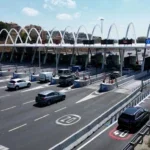
AP-7 toll booths. Credit: Ministerio de Transportes

Drivers heading towards Benalmadena on the AP-7 will face a short overnight diversion this weekend while crews push ahead with major noise-reduction works on the Marbella bypass.

Overnight ramp closure details

Officials from Spain’s Ministry of Transport have confirmed the on-ramp at kilometre 1044, direction Malaga, will shut from 10pm on Sunday, August 1, until 6am on Monday, August 3. This eight-hour window will hopefully allow teams to continue installing acoustic panels designed to cut traffic noise for nearby homes.

Why the works are needed

Traffic noise from the busy AP-7 has long affected residents living close to the Marbella variant. Continuous vehicle movement disrupts sleep, raises stress levels and reduces quality of life for people in properties within roughly 200 metres of the motorway. Ministry figures show more than 1,000 buildings stand to benefit once the full set of barriers is in place. There has been mention of homes that line the Mijas part of the A-7 yet.

Scale of the noise-reduction project

Crews are installing 28 noise-reducing panels along an eight-kilometre stretch of the bypass. The combined length of the barriers reaches 6,612 metres, with heights ranging from 2.5 to 4.5 metres. Metal panels will later be covered with ivy so they settle into the landscape more naturally. Total investment stands at €13.1 million, paid for entirely by taxpayers’ money through the European Union.

Alternative route for drivers

Drivers needing to join the AP-7 during the closure that late at night, or early in the morning, must follow a clearly marked diversion. From the closed ramp area they should take Avenida Arias de Velasco, continue along Calle Serenata, then turn onto Avenida Duque de Lerma before rejoining the motorway at the kilometre 1043 on-ramp. Signage will guide traffic throughout the night, and the main carriageway itself remains open.

Progress so far and remaining work

Works on the noise barriers have already caused earlier periods of lane narrowing and previous night-time restrictions around the same exits. Current focus sits between kilometre points 1044.7 and 1042.7, covering the area near Avenida del Trapiche and the connection towards the A-355 and local shopping zone. Once finished, the screens should lower noise levels for homes closest to the road, giving residents quieter nights and better daytime living conditions.

Local drivers are advised to allow a few extra minutes if travelling early on Monday morning. All main safety measures will stay in place while the remaining sections of barrier go up, completing a project that aims to make life more comfortable for thousands of people living alongside one of the Costa del Sol’s busiest stretches of motorway.

Continue Reading

Trending

Copyright © 2017 Spanish Property & News