Connect with us

%

Naples Shaken By Strongest Quake In 40 Years As Campi Flegrei Rumbles

Published

on

naples-shaken-by-strongest-quake-in-40-years-as-campi-flegrei-rumbles

Cars crushed by falling boulders in Naples quake. Credit: @MFerraglioni X

A powerful 4.7 magnitude earthquake struck the Campi Flegrei volcanic area west of Naples late on Friday evening, sending people pouring into the streets and leaving some buildings crumbling beyond repair.

Recorded at 7.46pm local time, the tremor sat just three kilometres below the surface and ranks as the most intense recorded since the latest phase of ground movement started around Pozzuoli. Residents across Naples and nearby towns felt the shake clearly, with many describing a long, rolling motion that rattled windows and set alarms off and caused rolling boulders to crush cars in the streets.

What the quake did on the ground

Power cuts hit several neighbourhoods and the island of Procida. Local rail and metro lines, including the Cumana and Circumflegrea routes, stopped running so engineers could check the tracks. Fire crews received reports of falling plaster, cracked walls and one section of façade that dropped onto parked cars in Pozzuoli.

Four people suffered injuries, all treated and released without serious concern. Thankfully, no one was trapped and no severe building collapses have been confirmed, though checks continue through the night. Churches and older residential blocks took the worst of the visible damage.

Aftershocks and the bigger picture

WATCH: Massive rocks crush vehicles after the earthquake (terremoto) in Pozzuoli, Italy. pic.twitter.com/4mypVwpM4G

— Scope Report (@ScopeReport_) July 31, 2026

At least ten smaller aftershocks followed, the strongest around magnitude 2.6. Civil Protection Minister Nello Musumeci confirmed the injury count and said crews were already assessing homes and places of worship. Local mayors urged calm while inspections carried on.

Campi Flegrei is a large volcanic caldera rather than a single cone. For years the ground has been rising slowly because of pressure from fluids below, a process known as bradyseism. That steady uplift produces swarms of small earthquakes. Stronger ones have grown more common since 2023, raising worry among the hundreds of thousands who live inside the risk zone.

How authorities are responding

Italy’s National Institute of Geophysics and Volcanology logged the event within minutes and continues to monitor the area. The national Civil Protection unit opened a crisis desk and remains in contact with the Naples prefecture. Train services stay suspended until safety teams finish their work.

The official line from the Italian government stresses that today’s tremor, while the strongest for four decades of continuous monitoring, still fits the pattern of volcano-tectonic activity linked to the rising ground. No change in the current yellow alert level has been announced.

Significant damage following a M4.7 earthquake that struck the Campi Flegrei, west of Naples, Campania, southern Italy. pic.twitter.com/6yivOZbb3J

— Weather Monitor (@WeatherMonitors) July 31, 2026

People in Pozzuoli, Bagnoli and western Naples spent the evening outside comparing notes and checking on neighbours. Many said the shaking felt sharper than the 4.6 events recorded last year. Street lights flickered back on in stages, and emergency vehicles moved between the worst-hit streets.

Further updates are expected once daylight allows a full survey of buildings and infrastructure. For now the message from local leaders remains steady: stay alert, follow official advice, and wait for the latest checks to finish.

Scossa di terremoto campi flegrei

Pozzuoli #campiflegrei #terremoto pic.twitter.com/FH2i6piYoL

— El Frosho Lavezzi (@antoniodelpr) July 31, 2026

%

The City So Huge It Rivals A Country: Nearly Twice Poland’s Population Lives Here

Published

on

the-city-so-huge-it-rivals-a-country:-nearly-twice-poland’s-population-lives-here

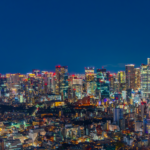
The result is a human concentration rarely seen anywhere else on the planet. Photo credit: Torjrtrx/Shutterstock

Imagine a city so enormous that its population could fill an entire European country, and then still have millions of people left over. That city is Tokyo, Japan, where the sprawling metropolitan area is home to around 37 million people, a population on the scale of almost twice the number of people living in Poland. 

The Japanese capital has become one of the most extraordinary examples of urban growth on Earth, with millions of residents packed into a vast network of neighbourhoods, business districts and surrounding cities that stretch far beyond the image many visitors have of central Tokyo.

A city bigger than some countries

Tokyo itself is home to around 14 million residents, but the true size of the city becomes clear when looking at the wider metropolitan area. This enormous urban zone includes surrounding areas connected by one of the most advanced transport systems in the world. The result is a human concentration rarely seen anywhere else on the planet.

The population of Greater Tokyo is comparable to the size of an entire nation. Poland, with a population of around 38 million people, has fewer residents than the number of people living across Tokyo’s vast metropolitan region.  For comparison, many major world cities that appear huge on a map are far smaller when measured by population. Tokyo’s urban area remains one of the largest population centres ever created.

From fishing village to global giant

Tokyo’s rise is even more remarkable considering its origins. Centuries ago, the area was a small fishing village known as Edo. Over time it transformed into the political, economic and cultural heart of Japan, eventually becoming one of the most influential cities in the world.

The city’s population expanded rapidly as people moved towards the capital in search of education, employment and opportunities. Today, Tokyo is a centre for technology, finance, fashion and entertainment, attracting workers and visitors from across Japan and around the world.

The secret behind Tokyo’s size

One of the reasons Tokyo has been able to support such a huge population is its transport network. Millions of people rely every day on trains and underground services that connect distant suburbs with central business areas. The efficiency of the system allows residents to live considerable distances from their workplaces while still commuting through the city.

Japan’s highly centralised economy has also played a role. Tokyo remains the country’s main hub for major companies, universities, government institutions and cultural attractions, making it a destination for people seeking new opportunities.

A warning for the future

Despite its enormous size, Tokyo faces challenges shared by many modern cities. Japan has one of the world’s oldest populations, and the country’s population has been declining for years. While Tokyo continues to attract people from across Japan, experts have warned about the long-term impact of falling birth rates and an ageing society. The city that once represented unstoppable growth is now facing the challenge of adapting to a changing future.

Still the world’s urban marvel

Whether measured by population, economic power or global influence, Tokyo remains a city unlike any other. A place where skyscrapers, traditional temples, crowded streets and quiet neighbourhoods exist side by side, and where more people live than in many countries combined. With a population approaching twice that of Poland, Tokyo is not just a city, It is a world of its own

Continue Reading

%

Fury Erupts As Pedro Sánchez Arrives In Crisis-Hit Ceuta

Published

on

fury-erupts-as-pedro-sanchez-arrives-in-crisis-hit-ceuta

Pedro Sánchez’ said Spain would use “all the mechanisms and resources” available during his visit to Ceuta on Friday July 31. Credit: La Moncloa – Flickr / Jupol Nacional – X

Fairground workers were among those waiting outside Ceuta’s heliport for Sanchez’s arrival after the city’s annual fair was cancelled. Their anger merged with protests over the border emergency as the Prime Minister’s convoy pulled away under heavy police protection.

Insults and police tension outside Ceuta heliport 

Spain’s Prime Minister Pedro Sánchez landed at Ceuta Heliport shortly after 11.40am on Friday July 31, accompanied by Interior Minister Fernando Grande-Marlaska. National Police and Guardia Civil officers had to establish a substantial security presence around the heliport, where local coverage placed the crowd at approximately 40 people. The official convoy was met with jeers and insults as it left the area. Officers intervened as tensions rose high around members of the crowd, prompting further complaints from other protesters nearby.

Demonstrators accused Sánchez’s government of failing to protect the border and damaging the city’s hospitality trade. Homophobic chants were also directed at Marlaska, according to accounts from the scene. Further protests then awaited Sánchez outside the Palace of the Assembly, where CeutaTV filmed residents holding placards and chanting against the Prime Minister.

Cancelled fair brings workers into the protest

The crowd near the heliport brought together people angry about the government’s handling of the border emergency and fairground workers protesting the cancellation of Ceuta’s annual fair. The event had been due to run from August 1 to 8, but the autonomous city suspended it on Friday morning, citing the uncertainty, instability and public concern caused by the unfolding situation. The city acknowledged that the decision would affect fairground workers, hospitality businesses, traders and performers.

Their presence added a personal local grievance to the wider protest that reflects one of the many ways the current surge is affecting local’s lives. Demonstrators also accused the government of damaging hospitality businesses, although no specific losses have yet been given.

Tarajal and coordination meeting follow Sánchez’s arrival

La Moncloa’s official timetable for the visit had scheduled Sánchez to meet state security representatives at the Tarajal border at 11.40am. Reports that he landed at approximately that time indicate the programme was running later than originally published. Sánchez travelled from the heliport to Tarajal with Marlaska, where he met representatives of the National Police and Guardia Civil and viewed the security operation at the border.

He then attended a coordination meeting at Ceuta’s Palace of the Assembly with city president Juan Jesús Vivas, Government Delegate Miguel Ángel Pérez Triano, senior National Police and Guardia Civil representatives, the director of Ceuta’s Temporary Stay Centre for Immigrants (CETI) and representatives from the Red Cross.

The visit follows the rapidly escalating border emergency that has led Ceuta to seek extraordinary intervention from Madrid, as previously reported. 

Sánchez pledges resources and possible business support

Following the coordination meeting, Sánchez said Spain would use “all the mechanisms and resources” available to protect security and social harmony in Ceuta. He described the mass crossing as a “violation of Spain’s territorial integrity”. The Prime Minister said a temporary reception centre would be established to accelerate documentation and removal procedures for people with no legal claim to remain in Spain. He also announced plans to install a visible line of buoys near the Tarajal breakwater. The government argues that marking the border more clearly could help facilitate returns while complying with the recent Supreme Court ruling on people arriving by sea.

El Gobierno garantizará la seguridad de los vecinos y vecinas de Ceuta, intensificando la presencia de las Fuerzas y Cuerpos de Seguridad en las calles de la ciudad.

Además, vamos a desplegar una barrera física de contención en el mar para facilitar la repatriación en frontera,… pic.twitter.com/Mj2LrcoBV9

— Pedro Sánchez (@sanchezcastejon) July 31, 2026

Sánchez said the government would also examine possible help for small businesses forced to close during the emergency. No aid scheme, eligibility conditions or timetable were announced in his initial statement.

Continue Reading

%

Malaga Drivers Hit By Jams On And Sinkhole On A-45

Published

on

malaga-drivers-hit-by-jams-on-and-sinkhole-on-a-45

Sinkhole works causing major jams on road from Malaga to Cordoba. Credit: DGT

Emergency works to repair a road surface collapse on the A-45 near Casabermeja continue to disrupt one of Malaga province’s busiest dual carriageways. Northbound traffic towards Cordoba faces the heaviest restrictions, while delays also are building in the opposite direction towards Malaga City, the provincial capital.

Sinkhole prompts lane closures near Casabermeja

Road crews are tackling a “socavon”, or sinkhole, in the carriageway surface at Casabermeja. The defect forms part of wider emergency repairs authorised after intense storms in late 2025 and early 2026 damaged stretches of both the A-45 and A-7.

Work has required the complete closure of the Cordoba-bound carriageway over several kilometres. A temporary transfer previously switched traffic onto the opposite side of the dual carriageway between roughly kilometre points 123.6 and 118.2. Full closure extended across about five and a half kilometres, with the Cordoba direction shut between 125.5 and 123.5 and the Malaga direction restricted between 116.5 and 118.

➡️Alternativa hacia Córdoba/Granada: AP-46 y, para vehículos ligeros desde la A-7 en Vélez-Málaga, por A-356 y A-7204. pic.twitter.com/QP78geAL6X

— Dir. Gral. Tráfico (@DGTes) July 31, 2026

Queues build in both directions

Traffic monitors recorded queues of two kilometres towards Cordoba and one and a half kilometres towards Malaga on recent weekends. Similar delays have appeared daily during the peak summer period, when the A-45 carries heavy volumes of local and tourist traffic between the coast, Antequera and inland Andalucia.

Local politicians have criticised the decision to carry out the works in high season with so much traffic already on the roads.

Some have chimed in and asked the Spanish government whether no better date existed than the height of summer to close both lanes towards Cordoba. They describe the timing as an even bigger blow to a province that depends heavily on tourism and argued that such maintenance should take place at night.

Earlier, there were also daytime lane closures on the A-7 that produced similar congestion and called for explanations from Transport Minister Oscar Puente, which never came.

Alternative routes available

Drivers wanting to avoid the works can use the parallel AP-46 toll motorway, known as the Autopista de las Pedrizas or Guadalmedina.

Light vehicles only may follow secondary roads: from the A-7 at Velez-Malaga via the A-356 and A-7204, or from the Antequera and Granada approaches by leaving the A-45 at exit 114 or the A-92 at exit 24, then continuing on the A-7204, A-356 and MA-3100.

Latest position on 31 July

Later on Friday, July 31, the Directorate-General for Traffic confirmed that the temporary transfer had been removed. The right-hand lane towards Cordoba reopened, yet the left-hand lane remains closed. Restrictions and the risk of further delays therefore continue.

Anyone planning to travel the A-45 should consult the latest DGT alerts through the official app, the @DGTes account or traffic cameras before setting out. Conditions can alter quickly while emergency repairs remain under way, and peak summer periods are likely to produce the longest waits.

Continue Reading

Trending

Copyright © 2017 Spanish Property & News