
Barcelona
Spain’s General Strike Draws Uneven Participation And Large Street Protests

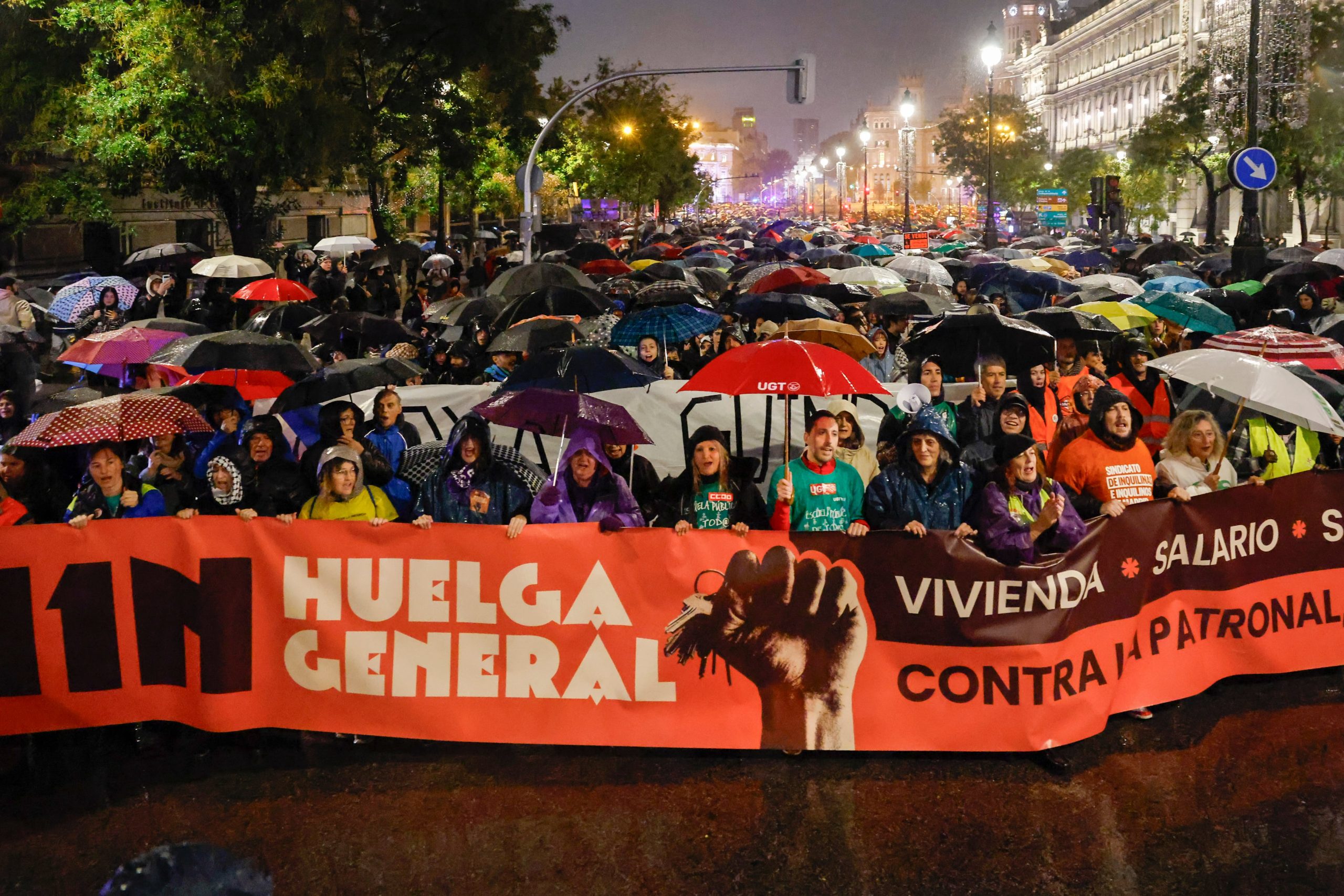
Spain’s main unions used the November 11 general strike to send a warning to the government that will emerge from the snap election of November 29: it will have to negotiate with workers’ organizations and address their demands, regardless of its own political color. “If they reach power, they will have to reach an understanding with us,” UGT general secretary Pepe Álvarez warned, alluding to the People’s Party (PP), which is currently in the opposition but leading voting intention polls. The PP had criticized the stoppage, calling it a “preventive electoral strike” against the mainstream conservatives, led by national PP leader Alberto Núñez Feijóo.
The day unfolded across Spain under very inclement weather, with driving rain in many cities and the effects of Storm Charles, which forced the cancellation of marches scheduled in Andalusian capitals. The impact of the strike was more visible on the streets, roads and access points to logistics hubs than in stores or workplaces themselves, in part because of the extent of remote work and the mobility difficulties.
The demonstrations were overwhelmingly peaceful, although clashes were recorded in Madrid, where there were police charges, and in Barcelona. In the Catalan capital the protest descended into looting by groups of hooded individuals, who also launched pyrotechnic devices at the regional police force, the Mossos d’Esquadra, near Plaça de Catalunya. During the day there were more than 1,500 incidents across the territory involving pickets and demonstrators, according to the Interior Ministry. More than 50 people were arrested at pickets and that total rose to almost 70 in the subsequent disturbances.
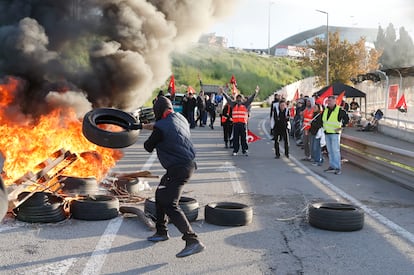
Union leaders criticized the police response as excessive and for the use in some cases of pepper spray. The two main unions, CC OO and UGT, denounced disproportionate use of police force and announced they would study possible legal actions. The employer associations CEOE and Cepyme condemned the vandalism and demanded respect for the right to work of those who wished to go to their jobs.
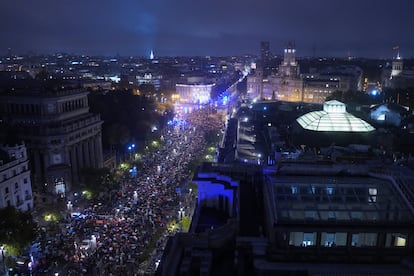
In Madrid more than 120,000 people, according to the Government Delegation’s estimate (between 600,000 and 750,000, according to the organizers) took part in the demonstration at 6.00 pm. A tide of demonstrators defied the bad weather, from university students to government employees and pensioners, illustrating the breadth of the social concerns, which include a lack of affordable housing, low salaries and cost of living concerns. The march set off from Atocha station, passed along Gran Vía and reached Plaza de España, where a police cordon had been deployed.
Chanting “This is class struggle” and “Madrid will be the tomb of rentiers,” protesters marched through the capital’s streets in heavy rain at the end of a day of strike action that began to take shape after the eviction of Maricarmen Abascal, an 87-year-old Madrid resident who died on October 7, two weeks after being forced to leave her home. Her fight, and her call for young people to “fight for what’s yours,” inspired a prolonged encampment in Sol square and led a group called the Tenants’ Union (Sindicato de Inquilinas) to make the first call for a nationwide strike.
The unions highlighted the high turnout in industry, automotive, logistics, energy and port facilities. By contrast, public administrations, health, education and much of the services sector registered a more limited impact. The unions placed territorial participation in a range from 41% in regions such as Castilla-La Mancha and Extremadura to more than 80% in Catalonia and Andalusia.
Transportation was one of the areas most affected by the strike. The state railway company, Renfe, reported 6.83% participation among its night and morning shift workers. However, 24% of high-speed and long-distance commercial services were cancelled and 10.17% of scheduled Cercanías, Rodalies, Avant and medium-distance public services were suspended. In air travel, the airport operator Aena recorded 234 cancellations out of 4,529 scheduled flights until 10.00 am, representing 5.16% of the total.
Madrid concentrated some of the most serious incidents of the day, particularly at the wholesale food market Mercamadrid and at EMT bus depots. There were also temporary closures on roads, including the M-30, the A-42, the A-5 and the A-6. In Catalonia pickets blocked access to Barcelona and caused restrictions on the AP-7, the A-2 and the Ronda Litoral.

There was no widespread closure of retail stores. Supermarkets and major distribution chains kept their establishments open, although with staffing and schedule variations. The unions put participation at 60.8%, while employers said that small shops operated practically normally.
On television, the main national channels maintained their broadcasts, although there were two notable episodes in the public audiovisual sector: Canal Sur interrupted its programming, and RTVE Catalonia had to move the program Cafè d’idees to another set after a group of demonstrators entered the facilities.
An ‘unorthodox’ strike
Under the slogan Salaries, housing, prices, it was the first general strike called by the unions in 14 years, and even then it was viewed as “unorthodox” since it was not a response to a specific piece of legislation or to any single government body. Instead it grew out of a wave of public outrage over an eviction and out of protests organized by a group that is not a labor union. It also falls 18 days before a general election, and it comes after a train accident that has brought about “a certain shift in the country’s mood,” according to CC OO leader Unai Sordo.
Sign up for our weekly newsletter to get more English-language news coverage from EL PAÍS USA Edition








Barcelona
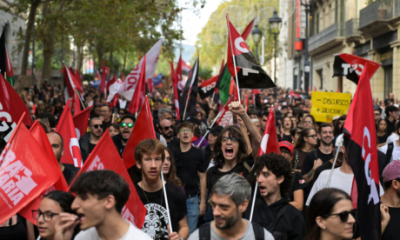
IN PICS: Burning Tyres, Baton Charges And Blocked Motorways As Millions Brave Storm Charles For Spain’s First General Strike In 14 Years

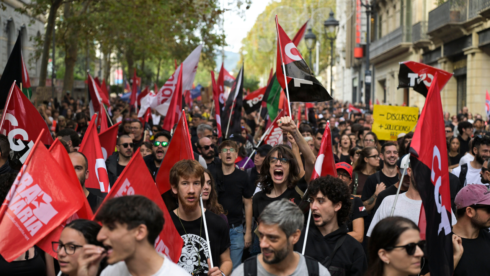
 The Tenants’ Union claimed some four million people hit the streets by midday, while unions reported 90 per cent participation in the car and port industries.

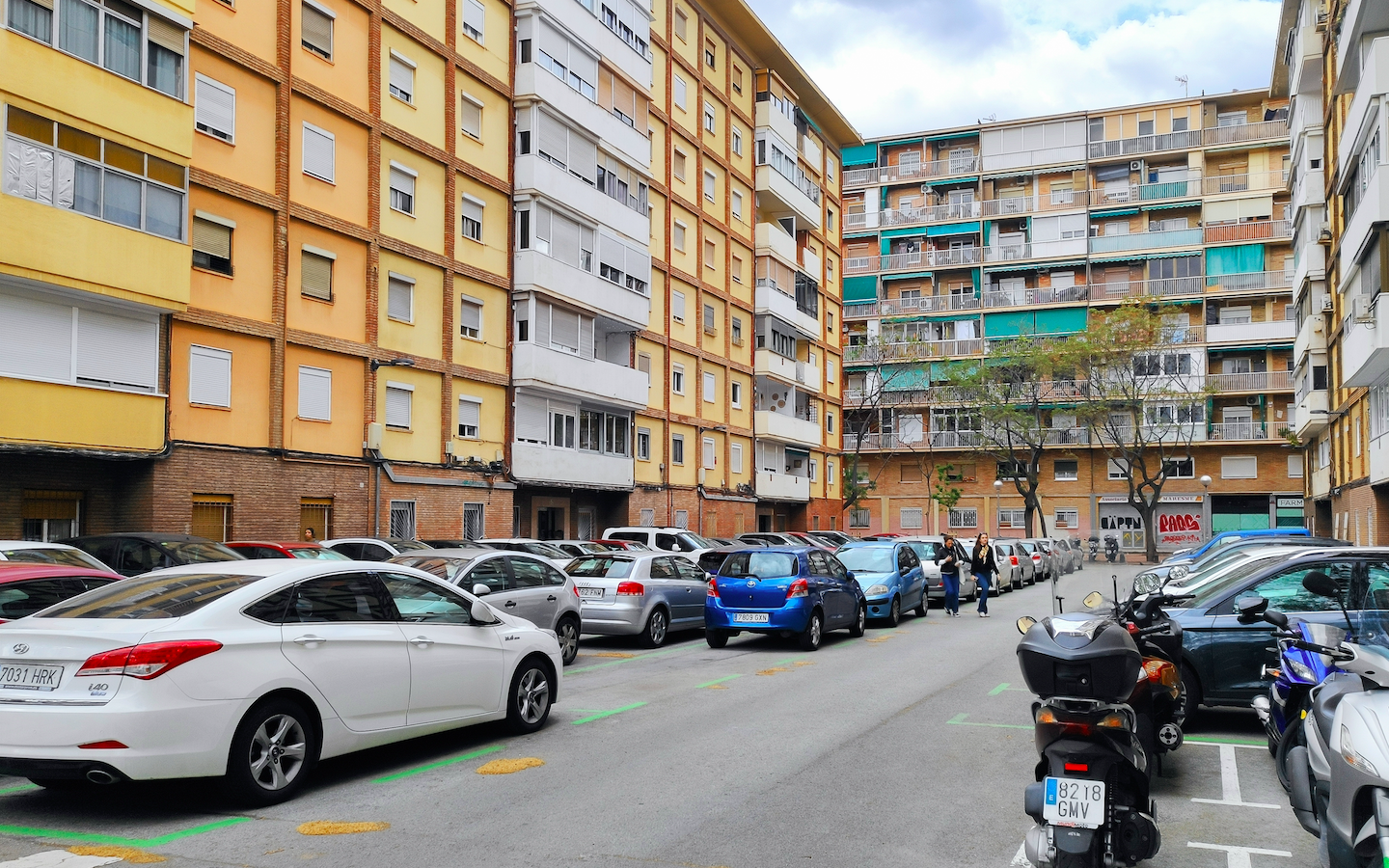
The first three penalties were successfully challenged and withdrawn. Photo credit: Alen Martisol/Shutterstock
A trip to the postbox has become a source of anxiety for a retired couple in Galicia after Barcelona City Council repeatedly accused them of driving illegally in the Catalan capital, despite their car never having left their home province. Carmen and José, both 78, have received six traffic fines totalling €1,200 for alleged journeys they insist they never made. The first penalty arrived in September 2024. Since then, five more have followed, each demanding €200 for entering Barcelona’s Low Emission Zone (ZBE) without the necessary environmental authorisation.
Although all six fines have now been cancelled, the couple are still worried that another could arrive at any time. “We are desperate,” José explained, describing how the situation has left them bewildered. The couple live in Bueu, in Pontevedra, and say their Audi A4, which is more than 20 years old, is only used for getting around their local area.
Six fines for journeys they never made
The penalties relate to three different locations in Barcelona: three alleged journeys along Travessera de les Corts, two on Avenida de Madrid and another on Avenida Paral·lel. José says the car does not leave Pontevedra province, making the accusations particularly difficult for the couple to understand. They initially had no idea how to challenge the fines and turned to a local gestoría in Bueu for help.
Francisco José Domínguez, who took on their case, began examining the evidence supplied with the penalty notices. One photograph appeared to offer a possible explanation for the repeated mistakes. According to Domínguez, the image shows what appears to be a tractor or trailer, rather than the couple’s Audi. Part of the registration plate is difficult to make out, and he suspects this may have led to the wrong vehicle being identified.
A registration plate may hold the answer
There is a small but important difference between Spanish registration plates for ordinary cars and those used on agricultural tractors. Both follow a similar combination of letters and numbers, but standard cars have the distinctive blue strip bearing the European Union flag and the letter E. Domínguez believes that a partially obscured letter could have caused the automatic recognition system to mistake another vehicle’s registration for the one belonging to Carmen and José. The gestoría does not believe the couple have been victims of identity theft. Instead, it suspects an error in the identification process, although the exact cause has not been established.
The first three penalties were successfully challenged and withdrawn by Barcelona City Council after the gestoría submitted appeals, including a specific request for the registration numbers to be checked. However, the matter did not end there. This year, the couple received another three fines for the same alleged offences, bringing the total to six and leaving them facing the prospect of having to challenge the same mistake all over again.
Barcelona admits a possible camera error
Barcelona City Council has attributed the problem to what it describes as a possible ‘one-off error’ in the reading of the registration plate. The city’s Low Emission Zone enforcement system uses cameras to photograph vehicles entering restricted areas. The images are then sent to the Barcelona Metropolitan Area (AMB), which checks whether the vehicle has permission to circulate or qualifies for an exemption. If the system identifies a vehicle without the required authorisation, the case is passed to the Institut Municipal d’Hisenda, which processes the penalty and sends the notification to the registered owner.
In this case, the council’s explanation points to an error during the initial identification process. However, the fact that three further fines were issued after the first batch had already been cancelled has raised questions about why the problem was not identified and corrected earlier. The council also maintains that the vehicle shown in the photograph cannot be a tractor, as tractors are not permitted to use the roads where the alleged offences took place.
€150 out of pocket despite winning their appeals
Although Carmen and José have escaped the €1,200 in penalties, fighting the accusations has not been entirely free. Their gestoría requested €150 in compensation from Barcelona City Council to cover the costs of preparing and submitting the paperwork needed to challenge the fines. That request was rejected.
The couple have therefore been left with the expense and frustration of defending themselves against six alleged traffic offences, none of which they say they committed. Domínguez has also questioned how the council could continue issuing penalties after cancelling the original three without identifying what had gone wrong.
The real driver may still be getting away with it
He described the situation as almost unbelievable, particularly given that the same registration-plate problem appeared to have continued unnoticed. The six fines have now been withdrawn, but there is still one question hanging over the case: who is actually driving the vehicle whose registration appears to have been confused with the couple’s Audi?
While Carmen and José have spent months dealing with fines for journeys they say they never made, the driver responsible for the Barcelona offences may still be going about their business without knowing anything about the confusion. As Domínguez pointed out, the real offender is potentially still driving around without a clue that someone else has been receiving their fines.


Playa Flamenca Red Cross Charity Day

Malaga’s Charity Hamper Worth Over €6,000

Insurance Without The Lost-In-Translation Moments
Viral video in Spain sparks fury over drivers who ‘have no idea how to drive’
Spain’s pet owners face fines of up to €200,000 for animal welfare offences
Halloween lunch sells out as 51 join Marbella get-together


-
DGT4 weeks ago
Viral video in Spain sparks fury over drivers who ‘have no idea how to drive’
-
Keeping cats and dogs outside4 weeks ago
Spain’s pet owners face fines of up to €200,000 for animal welfare offences
-
Age Concern Marbella - San Pedro2 weeks ago
Halloween lunch sells out as 51 join Marbella get-together
-
Consumer Rights Spain4 weeks ago
EU offers extra year of warranty on phones, but Spain faces delays
-
Council tax (IBI)4 weeks ago
Barcelona plans 150% property tax increase on tourist flats ahead of 2028 ban
-
airports4 weeks ago
Travelling between Spain and Italy? The extra border checks could soon end
-

 New Developments2 weeks ago
How To Get A Tourist Rental Licence In Andalusia (Spain) – Step-By-Step Guide 2025
-

 %4 weeks ago
Santa Pola Museo Del Mar