Connect with us

%

Spain’s Snap Election Kills The Terrace Smoking Ban And A String Of Other New Laws

Published

on

spain’s-snap-election-kills-the-terrace-smoking-ban-and-a-string-of-other-new-laws

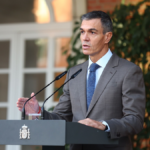
Pedro Sánchez’s call for a general election means some laws are now dead in the water. Credit: La Moncloa

Smokers can rest easy when lighting up beside your lunch, but they aren’t the only ones whose plans have changed overnight. Spain’s snap election has wiped out the terrace smoking ban and a string of other unfinished laws, with the government scrambling to save only its housing decrees.

Congress is dissolved and unfinished laws have fallen with it

Spain’s election is now official, with Congress and the Senate dissolved on Tuesday for a vote on Sunday November 29, and the new parliament due to meet on December 23. Any bill that hasn’t been passed when Congress is dissolved falls with it, so the next government would have to bring it back and start again.

None of these new rules had come into force yet, so today’s rules carry on exactly as they are.

The government has used Tuesday’s cabinet meeting to re-approve the two housing decrees that Congress rejected on Friday October 2, with the plan of putting them to the Diputación Permanente (the committee that stands in while parliament is dissolved). However, no move to rescue the tobacco bill or most of the others had been announced at the time of writing, so those laws are dead in the water until a new government takes over.

The terrace smoking ban was still being amended

The tobacco bill had been through cabinet on Tuesday July 21 and was still at the amendment stage in Congress’s Health Committee when the election was called. It would have banned smoking on bar and restaurant terraces, beaches, public pools, sports facilities and outdoor events, with a 15-metre smoke-free zone around schools, hospitals and public buildings, according to the Health Ministry. It would also have banned under-18s from smoking at all, rather than just buying tobacco, and treated vapes like cigarettes.

Terraces were always going to be the sore point. Spain’s respiratory society (SEPAR) found that roughly half of non-smokers are exposed to smoke on terraces and in outdoor leisure areas, as EWN reported in September, and it’s the classic ‘I came outside to get away from the smoke, so why is it following me?’

Bar owners saw it very differently, with hospitality groups claiming that more than 30,000 bars could close and 300,000 jobs could be at risk. Those are the sector’s own figures, though. Hostelería de España (the national hospitality association) said last October that people won’t stop smoking just because it’s forbidden on terraces.

Politicians were never united either. Popular Party leader Alberto Núñez Feijóo called the law badly born and improvised in July, while the government needed support from Junts and the Basque party PNV that it hadn’t secured. Whether it comes back depends on who forms the next government, and the last attempt took around 10 months to get from a first draft in September 2025 to cabinet approval.

Pensions, immigration and health reforms are among the casualties

Congress had agreed only in September to start work on a Podemos proposal that would let people with 40 years of contributions retire early without the usual penalty. That has fallen too, along with new asylum and foreigners laws that were being drawn up to bring Spain in line with the EU migration pact and had not got beyond an early stage.

Health has taken a heavy hit as well. The medicines law and the Estatuto Marco (the framework statute covering the working conditions of health staff) have fallen, and doctors’ unions had been planning indefinite strikes from October 28.

The list goes on, with the Families Law, the Youth Law, which included lowering the voting age to 16, and plans to limit social media for under-16s among those left in the air. Spain also heads into the election without a 2027 budget having been presented, although next year’s minimum wage could still be set by royal decree.

What it means for Brits in Spain

If you’ve been waiting for a new rule to arrive, the safest approach is to treat anything that hadn’t finished its journey through parliament as not happening for now. Smokers haven’t been handed new freedoms either, and the current smoking rules still apply.

The new parliament meets on December 23, so any revival of these laws can only begin after that, and the government that forms will decide which ones get a second chance.

%

Five Kilometres For A Global Cause

Published

on

five-kilometres-for-a-global-cause

Walkathon for Water. Credit: AEHCOS

Costa del Sol residents are being invited to swap their usual morning routine for a five-kilometre charity walk in Benalmadena on Thursday, October 15, helping raise awareness of the daily struggle faced by millions without safe drinking water.

The fourth annual Walkathon for Water will start at 10am from Sahara Sunset on Avenida Rocío Jurado, with participants following the seafront towards Puerto Marina before returning to the resort.

Organised by the We Are Water Foundation with Royal Oasis Club at Pueblo Quinta and Sahara Sunset, both managed by Hilton Grand Vacations, the event uses the five-kilometre distance to represent the journey many children make every day to find water.

Walking the distance many children face

According to the We Are Water Foundation, more than two billion people worldwide do not have access to safe drinking water. Many children in Africa, Asia and Latin America walk several kilometres each day to collect water for their families.

Participants in Benalmadena will therefore be turning an everyday walk into a reminder of a very different reality for communities around the world.

Money raised during this year’s international Walkathon programme will support two water projects in India and Mexico, with the work expected to improve access to clean water for more than 5,000 people. The Benalmadena event is one of 20 Walkathons being held across eight countries during 2026.

How to join the Benalmadena walk

The five-kilometre route is expected to take between one hour and 90 minutes and is open to people who want to support the cause.

Registration can be completed online through the Walkathon for Water section of the We Are Water Foundation website, with a minimum donation of €5 per person. People can also register at the event itself.

The walk starts and finishes at Sahara Sunset, Avenida Rocío Jurado, Benalmadena Costa, at 10am.

Afterwards, participants can stay for paella, sangria and a raffle from 1pm.
For registration and full event details, visit the We Are Water Foundation website.

Continue Reading

%

Steve Ponders, When Is It Time To Give Up Driving?

Published

on

steve-ponders,-when-is-it-time-to-give-up-driving?

Aging hands at the wheel. Credit: SunCity – Shutterstock

For many people, passing their driving test represents freedom, independence and the start of a new chapter. For long-time Costa del Sol expat Steve Marshall, it certainly did.“I was thinking over my morning cup of tea, how often do I use my car each week?” Steve says.

Looking back, he remembers exactly how important getting behind the wheel felt.“When I passed my driving test (second time I admit) it felt as if I’d been awarded a badge of honour. I was a driver! I was independent and I loved it.”Years later, however, Steve admits his attitude towards older motorists has changed considerably.“I looked at ‘older’ drivers and wondered in despair how they could still be on the road – such was the intolerance of youth,” he recalls. “With the years has come a little bit more wisdom.”

Age is not the only question

Steve believes there is no simple age at which someone should automatically stop driving. “Age alone should not be the only consideration,” he says. Instead, he believes older motorists need to take an honest look at several factors that can affect their ability behind the wheel.“Your sight, reactions, ability to park, medication, reduced mobility and general tiredness are all things that need your honest attention if you are to truly be a safe and considerate driver,” Steve explains. That honest assessment can be difficult, particularly when driving has been part of someone’s independence for decades. Steve also believes motorists should consider whether keeping a car still makes financial sense.

Is your car still worth the cost?

Insurance, tax, servicing and other running costs can add up quickly, particularly for someone living on a pension. “How often do you use your car and does the aforementioned cost warrant that drain on your pension?” Steve asks. His own experience provides a good example.

“My own car insurance was more than 300 euros for the year,” he says. Steve uses his car less than he once did, but there is an important reason he has not given it up.“With no bus route to fall back on it’s a lifeline,” he explains.

Do you still need such a big car?

Steve also questions whether older motorists sometimes continue driving vehicles that are larger than they actually need. “I have a ‘mature’ estate vehicle that never lets me down – but really a smaller vehicle would do the job just as well,” he admits. “In the past I needed a larger vehicle but that requirement no longer exists.”

He has noticed other older drivers continuing to use large, comfortable cars and believes this can sometimes create a misleading sense of security. “I see ‘older’ drivers in big, very comfortable cars that in truth cocoon them from the realities of the road,” he says. “That false sense of well being and security is a recipe for disaster.”

Giving up the car does not mean giving up

For Steve, perhaps the most important point is that deciding to stop driving should not be seen as surrendering independence. “If you feel the time is right to relinquish your car don’t think of it as giving up your independence because it isn’t,” he says. “There is a time in life for everything and alternatives are often just around the corner.”

For anyone facing that difficult decision, Steve’s message is ultimately a positive one.

“Whatever you decide, live your best life,” he says, “even if it no longer includes your ‘trusty metal friend’.”

Continue Reading

%

Alcúdia Brings Its Historic Sa Fira To A Close

Published

on

alcudia-brings-its-historic-sa-fira-to-a-close

Alcúdia has brought this year’s Sa Fira to a lively close after three days of activities celebrating the Mallorcan town’s history, traditions, rural heritage and community spirit.

The final day once again transformed the streets into a meeting point for residents and visitors, with a packed programme offering something for all ages. From traditional giants and agricultural displays to animals, Roman re-enactments and children’s activities, the Sunday programme continued the festive atmosphere that had filled Alcúdia throughout the weekend.

A celebration of Alcúdia’s heritage

The annual Fira is much more than a street festival, with the event providing an opportunity to showcase traditions and elements of local life that have shaped the community over generations.

The town’s famous gegants, or giant figures, were among the attractions featured during the celebrations, adding one of Mallorca’s best-known traditions to the programme.

The agricultural and rural elements of Sa Fira also highlighted Alcúdia’s connection to the countryside, while the Roman-themed activities offered visitors the chance to step back into the island’s ancient past.

For younger visitors, a selection of activities helped make the final day a family-friendly occasion, with children able to enjoy the festive atmosphere alongside the traditional displays and performances.

Across the three days, the event encouraged people to explore Alcúdia on foot, discover its heritage and enjoy the town’s streets, squares and historic surroundings.

Music brings the celebrations to an end

After three busy days, organisers chose music and traditional dancing as the perfect way to bring Sa Fira to a close.

Plaza Carles V became the centre of the final celebrations as crowds gathered for a ballada popular, a traditional community dance event featuring performances by Sarau Alcudienc, Càrritx and Música Nostra.

The evening provided a fitting finale to the festivities, bringing together generations of residents and visitors in one of Alcúdia’s most recognisable public spaces.

Traditional music and dancing have long played an important role in Mallorca’s cultural celebrations, and the final performance gave people the opportunity to enjoy these customs in a lively, communal setting.

The atmosphere marked a final chance for people to meet friends, spend time with family and enjoy the festival before the streets returned to normal.

‘The heart of Alcúdia’

The local council thanked everyone who took part in the three-day celebration, highlighting the role played by residents in making Sa Fira a success.

The message to the community was one of appreciation for everyone who had taken to the streets, participated in the activities and helped create the atmosphere throughout the weekend.

With its combination of heritage, farming traditions, entertainment, family activities, music and local culture, Sa Fira once again offered a snapshot of the character of Alcúdia.

The closing celebrations ended with a clear message from the organisers: Sa Fira is not simply an event held in Alcúdia, but a celebration shaped by the people who live there.

As the final music faded from Plaza Carles V, this year’s edition came to an end, leaving residents and visitors with three days of traditional entertainment, community celebrations and a chance to experience the historic town at its most festive.

Sign up for personalised news

Subscribe to our Euro Weekly News alerts to get the latest stories into your inbox!

By signing up, you will create a Euro Weekly News account if you don’t already have one. Review our Privacy Policy for more information about our privacy practices.

Continue Reading
Advertisement
Advertisement

Spanish Real Estate Agents

Tags

Trending

Copyright © 2017 Spanish Property & News