A rail collision in Spain that claimed at least 68 lives on Wednesday came after a train was ordered to go in “error” by Spanish rail infrastructure manager Adif, despite a technical failure that halted all services, the transport minister said.
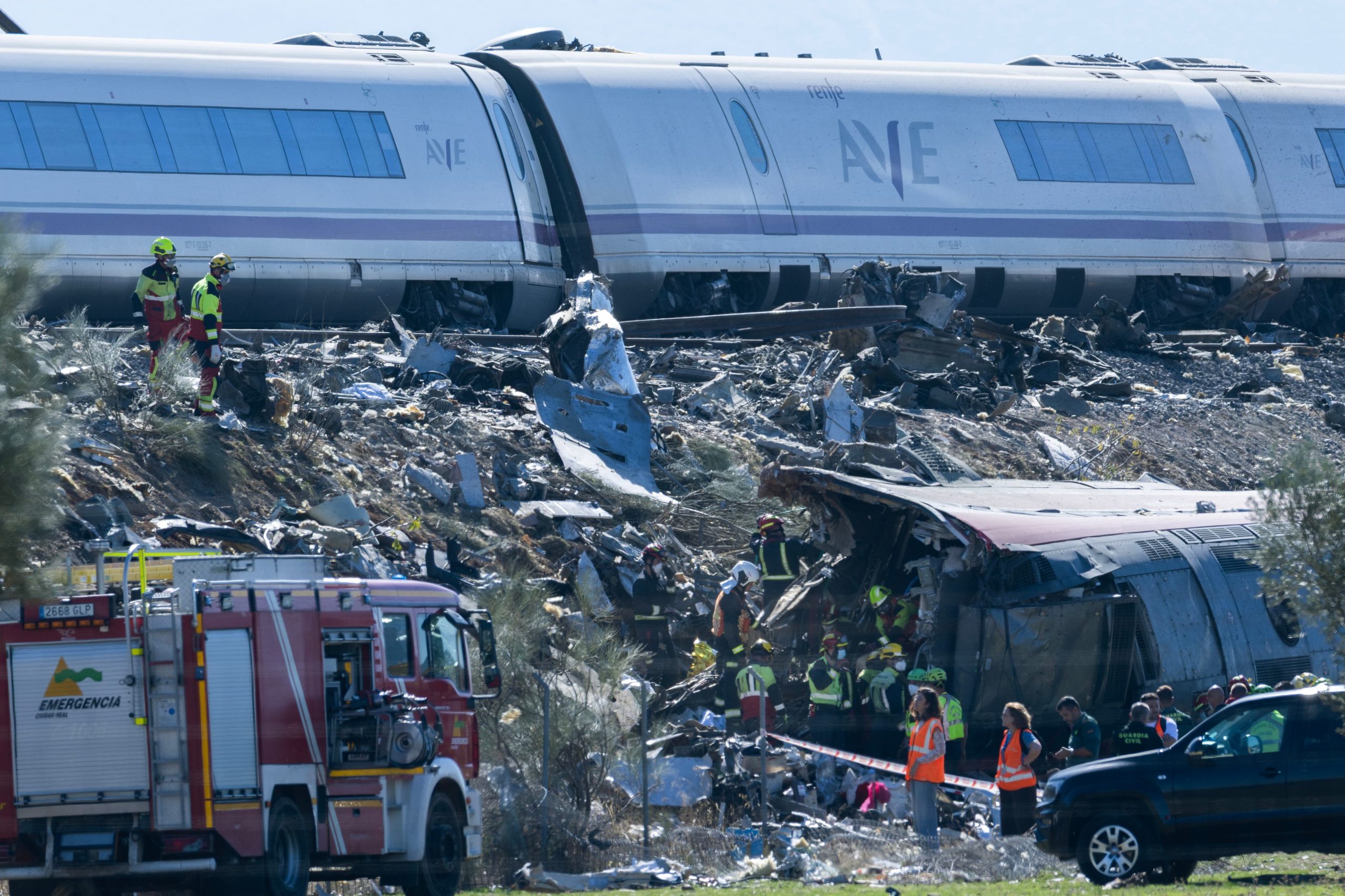
Spanish Minister of Transport Óscar Puente has directly blamed a decision by the Adif control centre for the accident between a Renfe AVE high-speed train and an Iryo train at the entrance to Urda station (Toledo) on Wednesday.
Adif is Spain’s state-operated rail infrastructure manager tasked with building, managing and maintaining the tracks, while Renfe runs Spain’s public trains.
The first findings relating to the accident in the central region of Castilla-La Mancha are likely to revive questions about rail safety in Spain after another high-speed collision in January killed 46 people.
Don’t miss our journalists’ daily news roundup from Spain
Puente said 69 kilometres (43 miles) of track were affected by an outage of the automatic control system, which “caused all the trains that were running at that time to stop automatically”.
“The decision to resume traffic, while that system had not been restored, belongs to the control centre, and the control centre… took the decision to resume traffic in circumstances that, from our point of view, are inexplicable,” Puente said.
🔴 Óscar Puente atribuye a un error humano “inexplicable” que se ordenara reanudar la marcha al AVE antes del accidente con el Iryo en Urda https://t.co/XkQscRdDWU https://t.co/WWZwZV9ZLx
A train operated by state company Renfe restarted and travelled 25 kilometres until it collided with a stationary train belonging to private Spanish company Iryo, at a speed that could have reached “up to 200 kilometres per hour”, Puente added.
“It is clear that, in the control centre, the decision was taken to restart, and then they had more than enough time to verify the error, and they did not fix it,” Puente said.
With additional reporting by The Local Spain’s Alex Dunham
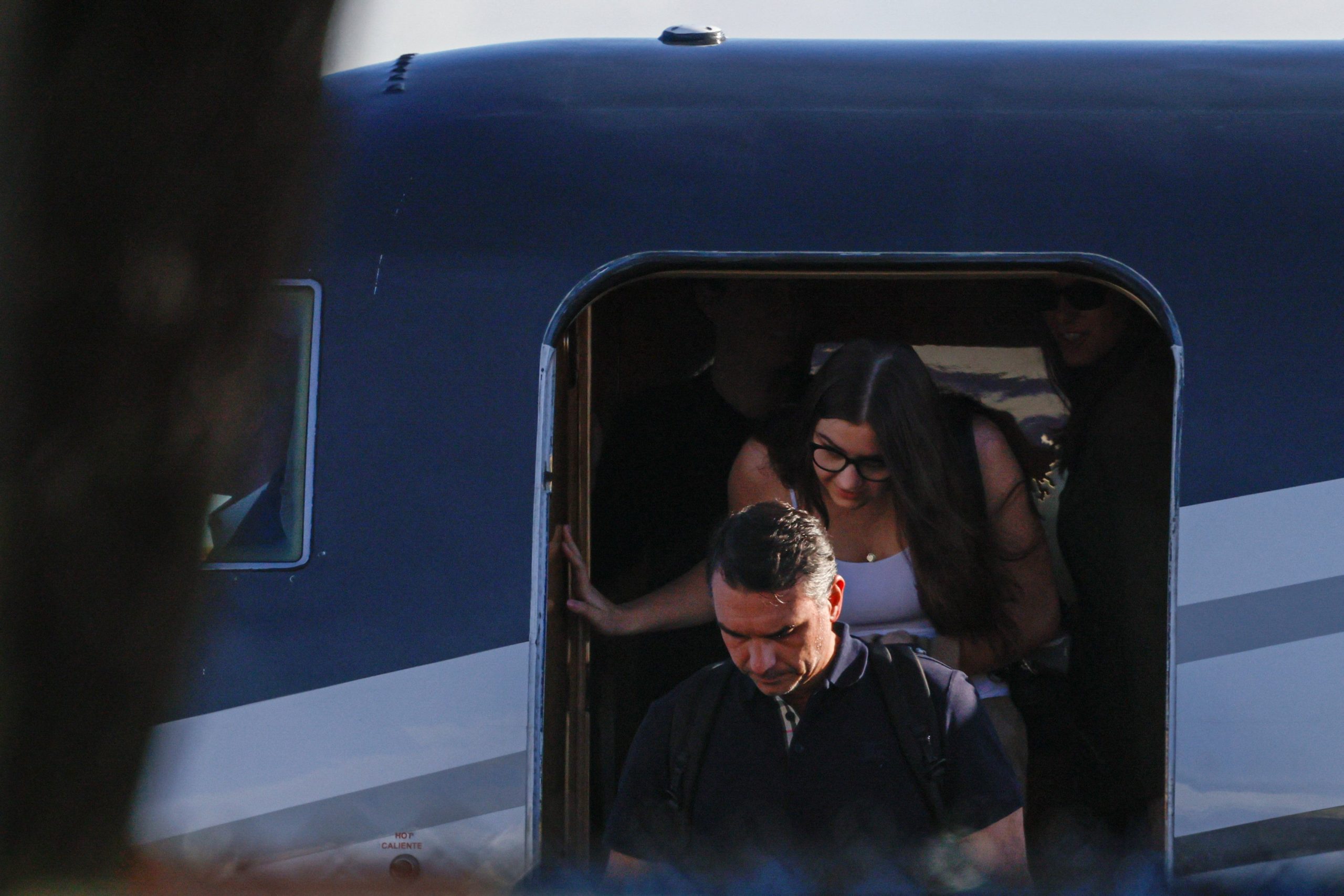
The plane carrying Flávio Bolsonaro and his family landed in Miami, Florida, on Wednesday morning. The Brazilian senator arrived at Opa-locka Executive Airport, north of Miami, at 9:20 a.m., after fleeing Brazil less than two days after losing the Brazilian presidential election to Luiz Inácio Lula da Silva.
Bolsonaro arrived in Florida after promising he would remain in Brazil to lead the opposition to Lula. Before leaving the country, he failed to comply with an order from Brazil’s Supreme Court requiring him to surrender his passports. On Tuesday, the administration of Donald Trump announced that it would issue visas for Bolsonaro, his wife and their two daughters.
Tuesday was marked by a series of confusing and self-serving accounts, with no one certain of Bolsonaro’s whereabouts. Earlier in the day, Argentina’s immigration authorities denied that he had entered the country, which was true at the time: he had not yet crossed the border.
Bolsonaro entered Argentina at 10:50 p.m. that night with his wife and two daughters, crossing via the Tancredo Neves International Bridge, which links Foz do Iguaçu, Brazil, with Puerto Iguazú, Argentina. The crossing was later confirmed by Argentina’s immigration agency in a statement issued at 2 a.m.
Barely 40 minutes after crossing the border, the family was on board a Gulfstream G400 operated by Baires Fly, which had been waiting at Puerto Iguazú airport since Monday.
Brazilian Supreme Court Justice Alexandre de Moraes, regarded as the Bolsonaro family’s chief adversary, had ordered the cancellation of Flávio Bolsonaro’s Brazilian passports and the surrender of his Italian passport, which he obtained in 2023.
According to the flight manifest, Bolsonaro crossed the border using his European passport, while his wife and daughters travelled on Brazilian passports. The aircraft took off shortly after midnight for Guayaquil, Ecuador. It landed there before dawn, refuelled and departed again half an hour later, according to the newspaper El Universo.
Flávio Bolsonaro is under investigation by Brazil’s Supreme Court on suspicion of money laundering and foreign-exchange evasion alongside his friend Willer Tomaz, a lawyer with business interests in the betting industry. Federal Police investigators suspect the senator is Tomaz’s silent partner. According to Folha de S.Paulo, Bolsonaro at one point had administrative access to a bank account belonging to a Tomaz company registered in Madeira, and the two men share addresses, travel records and business associates. Both deny any wrongdoing.
Bolsonaro’s stopovers were not accidental. Javier Milei’s Argentina is the Bolsonaro family’s closest ally in the region and has yet to recognize Lula’s election victory. “There will be no statement,” Milei’s government said. In July, at the launch of Flávio Bolsonaro’s campaign in São Paulo, Milei referred to Lula as a “convict” and a “thief,” prompting Brazil to summon its ambassador in Buenos Aires for consultations.
Daniel Noboa’s Ecuador, meanwhile, is one of Donald Trump’s closest partners in Latin America and, by extension, an ally of the Bolsonaros. Neither Argentina’s presidency nor Baires Fly immediately responded to requests for comment.
Bolsonaro’s decision to leave Brazil comes after a defeat that neither he nor his supporters had expected. Although he finished ahead of Luiz Inácio Lula da Silva in the first round on October 4, Lula staged a comeback to win Sunday’s runoff with 51.79% of the vote, compared with 48.21% for Bolsonaro. It was an unprecedented turnaround in Brazil’s democratic history.
Flávio Bolsonaro did not concede defeat, but hours later insisted he had never intended to leave the country and would instead lead the opposition against the left. His Senate term expires at the end of the year and, after 24 years in politics, he will no longer hold elected office. Without a seat in Congress, he will also lose the legal protections afforded to officeholders.
What Bolsonaro plans to do in the United States remains unclear, but the path has already been paved. The country has become a political rear base for the Bolsonaro family. His father, Jair Bolsonaro, flew to Orlando two days before leaving office in December 2022 and spent three months there while his supporters stormed Brazil’s Congress, Supreme Court and presidential palace in Brasília. His brother, Eduardo Bolsonaro, has lived in Texas since early 2025 and, from there, lobbied the Trump administration to impose tariffs on Brazil and sanctions on Moraes. Brazil’s Supreme Court later sentenced Eduardo Bolsonaro to four years and two months in prison over those efforts.
The Trump administration has made its support clear. His administration appointed a Brazil adviser close to the Bolsonaro family and has now opened the door to the son who was expected to inherit the Bolsonaro political movement.
On Monday, less than 24 hours after Brazil’s election, Trump publicly questioned the result. “It looked like another rigged election, frankly,” the Republican president told reporters. “I didn’t take sides, but it was a terrible look for the world.”
Trump, who faces pivotal elections of his own in less than a week and has already sown doubts about the process, went on to add: “Elections have to be indisputable, and it looked really bad to me.”
Sign up for our weekly newsletter to get more English-language news coverage from EL PAÍS USA Edition
At least 64 people have died in a train accident that occurred Wednesday morning near Urda station in Toledo, Spain, according to the government, which fears there may be more fatalities. “It could be worse than Adamuz [the rail accident in Córdoba that claimed 46 lives on January 18],” government sources said. The authorities also said 80 people had been injured, 50 of them seriously. At least 55 people had been transferred to hospitals in the area, the regional government of Castilla-La Mancha confirmed.
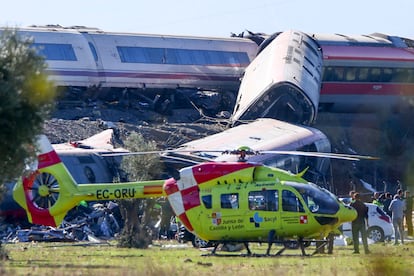
An AVE high-speed train collided with an Iryo train that was stopped on the tracks, according to sources from the emergency services, who indicated that two cars fell down an embankment. According to initial reports, the AVE train may have struck the Iryo train from behind, causing two cars of the latter train to derail.
Spanish state rail company Renfe has reported that train service between Madrid, Ciudad Real, and Andalusia has been suspended. The government and the opposition have canceled their schedules for Wednesday after receiving news of the accident.
“I am in constant contact with the Minister of Transportation and the premier of Castilla-La Mancha. Emergency services are working on the ground to assist those affected and ensure their safety, in coordination with all the relevant authorities. My thoughts, solidarity, and support go out to all the victims and their families,” posted Prime Minister Pedro Sánchez on X.
Among the passengers was former Popular Party labor minister Fátima Báñez, whose condition remains unknown. “I can’t give you any information [about Báñez], but we’re in contact with her family, who are already in the area. We’re gathering information,” said Antonio Sanz, the regional minister for the presidency and head of emergency management in Andalusia.
“A human error by an [state-owned railway infrastructure company] Adif operator in response to a malfunction in the main signaling system is the likely cause of the accident,” government sources said. This safety system is automated, but when it fails, it switches to manual mode. That is why the trains came to a stop when the automatic safety system failed, and service resumed under human control — and that is where the error occurred, according to initial analyses.
Rafael Escudero, spokesperson for the Railway Union, said that the accident was “very unusual.” Speaking to Antena 3 radio, he noted that there is no passenger stop in that area, that train traffic is monitored in real time, and that the train also receives real-time information on the condition of the tracks; if there is an obstacle — such as another train — it would stop.
‘What I encountered was horrific’
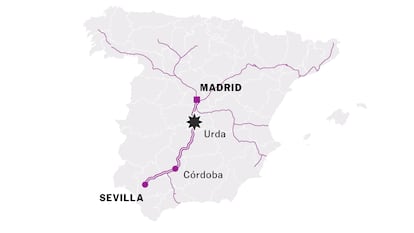
A passenger traveling in one of the rear cars of one of the trains told EL PAÍS that he felt a “strong impact” about 40 minutes into the trip. The collision occurred at kilometer marker 118, between the towns of Mora, Orgaz, and Urda (Toledo). The Renfe train involved in the accident had stopped and slowed down minutes earlier due to a traffic problem on the line. The explanation points to human error, because when the safety system failed, about eight trains in the area came to a stop; they were then ordered to move, but the Iryo train was unable to do so and remained stationary.
Another passenger, Miguel Ángel Pérez, who had already exited the train, told state broadcaster TVE by phone that the accident was “terrible, indescribable.” He was travelling in the last car of Renfe’s AVE 2080, which was carrying a total of 397 passengers. “We’ve come to realize the immense gravity” of what happened, he admitted. “With the huge impact and the rattling, we started clinging to our seats,” he said. “We were able to get out of the car by breaking the windows,” he noted before hanging up because he was being asked to provide his ID to authorities.
Ambulances and hearses continued to arrive at and leave the scene of the accident later Wednesday morning, where not all the bodies have yet been recovered. In the area, a priest from Consuegra — just a few miles from the crash site — says he arrived at 10 a.m. and administered last rites to two people near the tracks. “What I encountered was horrific — many victims in very bad condition. Most of them were young people. I had never faced a situation like this before.”
According to initial analyses, an operator at the Atocha control center in Madrid mistakenly ordered the Renfe train to proceed even though the Iryo was blocking the track; this ultimately led to a rear-end collision — at a speed yet to be determined — between the Renfe train and the Iryo, which caused the accident. Investigations are ongoing, but these are the initial findings from technical experts, according to government sources.
The spokesperson for the regional government of Castilla-La Mancha, Esther Padilla, confirmed on TVE that there were numerous fatalities, but announced that the number “will most certainly rise.” “The Military Emergency Unit (UME) has offered its assistance, as have Castilla-León, Madrid, Andalusia, and Navarre — the latter being the most recent to join the effort,” Padilla added.
Although there is no official confirmation of fatalities at this time, this accident brings to mind the derailment of two high-speed trains in Adamuz (Córdoba) on January 18, which was the most serious train accident in Spain since 2013, when an Alvia train connecting Madrid with Ferrol derailed on a curve in Angrois, near Santiago de Compostela, due to excessive speed. Eighty people died and another 145 were injured.
The worst accident in Spanish railway history is considered to be the one that occurred in Torre del Bierzo (León) on January 3, 1944. It involved a collision inside a tunnel between an express train, a shunting locomotive, and a freight train, resulting in an official death toll of 78. However, it is believed that the actual number of fatalities was concealed by the Franco regime. Other accidents with a high number of casualties occurred in El Cuervo (Seville) on July 21, 1972, when a head-on collision between a railbus operating on the Cádiz–Seville route and an express train from Madrid resulted in 86 deaths and 112 injuries; and on the Valencia Metro on July 3, 2006, when a Metrovalencia subway train derailed due to high speed on a curve, resulting in 43 deaths and 47 injuries.
Members of the Adamuz victims’ association have said they want to help and share their experience following the events of January 18. José Manuel, a member of the association’s board of directors and a relative of one of the women injured in the previous accident, put it this way: “Every step they take from here on out has consequences they are not yet able to fully assess.”
Sign up for our weekly newsletter to get more English-language news coverage from EL PAÍS USA Edition
Spanish Socialist PM Pedro Sánchez defending his housing policy on national TV.
Socialist Prime Minister Pedro Sánchez recently appeared on television defending rent controls and greater government intervention in Spain’s housing market. His interview on La Revuelta brought several questionable arguments and important omissions into focus. Here’s a closer look.
With Spain heading towards a general election on 29 November, Sánchez is seeking to make housing a central issue. After eight years in power, his government faces criticism over worsening affordability and insufficient housebuilding.
In an interview on La Revuelta on 22 October, Sánchez argued that Spain needs both more construction and greater regulation. He described them as the two pedals of a bicycle.
But his defence of that approach raises some awkward questions.
1. The property bubble supposedly disproves supply and demand
Sánchez argued that Spain built 4.5 million homes before the financial crisis, yet house prices continued rising. He suggested that the relationship between supply and demand was therefore not so straightforward.
The same argument appears in the preamble to the government’s housing decree of 6 October, which notes that more than 3.5 million homes were built in five years without containing prices.
But this was a speculative bubble, fuelled by excessive credit and expectations of ever-rising prices. Construction and prices were both responding to extraordinary speculative demand.
The fact that prices rose whilst supply increased doesn’t demonstrate that additional supply was ineffective. Prices might have risen even faster without it.
It’s rather like arguing that because tulip prices rose during the Dutch speculative mania of the 1630s, growing more tulips doesn’t help contain their price.
The last property bubble illustrates how speculative demand can overwhelm supply, not that the laws of supply and demand cease to apply.
Sánchez is anything but stupid. I’m sure he knows that building more affordable housing within commuting distance of hot markets would help keep a lid on house prices, but he needs to undermine this argument in favour of regulations that punish landlords, which is what his left-wing comrades want more than anything else. These argument helps keep the hard-left on board.
2. Barcelona as a rent-control success story
Sánchez held up Barcelona, where rent controls apply, as an example of rents rising much more slowly than Madrid, where they don’t.
There is evidence of greater price restraint in Barcelona. According to the Generalitat’s official rental-contract figures, the average monthly rent on new contracts was €1,137 in Q1 2026, down 4.7% from immediately before the controls began in 2024, though up 4.6% year-on-year.
But prices are only part of the story. What about availability?
The number of new rental contracts signed in Barcelona fell from 53,524 in 2018 to 30,789 in 2025, a decline of 42.5%. Even comparing Q1 2026 with Q1 2024, new contracts were down 17%.
Fewer new contracts do not necessarily mean fewer homes in the total rental stock. Longer tenancies also reduce turnover. But they do mean fewer opportunities for people looking for somewhere to rent.
Rent controls can protect sitting tenants whilst making life harder for newcomers competing for the limited number of homes becoming available.
Sánchez mentioned the restrained prices, but not the collapse in new contracts.
3. A million new homes built?
Sánchez also claimed that one million homes had been built in recent years, with around 13% classified as protected housing.
He didn’t specify which years. According to official figures examined by fact-checking organisation Newtral, Spain completed approximately 722,000 homes between 2018, when Sánchez came to power, and Q1 2026.
The distinction matters when assessing a government’s record on construction, particularly when housing supply is one of the central issues in the election campaign.
4. A market that supposedly needs more intervention
Sánchez repeatedly argued that the housing market wasn’t working and therefore needed greater public intervention.
But Spain’s housing market is already heavily regulated. Planning restrictions, lengthy administrative procedures and construction requirements constrain development, whilst rental legislation governs prices, contract terms and landlords’ rights.
The question is not simply whether intervention is needed, but whether existing intervention is contributing to the problems the government wants to solve.
A market struggling to respond to demand does not necessarily need more regulation. It might need some of the existing obstacles removed.
5. Two pedals pulling in different directions?
Sánchez’s bicycle analogy sounds reasonable: build more homes whilst regulating the market.
But construction and rental investment depend on expected returns, costs and risks. Regulations that make projects less viable or reduce returns can discourage the very investment needed to increase supply.
Barcelona’s requirement to reserve 30% of certain new developments for protected housing illustrates the difficulty. Introduced in 2018, it has produced far fewer protected homes than originally expected, and even the Socialist-led city council has sought to make the rules more flexible.
Sánchez also argued that his government supports small landlords through tax incentives, whilst directing its criticism towards large investors and so-called vulture funds.
The incentives exist. But the relevant question is whether they outweigh the additional costs, restrictions and risks of renting out a property. That matters in a market where individual owners account for the overwhelming majority of privately rented homes.
What the interview leaves unanswered
There are legitimate arguments for protecting tenants, restraining rents and expanding affordable housing. But the benefits of intervention need to be weighed against its effects on supply, investment and access for prospective tenants.
The interview emphasised construction and regulation as complementary solutions, yet gave little attention to the possibility that some regulations make additional housing less likely to materialise.
Nor did it adequately distinguish the speculative excesses of the 2000s from today’s shortage of homes.
With this sort of reasoning informing housing policy, it’s hardly surprising that Spain’s housing crisis has deteriorated during Sánchez’s eight years in power. I sometimes wonder whether a Socialist government with an absolute majority of its own would have taken a more pragmatic approach, rather than being pulled further towards intervention by its partners on the hard left, who’ve made housing their signature issue. But without a majority of his own, Sánchez remains dependent on those partners to govern. If that arrangement continues, and the underlying thinking doesn’t change, it’s difficult to see Spain’s housing problems getting any better. Indeed, there’s every risk they’ll get worse.