Connect with us

Latest

S

Published

on

s

We’re checking if you’re a real person and not an automated bad bot. Usually, the captcha below will complete itself. If it doesn’t, simply click the checkbox in the captcha to verify. Once verified, you’ll be taken to the page you wanted to visit.

Human verification is in progress ✨

If for some reason after verifying the captcha above, you are constantly being redirected to this exact same page to re-verify the captcha again, then please click on the button below to get in touch with the support team.

Contact Support

Please mention the “Ray ID: 9f8542a96fbd3075” and “Client IP: 195.250.23.30” to your ticket.

Continue Reading

california

Meth Purer Than In ‘Breaking Bad’ And Stash Houses In The Kardashians’ Neighborhood: How Barrio 18 Ran Its Los Angeles Drug Operation

Published

on

meth-purer-than-in-‘breaking-bad’-and-stash-houses-in-the-kardashians’-neighborhood:-how-barrio-18-ran-its-los-angeles-drug-operation

A U.S. Drug Enforcement Administration (DEA) operation has exposed the activities of a violent Los Angeles gang, Barrio 18, which was distributing Mexican cartel drugs on the streets. The group sold methamphetamine with 100% purity (even higher than the 99.1% boasted by Walter White in Breaking Bad), used a business as a front, and relied on dealers who did not fit the usual profile. One of their stash houses was located in the exclusive neighborhood where the Kardashian family lives, while gang members sold their product in a park crowded with addicted homeless people — described by authorities as an “open‑air drug market.”

On Wednesday, as the operation came to a head, dozens of federal and local agents took control of MacArthur Park, a few blocks west of downtown, and raided two homes and a business in the early morning hours. They arrested at least 18 people, including Yolanda Iriarte-Avila, a 40-year-old woman identified as the area’s main drug distributor. All of them face sentences of between 10 and 20 years in prison.

Under the fearless leadership of @POTUS, we are crushing the drug trade and saving countless American lives: 25 alleged drug dealers and traffickers have been arrested and federally charged in the last 24 hours.

These defendants and anyone who helps spread the scourge of drugs… pic.twitter.com/mbvTr13KqD

— U.S. Department of Justice (@TheJusticeDept) May 6, 2026

Iriarte-Avila lived in Calabasas, a wealthy and quiet town north of Los Angeles. She was a neighbor of the Kardashian family, Drake, Justin Bieber, The Weeknd, Will Smith, and Miley Cyrus, among other celebrities. Her apartment was the perfect stash house, until she sold a kilo of fentanyl for $10,000 to a DEA informant, and her cell phone was found to contain some 150 phone conversations she had over 30 days with her boyfriend, Jesús Morales-Landel, a known drug dealer in MacArthur Park.

On Wednesday, authorities found 18 kilograms of fentanyl at Iriarte-Ávila’s hideout. She and her partner have been linked to the Barrio 18 gang, a rival of Mara Salvatrucha (MS-13). The DEA has not revealed who supplied the drugs to Iriarte-Avila, although it said that the gang has formed alliances with the Sinaloa Cartel, Jalisco New Generation Cartel, and Los Zetas.

A park disputed by three gangs

The federal indictment names at least 25 people involved in this criminal network and details 27 undercover purchases of fentanyl and methamphetamine made between March 9 and April 15, both inside and around the park. To track them, the DEA had the support of the Los Angeles Police Department and the Sheriff’s Office, who deployed drones, surveillance cameras, and a tracker installed in one of the suspects’ vehicles.

Agents monitored suspects’ movements through houses, parking lots, restaurants, clothing stores and supermarkets, until they reached what investigators describe as the group’s center of operations: a business called El Paraíso, located across from the park, where — according to the investigation — they stored narcotics and coordinated sales ranging from $10 to $40.

At the mid-level of distribution were Mallaly Moreno-López, 31, and her boyfriend, Jackson Tarfur, 28. A swarm of police officers woke them while they slept in their Westlake apartment. As a desperate measure, they flushed the fentanyl pills they had with them down the toilet, and some remained in the toilet bowl; this was seen in a video released by the DEA as the final piece of evidence against them. Both are now in jail.

“For far too long, MacArthur Park has been plagued by drug addiction, crime, and despair,” said Anthony Chrysanthis, head of the DEA’s Los Angeles office, in a statement. “While this is a drug enforcement operation, it is also an effort to restore safety and wellness, and to return MacArthur Park back to the community.”

For years, MacArthur Park has been a recreational space for dozens of Hispanic migrant families. But it also became contested territory for gangs such as Barrio 18, MS‑13, and the Crazy Riders. According to authorities, to avoid clashes between rival groups, the prison gang known as the Mexican Mafia divided control of different sections of the park among them. After the pandemic, the area filled with homeless people and drug users, creating a lucrative open‑air market for these criminal structures.

“We witnessed drug activity return to MacArthur Park, ” Los Angeles Police Chief Jim McDonnell said in the statement.

Covert purchases

Amid the constant bustle of Alvarado Street, a man approached Jordan Jaramillo, who was wearing a black sweatshirt, camouflage pants, and a black mask covering his face. He asked for “crystal,” handed him a $20 bill, and received a small white rock. The dealer had a Chilean accent, uncommon in this neighborhood that has welcomed Central American and Mexican diasporas for decades. The customer, who was actually a police informant, placed the rock on a napkin and put it in his bag. Tests by a DEA lab revealed it to be 1.74 grams of methamphetamine with a purity level of 100%.

That same day, March 9, agents arrested Jaramillo while he was traveling in a car with one of his accomplices, and his Chilean passport appeared in the police database. According to the Department of Justice, Barrio 18 has been using undocumented South Americans to carry out street-level drug sales, in an apparent attempt to mislead authorities and break with the typical profile of dealers.

Other undercover police buyers approached Jaramillo to purchase powdered fentanyl for $20 to $40. In code, they asked him for “fettie.” This Chilean man was recorded by surveillance cameras that the Los Angeles government had installed in various areas of the park, and those images are now part of the evidence presented by the Central District of California. According to the indictment, at one point, this gang’s operations became so blatant that they stopped taking precautions: they were constantly entering the El Paraíso store and selling the merchandise in plain sight, right in front of the shop.

During Wednesday’s operation, as a loudspeaker warned in English and Spanish that it was a DEA raid, an agent used a saw to cut through El Paraíso’s metal shutter. The scene marked the end of the hideout from which Barrio 18 had operated with impunity.

Sign up for our weekly newsletter to get more English-language news coverage from EL PAÍS USA Edition

Continue Reading

ElPais

‘El Chapo’ Guzmán Blames Government For ‘violent Crimes’ In Mexico

Published

on

‘el-chapo’-guzman-blames-government-for-‘violent-crimes’-in-mexico

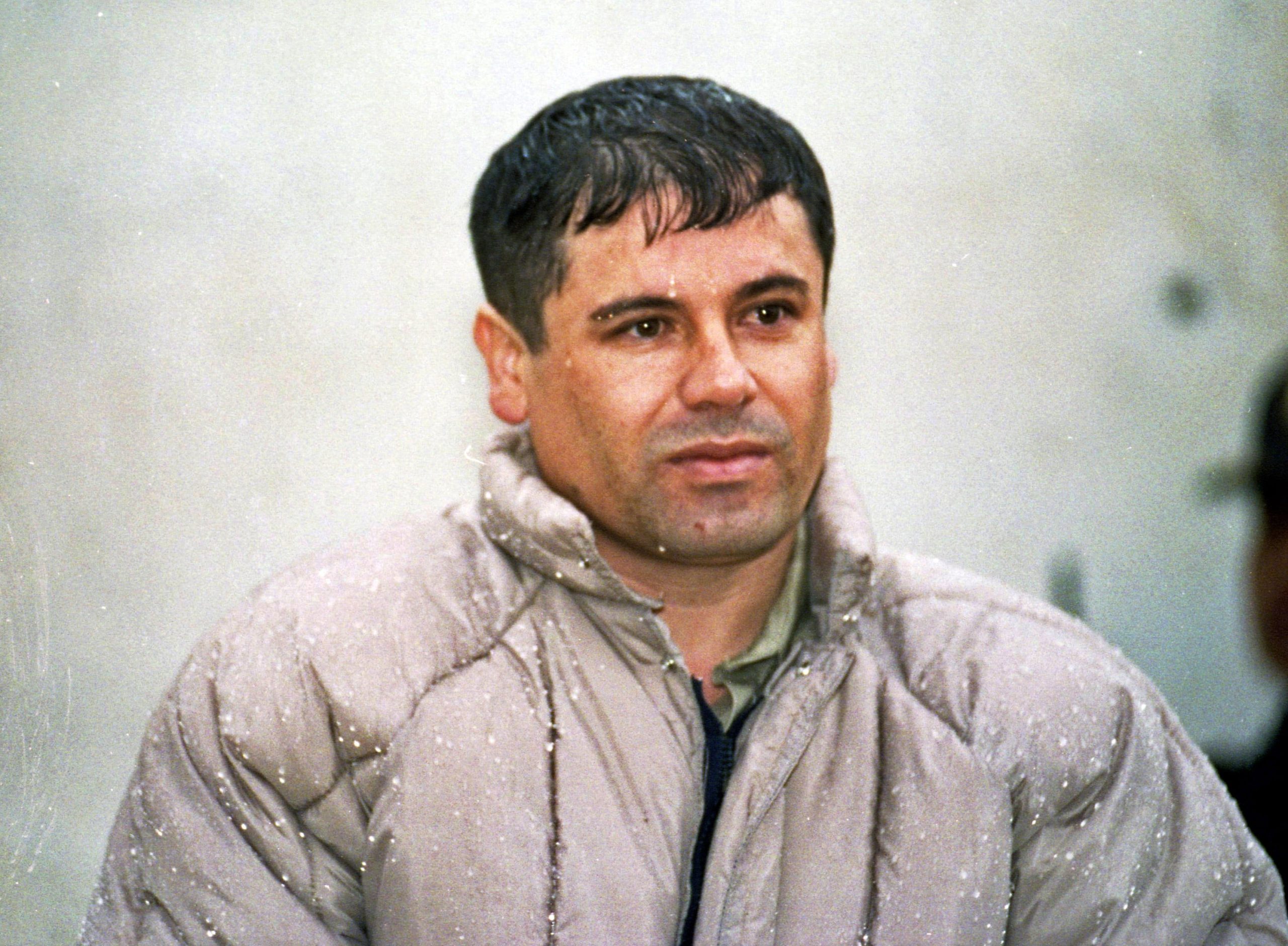
Joaquín “El Chapo” Guzmán has blamed the Mexican government for “all the violent crimes” and has insisted on his extradition in a new letter sent to Judge Brian Cogan. This new request from the once most wanted man in the world comes just a couple of days after he delivered another letter in which he requested “fair treatment under the law” and “to be transferred” to Mexico to face the pending charges against him. The judge responded to the previous message in a statement, denying his requests because he considered them unreasonable.

According to information released on Thursday by the Federal Court for the Eastern District of New York, on May 1, Guzmán sent another handwritten letter in English in which he insisted on his extradition. In this new text, the drug lord argues that all the violent crimes he is accused of “are based on a single witness.” “The Mexican government was responsible for all the violent crimes,” he wrote. “They blamed me for things I didn’t do, all because of who I am.”

“I was known in my country not for bad things. The good things I have done in Mexico are wanting family to eat together and have a great life,” another excerpt of the letter reads.

The violence during the years when El Chapo led the Sinaloa Cartel was marked by its extremity, strategic intent, and high impact, setting a before‑and‑after moment in the history of drug trafficking in Mexico. During his trial in the United States, prosecutors presented evidence and testimony linking him directly to the killings of rivals, traitors, and members of opposing cartels.

The cartel leader has been serving a life sentence since 2019 for multiple drug‑related crimes and has been held ever since at ADX Florence, the federal super‑maximum prison in Colorado. According to the judge’s response letter, he received up to five requests from Guzmán in the past two weeks. “Some of these documents make no sense, and none of them have any legal merit. They are all accordingly denied,” reads a section of the document signed by Judge Cogan.

In another letter, sent just two weeks ago, Guzmán requested the “protection” of his human rights as enshrined in the U.S. Constitution. The drug lord asked that the First and Eighth Amendments be applied to him. The First Amendment guarantees freedom of speech, while the Eighth Amendment prohibits the government from inflicting cruel, inhuman, or degrading punishment. In that letter, he argued: “The emerging of the constitution laws in the court of law have the rights to connect and be use for my equal protection on my rights.”

The last time those close to the former Sinaloa Cartel leader spoke out about his conditions was this past February. At the time, his lawyer Mariel Colón told the Mexican newspaper Reforma that her client had lost a significant amount of weight and had suffered episodes of tachycardia in recent months. “He is being held in extremely harsh conditions of confinement; in my opinion, they are inhumane and violate the U.S. Constitution. They are cruel,” she said.

El Chapo was arrested in Mexico in January 2016, after two spectacular prison escapes. The most recent, from the Altiplano maximum‑security facility in July 2015, was worthy of a Hollywood production: a tunnel equipped with ventilation, lighting, oxygen tanks, and rails for a motorcycle led directly to his cell, triggering a political crisis for then‑president Enrique Peña Nieto’s government. His final capture ended his criminal career. In 2017, he was extradited to the United States, where he has repeatedly denounced the extreme isolation he is subjected to. These same conditions are applied to terrorists.

Sign up for our weekly newsletter to get more English-language news coverage from EL PAÍS USA Edition

Continue Reading

Álvaro Arbeloa

Real Madrid In Crisis As Fresh Tchouameni–Valverde Clash Leaves Valverde In Hospital

Published

on

real-madrid-in-crisis-as-fresh-tchouameni–valverde-clash-leaves-valverde-in-hospital

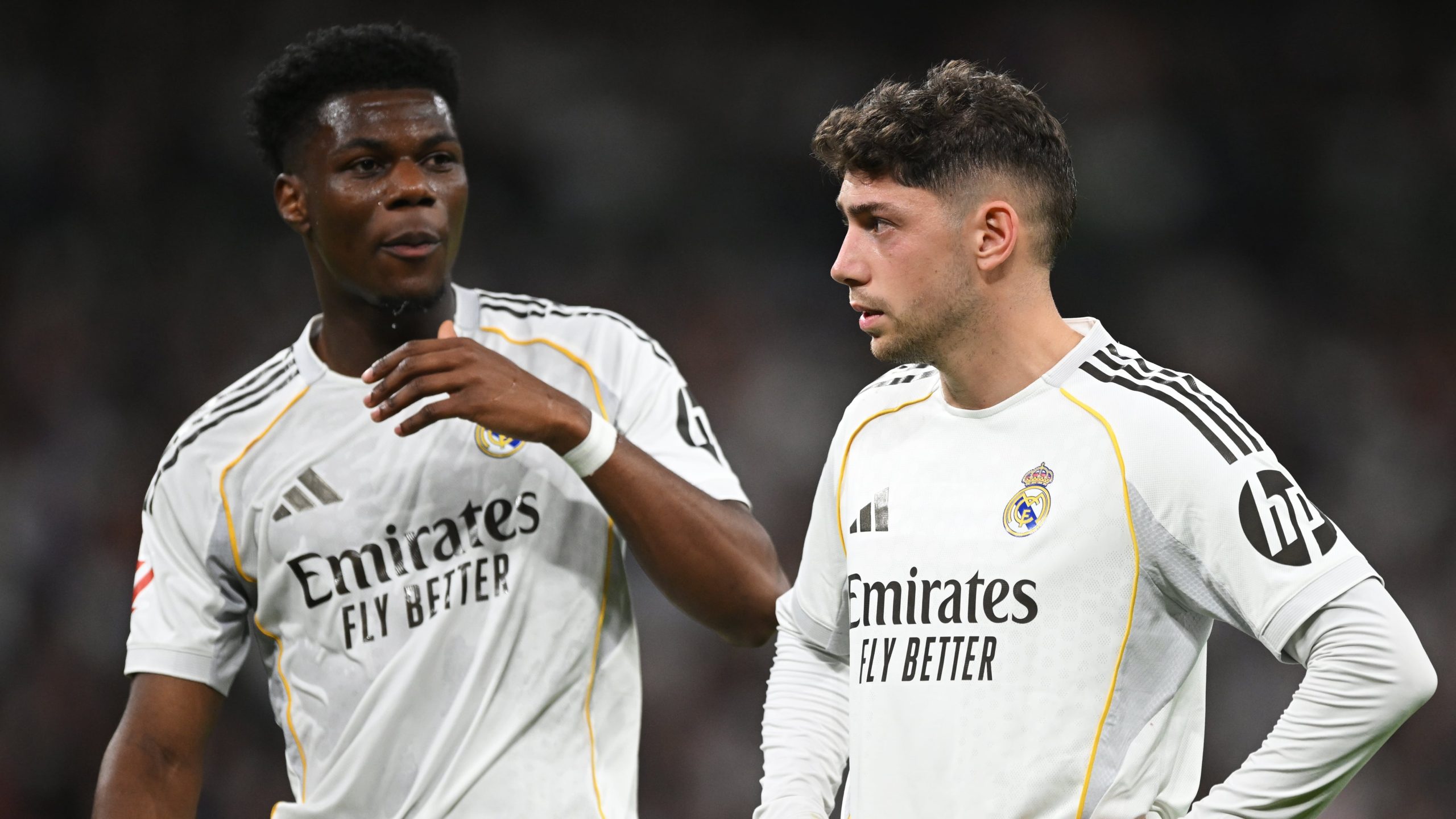
Real Madrid midfielders Federico Valverde and Aurélien Tchouameni trained together again on Thursday morning in Valdebebas, a day after their altercation in Wednesday’s session. The fallout from their fierce confrontation the day before still hung in the air, and the dispute flared again in the dressing room, ending with Valverde on his way to the hospital after slipping in the scuffle and hitting his head on the central table. In line with protocol, he was taken to a medical center for tests and discharged shortly afterward.

The soccer club has opened an internal inquiry to clarify what happened between the two players. And the chief executive, José Ángel Sánchez, went to the training area to gather the squad.

The confrontation began during a training match on Wednesday when, according to sources close to Valdebebas, Valverde began flying into tackles on Tchouameni with more force than the drill required. When the session ended, the Uruguayan still hadn’t cooled off and waited for the Frenchman to continue the dispute, which carried on into the dressing room.

On Thursday, Real Madrid held another training session to prepare for Sunday’s clásico — the name given to any match between Real Madrid and FC Barcelona — at the Camp Nou, and Valverde still hadn’t cooled off after his clash with Tchouameni. Arbeloa put them on opposing sides in the training match, and the Uruguayan again directed his aggression toward the Frenchman. Once more, the dispute carried into the dressing room. There, they grappled, a few blows were exchanged, and Valverde slipped and hit his head against the table in the changing area. Medical staff treated the cut on site in Valdebebas, with Arbeloa present, before a doctor accompanied the player to the hospital for further checks.

Alarmed by the seriousness of the situation, José Ángel Sánchez summoned the squad for a meeting. Some players, like Dani Carvajal, had to return to the training complex to attend the club’s attempt to restore order.

Real Madrid has been sending out unmistakable signals of a club in turmoil, and the pace of the unraveling has quickened this week. On Tuesday afternoon, an anonymous source close to the club’s highest‑paid player, Kylian Mbappé, sent a statement to AFP insisting his holiday with his partner had been misinterpreted and defending his “commitment” to the club.

That same night, Álvaro Carreras posted on Instagram that Antonio Rüdiger had hit him in the dressing room — something the German player later apologized for — while also defending his own “commitment” to the team.

On Wednesday, training at Valdebebas ended with the first heated confrontation between Tchouameni and Valverde, confirmed to this newspaper by people present at Valdebebas.

The looming prospect of a second consecutive trophyless season has brought long‑simmering tensions and divisions in the dressing room to the surface. Since the 2024 Champions League, relations have broken down in a squad where some players haven’t spoken to each other for months. According to several sources with access to the dressing room, the group is still shaped by old youth‑team loyalties and resentments: one faction fell out with football manager Xabi Alonso during their academy years, and another has recently clashed with head coach Álvaro Arbeloa. Those fractures have now resurfaced in the first team.

The disappointing performances on the pitch and the internal divisions have pushed the board to work on what several people familiar with the plans call “a small revolution” for next season. They believe the situation cannot be fixed simply by appointing a new coach — something they already take for granted — but will require both departures and arrivals. In fact, what they describe as a small revolution may not be small at all: the same sources insist that the club needs “something people will notice.”

The board has identified shortcomings in footballing quality, leadership, and maturity. Across different levels of the club, there has been growing concern — and frustration — over the indifference shown by some of the younger players, including a recent signing. They have been alarmed by the drop in professional commitment, by egos inflated without results to back them up, and by the dismissive attitude certain players have shown after defeats and poor performances. Long‑serving staff members say they miss the standards of discipline, competitiveness, and commitment embodied by the heavyweights who have left the dressing room in recent years: Nacho, Kroos, and Modric, to name only the most recent.

With the departure of the squad’s senior leaders, the dressing room has been left without figures capable of imposing order, and players have grown wary of two inexperienced coaching staffs. A group distrusted Xabi Alonso’s assistants from the start, and Alonso’s authority weakened further when the president of Real Madrid, Florentino Pérez, publicly backed Vinicius after the forward’s very visible defiance during the first clásico. Arbeloa’s staff, with even less top‑level experience, has faced similar pushback, leading to tensions with Dani Carvajal, Raúl Asensio, Álvaro Carreras, and Dani Ceballos.

The club is also troubled by the presence of several individuals inside the dressing room who appear intent on leaking internal conflicts — something senior figures describe as a betrayal of trust. They believe the leak about the Valverde–Tchouameni incident was meant to cause damage.

Suspicion also surrounds the criticism of Mbappé’s holiday in southern Italy with his partner during his injury recovery. He returned to Madrid minutes before the Espanyol match, drawing heavy criticism from fans and irritation from some teammates. Inside the club, the uproar is seen as an attempt to shift blame toward Pérez, who spent years pursuing the player. Even so, the club’s leadereship believes Mbappé has yet to fully grasp what it means to be the cornerstone of Real Madrid.

Against this bleak backdrop, with no trophies in sight to mask the crisis, Arbeloa’s team prepares for Sunday’s clásico — a dangerous fixture in which Mbappé remains doubtful. If Madrid fail to win at Sunday’s game, they will be forced to watch Barcelona celebrate a second straight league title, confirming Real’s second consecutive season without a trophy.

Sign up for our weekly newsletter to get more English-language news coverage from EL PAÍS USA Edition

Continue Reading

Trending

Copyright © 2017 Spanish Property & News