Connect with us

Health and Beauty

Spanish authorities recall Agrado sunscreen over banned ingredient

Published

on

The recall concerns batch 41997300 of Agrado crema solar SPF 50 in 100 ml tubes. Phoot credit: AEMPS

Spanish health authorities have recalled a batch of Agrado sunscreen after detecting a substance prohibited in cosmetics. The Agencia Española de Medicamentos y Productos Sanitarios (AEMPS) instructed retailers to remove the affected products and advised consumers not to use them.

The recall concerns batch 41997300 of Agrado crema solar SPF50 in 100ml tubes. Laboratory tests identified benzophenone, a chemical banned under European Union law. The AEMPS said the compound was present as an impurity rather than a deliberate additive, but at levels that could not be considered technically unavoidable. The agency emphasised that the recall is a preventive measure aimed at ensuring consumer safety, even though no adverse health incidents have been reported so far.

Detection and European context

The substance was detected through testing coordinated with other EU member states, as part of European market surveillance under the EU Cosmetic Regulation (EC) No1223/2009. This regulation prohibits certain chemicals in cosmetic products to protect users from potential health risks. Authorities confirmed that only the specified batch is affected and that other Agrado products remain on the market and have not been subject to recall.

Monitoring of cosmetic products is conducted continuously across the EU to detect prohibited substances, prevent unsafe products from reaching consumers, and ensure compliance with manufacturing standards. Benzophenone and similar compounds are specifically controlled due to concerns over potential hormonal and skin-related effects if they are absorbed in unsafe quantities.

Manufacturer and retailer response

The company responsible for marketing the product, Agrado Cosmetic Care 3000, S.L.U., has begun withdrawing remaining stock of the affected batch. Consumers who have purchased it are advised to return it to the point of sale for a refund or exchange. Retailers have also been instructed to remove the recalled products from their shelves to prevent further distribution.

Regional health authorities have been informed to ensure that local pharmacies, shops, and consumers receive guidance. The AEMPS has stressed that the recall is strictly limited to batch 41997300 and that no other batches are involved. Authorities have also asked retailers to display notices in stores to alert customers about the recalled product.

Consumer safety and guidance

Consumers in possession of the recalled sunscreen should stop using it immediately. Returning the product to the place of purchase is recommended. The AEMPS confirmed that the withdrawal is a precautionary action and that no adverse effects have been reported to date.

Authorities emphasised that the recall is part of ongoing European surveillance to ensure that cosmetic products comply with safety standards. Adherence to EU legislation prevents the presence of harmful or prohibited chemicals in everyday personal care items. Consumers are encouraged to check the lot numbers on their sunscreen and to follow official guidance when recalls are announced.

Public and regulatory context

This recall follows similar actions in Spain when cosmetic products failed to meet EU safety requirements. Authorities continue to monitor products to remove items containing prohibited substances promptly. The coordination with European partners ensures that unsafe products can be identified quickly and withdrawn from the market.

Officials reiterated that adherence to safety standards in cosmetics is mandatory, and companies found in breach of regulations may face legal and financial penalties. These measures aim to maintain public confidence in personal care products while ensuring user protection. Public information campaigns are often used to educate consumers about checking products and understanding official recall notices.


%

“Explosive” Hay Fever Warnings For Drivers In Spain

Published

on

“explosive”-hay-fever-warnings-for-drivers-in-spain

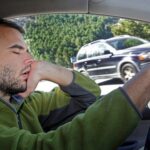
Feeling sleepy at the wheel? Antihistamines will do that. Credit: DGT

Hay fever season is upon us again and poses fresh dangers, especially for drivers in Andalucia as pollen counts are rising abnormally rapidly across the region.

University specialists are saying there are very high concentrations of olive and parietaria pollen in the local atmosphere. Plentiful winter rains nourished plants extensively, while recent early warmth has been accelerating the entire pollination cycle.

María del Mar Trigo from the University of Malaga aerobiology group is calling for extra caution among those sensitive to olive pollen, and now specialists predict the concentrations will keep rising in the coming weeks.

Factors behind “explosive” hay fever in Andalucia

Abundant precipitation over autumn and winter boosted plant growth and pollen output according to hospital allergy chiefs. Doctor Leticia Herrero at Quirónsalud Malaga links the higher pollen to how rains water plants and lift production levels. Doctor José Manuel Barceló at Vithas Malaga points to the sudden heat as a key factor speeding up the process.

Olive pollen proves one of the most problematic types in southern Spain, with peaks expected late April into May. Particles from this source travel distances of 100 kilometres so grains reach Malaga even from North Africa. Encina (holm oak) and cork oak pollens register extremely elevated amounts yet provoke reactions in few individuals only. Pollen from pines, ribwort chenopod pollen and dock pollen also fills the air during this full spring period. This combination creates conditions ripe for difficult symptoms in allergy sufferers.

Guardia Civil issues allergy warning for drivers

Traffic police who deal with elevated numbers of accidents at this time of year in Spain advise checking antihistamine labels for drowsiness effects before getting behind the wheel. Also, a single sneeze at motorway speeds covers multiple metres without clear vision for the driver.

Safe travel depends on full concentration and clear vision throughout the entirety of every journey. Motorists receive this message directly from Guardia Civil social media channels. Attention at the wheel remains essential to prevent accidents during high pollen days.

Pollen monitoring tools for those in Andalucia

Those living in or visiting the south of Spain should consult real-time data on the aerobiologia.uma.es website or via the Polen REA mobile application. These resources detail pollen types and readings for specific locations. Information covers olive, grass, plantain and other common varieties active now. Users can download the application easily for updates on their phone.

Tips to handle hay fever without risking safety

  • Protective sunglasses and masks help reduce exposure during breezy conditions.
  • Common medications include antihistamines, nasal sprays and eye drops for immediate relief.
  • Immunotherapy offers a longer course that retrains immune responses over several years.
  • Doctors stress early medical checks because symptoms appear across all age groups.

Colds clear up fast, but hay fever effects stretch for weeks or months, so correct identification matters. Early action will lead to better management of the condition overall. And don’t forget to take some Kleenex on your journeys.

Continue Reading

%

Is The Global Medicine Supply At Risk?

Published

on

is-the-global-medicine-supply-at-risk?

Fitness to practice: why world leaders lack the oversight of doctors

Many professions issue fitness to practice licences of one sort or another, and I’m sure you draw comfort from the fact that your dentist, doctor, even your bank manager are all subject to some kind of external verification from time to time, and will hold some form of fitness to practice license of some sort. Shame this doesn’t seem to apply to leaders of the free world.

The geopolitical fallout: why the Iran situation matters

Speaking personally, I’m furious with the action taken by the United States, or rather their deranged President, regarding the supposed immediate threat to the rest of world posed by Iran. There is no doubt that the past and current regime in Iran treat their own citizens with contempt, and any civilised nation will feel disgust and wish for a fairer, and more humane, society. But the actions taken by the United States, and its supporters, are having real-world impacts for everyone and unlikely to improve the situation for ordinary Iranians.

Trade disruptions: how the straits of Hormuz affect your healthcare

The closure of the straits of Hormoz to commercial shipping and the various restrictions on airspace and overflying are more than an inconvenience; they could seriously impact the lives of vulnerable people all over the world, thanks to the fact that pharmaceuticals are very much a part of globalisation that has evolved over the past thirty years or so.

It might come as a surprise to know that hardly any country is self-sufficient these days when it comes to medicines. Pretty much everywhere imports a substantial proportion of the medicines they require. The disruption to international trade is pushing up costs, and at the same time countries that are being directly impacted are in need of extra stocks, add to that those countries that manufacture certain medicines have decided to suspend exports keeping products for their own, and this may come as a further surprise but many medicines start life with a petroleum product in there somewhere.

Shortage alerts: what patients in the uk and spain need to know

The British Medical Journal has reported that there is already a shortage of certain medicines in the UK. Spain, as things stand at the moment has not formally issued any alerts, but of course that may change. If you are reliant on any long-term medication to help control things like high blood pressure, cardiac conditions, diabetes, or types of anxiety then it maybe an idea to have a chat with your pharmacist the next time you fill a prescription just to find out how things stand. This isn’t something to worry about right now, and if things do deteriorate the Spanish Government have central stocks and also plans in case shortages become severe. As a member of the EU there are also EU-wide contingency plans that are now being activated.

The obvious solution would be for every nation state to be self sufficient and manufacture their own medicines, but this just isn’t practical – nor should it be necessary.

A question of mental fitness: the case for revoking a president’s ‘license’

I referred to the President of the United States as deranged, I think it is important to stick to international conventions and protocol; and so, I should say whilst I have the utmost respect for the Office of the President of the United States, I believe the current holder of that office to be deranged. This is a view that is widely shared within medical circles, although the term most often used is ‘Malignant Narcissism and Paranoia’ which actually includes a broad mix of various personality disorders. This isn’t a case of someone who gets occasionally confused or forgetful, it is someone who compares themselves to messiah-like figures, in unable to experience empathy, and also appears to enjoy sadistic behaviour. In my view, his fitness to practice license should be revoked immediately as he currently poses a serious threat to public safety.

Mr Trump is not only threatening world-wide disruption to pharmaceutical manufacturing and distribution, but he has destroyed medical facilities and killed, and injured, medical personnel. This is a clear violation of the First Geneva Convention. Deliberate violations of any of the Geneva Conventions, there are four of them with two additional protocols, is a war crime.

Normal, balanced, reasonably educated people would not threaten to annihilate an entire population and return it to the Stone Age, nor would they share such a desire on some global media platform, unless they suffered from some major personality disorder. Geneva Convention number four, along with Additional Protocol 1, forbids any deliberate attacks against the civilian population and any civilian infrastructure considered to be essential. This would constitute a war crime.


And now for something completely different: managing hay fever safely

I don’t often stray into politics (or religion for that matter) but things have recently seemed to be getting out of control, so I apologise. Back to more familiar territory and I think steroid nasal decongestants would be as good a place as any.

With the hay fever and general pollen season about to unleash misery upon many people I wanted to share something about popular nasal decongestants that are steroid based, as most are. These sprays are very effective at reducing congestion and people who suffer from pollen allergies find them particularly useful. As with most medications there are some side effects but these tend to be fairly minor and disappear once treatment stops. Nasal steroids are generally considered very safe because the active ingredient (the steroid) is actually delivered to the place where it needs to act which is the lining of the nose. Steroid decongestants which are taken orally, on the other hand, probably don’t actually help that much because once the medication has been swallowed and passed trough the liver before it gets into the bloodstream and then reaches the nose there often isn’t enough left to have any meaningful effect. If you increase the oral dose you run the real risk of causing blood pressure to spike. For this reason, the spays are the best way of safely delivering steroids to the nose.

Understanding the rebound effect: what is rhinitis medicamentosa?

There is one important caveat. Because steroid spays are so good at doing their job, if you use them for a prolonged period of time and then stop you run the risk of something known as ‘rebound effect’. Essentially what happens is when the spay hits your nose the small delicate blood vessels all shrink and contract, this is what gives you the relief. If you continue with the spray for too long your nose gets used to these constricted blood vessels. Stop the spay and the blood vessels quickly relax and fill again with more blood which in itself causes congestion. This is known as Rhinitis Medicamentosa, which as the name implies is a direct result of using the medication. Current advice if you are one of the unlucky ones to suffer from pollen allergies, is to use the sprays sparingly and if you do have to use them for a prolonged period seek advice from your GP about the safest way of stopping use, which usually means a gradual withdrawal combined with saline sprays which allow time for the nasal tissue to recover.

Be prepared: essential items for a home first aid kit

Last week, I was enjoying a pleasant lunch with a group of friends – something I should make time for more often – when one person mentioned they were “stocking up on a few essentials” in case global events took a turn for the worse and local supermarkets began to run short of everyday necessities, and not just toilet paper. The conversation then shifted to what should be kept in a well-prepared home first aid kit.

Regardless of global circumstances, it is advisable for every household to maintain a comprehensive first aid kit. I would recommend including the following items:

  • A sufficient supply of adhesive plasters and a range of sterile bandages
  • Disposable gloves (they do not need to be sterile)
  • Triangular bandages, which can be used as slings or for securing larger dressings
  • A variety of sterile, non-adherent dressing pads
  • A roll of cling film, useful for covering burns and helping to retain moisture
  • Antiseptic lotion
  • Antiseptic cream
  • Adhesive wound closure strips
  • Paracetamol tablets
  • Loperamide tablets (for diarrhoea)
  • Tweezers (both blunt and pointed) for removing debris
  • Scissors, including a pair capable of cutting through clothing quickly
  • A reliable torch

In addition, it is prudent to keep a reserve supply of bottled drinking water, as well as any medications that you or your family members regularly require.

For further guidance on general emergency preparedness, you may wish to consult reputable organisations such as the Red Cross or your local Civil Protection office.

Stay informed on these changes by following the latest health and beauty news.

Continue Reading

Columnists

Why you’re always ‘on’: And why your body never truly rests

Published

on

By

Scrolling. Thinking. Half-relaxing, but never fully switching off.

You sit down to relax…

But your mind is still running.

Thinking about what happened today.
What needs to be done tomorrow.
Messages. Plans. Small things you don’t want to forget.

Even when nothing is happening… something is happening inside your head.

And that’s the part most people don’t realise.

You’re not just tired because you’re busy.
You’re tired because you’re always on.

I see this everywhere.

People finish their workday, sit on the sofa, turn on the TV… and still feel restless.
Scrolling. Thinking. Half-relaxing, but never fully switching off.

And over time, your body starts to feel it.

Sleep becomes lighter.
Energy drops during the day.
You feel tired, but wired at the same time.

For many, this becomes normal.

“This is just life.”

But it’s not how the body is designed to work.

Your body needs moments where it can truly go into rest mode.
Not distracted rest. Not half-attention. Real recovery.

And that’s where the Mediterranean lifestyle offers something powerful, without even trying.

When I started living here, I noticed something simple but important.

People don’t only work and rest.

They transition.

After work, there’s a walk.
A moment outside.
A conversation.
A coffee in the sun.

Not rushed. Not forced. Just a natural shift from one part of the day to another.

And that shift is what allows the body to slow down.

Evenings are different too.

Meals are not eaten in front of screens.
They’re shared. Talked through. Experienced.

The nervous system settles.
The body relaxes.
And sleep becomes deeper without effort.

This isn’t about doing less.

It’s about creating space between things.

Because when your day has no space… your mind stays active.
And when your mind stays active… your body never fully rests.

What you can start doing today

You don’t need to change everything.

Start with this:

  1. Create a transition after your day ends
    Before going home or sitting down, take a short walk. Let your body shift out of “work mode.”
  2. Reduce stimulation in the evening
    Less screen, more real moments. Conversation, a quiet walk or simply sitting outside.
  3. Eat without distraction
    A simple meal, eaten calmly, already signals your body to slow down.
  4. Give your mind space
    You don’t need to fill every moment. A few minutes of doing nothing is powerful.

This is what the Mediterranean lifestyle understands so well.

Rest is not something you switch on at night.

It’s something you build throughout the day.

And when you start doing that…

You don’t just feel less tired.

You feel calmer. Clearer. More in control.

Mediterranean tip of the week

Create one moment in your day without input, no phone, no screen, no distraction. Just you, your surroundings and a slower pace.

If you’d like guidance

If you recognise this feeling of always being “on,” you’re not alone.

With small changes in your daily rhythm, you can help your body truly switch off again.

If you’d like support in applying this in your own life, you can find more guidance and ideas on:

www.casamiguel.life

Because real rest…

Is not about stopping.

It’s about slowing down in the right way.

Continue Reading

Trending

Copyright © 2017 Spanish Property & News