
European Court of Justice
Spanish restaurant chain drops La Mafia name after Italian government wins legal battle

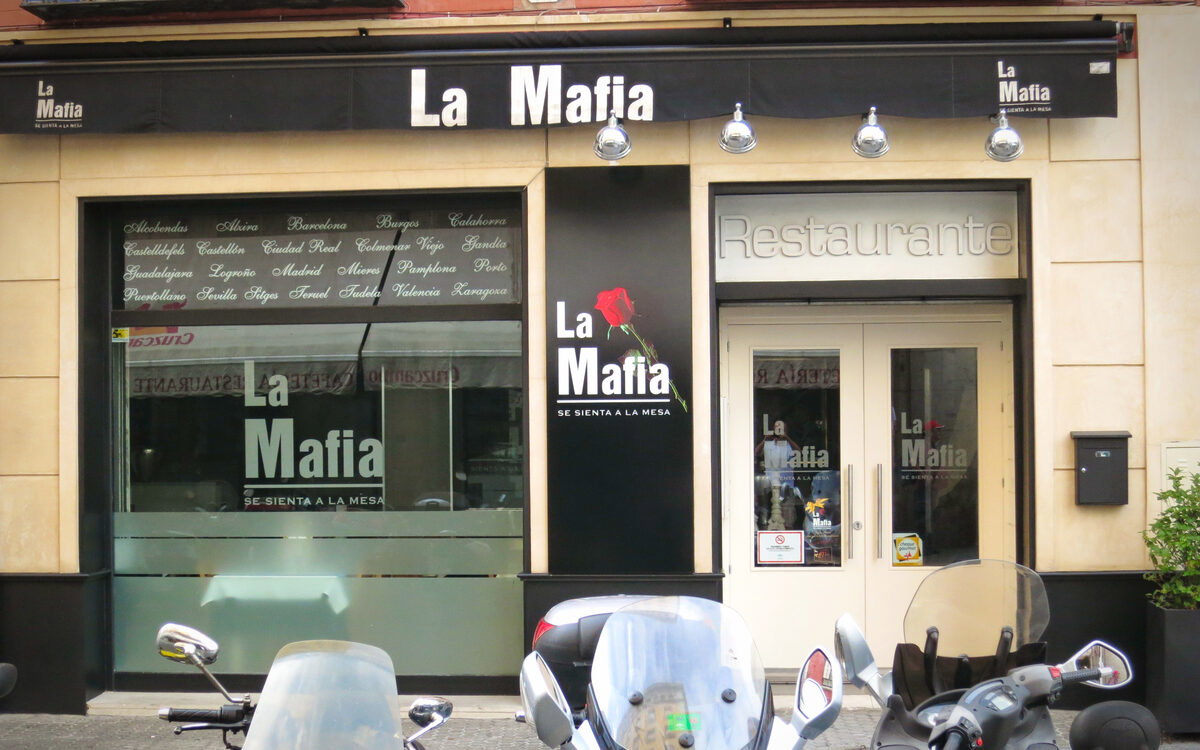
Italian authorities, and many other ordinary Italians, consider the restaurant chain brand “La Mafia, se sienta a la mesa”, deeply insensitive because it directly references a real criminal organisation responsible for violence, drug trafficking, money laundering and corruption, as well as a painful reminder of the years of battle Italian communities went through to rid their society of the scourge of criminal social dominance. For that reason, the company has been persuaded to change the name to La Famiglia.
Many have argued that linking such a name to dining and leisure trivialises serious crimes and romanticises intimidation tactics that have caused immense suffering to victims and their families across Italy and beyond. Spain has also served as a base for related money laundering activities in tourism centres, adding weight to concerns that the branding undermines ethical standards shared across EU member states. Many of those who have not been so offended my the restaurant chain’s naming, have just found it extremely tacky.
Owners’ reason for choosing the original name
According to the founders of the Zaragoza-based chain, they drew inspiration from a recipe book titled La Mafia se sienta a la mesa. They positioned the name within a broader cultural tradition seen in films, books and media where the term appears in artistic contexts. Company representatives tried to defend its use through claims of free expression, insisting it reflected Italian culinary themes without endorsing crime. Despite this, courts ruled that commercial exploitation differs markedly from artistic references and crosses into unacceptable, and offensive territory.
New name adopted by the chain
Executives have rebranded the 114-restaurant group as La Famiglia se sienta a la mesa. This subtle change replaces “Mafia” with the Italian word for “family” while retaining the original playful structure. The company describe the change as preserving the brand’s heritage and community feel without the controversial element. Expansion plans to reach 200 outlets by 2029 remain unchanged despite the legal setback.
Public reaction
On X users reactions have been strong: User Ancceloti claimed, “Calling a restaurant “La Mafia” seems offensive to me. And the Italian tourists freak out. It’s as if a Spanish restaurant in Rome called it ETA.”
Cami C saw the name as tacky saying, “It is a restaurant that represents their country… For many Italians it is offensive and above all, sad…”
Other controversial restaurant names forced to change
Similar cases have surfaced elsewhere when names clashed with public sensitivities. Chains evoking stereotypes or historical traumas have faced pressure to rebrand after complaints from affected communities or governments. Examples include eateries using terms tied to organised crime in ways deemed to mock real victims or perpetuate harmful clichés, prompting trademark cancellations or voluntary renamings to avoid boycotts and legal action. Authorities increasingly scrutinise such branding for its potential to offend or trivialise ongoing issues.
The Spanish Patent and Trademark Office issued its ruling on February 26, declaring the original name contrary to public order and good morals. This decision followed years of Italian diplomatic efforts and a prior 2018 EU court judgment invalidating the EU-wide trademark. The chain continues to report strong growth, with revenues rising 12 per cent to €132 million in the latest year.





Palma’s coolest creative weekend lands at Aethos: Tattoos, tardeo, jewellery making and more
Marbella moments worth showing up for
Brit, 24, dies in horrific stairwell plunge in Tenerife after night out at festival

Luxury Villas For Sale, Estepona – ProjectL1

Stylish 3-Bedroom Apartment With Panoramic Sea Views – Benalmádena
Brussels warns Spain that migrants regularised under controversial scheme will be deported back to Spain if they try to move to other EU countries


-
 New Developments4 weeks ago
Luxury Villas For Sale, Estepona – ProjectL1
-
 New Developments3 weeks ago
Stylish 3-Bedroom Apartment With Panoramic Sea Views – Benalmádena
-
eu response to spain migration policy3 weeks ago
Brussels warns Spain that migrants regularised under controversial scheme will be deported back to Spain if they try to move to other EU countries
-

 %3 weeks ago
Poland Disconnects Utilities At Russian Consulate That Moscow Refuses To Hand Over
-
Costa Calida3 weeks ago
Murcia unveils monument marking 175th anniversary of Burial of the Sardine
-
Costa del Sol3 weeks ago
Easter on the Costa del Sol: a time of renewal
-
ChatGPT4 weeks ago
He used ChatGPT to sell his home – and walked away with €100,000 more than expected
-

 Uncategorized4 weeks ago
Kelly Piquet