
ElPais
Squeezing The Clouds: Aboard The Small Plane Making It Rain In Drought-Stricken Honduras

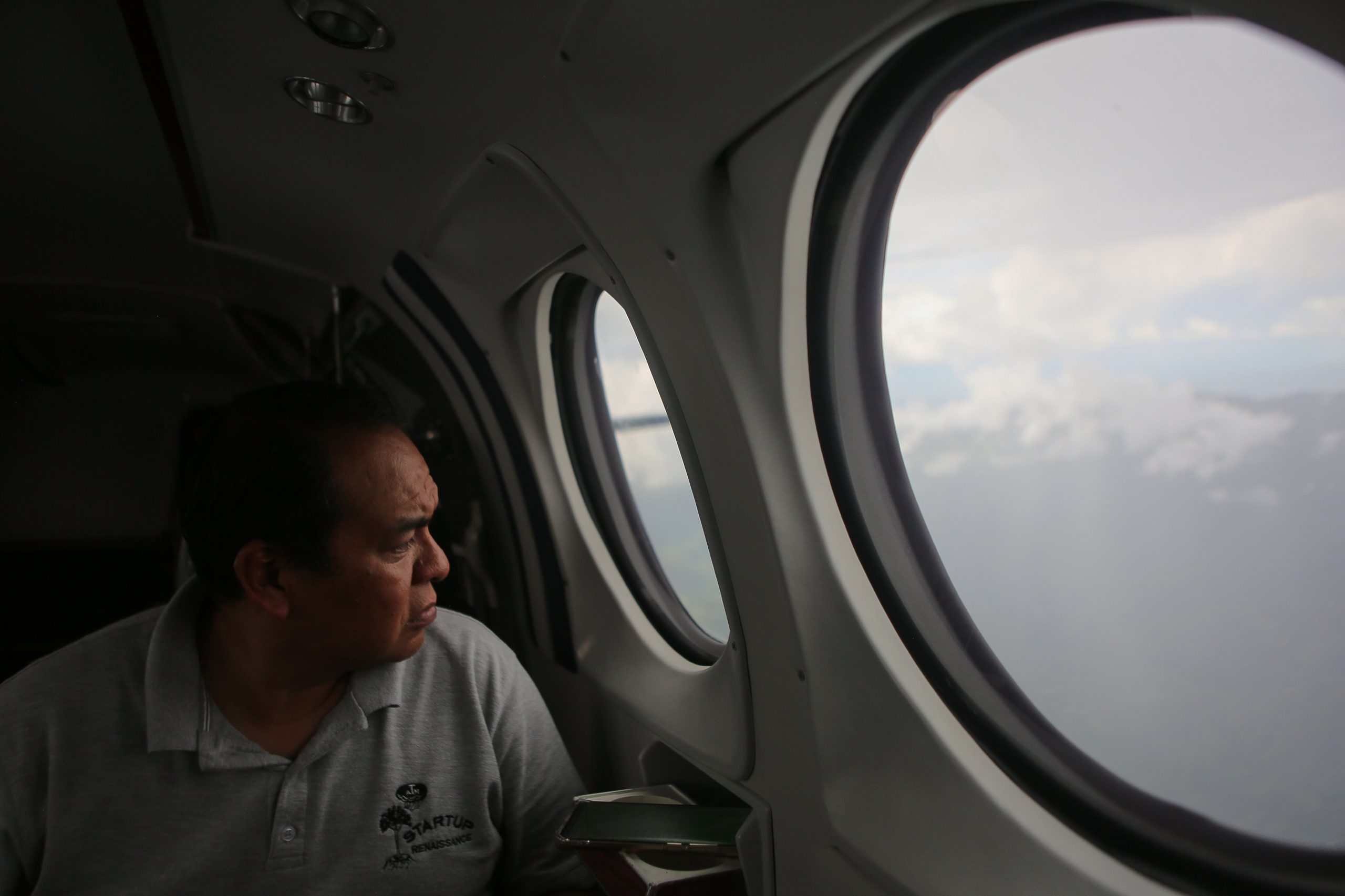
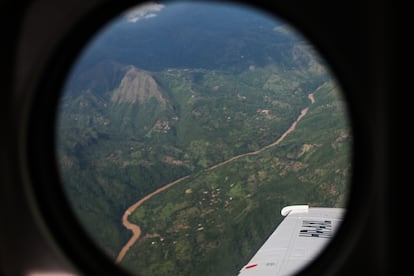
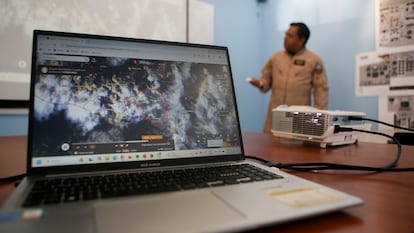
The rivers near the capital look brown from an altitude of 3,600 meters. It rained lightly in Honduras a week ago, and some of the murky water is returning to the Humaya river, one of many parched streams that 20 years ago did not show such arid scenes. Aboard the King Air C90, Víctor Torres, a Mexican pilot and member of Startup Renaissance, enlarges a patch of dark clouds near Comayagua on the screen and receives a clear instruction from the meteorologist on the ground: a dart-in-a-bullseye emoji. “Hold on,” he warns.
Juan Carlos Diaz quickly opens two valves on a tank containing 1,000 liters of silver iodide and another one with air, and writes the exact coordinates in his notebook. The liquid begins to spray from the tail of the aircraft. The pilots start the camera; they know the turbulence is starting. The small plane spends two minutes crossing back and forth, as if trying to envelop the cloud. “Save 10%. It has to reach the south,” Torres shouts from the cockpit. Thirteen minutes later, thousands of droplets streak the windows. The crew smile in triumph. “My daughter thinks I’m like a superhero and that I make it rain,” he says with a laugh. “I’ve explained a thousand times that what we do is science, but I let her believe whatever she wants.”
Cloud seeding, or cloud stimulation, has been practiced for about 70 years. The technique mimics the natural process by which rain forms but seeks to amplify its intensity. The silver iodide particles released by these retired military personnel act as condensation nuclei that, depending on humidity, temperature, motion and water vapor, reach the point of precipitation immediately or a few minutes later. The problem, both explain, is that without developing clouds — such as cumulonimbus or congestus cumulus — there would be nothing to do. “They are our raw material. On a summer day with bright sun, no science will work,” Torres concludes.
The tool, as they describe informally, “squeezes” the water the cloud holds “and a little more.” While both predict a 40% to 60% increase in rainfall as a result of their interventions, international bodies are more cautious. Spain’s State Meteorological Agency (Aemet) estimates the impact of such flights at 5–10% more rain, while the U.S. Government Accountability Office (GAO) estimates between 0% and 20%. The World Meteorological Organization (WMO), however, does not provide a percentage and stresses that this remains an active area of scientific research that is difficult to replicate in other territories.
“Each project must be designed, executed and evaluated rigorously, with independent reviews and careful analysis of the expected benefits,” says Rodney Martínez, the WMO representative for North America, Central America and the Caribbean. So far, no environmental or human health damage from the use of silver iodide is known, but possible unintended effects on water impact or other ecological harms, such as uncontrolled flooding, cannot yet be ruled out, he says.
There are two points on which the entire scientific community agrees: that it can produce nearly immediate precipitation under very specific environmental conditions, and that it will never be enough to reverse a drought like the one Honduras faces today. Much less in the times of the El Niño phenomenon, which has disrupted climate patterns in the country. Although some neighborhoods have been flooded by heavy rains— according to Tegucigalpa’s mayor, 80% of what fell last year fell in the last month — others have gone months pleading with the sky for any shower. By excess or by lack of water, Honduras has 5.6 million people, practically half its population, under some type of alert, including 103 municipalities in the red category.
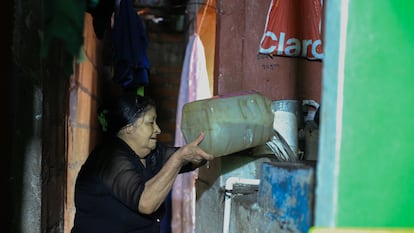
In the Dry Corridor, a strip with a long history of water scarcity that also crosses Guatemala, El Salvador and Nicaragua, thousands of farming families have stopped putting three meals a day on their table because they have not harvested anything for 11 months. Since August, the City of Tegucigalpa has been forced to ration water. Each citizen receives water — if they’re lucky — every nine days and only for about three or four hours. When EL PAÍS visited Honduras, it was every 14 days. Although it is not the first time Hondurans collect rainwater, the scenes are becoming more common: buckets, bottles and pots stacked in yards and pipes connecting roofs to sinks in case the sky gives any respite.
The worst outburst of El Niño
“It’s a bandage for a fracture, we know,” Torres says from his copilot’s seat. “It’s our small contribution to everything happening in the country. I’d rather do that than do nothing.” According to the WMO, the El Niño phenomenon will continue to intensify over the coming months and could peak in December, becoming one of the most intense episodes on record. There is more than a 75% probability that, between October and December, it will reach a magnitude greater than any episode observed since 1950.
Days after shutting off the taps in the capital, the Secretariat of Agriculture and Livestock (SAG) contracted the services of Mexican company Startup Renaissance, which has already operated in Chile and Mexico under similar situations, and rented a small plane for the job. In total, it has cost $700,000, a figure they are considering increasing. Moisés Abraham Molina Guillén, Honduras’ secretary of state for SAG, insists this is one of multiple measures the government is carrying out, such as drilling wells “at full speed” or distributing seeds exclusively to farmers in territories “where the rainfall forecast is adequate.” The official called the seeding results “very laudable” and told EL PAÍS that “where 20 millimeters were forecast, we recorded 80 and 100.”

This initiative, which aims to benefit the 2.3 million hectares affected in the country, has been as applauded as it has been criticized. For sugar producers — who contributed one-sixth of the investment — the stimulation is a relief for their battered crops. Citizens more skeptical of the government raise an eyebrow when recent rains are linked to the state effort. Still, everyone crosses their fingers that it works. Today, a small plane that once transported celebrities is the hope of a whole country ranked among those most exposed to El Niño, according to CEPAL.
‘I don’t want luxuries. Just water and food’
Seconds after the first drops fall, she jumps to her feet. She turns over the pots she had on the floor, grabs empty paint buckets, soda bottles — “everything works” — and rushes out to the terrace of her rundown house. Then she stops short. She just remembered that her grandson installed a pipe system that collects rainwater more easily. Suyapa Alvarenga, 71, has spent her life sharpening her ear to detect a downpour and to begin a handmade, constant ritual.
Although now somewhat more mechanized, she stands by the blue barrel and waits patiently for it to fill. She looks at the container like a slot machine dispensing coins. “I don’t want luxuries. Just water and food. With that you’re richer than rich,” she declares. Doña Suyapa does not know what it is to turn on a tap and have water. She says rationing is not new in a neighborhood like the one where she was raised: Nueva Suyapa. In this working-class community of 5,000 people, residents have for decades bought water or received state water once or twice a week. Climate change and El Niño have stretched those periods to the point of being unlivable. The last time this domestic worker washed dishes with cistern water was in August.
Alvarenga’s reality was the daily life of the country’s poorest classes, those who settled informally on hillsides or in squatter neighborhoods. Today, even the better-off classes would not have water in their taps if they could not pay for private water trucks or have a full cistern system at home. Showering with a basin and reusing dirty water for the toilet is the new normal for Honduras’ middle class.
This decision responds to the very low water reserves in the Los Laureles and La Concepción reservoirs, which are part of Tegucigalpa and Comayagüela’s supply system. Recently, improvements were recorded that reduced the days without water from 14 to nine. The day water arrives is a celebration. Any concave object becomes useful.
José Velázquez, 38, refreshes Facebook constantly. He does it to update the page where the Water Board posts water turns sector by sector. His turn was supposed to come on Friday; he didn’t go to work and spent the day turning his tap back and forth with the same desperation with which he checks the social network. Not until Tuesday could he indulge in that small luxury, which he admits he’s embarrassed to share. “I took a long shower,” he admits. “I needed to feel some normality; it had been a long time since I allowed myself that privilege.” Washing the car is considered wasteful and condemned by neighbors. “It’s absurd to live like this. We’re experts at economizing, but how much worse is this going to get?” he asks.
Gather buckets and clean them. Stay home when the water finally arrives, don’t forget to buy bleach for rainwater. Make sure the children don’t pull from the cistern, don’t go on holiday in case a downpour falls… Velázquez admits he’s exhausted. Solving things that should be basic has become his second job. His first, driving for Uber, does not even earn him the minimum wage. Even so, he manages to stretch it far enough to feed his three children and his pregnant wife
For months he hadn’t asked himself the question again: What if I go to the United States? Precarity is forcing him to imagine that idea again. “Life is getting increasingly complicated,” he says from his living room. The man lets out one sigh after another. “Before, people left because of gangs, because they couldn’t find work. But we’ll end up leaving because of this crazy climate,” he predicts.
Sign up for our weekly newsletter to get more English-language news coverage from EL PAÍS USA Edition


For the past two decades, Zoe Kazan, 43, has built a low-key career, moving between independent films and more ambitious projects. The former include Ruby Sparks (2012), a comedy she also wrote and produced. The latter include hits such as She Said (2022), in which she starred alongside Carey Mulligan as one of the New York Times reporters who exposed Harvey Weinstein’s abuses.
Now, all of that has been overshadowed by her work behind the camera as the creator, writer and executive producer of the Netflix miniseries everyone is talking about: East of Eden. Premiering on the platform on October 1, this new screen adaptation of John Steinbeck’s celebrated 1952 novel has had to withstand not only the scrutiny of critics and audiences, but also the cruelest test of all: comparison.
The daughter of screenwriters, Kazan is also the granddaughter of legendary director Elia Kazan, who made history in 1955 with the first film adaptation of the novel.
Seventy years after her paternal grandfather’s classic, Kazan has ventured her own version for a contemporary audience. Instead of a major theatrical release, she has delivered a seven-episode streaming series. And instead of casting an unknown James Dean (whose career was launched by the film) to tell only part of the story, she places Florence Pugh’s commanding presence at the center of a narrative her grandfather largely left unexplored. His adaptation focused solely on the final third of the novel, which the filmmaker once described as “the only part that is filmable.”
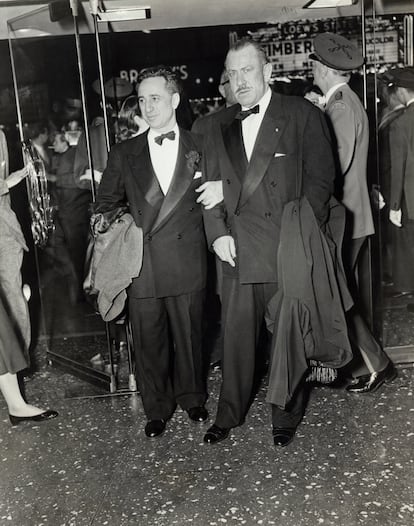
So far, the strong reviews for Kazan’s cast, with Christopher Abbott (Girls) and Mike Faist (Challengers) rounding out the central trio, have helped quiet critics who see the miniseries as a commercially driven project rather than a deeply considered reimagining of John Steinbeck’s novel.
As writer and showrunner, Kazan has made choices of her own, as different from her grandfather’s as the decades that separate their adaptations. While he chose to focus on the turmoil of a tormented Cal Trask (James Dean), whose convictions are as unstable as his sense of self, Kazan, who has long expressed an interest in the representation of women on screen, has shifted the emphasis toward the novel’s female perspective, giving the antiheroine Cathy Ames (Florence Pugh) a far more prominent role.
“I think it’s all dialectics,” she recently told GQ while discussing the release of East of Eden. “I think that there’s a strange balancing act that the book is doing between philosophy and plot, and between good and evil, and I think that in the movie there was just an overbalancing into the masculine aspects and the boy’s story, and Cathy, or Kate, was really relegated to being a side character.”
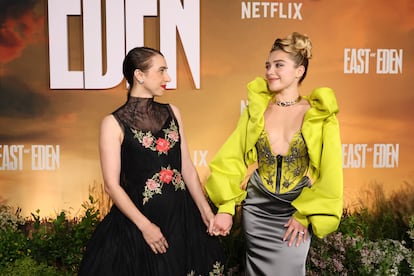
In an interview with Vulture, Kazan described how she discovered Steinbeck’s work at an early age, an interest she naturally shared with the rest of her family. By the age of 15, five years before Elia Kazan’s death in September 2003, she had already read East of Eden. Soon afterward, she told the publication, she traveled across California with her parents, screenwriters Nicholas Kazan and Robin Swicord, whose credits include Little Women, Matilda and Practical Magic. During the trip, she visited Steinbeck’s hometown of Salinas and even stopped by his childhood home, which had since been turned into a restaurant.
By then, Steinbeck’s work had already become part of her DNA. After reading several film projects that attempted to adapt East of Eden, Kazan finally asked the question she seemed destined to ask: “If the rights to East of Eden ever come up, can you let me know? I’d really like to pitch on it,” she wrote to her agents.
In 2019, she finally got her answer. A production company had secured the rights to the novel and was looking for someone to adapt it into a series that would place greater emphasis on Cathy Ames: “You interested?”
Aside from a handful of roles that brought her within sight of Hollywood, including a part in Revolutionary Road (2008), Kazan chose the Broadway stage in her early years as an actress, appearing in a number of productions in the early 2000s.
Even then, her surname did not go unnoticed, and questions about her grandfather soon followed. Beyond proving that she was more than just another nepo baby, the actress also had to contend with a thorny family legacy. In 1952, her grandfather testified before the House Un-American Activities Committee. At the height of the Red Scare, he named eight colleagues from the theater who, like him, had been members of the Communist Party in the 1930s.
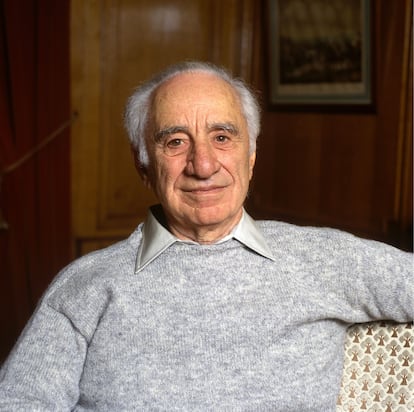
In January 2020, during a panel discussion for the HBO miniseries The Plot Against America, in which she starred, Kazan was asked about her grandfather’s actions during that period of U.S. history. Her response was as direct as it was candid.
She replied: “I have thought a lot about how the history of our country affected my family’s history, what it meant for my grandfather as an immigrant to this country to have his Americanness tested, and the choice that he made from that, and I [have] thought a lot about my own choices that I’ve made, the way that I choose to live my own life. I think ‘thou mayest’ choose a different life.”
In doing so, she alluded to some of the very ideas Steinbeck explored in East of Eden, where the biblical story of Cain and Abel serves as a recurring point of reference throughout the novel.
In the discussion, she suggested that Steinbeck chose to include this in his novel “about the foundation of the West” because “it’s also about America choosing to recognize who they have been — Cain did kill his brother — but also recognizing that they may choose a different future for themselves.”
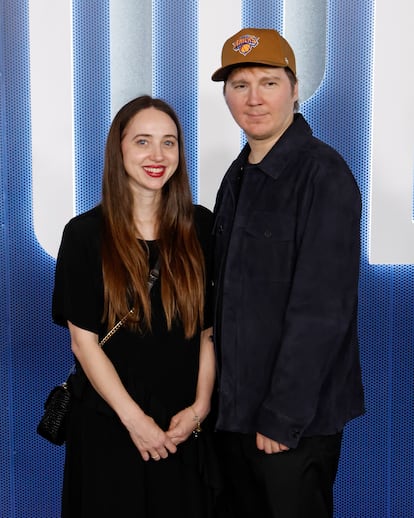
As for the family she chose, Zoe Kazan has been in a relationship with fellow actor Paul Dano since 2007. The two starred together in Ruby Sparks (2012), in which he played a writer and she the perfect woman he creates on the page, only for her to mysteriously come to life.
Kazan and Dano met while working on the Off-Broadway play Things We Want, directed by Ethan Hawke. Since then, they have built one of Hollywood’s most enduring and private relationships. Though they have never married, they have two young children, a daughter born in 2018 and a son born in 2022. In 2025, they took them to New Zealand for seven months during the filming of East of Eden.
After the birth of her first child and around the release of The Ballad of Buster Scruggs, the Coen Brothers’ film in which she starred, Kazan spoke to Vulture about her fiercely guarded private life.
“I think we value privacy partially because you’re trying to protect your creativity, and it has to come from somewhere personal. Having a private life is an incredible privilege, and must be protected in order to allow your unconscious to belong to you,” reflected the granddaughter of one of cinema’s greatest directors, aware that there are no easy answers.
Sign up for our weekly newsletter to get more English-language news coverage from EL PAÍS USA Edition

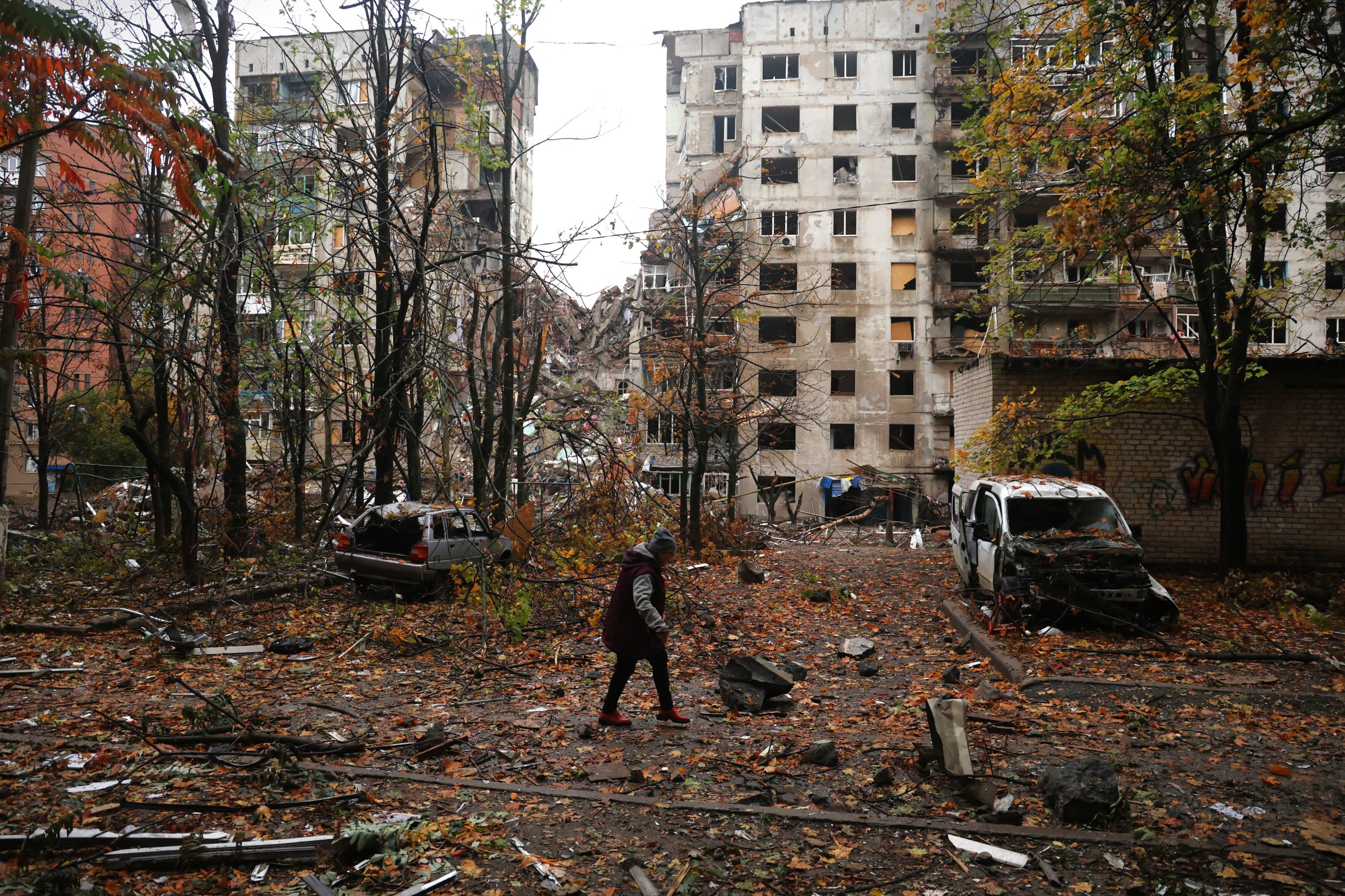
Dawn breaks under rainfall in Kramatorsk, a Ukrainian stronghold under Russian threat on the eastern front. What makes it harder for drones to fly becomes an opportunity for Russian infantry to try to gain ground. These are, in any case, small skirmishes. EL PAÍS reports this from a military command post in Kramatorsk based on images captured by drones on October 15. The front line shows hardly any change and the war is stuck in a complex tangle as the fifth anniversary of the full-scale invasion approaches. Kyiv has also recently suffered serious setbacks: at home, with attacks across around 20 of its regions, and internationally, the blow represented by the United States’ overt alignment with Russia.
Beyond the Kremlin’s imperial posturing, decisions in boardrooms and on international markets are also pushing Ukraine further away from a just and lasting peace — the kind frequently discussed in diplomatic forums and meetings. President Volodymyr Zelenskiy has accused his allies of not doing enough, especially after several ballistic missile attacks on his country last week about which Kyiv was not warned, as often happens. Behind this is published reporting that the United States could stop sharing intelligence with Kyiv. Added to that was a partial outage of Starlink, Elon Musk’s company, whose terminals are essential to the Ukrainian military, in what Zelenskiy called a “planned operation.”
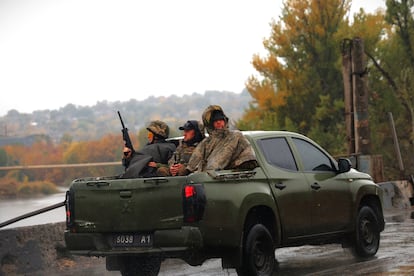
Zelenskiy does not hide the fact that he feels betrayed by U.S. President Donald Trump at a time when relations between them have again soured. The U.S. and Russian leaders recently signed an agreement to release hundreds of thousands of barrels of diesel despite sanctions on Moscow. Beyond his outrage, Zelenskiy cannot openly confront Washington despite Trump’s repeated slights — whether because of the latter’s closeness to Vladimir Putin or because of the way the Republican belittles him and Ukraine. On October 17, responding to journalists via WhatsApp, he said he expected new meetings with U.S. negotiators to try again for an energy truce. But he is clear that Putin “wants our destruction. Surrender is not enough for him.”
Zelenskiy, in any case, is trying to keep his composure. After the U.S. president’s announcement of an “energy ceasefire” on October 11 — which never really existed because Moscow rejected it — Kyiv resumed strikes on Russian refineries. That further irritated Trump in a kind of vicious circle. “We Ukrainians have dignity,” Zelenskiy said on October 16 in Brussels. In a jab at the Republican magnate, he praised Europeans as “real leaders” who have stood by Ukraine “from the very beginning of this war.”

Meanwhile, ordinary citizens are bearing the brunt. Life in the country’s major cities, such as Kyiv, the capital, and Kharkiv, the second-largest city, remains disrupted by constant attacks that local air defenses fail to repel. Cuts to basic services are commonplace and nothing suggests conditions will improve.
Moscow’s main objective now is to shut off water, electricity, and gas as a new winter approaches. The attempt to ensure that attacks would spare energy infrastructure was nothing more than a mirage that few believed in when, as on previous occasions, Trump’s empty diplomatic gestures came to nothing at the first sign of trouble.
Bad weather, good weather
From a bunker in Kramatorsk filled with screens where Ukrainian troops watch the battle unfold in real time, orders are issued to those on the ground. Sitting in a chair like those used for long hours of gaming and wearing a tracksuit, Roman, a 42-year-old deputy battalion commander, admits his country is having a hard time.
He enlisted shortly after Moscow launched a military operation in 2014 to occupy part of Ukraine’s Donbas region, a precursor to the blow of the full-scale invasion of February 2022. Adverse weather hampers drones, he explains, but “helps Russian infantry to advance on land. This weather is ultimately worse because the Russians have more personnel and resources than we do and we cannot push them back. They move slowly, but they move,” he says.
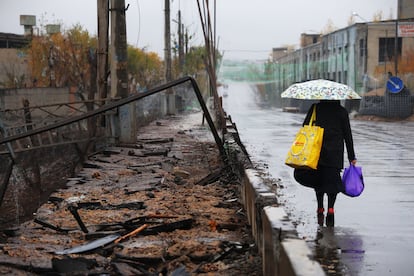
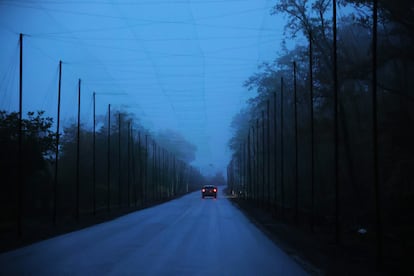
In four months it will be five years since the Kremlin launched its invasion. A trip through different regions of eastern and southern Ukraine is a reality check that helps explain the pessimism and fatigue among the population, although each person views the conflict through their own lens. The number of bombed gas stations keeps growing, as do the miles of roads and streets covered with netting to try to blunt the impact of Russian drones. There are stretches in Kherson, in the south, where there is evidence of Russian airstrikes almost every 50 meters — some with the wreckage of a vehicle nearby — that underline the measure’s limited usefulness and how they barely stop the smallest devices.
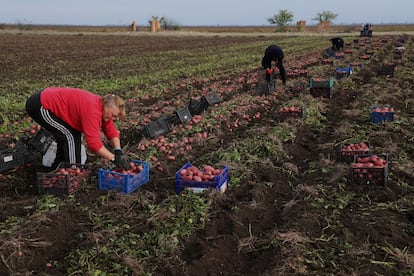
Not far from there, in the village of Sahaidachne, Natalia leads a crew of half a dozen women busy harvesting potatoes. The 42-year-old spent seven months under Russian occupation in Zmiivka on the banks of the Dnipro River. She recalls that there they had everything needed for a decent life — working the land and even with young people still in the town. In November 2022, after Ukrainian forces expelled the occupiers from the area, she ended up settled in this new village. “We don’t have money to move again,” she says resignedly, despite a recent incident when a drone landed next to the house where she now lives with her husband. She believes Moscow should return all occupied territory to Kyiv.
A little farther north, in Nyva Trudova, a small village in the Dnipropetrovsk region, three workers from an agricultural and livestock company share dinner. The oldest, Oleksi, 60, does not hide his hostility toward Zelenskiy, whom he considers “corrupt,” like those around him. He thinks Ukraine will not recover the roughly 20% of the country that Russia still occupies. For that reason, he believes a peace deal should be signed now and that Moscow should keep that territory, because otherwise, he says, it will continue to gain more ground.
Against the noise from Washington, Kyiv’s allies — especially in the European Union — have been unable to impose sanctions on Moscow that would prevent the military aggression from reaching its current extent. Zelenskiy conducts frequent rounds of talks and constant foreign visits, such as last week’s trips to London and Brussels, but Kyiv still lacks the weaponry and financing required to stop Moscow’s offensive, particularly its ballistic missiles and jet-powered drones. All this is unfolding amid an expanding hybrid war deployed by the Kremlin, whose tentacles increasingly reach across Europe.
In the underground command center in Kramatorsk, Roman puffs on an electronic cigarette as he recounts that during nighttime operations Russians camouflage themselves with special clothing so they are not detected from the air as heat sources. In the background, despite the rain, artillery thunders and air-raid sirens go off in the streets. On one of the televisions, the soldier shows footage captured that very morning by the camera of one of those unmanned aerial vehicles as it drops its bomb on an invading soldier trying to advance his position in the area. Minutes later, another device — this one classified as a surveillance drone — confirms the death. But it’s just one.
These unmanned systems have become the main protagonists of the armament revolution this conflict represents for both sides. Some are small, flying only a few thousand meters and carrying a kilo of explosives, while others have ranges and speeds that are difficult to counter. New drones — increasingly sophisticated alongside ballistic missiles and aerial bombs — allow Moscow to extend the front line and keep all of Ukraine permanently on edge. At the same time, surprising advances in Ukrainian industry, despite having less funding and resources, allow Kyiv to strike targets over 2,000 kilometers (1,240 miles) inside enemy territory.
Underground, Roman, despite the small trickle of Russian uniforms visible from the drones, knows there are thousands still trying to advance and take Kramatorsk, increasingly destroyed and deserted. This city is the largest under Kyiv’s authority in Donetsk region, of which Russia occupies about 70%. Putin will not renounce it. For that reason, Roman and the others fear that, as with Bakhmut and other nearby towns, Kramatorsk could end up falling.
Meanwhile, Natalia continues working in her potato field. She says her dog is unfazed by Ukrainian drones but hides when they are Russian. That gives this woman peace of mind and confidence. She says she has an official certificate of internal displacement but has not received from the government the money due to her after losing her home. She opens her phone and shows it, destroyed. “Why do we deserve this war?” she asks.
Sign up for our weekly newsletterto get more English-language news coverage from EL PAÍS USA Edition


When Hulk Hogan sued the tabloid Gawker in 2016 for publishing a sexual video without his consent, no one gave him a chance of winning. But Hogan won the case and was awarded $140 million in damages, which led to the online outlet’s demise. Peter Thiel, one of Silicon Valley’s most shadowy figures, tipped the legal battle: he secretly funded Hogan’s lawyers. He wanted revenge on Gawker because it had ridiculed him for years and outed him as gay.
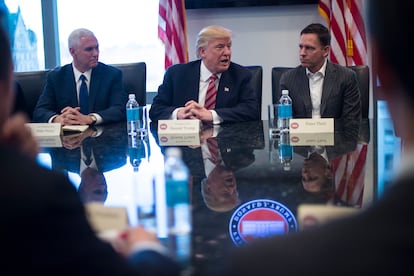
After that legal victory Thiel, the founder of PayPal, believed the jury’s support for Hogan signaled a deep social shift. He foresaw, before most, the victory of a New York real estate developer with a reputation as a womanizer in that year’s election. At the time, Donald Trump was still an unlikely candidate. “Wow, he might win the election,” Thiel thought, he later told The Atlantic. A few weeks after that he delivered a speech at the Republican National Convention that helped launch Trump’s political career.
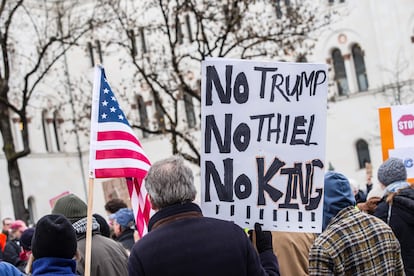
A decade later, Peter Thiel, 58, is the most influential figure in Silicon Valley since Steve Jobs emerged in the late 1970s. A libertarian, anti-establishment promoter of technoconservatism, he is behind the rise of political figures such as Vice President J. D. Vance, who worked for him at Mithril Capital, one of his investment funds, and Ted Cruz, the senior Republican senator from Texas. He has inspired the United States’ technological nationalism and opposes international organizations born after World War II, such as the United Nations and NATO. In late September he took part in a lecture series in Nashville in which he warned about the “Antichrist” and the dangers of regulating artificial intelligence. This is not the first time he has cloaked attacks on those who would regulate Big Tech in religious rhetoric. He did the same last year at similar conferences in San Francisco, Rome and Paris.
“He is the father of a small but powerful sect that pursues these extremist, antidemocratic ideas in Silicon Valley,” says Gil Durán, a writer and journalist and author of The Nerd Reich: Silicon Valley Fascism and the War on Democracy, in an email interview. “For 30 years, he has preached against democracy and government, which he called ‘fundamentally evil,’ while investing in companies that provide surveillance to the government.” He adds: “His hijacking of Christian rhetoric conceals Silicon Valley’s true religion, where many believe they are creating a god called AI that will grant eternal life, let them travel to the heavens in spacecraft and enjoy an endless, abundant paradise. Silicon Valley is reshaping Christianity in its own image.”
His intellectual baggage alarms the left. He opposes taxes, has set up a corporate apparatus with residency in multiple countries to minimize his tax burden; rejects the woke movement, including climate change; loathes universities; and encourages start-up founders to flout regulatory limits.
A few months ago, he traveled to Argentina, where he has bought a mansion. He has forged close ties with Javier Milei’s government and is scouting land in Patagonia to revive his dream of creating autonomous cities that operate under their own laws, independent of other administrations. It’s something similar to what he promoted in Próspera Zede, an urban settlement on the Honduran island of Roatán that he wants to expand to other parts of the world.
Thiel is also the founder of Palantir, one of the darkest companies in the global tech landscape. Founded three years after the 9/11 attacks, when the Bush administration prioritized security over civil liberties, Palantir processes massive databases that search for patterns and vulnerabilities. The company, named after an object in J. R. R. Tolkien’s The Lord of the Rings, was born thanks to a CIA contract. Today, governments around the world use its services.
“He does not believe in democracy, nor that human beings can live together peacefully without some authority,” explains philosopher Mark Coeckelbergh, a professor at the University of Vienna who studies the relationship between ethics and technology. “Thiel believes in the role of elites; he thinks that if you don’t keep people under an authoritarian regime, episodes of violence will occur. He believes there is an elite of visionaries like himself who should lead the world. He thinks the tech companies that created AI should operate freely, without regulation or limits, to accelerate progress.”
He is an eccentric man full of contradictions. As Max Chafkin, author of The Contrarian: Peter Thiel and the Rise of the Silicon Valley Oligarchs, describes him, he is very intelligent but also socially awkward. Thiel was born in Frankfurt, Germany, in 1967, the son of an engineer whose work took the family around the world. After spending a few years in apartheid South Africa, the family emigrated to the U.S. when Thiel was still a child. They settled in Foster City in the San Francisco Bay Area. There, in the early 1980s, with Republican and evangelical Christian parents, Thiel grew up amid chess pieces and science fiction books. In school, he was considered a brilliant student by teachers and a nerd by classmates. He read fantasy and science fiction endlessly — Robert A. Heinlein, Isaac Asimov, Arthur C. Clarke — but his favorite work was The Lord of the Rings, which he admitted he had reread a dozen times.
When he arrived at Stanford University in 1985, he was the target of jokes and taunts that bordered on bullying because of his arrogant, introverted character. There he became acquainted with the libertarian philosopher Ayn Rand and discovered René Girard and his theory of mimetic desire. “We desire what others desire because we imitate their desires,” the French thinker wrote; Thiel attended Girard’s Stanford classes and read works such as To Double Business Bound: Essays on Literature, Mimesis and Anthropology. It was during this period that he developed his anti-communism and his distrust of universities and intellectual elites. His views gave free rein to the resentment he had built up over the years.
Girard’s work profoundly marked him. Thiel developed disturbing political, social and technological theories around the French philosopher and anthropologist’s thought, which holds that mimetic desire leads to envy, social rivalry and the emergence of scapegoats who serve as a release valve to avoid mass conflict. From this comes his theory about the Antichrist, Armageddon and the Katechon, a Greek term meaning that which restrains the Antichrist.
“He has an unhealthy obsession with the Antichrist, the figure around which his personal theology revolves,” says Gil Durán. “It is anti-Christian, and his sermons accuse all his political enemies of being possible vectors of the Antichrist. He encourages people to view our current politics as an existential battle between good and evil. He accuses Greta Thunberg, Alexandria Ocasio-Cortez, critics of AI and even the Pope of being possible Antichrists. It’s pure gibberish, but it’s also a kind of confession. If Silicon Valley billionaires want to see the face of evil, they should look in the mirror.”
He also drew on the work of conservative political theorists such as Leo Strauss and Carl Schmitt, the latter a former member of the Nazi party. He mixed their theses on the deficiencies of liberal democracy with Girard’s theory of mimetic desire. As Coeckelbergh explains, “Girard’s influence on Thiel manifests in the threat of violence under civilization, under democracy. From Carl Schmitt, he takes this friend-versus-enemy thinking, where there is really no place for democracy” because we must always be ready to defend ourselves from the enemy. In 2009, Thiel wrote a controversial essay: “Since 1920, the vast increase in welfare beneficiaries and the extension of the franchise to women — two constituencies that are notoriously tough for libertarians — have rendered the notion of ‘capitalist democracy’ into an oxymoron.” After being harshly criticized for the piece, he issued an apology of sorts that did not settle the matter.
Professor Roberto J. González, author of War Virtually, which analyzes how tech companies are arming the military for a new kind of war, believes Thiel’s philosophical reflections have little impact beyond convincing some investors and executives “that they are part of a noble, even sacred, mission to rescue Western civilization.” But Thiel does have “immense impact through his investment firms. Thiel’s venture capital firm, Founders Fund, financed Palantir, Anduril, Clearview AI, Flock Safety and other defense and surveillance start-ups that have received massive, multibillion-dollar government contracts,” he concludes, highlighting the contradiction between Thiel’s libertarian ideas and his dependence on public contracts.
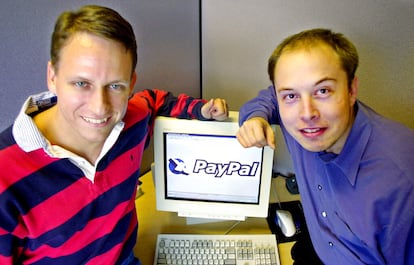
After leaving Stanford and failing in Wall Street and Washington, Thiel returned to the San Francisco area disillusioned, and raised money from family and friends to start a fund to invest in tech start-ups. In 1998, he met a young Russian-born engineer, Max Levchin, who was experimenting with software to exchange IOUs. Together they created PayPal, an electronic payments platform between users that allowed them to evade government control — an idea that anticipated some of the principles of cryptocurrencies he would later champion.
A few months after PayPal launched, another young engineer joined them: Elon Musk. After a period of internal wars at the company, Thiel became chief executive. He skirted banking regulation and allowed unchecked financial movements, a strategy that became the seed of Thielism. Around that time, the group known as the PayPal mafia — former employees and founders of the company — emerged as investors in major tech firms such as Tesla, SpaceX, OpenAI and YouTube. In 2002 they sold the company to eBay for more than $1.5 billion.
Ber Tarnoff, co-author with Quinn Slobian of Muskism, a study of the Tesla founder’s thinking, does not believe Thiel borrowed libertarian ideas from Musk. Thiel “has long been interested in exit strategies from the state, unlike Musk, whose emphasis has always been on state symbiosis.”
Thiel’s example at PayPal, his boldness in investing in emerging companies and his aggressive style were crystallized in a book, Zero to One: Notes on Startups, or How to Build the Future, a bestseller in which he argues that entrepreneurs are nearly divine, that monarchies are more efficient than democracies, and that sects are a good organizational model. Thiel encourages breaking rules to create successful companies that achieve monopolies, his true obsession, Chafkin notes in his biography. For Thiel, the goal is not to be more productive or competitive: it is to create monopolies from entirely new concepts or ideas.
Thanks to the proceeds from selling PayPal, in 2004 he decided to invest $500,000 in a start-up founded by a Harvard sophomore named Mark Zuckerberg. In exchange for his investment, he received 10% of the nascent social network, which eventually made him a visionary, and he imposed his disruptive vision for managing the company on Zuckerberg. The entrepreneur must be untouchable, retain power, and rules must be broken to succeed. In this way, Zuckerberg rose at Facebook, considered one of the most harmful companies of the new economy.
The year after investing in Facebook, he founded Founders Fund, a venture capital firm aimed at discovering disruptive companies with the potential to change the world. The fund’s portfolio includes SpaceX, Palantir, Anduril, Airbnb, OpenAI and Polymarket. The fund outlines the characteristics such companies must have: “The best companies create their own industries. They are not popular, they are hard to evaluate, they have technological risks, but not insurmountable technological risks, and if they succeed, their technology will be extraordinarily valuable.”
He wraps it all in a philosophical cloak. In an interview with The New York Times, he argued that humanity’s biggest problem is technological stagnation. “We should have colonies on the Moon, robots, flying cars, cities on the ocean, under the ocean,” he said in a speech. “We should have organic agriculture. We should have turned deserts into arable land. There are a lot of incredible things people expected to happen in the fifties and sixties that would have transformed the world.” But none of that happened. He argues that since the 1960s humanity has not produced major technological breakthroughs: the rise of the internet lost momentum and the iPhone was not a technological revolution but a commercial one. He is skeptical about AI’s transformative power, though he admits it is the only thing that could break the stagnation. For Thiel, true innovation comes from “creating markets where none existed before.”
Kim Phillips-Fein, author of Country of Lords, a book that examines how tech magnates contribute to inequality, recalls a statement from Thiel in her work: “I was growing up, I wanted to be the best, I wanted to go to these elite institutions. I went to law school, I had the straight and narrow path, but then I realized that all that was wrong, and actually you had to disrupt everything, create your own monopoly, a monopoly of one: nobody else can ever be you, and then the people who are kind of blessed with this genius to recognize how to create something completely new in the world, those are the people who will deserve to win in this race and deserve to command the resources of society.”
Sign up for our weekly newsletter to get more English-language news coverage from EL PAÍS USA Edition

Se Acabó Apilar Sartenes Y Tapas De Ollas: Este Accesorio Las Mantiene En Orden

El Pequeño Accesorio Que Hace Que Las Fotos Del Móvil Parezcan De Una Cámara Profesional

Las Lavadoras Bosch Que Puedes Controlar Desde El Móvil Y Gastan Menos Energía


-

 Uncategorized4 weeks ago
F1 Bahrain Grand Prix will be live and FREE on TV this weekend
-

 New Developments4 weeks ago
How To Get A Tourist Rental Licence In Andalusia (Spain) – Step-By-Step Guide 2025
-

 New Developments3 weeks ago
Luxury Villas For Sale, Estepona – ProjectL1
-
Blackout preparedness4 weeks ago
Brussels takes action against Spain over failure to update blackout plan
-
EU3 weeks ago
EU nicotine crackdown sparks warning that ex-smokers could be driven back to cigarettes
-

 Uncategorized4 weeks ago
Lewis Hamilton F1 wish could come true as stunning plans for new track revealed
-
 Housing access / crisis / affordability3 weeks ago
Radical Housing Decrees Defeated As Snap Election Talk Grows
-
British tourists arrested in Magaluf3 weeks ago
British tourists arrested after taxi driver left bloodied in Magaluf