Connect with us

%

Sweden Deports 458 Britons Since Brexit In Shocking Residency Crackdown

Published

on

sweden-deports-458-britons-since-brexit-in-shocking-residency-crackdown

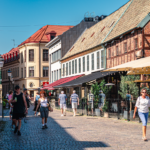
A refusal does not automatically mean deportation. Photo credit: Oksana Yermoshenko/Shutterstock

A home, a family and decades of memories have not been enough to protect hundreds of Britons in Sweden from being forced to leave. Sweden has confirmed that 458 British citizens have been deported or forcibly removed since Brexit, revealing the scale of a residency crisis that has been quietly building since the UK left the EU. 

The figure has drawn attention because these are not simply people arriving in Sweden after Brexit and being refused permission to settle. The cases concern British citizens who failed to secure the post-Brexit residency status required to remain in the country, including people who had established their lives there before Brexit.

Thousands applied, thousands were rejected

By the end of 2024, 14,233 applications for post-Brexit residency had been submitted in Sweden, according to the Swedish Migration Agency. Almost 4,000 were rejected. Of course a refusal does not automatically mean deportation, but Swedish authorities say the 458 figure refers to cases where rejection of an application for residence status was accompanied by a deportation decision. 

However, the refusal rate has raised eyebrows, analysis by the UK Foreign, Commonwealth & Development Office found Sweden’s refusal rate was 27.5 per cent, around three times higher than in any other EU member state and far above the EU average of roughly 3 to 4 per cent.  Separate Eurostat figures show that between 2021 and 2025, 2,490 UK nationals were ordered to leave Sweden. That represented almost a third of all UK nationals ordered to leave an EU country during the period, although the data does not establish exactly how many had been living in Sweden before Brexit. 

The numbers may not tell the whole story

Campaigners representing British residents in Sweden say the newly released 458 figure needs to be treated carefully. The number does not necessarily include people who left Sweden voluntarily after discovering they were unlikely to secure residency, nor does it necessarily capture Britons who obtained another form of temporary residence after their original application failed. That means the number of people whose lives have been disrupted by the residency rules could be considerably broader than the deportation figure alone suggests.

David Milstead, who heads the 9,000-member Brits in Sweden campaign group, has called for fuller and more transparent information about the circumstances behind the removals.  The concern is particularly significant for Britons who believed their established lives in Sweden were protected by the Brexit Withdrawal Agreement.

Why are people losing the right to stay?

British citizens who were legally resident in Sweden before the end of the Brexit transition period were covered by the EU-UK Withdrawal Agreement. But Sweden operates an application-based system, meaning eligible British citizens had to apply for the relevant residence status. Late applications can still be accepted where there are “reasonable grounds” for missing the deadline. The dispute has centred on how strictly Sweden has interpreted that provision. The UK government has repeatedly raised concerns about the approach, with officials saying that, in practice, late applicants in Sweden are unlikely to have their reasons accepted as reasonable. 

Swedish authorities reject the suggestion that they have failed to implement the Withdrawal Agreement correctly. The Swedish Migration Agency maintains that the rules have been applied properly and that applicants have had access to appeals. Migration minister Johan Forssell has also defended the system, while leaving the door open to possible changes to make the process easier in future. 

Pressure is now coming from Brussels and Sweden

The issue is no longer confined to campaign groups and affected British residents. The European Commission is pressing Sweden for answers over its treatment of vulnerable British citizens, according to government correspondence obtained by The Local. The pressure follows reports of removal orders involving elderly and seriously ill residents.  The UK’s Foreign Office has also continued raising the matter with Swedish authorities through the mechanisms established to oversee citizens’ rights under the Withdrawal Agreement.

Meanwhile, Sweden’s opposition Centre Party has promised to reopen the application process for affected British citizens if it enters government. Its migration spokesperson has argued that people who had already built established lives in Sweden should not lose their right to remain because of administrative problems.  For Britons still caught in the system, the issue is therefore far from settled. Sweden has now put a number on those already removed, but campaigners are demanding to know how many more people have been forced to leave, remain on insecure temporary permits or are still fighting to keep the lives they established in Sweden before Brexit.

%

Couple Who Had Never Sailed Before Plan World Circumnavigation In All-Electric Sailboat

Published

on

couple-who-had-never-sailed-before-plan-world-circumnavigation-in-all-electric-sailboat

Dan and Kika ready to take out Uma. Credit: Given

After a decade of preparation, Dan and Kika Deckert are preparing to take their 36-foot sailing boat Uma on a round-the-world trip, with departure planned for November 2026.

Their target is to complete a circumnavigation within 12 months without fossil fuels for propulsion, onboard power or cooking. Sailing will provide Uma’s movement, while solar panels, batteries and regeneration under sail will power life at sea.

Route plans will take Uma south-west out of the Mediterranean and across the Atlantic before heading around Cape Horn. Travel will then continue through the South Pacific, Australia and the Indian Ocean, around the Cape of Good Hope and back across the Atlantic.

An electric boat built through experience

Uma, far from Gibraltar.
Credit: Given

Uma is a 1972 Pearson 36 that Dan and Kika bought after graduating as architects. Neither had sailing experience, but they spent the following 12 years learning at sea, rebuilding the boat and documenting their adventures.

More than 30,000 nautical miles and 30 countries later, Uma has become a long-running test bed for electric sailing. Their first system used a second-hand forklift motor and batteries before they moved to Oceanvolt electric propulsion.

Svalbard also features in Uma’s story. In 2021, the boat reached the High Arctic without a diesel engine after Dan and Kika crossed the North Atlantic.

No diesel, generator or cooking gas

Uma 3.0 uses twin Oceanvolt electric propulsion, 3kW of solar generation, 50kWh of battery storage and up to 1kW of regeneration under sail.

Hydrogeneration allows the boat to turn movement through the water into electricity while sailing, helping recharge its batteries during longer passages. Oceanvolt says the amount generated depends on factors including boat speed.

Dan and Kika say every essential system, including navigation, communications, cooking and water production, must work within the energy available from solar power and regeneration.

“We never set out to become experts. We simply kept asking better questions and learning what the next step required,” they say.

Could Uma make history?

Previous attempts at fossil-fuel-free ocean voyages have not followed the same rules, according to the press kit. Some carried backup fuel or generators, while others did not complete the voyage.

Success would give Uma a claim to becoming the first all-electric cruising sailboat to complete a circumnavigation under the couple’s stated conditions.

Adventure is only part of the project. Dan and Kika want to show what long-term life aboard an electric cruising boat can look like.

Readers can also follow the voyage through Sailing Uma’s website, YouTube and social media, with future live tracking planned.

Continue Reading

%

Home Prices In Competa, Frigiliana & Nerja Jump 30%

Published

on

home-prices-in-competa,-frigiliana-&-nerja-jump-30%

Burriana in Nerja. Credit: Charlesy – Shutterstock

Northern Europeans keep clicking through Idealista ads in three Axarquia towns, and asking if prices have moved with them. Competa, Frigiliana and Nerja now are among Spain’s most-watched spots for foreign house hunters, and square-metre costs have climbed more than 30 per cent since October 2021.

Two sorts of visitors still split the Costa del Sol. Some come for a few nights out. Others, often older buyers from Britain, the Netherlands, Sweden and Germany, want a place of their own and a milder winter than Bristol, Amsterdam or Oslo. That second group has built small colonies in the eastern hills and on the Nerja coast. Spanish is optional. Sun is not.

Where overseas clicks already beat Spanish ones

Idealista’s late-August readout put Competa, Malaga Province’s most international and cosmopolitan village, at the top of Malaga’s list. Foreigners accounted for 61 per cent of views of homes for sale there, mainly British, Dutch and German browsers. Frigiliana followed at 57 per cent, with Brits, Dutch and Swedes leading. Nerja came in at 56 per cent, this time with Swedes first, then British and Dutch house hunters.

Search traffic is not a completed sale. Local agents still say it matches what they see: northern Europeans touring village houses and sea-view flats before they book a viewing.

How far prices have moved since 2021

Competa went from €1,467 per square metre in October 2021 to €1,949 in August 2026, a 32 per cent rise. Frigiliana climbed from €2,388 to €3,248, up 36 per cent. Nerja posted the steepest jump, from €2,866 to €3,952, a 38 per cent increase.

Buying a home in Malaga province is dearer almost everywhere than five years ago. Those three towns still lag the provincial jump of about 75 per cent. Malaga itself is a mixed market: Marbella and Benahavis mansions above €8,000 per square metre sit at one end, and modest inland cottages near €1,000 at the other.

Competa, Frigiliana and Nerja sit in the middle, pulled by both Spanish and overseas demand. Nothing in the latest Idealista numbers suggests that climb is about to ease.

Continue Reading

%

Crane Needed To Flip World’s Biggest Spanish Omelette

Published

on

crane-needed-to-flip-world’s-biggest-spanish-omelette

World’s biggest Spanish tortilla. Credit: Sanxenxo ayto

Crowds packed Sanxenxo in Galicia on Saturday to watch a family-run egg company cook what organisers called the world’s biggest Spanish omelette. Family company El Huevo de la Abuela (O Ovo da Avoa) used 17,000 eggs, 1,700 kilos of potatoes, 300 kilos of onion, 300 litres of oil and 30 kilos of salt.

Six-metre pan and 72 pairs of hands

Town hall social posts said thousands turned out for the cook-off, tied to the local onion fair and Santa Rosalia festivities. Seventy-two people worked a six-metre-diameter pan. Portions came with onion and without, a nod to Spain’s never-ending kitchen argument over how a proper tortilla de patatas should taste. Fans of that debate will recognise the split from earlier Euro Weekly News coverage of national surveys on onion versus no onion.

75-tonne crane for the flip

Sanxenxo council called the flip the day’s most nail-biting moment. So easily could they have ended up with the world’s biggest pan of scrambled eggs.bCrews needed a 75-tonne crane to turn the giant omelette. Officials described it as a high-precision job that went off without a hitch. Cooking finished around 14.15, then queues formed for 10,000 portions at just €3 each. Proceeds go to charity.

Council thanks went to the Melide-based family firm, sponsors, volunteers and everyone who turned up. “Sanxenxo made history,” the town hall said.

Onion fair backdrop and a Galician food tradition

This was no one-off stunt. The same company staged a similar giant omelette in Melide last year. Sanxenxo’s version sat inside the Feira da Cebola, putting the town’s own onions front and centre. Galicia already draws food lovers for octopus, percebes and hearty home cooking; a monster tortilla fits that pattern of big, communal plates that raise cash as well as eyebrows.

Readers who like oversized Spanish dishes can look back at Euro Weekly News pieces on giant paella fundraisers and huge rice cook-offs in other regions. Marbella’s well-reviewed tortilla bars and Galicia travel features give more flavour of the same food culture. Official details on the egg producer sit at elhuevodelaabuela.com. Broader context on Spanish omelette records and earlier attempts is available from contemporary Spanish press reports on the Melide and Vitoria cook-offs.

Portions sold out to a mix of locals and visitors. Charity takings were the point, not a stamped Guinness certificate on the day. For a coastal Galician town better known for beaches and summer crowds, a six-metre omelette flipped by crane made for an unusual Saturday in early September.

Continue Reading

Trending

Copyright © 2017 Spanish Property & News