Connect with us

%

Taxi Users In Spain Could Be Fined €200 For This Common Mistake

Published

on

taxi-users-in-spain-could-be-fined-e200-for-this-common-mistake

Passengers in Spain, and not taxi drivers, pay the fine if they don’t wear a seatbelt. Credit: Alexandre Rotenberg / Shutterstock

Passengers who don’t wear a seatbelt in the back of a taxi in Spain can be fined €200 on the spot, and it’s the passenger who pays, not the driver.

The rules have changed for taxi drivers too this autumn, and the fine drops to €100 if it’s paid quickly, so it’s worth knowing where you stand before your next ride.

The Guardia Civil stopped a taxi on the A-6

The latest passenger caught out is author Arturo Pérez-Reverte, who was riding in the back of a taxi on the A-6 on Monday November 2 when the Guardia Civil stopped it and found he wasn’t wearing his seatbelt.

The novelist is best known abroad for his Captain Alatriste series, and he also wrote The Club Dumas and The Queen of the South. Before turning to fiction he spent 21 years as a war correspondent for Spanish state television, RTVE, and he’s been a member of the Royal Spanish Academy, the body that guards the Spanish language, since 2003.

He was handed a €200 fine for a serious offence and paid €100 on the spot. He then posted on X that the officers had every right to fine him, adding that he’d wished them a good shift.

That €100 isn’t a special deal, though. It’s the standard 50 per cent reduction for paying promptly, and it’s open to anyone who gets the same fine.

Back-seat passengers pay the fine themselves

Seatbelts have been compulsory in the back seats of cars in Spain since 1992. The traffic authority says an unbelted rear passenger at 80km/h would be thrown forward with the same force as a 1,200kg ball hitting at 10km/h. 

The €200 fine belongs to the person who isn’t belted, so in a taxi that’s you, as the passenger, and not the driver. Penalty points come off the driver’s licence only, so a passenger loses the money but no points.

Children are different though. If a child isn’t belted, their parents or guardians answer for the fine as they cannot pay it themselves, and the driver still doesn’t pay the fine. In towns, children under 135cm (4ft 5in) can still ride in the back of a taxi without a child seat.

Taxi drivers lost their own exemption on October 1

Until last month, taxi drivers in towns could drive without a belt. Since Thursday October 1, that exemption has gone for taxis, delivery vehicles and driving school cars, and drivers must wear a belt at all times. A driver who skips it now faces the same €200 fine, plus four points off their licence. Only ambulance staff treating a patient in the back on an emergency call can still travel unbelted. 

So any older guide that still lists urban taxi drivers as exempt is now out of date.

Paying within 20 days halves the fine

You have 20 calendar days from receiving the notification to pay half price, so €100 for a €200 fine. Challenge it with an allegation and you lose the discount, with the full amount due if it’s rejected. Pérez-Reverte paid at the roadside, but the DGT’s own guidance only explains paying through its app or by phone, so it’s worth asking the officers what your options are.

So next time you climb into a taxi in Spain, buckle up in the back before the driver pulls away, and if a fine does come, you’ve got 20 days to pay it at half price.

%

Meet Rescued Horses In Coin

Published

on

meet-rescued-horses-in-coin

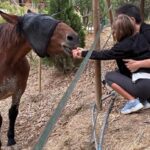
Picture a horse nuzzling your hand in search of a carrot, or a table covered in ribbons, glitter and handmade stars. Saturday, November 14 brings two wonderful reasons to visit an animal sanctuary and help animals that were once given up on.

Two events, one lovely Saturday

Todos los Caballos del Mundo or “All the Horses in the World”, is hosting a guided visit for all the family and a Christmas crafts workshop on the same morning at Ctra. de Borrajo, s/n, 29120 Alhaurin el Grande, Malaga

This guided visit runs entirely in English, from 10:30am to 12:30. You can wander the paddocks, hear the animals’ stories and meet the people who look after them with children are very welcome.

Entry is by donation: €10 for adults and €5 for children under 12, and under-threes go free. All of it goes towards the animals’ care. Please bring carrots for the horses and leave pets at home so the residents stay calm.

Limited spaces are available so you need to book at todosloscaballosdelmundo.com. Go to the “Visits” section and select 14 November.

Make your own Christmas decorations

Prefer something creative? The sanctuary’s Christmas workshop, is a morning of festive crafting surrounded by nature and animals. Organisers promise personalised ornaments and some surprises. Think stars, snowflakes, Christmas trees and reindeers. No experience is needed, only a willingness to have fun.

Tickets cost €30 per person, and is open to everyone so friends, couples and families can all join in. Everyone takes home their own handmade creations, which makes this a lovely way to get ahead on tree decorations or gifts.

Capacity is also limited for this event. To reserve, send a WhatsApp message on 660 092 092.

The sisters behind the sanctuary

Sisters Concordia and Virginia Marquez Garcia founded the charity roughly two decades ago, after moving to Malaga and finding horses abandoned and mistreated. Today it cares for hundreds of animals, including donkeys, dogs and cats, many of them rescued from neglect or illness. It is one of the country’s largest equine sanctuaries.

Can’t make it? You can still help

Anyone unable to attend has other ways to lend a hand. The sanctuary welcomes donations of food, blankets, towels and other useful items. Volunteers are always appreciated, and following and sharing @todosloscaballosdelmundo on social media helps spread the word.

Whichever event you choose, you will leave with a warm feeling, and perhaps a new four-legged friend to sponsor. For more information visit the charity website or social media channels.

Continue Reading

%

Minimum Wage Workers In Spain Could Get €65 A Month More From January

Published

on

minimum-wage-workers-in-spain-could-get-e65-a-month-more-from-january

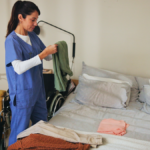
Carers and cleaners are among the workers in line for a new minimum rate from January. Credit: PeopleImages / Shutterstock

Cleaners, carers and seasonal workers across Spain are in line for a bigger pay packet from January, with the proposed minimum for hourly home help rising by 51 cents to €10.06. It’s part of a wider minimum wage rise the government wants signed off before voters go to the polls on Sunday November 29.

Hourly home help would rise to €10.06

Cleaners, carers and nannies paid by the hour would be entitled to at least €10.06 for every hour worked from January 1, up from €9.55, under a draft government order published this week.

That’s a rise of 51 cents, or roughly €80 over a year for someone who cleans for three hours every week and around €530 for a carer who works 20 hours a week. The rate applies to domestic workers who are paid by the hour and don’t live in the household, and the draft says the €10.06 has to cover every part of their pay for the hours actually worked.

The draft also says only cash counts towards the minimum, so payment in kind, such as food or accommodation, can’t be used to make up the difference. 

Short-term staff would get at least €60.88 a day

Workers on short contracts would see a bump too. Anyone hired for up to 120 days by the same company would be entitled to at least €60.88 for each legal working day, up from €57.82 this year.

That daily rate is meant to cover the worker’s share of Sundays, public holidays and the two extra annual payments (pagas extra, normally paid in summer and at Christmas), which is why it’s higher than the plain daily rate of €42.87 that applies to the standard minimum wage. Holiday pay for these workers is regulated separately.

The main minimum wage would climb €65 a month

For everyone else on the minimum, the draft sets €1,286 gross a month over 14 payments, or €18,004 a year for a full-time job. That’s a rise of 5.3 per cent, or €65 more a month than now and €910 across the year.

A group of experts advising the Labour Ministry had recommended 4.9 per cent, which would have meant €1,281 a month, so the government’s figure is slightly higher, only by about €5 a month. The unions CCOO and UGT had asked for at least 7 per cent, which would have meant around €1,306. They’ve made their backing conditional on the decree stopping employers from absorbing existing pay supplements into the new minimum, and hadn’t yet commented on the figure.

Anyone already earning more than €18,004 a year for full-time work isn’t affected, and the minimum will have risen by almost 75 per cent since 2018, when it was €736 a month. We compared the current €17,094 a year with UK minimum pay last month, in case you missed it.

Tax is still withheld, then claimed back

Elma Saiz, Spain’s Social Security minister and government spokesperson, said the Spanish tax agency would again approve a deduction so that minimum wage earners pay no income tax (IRPF).

This year, though, employers would still withhold tax from monthly pay, and the money could only be recovered by filing the annual tax return the following year. The draft also says regional or local rules, and private contracts that use the minimum wage as a reference, will stay on this year’s figure unless the parties agree otherwise.

Approval could land in the middle of the election campaign

The draft is open to comments until Monday November 16. The Council of Ministers could then approve it on Tuesday November 17 or Tuesday November 24, with the campaign officially starting on Friday November 13 and the general election on Sunday November 29.

Last year’s rise wasn’t signed off until Wednesday February 18, and it was backdated to January 1. The new draft is written to apply from January 1. Until the decree is approved and published in the BOE (Spain’s official state gazette), the €1,286 and the new hourly and daily rates remain proposals, so the final figures are worth checking once they appear there.

Continue Reading

%

Another Day Of Commuter Train Chaos

Published

on

another-day-of-commuter-train-chaos

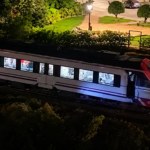
Cercanias commuter train broken down again on the Fuengirola line.

Repeated breakdowns raise questions over investment (or a lack of), reliability and whether a change of government could make a difference. Costa del Sol citizens are at the end of their tether.

Passengers travelling between Malaga and Fuengirola faced another day of disruption and waiting on Thursday, November 5, after a technical fault on a Cercanías (commuter) train caused widespread delays, cancellations and overcrowding.

The latest problems affected the C1 line, with passengers reporting waits of up to an hour at Plaza Mayor. Some trains were running late, while passengers reported smoke and an unusual smell around the wheels of a train at La Colina in Torremolinos. Some services were cancelled and others required passengers to change trains.

According to Málaga Hoy’s report on the latest Cercanías disruption, the problems also affected the C2 service between Malaga and Alora.

A difficult week for Malaga commuters

Thursday’s disruption followed three consecutive days of problems reported across the network, with delays, cancelled services and compulsory changes of train.

On Sunday, November 1, around 20 passengers were left stranded after a technical failure stopped the last train travelling towards Fuengirola. Renfe eventually arranged taxis to take them home. EWN previously reported the late-night breakdown which left Malaga passengers stranded.

The following night, a man died after being struck by a train near Torreblanca, forcing the suspension of services between Benalmadena and Fuengirola. This was a separate and tragic incident, rather than a mechanical failure. Even more operational problems followed on Tuesday and Wednesday, before Thursday’s technical fault brought another round of passenger complaints.

Spanish newspaper El Español counted 37 service disruption notices on Thursday alone, covering delays, cancellations, partial interruptions and a compulsory passenger transfer. Renfe attributed the latest C1 problems to a technical fault affecting one train, while the C2 experienced separate difficulties.

Why the Fuengirola railway is significant

The 32-kilometre C1 connects Malaga city with the airport, Torremolinos, Benalmadena and Fuengirola. It is an essential transport link for residents commuting to work, tourists travelling between resorts and airport passengers avoiding increasingly congested roads.

Renfe’s 2025 passenger figures show that Malaga’s two Cercanías lines carried 15.54 million passengers last year, with the bulk of demand concentrated on the C1. At some points, passenger numbers reach 150 per cent of available seating capacity.

Renfe plans to invest €66.7 million in seven new high-capacity trains for the Fuengirola route, expected to enter service from 2028. A further €40 million is earmarked for a new maintenance workshop.

Meanwhile, Adif has been working on a project to add 2.8 kilometres of double track between Malaga Airport and Campamento Benitez, helping to address infrastructure limitations that restrict how frequently trains can run.

Could we do with a change?

Responsibility for Spain’s state railway network ultimately falls on the national government through the Transport Ministry, Adif and Renfe. A change of administration in Madrid could therefore bring different investment priorities, management decisions and expectations for service improvements.

However, replacing the government would not automatically solve the railway’s problems. The infrastructure limitations, maintenance requirements and growing passenger numbers would still need to be addressed. For thousands of people who depend on the C1 every day, the promised new trains and infrastructure improvements offer some hope, but they will not arrive overnight.

Whether under the present administration or a future government, the question remains the same: how can a railway serving one of Spain’s busiest coastal areas provide a service passengers can actually rely on?

Continue Reading

Trending

Copyright © 2017 Spanish Property & News