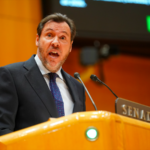
Puente told reporters: “This is not an interrogation and only I will talk.” Photo credit: Gil Corzo/Shutterstock
Spain’s railways are facing serious questions after the deadly collision at Urda, nine months after the Adamuz disaster killed 46 people. The latest tragedy has brought renewed attention to warnings about railway safety, demands from Adamuz victims for trains to be stopped until the network’s reliability could be guaranteed, and a controversial television appearance by Transport Minister Óscar Puente just days before the new crash.
The disaster has also reopened debate about government financing for railway projects overseas while passengers at home face questions about the safety and reliability of their own network. The causes of the Urda collision has not yet been established, but the Spanish people want answers.
Victims had already warned about railway safety
In July, the Association of Victims of the Adamuz Derailment formally asked the Transport Ministry, rail infrastructure manager Adif and the Spanish Railway Safety Agency (AESF) to suspend rail traffic until the system’s safety and reliability could be guaranteed. The request followed a warning from the Railway Accident Investigation Commission (CIAF) that existing arrangements did not include a system specifically designed to detect rail breaks. The victims wanted traffic halted until the necessary technical measures and safety assurances were in place.
The request was made months before the Urda collision. It does not, however, establish that it was the same issue that caused both disasters. The investigation into Adamuz also raised questions about how railway defects were assessed. In September, Adif defended its maintenance procedures, saying the irregularity detected at the site in October 2025 remained within safety tolerance and did not require intervention.
That was Adif’s assessment of the specific defect, not a blanket certification that every part of Spain’s rail network was risk-free. The evidence shows that safety concerns had been raised before the Urda Collision, but the cause of the latest collision must first be be established by investigators.
Puente’s joke about Renfe sparks anger
The timing of Puente’s television appearance could not have been more poorly timed and has added to the anger of current and past rail victims. On October 21, the minister appeared on Cara al Show, presented by Marc Giró on laSexta channel. In a promotional sketch of Spain’s rail services, a lift stopped working and an announcement said the delay was caused by a technical fault. Puente replied: “Good grief. As if we didn’t have enough problems with Renfe already.” The sketch ended with the participants dancing, and Puente shared the clip on social media with the caption: “If I survive this…”
Even though the joke was made before the Urda collision, the Adamuz crash had already happened. Forty-six people had died in January, and survivors and families were still dealing with the consequences. Mario Samper, president of the Association of Victims of the Adamuz Derailment and himself a survivor, condemned the sketch. He said it was unacceptable for the minister to joke about Renfe’s problems while 46 people had died and families had been devastated. The association called for Puente to leave office, describing his behaviour as insensitive.
Comments that incriminate
His earlier comments about the state of Spain’s railways have also resurfaced. Speaking in Congress in September 2024, Puente declared that “Spain’s railways are living the best moment in their history”,pointing to record passenger numbers and improvements in services. He acknowledged that the network still had shortcomings, but maintained that the overall service had never been better. Following the latest disaster, those words have taken on a different significance for critics questioning the state of the country’s rail infrastructure.
To add to the outrage the minister’s handling of questions after the Urda collision has added to the controversy. During a press conference on October 28, Puente told reporters: “This is not an interrogation and only I will talk.” His response added to the frustration surrounding the government’s handling of the disaster, with journalists seeking answers about the collision and railway safety and Puentes trying to silence reporters. Critics argue that his remarks and his response to questioning have done little to reassure victims and passengers who want clear answers.
More than €750 million for Moroccan trains
The government’s railway financing abroad has also become part of the debate about priorities and public money. In February 2025, Spain announced financing of more than €750 million for Morocco to buy 40 intercity trains from Spanish manufacturer CAF. The agreement was made through the Fund for the Internationalisation of Companies (FIEM), with financing backed by a sovereign guarantee from Morocco. There were also earlier loans for rail projects in Morocco and Uzbekistan. In 2019, up to €190 million for Casablanca tram projects and €57.5 million for Uzbekistan trains and equipment were approved as repayable loans. These were intended to support overseas contracts for companies operating in or from Spain, rather than grants handed over without repayment.
And even though these are loans, not grants, the spending still raises questions about the government’s priorities. The government has chosen to use public financing to help Spanish businesses secure railway contracts abroad. After two major rail disasters, passengers and taxpayers can reasonably ask how that sits alongside the investment, maintenance and safety measures needed at home. The Moroccan train contract also has an economic purpose, supporting work for CAF’s Spanish factories. It would therefore be misleading to describe the entire sum as money simply given away or to assume it could automatically be transferred to domestic rail maintenance. The question is whether the government is doing enough on both fronts.
Questions the government must answer
Urda’s cause remains under investigation, and of course no conclusion should be drawn before the evidence is established. But the sequence of events raises serious questions that go beyond one collision or one television appearance. Victims of Adamuz had already asked for railway traffic to be suspended until safety could be guaranteed they also had asked for the findings of the cause of the crash to be made public, something that the government has refused to do. Investigators had highlighted a gap in rail-break detection, while Adif maintained that the defect identified at the Adamuz site had remained within accepted safety limits. Now another catastrophic collision has occurred, and investigators must determine exactly why.
The government will need to answer questions about safety warnings, maintenance decisions, oversight and the measures taken after Adamuz. For passengers, the immediate priority is to establish what happened at Urda, publish the findings and act on any safety deficiencies investigators identify. For families still grieving, and for the millions who depend on Spain’s railways, assurances alone will not be enough they want the current government gone and someone to be held accountable for these tragic and preventable deaths.
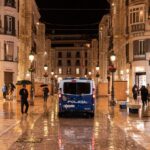
Malaga-based National Police. Credit: Pavel Larsson – Shutterstock
Seven people have been arrested after a criminal network allegedly tricked people looking for long-term homes in Malaga into paying deposits for properties they had no right to rent out.
Police believe around 20 people have already fallen victim to the scam, with losses estimated at €150,000. Another three people are being investigated in connection with the alleged operation.
What made the fraud particularly convincing was that the properties were real. Members of the gang would first book tourist apartments for just one day before advertising them as available for long-term rental.
They then arranged viewings, showed prospective tenants around the homes and collected money for reservations and deposits. Payments were made through Bizum, Spain’s popular mobile payment service, or bank transfers.
In some cases, the same apartment was offered to several different people on the same day, with each being led to believe they had secured a place to live.
Suspected ringleader operated from Thailand
According to the National Police investigation, reported by EFE, the organisation was based on the Costa del Sol but had an international element. Its alleged ringleader operated from Thailand, where he coordinated the fraudulent activity and recruited people in Spain to carry out the practical work.
Different members had clearly defined roles. Some published advertisements on social media and arranged appointments, while others showed prospective tenants around the apartments and collected their money. Investigators also uncovered a system involving numerous telephone numbers and bank accounts, with cryptocurrency allegedly used to launder some of the proceeds.
Benalmadena featured in the operation, with one suspect responsible for collecting money and arranging the movement of funds and apartment keys. Another allegedly received cash and converted it into cryptocurrency.
Police warn more victims could come forward
The investigation began after several complaints were received by the National Police’s Central District station in Malaga. Officers subsequently identified the properties involved and carried out operations to catch suspects in the act. Several further scams were prevented when prospective tenants arrived to reserve apartments.
Seven people have now been arrested and three others are under investigation for alleged offences including membership of a criminal organisation, fraud and money laundering.
Police believe the number of victims could increase as the investigation continues, given how many people were reportedly shown the same apartments. The case is another warning for people searching for rental accommodation in Spain. EWN previously reported on how fake landlords were targeting desperate renters across Spain, with criminals exploiting the pressure on people to find somewhere to live.
Anyone searching for a long-term rental should check the identity of the person offering the property and establish that they are the owner or have proper authority to rent it out. Paying a deposit before verifying these details can leave prospective tenants seriously out of pocket.
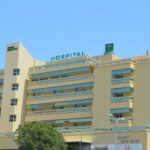
Visiting a large Spanish hospital for the first time can be a daunting experience, particularly if you are not confident speaking Spanish. But a little preparation can make all the difference, according to British expat Steve Marshall, who has put together a practical guide to help English-speaking residents navigate their way around the Hospital Universitario Costa del Sol near Marbella.
Steve says, “Getting older often means more frequent visits to doctors and hospitals. While appointments at a local health centre may be relatively straightforward, larger public hospitals can be confusing, busy and difficult to navigate, especially when language becomes a barrier.”
Steve’s guide focuses on the Hospital Universitario Costa del Sol, situated just off the A-7 at kilometre 187, near Marbella. His message is simple: “be prepared, know where to go and don’t be afraid to ask for help.”
Here is his step-by-step guide.
1. Prepare before leaving home
Having the right paperwork and information with you can save considerable time and frustration.
Steve recommends taking:
Your hospital appointment letter or SMS confirmation.
Your Spanish health card, TIE or passport.
A list of your current medicines and their dosages.
Any recent X-rays, test results or relevant medical paperwork.
A written list of your main medical concerns.
One particularly useful tip is to use Google Translate to produce a Spanish version of your medical concerns. This gives you something to show your consultant if communication becomes difficult.
Steve also advises checking that your mobile phone is working and fully charged. Take some water, a face mask if you prefer to wear one, and allow plenty of time to get there.
2. Finding the hospital
The hospital has been extended and, according to Steve, visitors should use the new entrance at the front of the extension rather than looking for the former main entrance. There is free parking available, while public transport provides alternatives for those without a car.
From Fuengirola:
Take the M-220 bus.
Get off at Los Monteros.
Walk approximately 350 metres to the main hospital entrance.
From Marbella:
Check the timetables for bus lines 6, 12 and 13.
Steve recommends checking current bus services before setting off, as routes and timetables can change.
3. Checking in: where to go first
Once inside the hospital, turn right towards the reception area. For English-speaking patients, Steve recommends looking for the desk marked with a Union Jack flag. This is where patients can seek assistance if they are unsure about their appointment or where they need to go. Wheelchairs are also usually available near the entrance.
If you already know where you are going, the automated check-in consoles offer another option:
Do not check in more than 30 minutes before your appointment.
Select ‘English’ in the top right-hand corner of the screen.
Enter your NIE number.
Collect your numbered ticket.
Large directory notices on the walls help visitors find their way around.
Still unsure? Take your ticket to the member of staff at the Union Jack desk. Steve says patients can also request a free interpreter service there if needed.
4. Finding your consultation room
Once checked in, follow the directions to your designated waiting room.
Find your room number and take a seat. A television screen will display patient identification numbers, corresponding to the numbers printed on the tickets issued at reception.
Keep an eye on the screen. When your number appears, it is time to go into your consultation.
5. During and after your appointment
Consultations usually involve both a consultant and a nurse. Steve says most consultants he has encountered speak English, although this is less common among nursing staff.
Patients are normally given a written medical report in Spanish after their consultation. If you do not have an interpreter with you, your smartphone can be particularly useful.
Steve recommends using the translation app on your phone to:
Translate the written medical report into English.
Focus on smell, taste and palate. Joseph Warner, deaf chef. Credit: JW
A British chef who has spent more than two decades mastering French cuisine is bringing his skills to southern Spain, where he is building a new life and business with his young family.
Joseph Warner, 40, has an unusual approach to professional cooking. Deaf and wearing hearing aids, he has learned to rely heavily on his eyes, nose and palate to do his job in some of the busiest kitchens in France. His story has something in common with that of deaf Strictly star Tasha Ghouri, who has also spoken about navigating professional life with hearing loss.
Now living in Santa Fe, near Granada, Joseph is putting those skills to work through his own private chef business, The Sensory Chef private chef service, serving clients in holiday villas and private homes across the Costa Tropical, Nerja, the Axarquia and Málaga.
His journey into professional cooking began at 18, after moving from Britain to the south of France as a teenager. Over the following 23 years, he gained French chef qualifications, including the CAP and BP, and worked in several professional kitchens. His experience included the Hôtel du Commerce before he progressed to become head chef at Les Feuillantines.
Learning to see what others might miss
For Joseph, being deaf has meant developing a different relationship with the kitchen. “A kitchen is a very visual place,” he explains. “I see everything. Taste, smell, colour, texture. That is where the name The Sensory Chef comes from.”
Rather than allowing his hearing impairment to define what he could achieve, he developed ways of working that made the most of his other senses and his ability to observe what was happening around him.
After 23 years in France, Joseph has now started another chapter. He moved to Spain with his wife and young son and registered as self-employed in 2025, launching The Sensory Chef.
His new business brings restaurant-quality cooking directly to people’s homes and holiday accommodation, taking away the work and worry of organising a special meal.
“I do the shopping, cook, serve at the table and leave the kitchen clean,” he says. “The family just enjoys the evening together.”
A taste of France in southern Spain
Joseph’s menus draw on his French culinary background while embracing the flavours and ingredients of his new home.
Guests can choose French bistro favourites, Provençal-inspired dishes, outdoor paella and tapas evenings. He also offers private cooking classes in villas, teaching everything from Spanish tortilla to French pastry. His approach brings another option to the region’s food and dining scene in Axarquia.
Vegetarian, vegan and gluten-free requirements can all be accommodated without an additional charge. With Christmas approaching, he is also offering traditional festive dinners, giving British families spending the holidays in Spain the chance to enjoy a familiar Christmas meal without spending hours preparing it themselves.
For Joseph, however, the business is about more than simply putting food on the table. “Being deaf has never stopped me cooking,” he says. “Starting a business in a new country is not easy, but I love this region, the markets and the produce. Cooking for people in their own home, around their own table, is the best part of my job.”
With menus starting at €70 per guest, The Sensory Chef offers a personal alternative to eating out, particularly for families and larger holiday groups. More details about his private dining experiences in Granada are available online.
For Joseph, it is also an opportunity to bring together everything he has learned over 22 years and make a new home for his family in Andalucia.
More information, menus and bookings are available at thesensorychef.es.