For years, Germany has been facing a serious real estate crisis. Throughout the country, one million new homes are needed, according to expert estimates. Apartment shortage in large cities has so increased pressure on the government that in a new reform package, Chancellor Friedrich Merz has committed to creating a state agency dedicated to building affordable housing. It will be accompanied by a law that halts the Berlin city government’s plans to convert certain private rental properties (Germany is known for its large private rental companies that manage thousands of homes) into public housing. The federal government says this could impede private construction. There are doubts as to the effectiveness of these proposed measures.
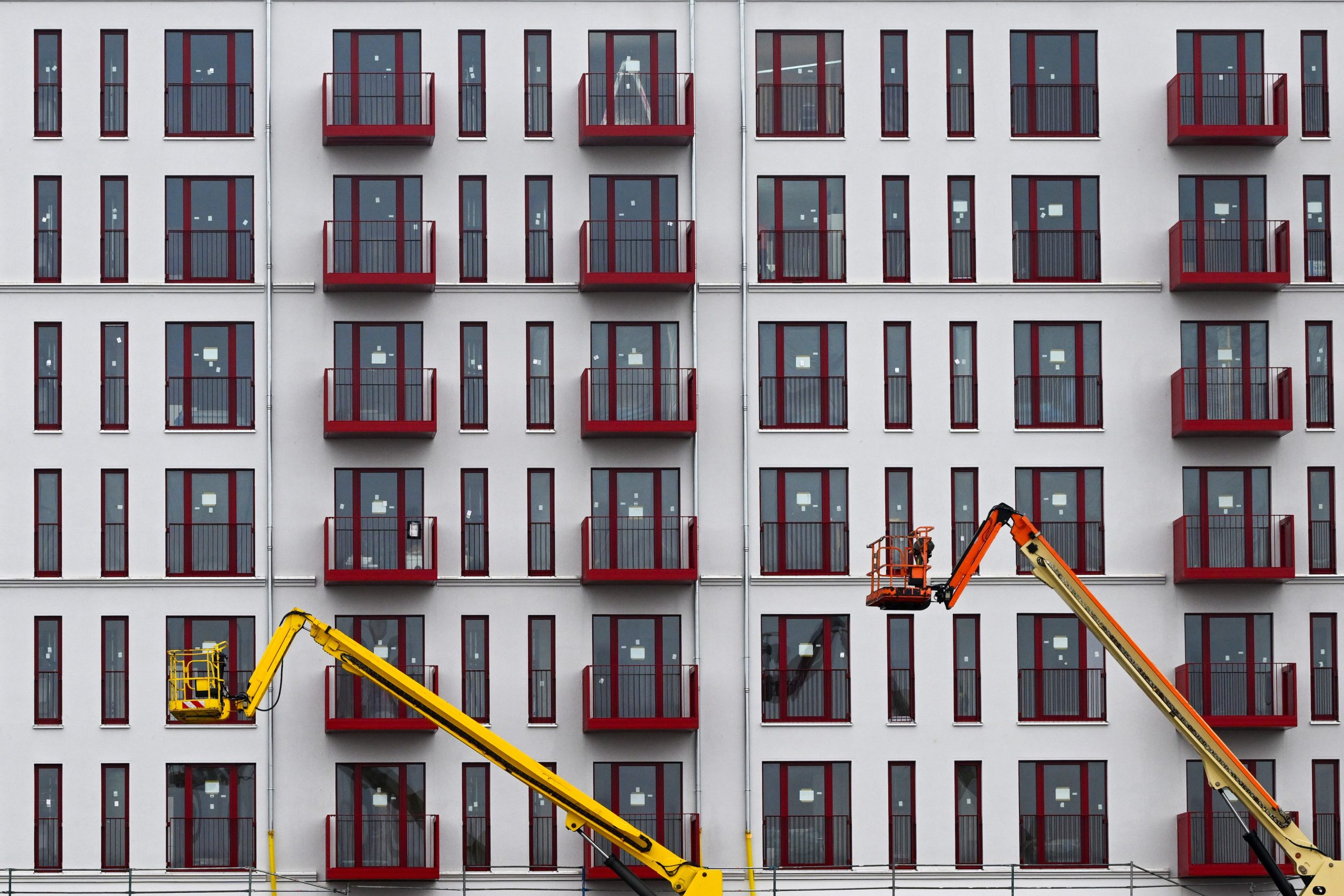
Construction of new housing in Germany has been stalled for years. According to the Federal Statistical Office, 206,600 homes were constructed in 2025, 45,000 fewer than the previous year, and the lowest since 2012. This year, that number is expected to fall even further to 185,000, according to a report published last week by the Ifo Institute. That shortage, coupled with population growth in major cities, has led to rising rents. Add this to the war with Iran, which has raised construction costs and interest rates, raising borrowing costs.
“The outlook on housing construction in Germany had slightly improved prior to February. But war with Iran and the rise in construction industry inflation will probably come back to complicate the lives of developers and contractors,” says specialist Ludwig Dorffmeister in the Ifo report. Plus, industry leaders have complained that in recent years, politicians have weighed down construction with new regulations, such as energy and acoustic isolation standards.
All this, Dorffmeister says, adds up to a problem of disequilibrium between supply and demand that is making rents go up in a country where more than 53% of homes are rental units — the highest rate in the EU. In cities like Berlin and Leipzig, that percentage is above 80%, as Dorffmeister, who is also an economist at the DIW Konstantin Kholodilin Institute, points out. “They are also lacking lots to build on in big cities, and the process for obtaining construction permits is lengthy,” says the expert.
In an attempt to incentivize construction, the Minister of Housing, Urban Development and Construction, Verena Hubertz, presented an action plan in June geared at reducing costs. Among other measures, it looks to simplify available support for real estate developers and to accelerate the planning process. The goal is for planning to last no longer than two years (currently, average time hovers around 27 months). It also seeks to more frequently employ industrialized construction, a system of prefabricated modules that are assembled at the building site, and which can speed up timelines.
In addition to those plans, the conservative-Social Democrat coalition government included a boon to the real-estate market in the reform package presented in June: an announcement of the creation of an affordable housing state agency. But the DIW Konstantin Kholodilin Institute doubts how much effect such an office might have, offering the reminder that there are already many regional companies dedicated to this. “Instead of creating a national bureaucratic structure with new positions, I would help the firms that already exist by, for example, providing more financial or construction support,” he says.
The government has announced that “in order to not endanger the construction of private housing, a federal law will prohibit the nationalization of private rental housing.” That measure would halt the Initiative to expropriate Deutsche Wohnen & Co (Germany’s largest real-estate company) in the Berlin city-state. “We want to build, not expropriate,” says Vice-Chancellor and Social Democrat leader Lars Klingbeil. But Minister of Justice Stefanie Hubig is skeptical. “There are experts who express doubts as to whether this can be regulated with respect to the Constitution,” the politician told the Handelsblatt newspaper.
In 2021, Berliners voted via referendum in favor of bringing private housing owned by large companies like Deutsche Wohnen — which has 100,000 homes in Berlin alone — into public ownership. Later, a law was approved to this effect. The regional coalition government has yet to apply the policy, but the Left Party and the Green Party have promised to do so, should they gain the majority in the September 20 regional elections.
This debate has long captured the public’s attention, and the Left Party has taken it on as one of its primary campaign messages to win votes in the Berlin election. Its candidate, capital favorite Elif Eralp, has focused her race on access to affordable housing, well aware of the subject’s importance among Berliners, as is reflected in polls — and not immigration or security, as the far right claims.
Hunting for an apartment in Berlin has become a titanic task. For a year, Dorothee spent a large amount of energy searching for an apartment for herself and her partner. At first, the two seemed to have everything in their favor: they are both German nationals who have held steady, well-paying jobs for many years. They don’t smoke and they don’t have pets. “Ads were taken down in a matter of minutes,” she remembers. “We we used to go to look at an apartment, the majority of the time there was a huge number of people, like 60 or 70,” she says. “There were simply very few offers at accessible prices. Sometimes, they were only for a limited amount of time, or they were on the ground floor of a really busy street. Or there were other factors that were absurd.”
Ultimately, they found an apartment in a neighborhood on the eastern side of the capital, far from the center and the areas where they originally had wanted to live. Dorothee, like many others, laments the number of offices that have been built in recent years in central areas, “simply because the state does not impose very strict restrictions” and how now, many of those buildings are empty. She also decries how the government is “advancing very slowly when it comes to improving the rental situation.” “I think that the problem can only be resolved by paying very special attention to the construction of affordable housing,” she says.
Aware of this lack of accessible rental properties, the government has presented an initiative to make caps on rent more effective, and that would establish a 10% increase limit in new contracts over local rent standards set by an annual index, a regulation that would apply to all areas experiencing housing shortages. Its goal is to expand the long-term rental market and end loopholes that have led to the proliferation of temporary housing and furnished apartments available for exorbitant prices.
The proposed law looks to place a six-month minimum on temporary rental contracts, and limit furnishing surcharges to the current value of the furniture. Plus, a flat rate of 10% of net rent (including expenses) may be applied to fully furnished units. According to Dorffmeister, while this cap on rents may be positive, it also has a downside: “It leads to less construction and creates an even larger housing shortage.”
In practice, and out of fear of conflict with their landlord, many tenants are hesitant to report abuse. In an attempt to fix that, in June, the Berlin regional government approved a landlord registry, a digital database that lists 1.8 million rental properties in the capital to detect suspicious cases of real estate speculation through the help of artificial intelligence. It will also activate a rental scanner that will automatically analyze online platform ads to detect potential noncompliance with the law. An initial analysis of more than 7,700 ads published in June revealed that 46% of them triggered suspicion of an infraction.
Sign up for our weekly newsletter to get more English-language news coverage from EL PAÍS USA Edition







 España2 weeks ago
 Amazon2 weeks ago
 New Developments2 weeks ago
 Audiencia Nacional2 weeks ago
 Uncategorized2 weeks ago