Connect with us

%

The Grand Prix Is Back: Madrid Prepares For Its First F1 Race In 45 Years

Published

on

the-grand-prix-is-back:-madrid-prepares-for-its-first-f1-race-in-45-years

Madrid’s new Madring circuit will stage its inaugural Formula 1 weekend from September 11 to 13. Credit: Motorsport Photography F1

Anyone planning a Sunday dash to the new circuit now has a firm time to work around: the lights are due to go out at 3pm. Before that, Madrid’s first Madring weekend brings three days of Formula 1, Formula 2 and Formula 3 action.

Madrid’s Formula 1 schedule in full

It has been 45 years since Madrid hosted a Formula 1 race. This year, that number goes back to 0. The Formula 1 Spanish Grand Prix returns and will run from Friday September 11 to Sunday September 13 at Madring, the new 5.4-kilometre circuit built around IFEMA Madrid and Valdebebas.

All the times below are local Madrid time, which is Central European Summer Time. Viewers in the UK will find each Formula 1 session begins one hour earlier.

Friday September 11

  • First practice: 1.30pm – 2.30pm
  • Second practice: 5pm – 6pm

Saturday September 12

  • Third practice: 12.30pm – 1.30pm
  • Qualifying: 4pm – 5pm

Sunday September 13

  • Drivers’ parade: 1pm – 1.30pm
  • Spanish Grand Prix: 3pm – 5pm

This is a conventional Grand Prix weekend rather than a Sprint event, giving teams three practice sessions before qualifying establishes the grid for Sunday’s 57-lap race.

Formula 2 and Formula 3 will fill the spaces between sessions

Spectators with weekend tickets will see considerably more than five Formula 1 sessions. Formula 2 and Formula 3 will also compete at Madring, beginning with practice and qualifying on Friday. The promoter’s current timetable lists a Formula 3 Sprint race at 11.05am on Saturday, followed by the Formula 2 Sprint at 2.15pm. Sunday begins with the Formula 3 race at 9.55am and the Formula 2 race at 11.25am, before the F1 drivers’ parade and main event.

Organisers describe these as the activities and timings confirmed so far, leaving room for further additions or adjustments closer to the weekend.

Madrid now carries the Spanish Grand Prix name

Spain has had two Formula 1 events in 2026, but only the Madrid race carries the traditional Spanish Grand Prix title. Barcelona hosted its race at the Circuit de Barcelona-Catalunya from June 12 to 14 under the separate Barcelona-Catalunya Grand Prix name. Madrid’s September event therefore represents both the new circuit debut and the transfer of Formula 1’s most familiar race title.

The capital last hosted a Formula 1 World Championship race at Jarama in 1981. Its return comes under an agreement intended to keep the Spanish Grand Prix in Madrid until 2035.

Madring combines public roads with a permanent venue

The new circuit has 22 corners and uses IFEMA land, roads through Valdebebas and approximately 1.5 kilometres of existing public streets. Its defining section is Turn 12, La Monumental. The semicircular corner is almost 550 metres long, has 24 per cent banking and is designed to be taken flat out. Organisers expect around 45,000 spectators to be positioned around this part of the circuit.

Elsewhere, the layout contains an 837-metre straight where cars are projected to exceed 300 kilometres per hour, followed by a heavy braking zone. Madring says the highest anticipated speed on the circuit is around 340 kilometres per hour.

Spectators are encouraged to make the most of public transport to and from the venue

Madring’s ticket information currently says standard grandstand and general admission tickets are only sold as three-day passes, rather than individual day tickets. 

Public transport will be central to the weekend. Metro Line 8 stops at Feria de Madrid beside IFEMA, while the C1 Cercanías train serves Valdebebas and connects with Atocha, Recoletos, Nuevos Ministerios, Chamartín and Madrid-Barajas Airport Terminal 4. The organiser’s frequently asked questions state that there will be no general parking at the venue, making it important for people to map out what services they’ll need in order to arrive at the venue. 

The Madrid race marks a pivotal moment for Spanish Formula 1 racing. Formula 3 cars will also complete two days of testing at Madring on August 24 and 25, allowing organisers to validate sporting, operational and safety procedures before Formula 1 arrives.

%

Apple Maps’ Camera Backpacks Are Walking Spain’s Streets – And The Images May Train AI

Published

on

apple-maps’-camera-backpacks-are-walking-spain’s-streets-–-and-the-images-may-train-ai

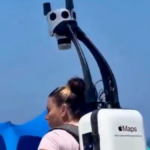
Apple uses portable camera systems to map pedestrian areas its vehicles cannot reach. Credit: nifunifa712 / X

Apple has taken its street-mapping cameras beyond the road, sending backpack-equipped surveyors through pedestrian areas of Madrid and Cataluña. While faces and number plates are blurred before publication, homes are obscured only if a person requests it, and anonymised images may also be used to train AI.

Apple’s cameras are reaching places its vehicles cannot

Apple conducted backpack surveys in Cataluña from March 30 to June 23, 2026, and in the Community of Madrid until July 1, according to the company’s official image-collection schedule. The portable systems allow surveyors to photograph pedestrianised streets, squares, pathways and other public spaces that cannot be reached by Apple’s mapping vehicles. Apple specifically cites streets in Madrid where driving is not possible as an example of where the backpacks can come in handy. 

Some of the information collected can be used directly in Apple Maps, including its Look Around feature, which allows users to explore streets through a panoramic ground-level view. Other portable surveys use iPhones, iPads or similar devices to improve the accuracy of the underlying map.

A video circulating on X has now placed the equipment under renewed scrutiny. It shows an Apple Maps operator carrying one of the distinctive camera backpacks through a busy public area near the coast. 

The footage does not establish that Apple has introduced an entirely new mapping system, nor is it evidence of a privacy breach. But it does raise questions on what happens to the images of people, vehicles and homes caught along the way, and whether some places should remain “best kept secrets”. 

Faces and number plates are blurred before publication

Apple says it blurs faces and vehicle registration plates in images published through Look Around. The same privacy protections apply whether the imagery was collected from a vehicle or by a surveyor walking with portable equipment. Apple promises that identifying details will be obscured in the publicly available imagery.

Spain’s Data Protection Agency says registration plates can constitute personal data, therefore blurring plates removes one of the clearest identifying details before a street scene is made available online. Homes, however, are treated differently. Apple does not promise to blur house façades automatically, although residents can request that their own individual property be obscured. Requests can also be submitted if a face or registration plate has not been sufficiently hidden. This places some responsibility on residents to inspect the published imagery and complain if they believe it reveals more than they are comfortable having online.

The imagery can serve a second purpose beyond Maps

The most significant privacy question is how the resulting material may later be reused, and not just on their maps app. Apple says blurred imagery collected during its mapping surveys can help develop and improve other company products and services. This includes training models connected to image recognition, image creation and image enhancement.

Apple confirms that the material used for these additional purposes is blurred, and pedestrian’s faces or house façades will not be automatically placed inside an AI training set. However, its Spanish image-collection notice does not identify which individual products or models will use the data, how much of the collected imagery will be reused or how long those training datasets may be retained.

The result is a broader trade-off than simply exchanging street photography for a more detailed map. Public spaces that cannot be reached by camera cars can now be documented on foot, and the resulting visual information may contribute to Apple technology well beyond navigation.

Residents can request that their homes are hidden

Anyone who wants a face, registration plate or their own home blurred out can report the image through Apple Maps or contact the company using the address mapsimagecollection@apple.com. Apple’s Maps reporting privacy notice says a blurring request may be linked to the person’s Apple Account or email address. 

No publication date has been announced for imagery gathered during the 2026 pedestrian surveys in Madrid and Cataluña. Residents will just have to wait until their blurred out silhouettes appear in Look Around before checking how their street, property or image has been presented.

The backpack itself may look more intrusive than an ordinary mapping car because the operator walks directly among everyone else. Next to you while you eat on a terrace, as you sunbathe on the beach, or as you walk your dog outside your house. But the more consequential issue is what Apple collects in public, if it automatically hides what it should and how far supposedly anonymised street imagery travels once the map has been made.

Continue Reading

%

80% Of Wild Boars Carry Diseases

Published

on

80%-of-wild-boars-carry-diseases

At first glance, a wild boar wandering through a Spanish neighbourhood or trotting along a beach can seem almost charming. Videos of families of striped piglets crossing roads or rooting around parks regularly go viral, with many people stopping to take photographs or even attempting to feed them.

But wildlife experts say that adorable appearance hides a much harsher reality.

Spain’s wild boar population has grown dramatically in recent years, and the animals are now appearing in urban areas with increasing frequency. Besides causing traffic accidents and damaging gardens, they can also carry diseases that affect humans, pets and livestock. New research from Málaga has highlighted just how important that risk may be.

Study uncovers infectious disease risk

Veterinarians in Málaga have been analysing around 80 wild boars and feral pigs that were captured after entering urban areas and residential neighbourhoods. Preliminary findings revealed a high prevalence of antibodies linked to hepatitis E, a virus that can infect people and is commonly spread through contaminated food or contact with infected faeces. Researchers are also screening the animals for numerous other bacteria, parasites and viruses capable of causing disease.

Experts stress that the greatest concern is not simply eating wild boar meat, which is subject to inspection when legally sourced, but the increasing contact between these animals and people in parks, streets and public spaces where contamination from faeces becomes possible.

Where are wild boars found in Spain?

Wild boars live throughout much of mainland Spain and are especially common in Andalucía, Catalonia, Aragón, Castilla y León, Extremadura, Galicia and parts of the Valencian Community.

However, they are no longer confined to forests.

Sightings have become increasingly common around Málaga, Marbella, Benahavís and other Costa del Sol towns, while they regularly appear on the outskirts of Barcelona, Madrid and numerous smaller municipalities. Holidaymakers have even spotted them wandering across beaches, golf courses, campsites and supermarket car parks in search of food.

Their growing confidence around humans is largely driven by easy access to rubbish bins, discarded food and deliberate feeding by well-meaning residents.

Why they are more dangerous than they look

Despite their stocky appearance, wild boars are surprisingly fast and powerful. Adults can weigh well over 100 kilograms and are capable of sprinting at speeds approaching 50km/h.

Although they generally avoid people, they can become aggressive if cornered, frightened or protecting their young. Females with piglets are particularly defensive, while males possess sharp tusks capable of causing serious injuries.

Road safety is another major concern. Collisions involving wild boars have risen across Spain as animals venture onto roads at dawn, dusk and during the night, often appearing with little warning.

Veterinarians also warn that wild boars can act as reservoirs for diseases affecting domestic pigs, hunting dogs and wildlife, while some infections may also pose a risk to humans.

What should you do if one approaches?

Wildlife experts recommend staying calm and giving the animal plenty of space.

Do not feed it, try to touch it or attempt to take a close-up selfie. Feeding encourages boars to lose their natural fear of humans, increasing the likelihood of future encounters.

If a boar approaches, slowly back away without making sudden movements. Keep dogs on a short lead, as barking pets can provoke defensive behaviour. Never get between a mother and her piglets, and if the animal shows signs of aggression, move behind a solid barrier such as a parked car, fence or building.

If you encounter an injured or unusually aggressive boar in an urban area, contact the local police or emergency services rather than trying to deal with it yourself.

Learning to live alongside wildlife

Experts say wild boars are an important part of Spain’s natural ecosystems, helping disperse seeds and recycle nutrients through woodland habitats.

The challenge comes when expanding towns, plentiful food waste and shrinking natural spaces encourage them into areas heavily used by people.

That is why authorities continue to urge residents and visitors to secure rubbish, avoid feeding wildlife and respect the animals from a safe distance.

They may look irresistibly cute from afar, but Spain’s wild boars are still wild animals, and the safest encounter is always one viewed from a respectful distance.

Continue Reading

%

Comic-Con Malaga 2026 Reveals 70-Star Guest List

Published

on

comic-con-malaga-2026-reveals-70-star-guest-list

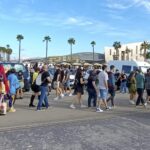
Kilometric queues outside Comic-Con. Credit: EWN

Comic-Con fans already have plenty to look forward to after San Diego Comic-Con Malaga confirmed its first wave of celebrity guests for the 2026 event, with around 70 special guests already signed up and organisers promising even more announcements before October.

Running from October 1 to 4, 2026, at Malaga’s Fycma exhibition and conference centre, the convention is building on the success of its debut by bringing together film stars, TV favourites, comic creators, gaming legends and pop culture icons under one roof.

Lord of the Rings stars lead Comic-Con Malaga line-up

Among the biggest names confirmed are Elijah Wood and Sean Astin, forever loved by fans for playing Frodo Baggins and Samwise Gamgee in The Lord of the Rings trilogy.

Joining them will be Karl Urban, best known today for his role in The Boys, while Christopher Lambert, remembered by many for Highlander, is also scheduled to appear.

Marvel fans are in for a treat too, with Deborah Ann Woll, who starred as Karen Page in Daredevil, confirmed for the event.

Organisers have stressed that the guest list remains open, meaning even more celebrities could be announced over the coming weeks.

Comic creators and gaming legends also confirmed

Comic-Con Malaga is about much more than film and television. Comic book fans will be able to meet respected artists including Iban Coello, Glenn Fabry, Arthur Suydam and Natacha Bustos, representing a wide range of styles and publishers.

Gaming buffs are also well catered for. Legendary developer John Romero, one of the creators behind Doom and Wolfenstein 3D, will attend, while Jeremy Crawford, one of the lead designers of Dungeons & Dragons, is also on the programme.

Film producer and director Dean Devlin will use the event to present exclusive previews of upcoming seasons of The Ark and The Librarians: The Next Chapter.

Malaga prepares for another international pop culture celebration

Following a successful debut, San Diego Comic-Con Malaga continues to establish itself as one of Europe’s biggest pop culture events.

Visitors can expect celebrity panels, autograph sessions, exhibitions, gaming experiences, comic book artists, exclusive previews and plenty of cosplay across the four-day convention.

With nearly 70 guests already confirmed and organisers continuing to announce new additions, anticipation is only likely to grow as October approaches.

For the latest guest announcements and ticket information, fans can visit the official San Diego Comic-Con Malaga website: https://sandiegocomicconmalaga.com.

Continue Reading

Trending

Copyright © 2017 Spanish Property & News