
technology
The key to online visibility: Tools supporting online visibility

Online visibility has entered a new era. For years, online visibility was largely synonymous with Google rankings. Today, that equation is far more complex. Search engines are evolving, AI assistants are becoming a new source of information, and users increasingly expect instant answers instead of links.
For businesses, this means online visibility is no longer just about appearing in search results. It’s about building authority, credibility, and providing reliable information for both people and AI.
From backlinks to digital authority
The rules of SEO have changed significantly. Mass link acquisition has given way to a strategy focused on quality, context, and trust. Search engines now value editorially relevant publications, authoritative websites, and natural brand mentions far more than the sheer number of backlinks.
At the same time, marketers are embracing Generative Engine Optimisation (GEO)—an approach that focuses on how brands are represented in the sources used by AI-powered search and large language models. In this environment, publishing valuable content on trusted websites has become an essential part of long-term digital visibility.
As SEO becomes more sophisticated, marketers increasingly rely on specialised tools that support different stages of the visibility-building process. Some help analyse performance, others improve technical SEO, while dedicated platforms make it easier to earn high-quality publications and backlinks.
Three SEO and digital visibility tools
Ahrefs – understanding your backlink profile
Before building links, it’s important to know where your website stands. Ahrefs is widely used by SEO professionals to analyse backlink profiles, monitor competitors, identify content opportunities, and measure domain authority.
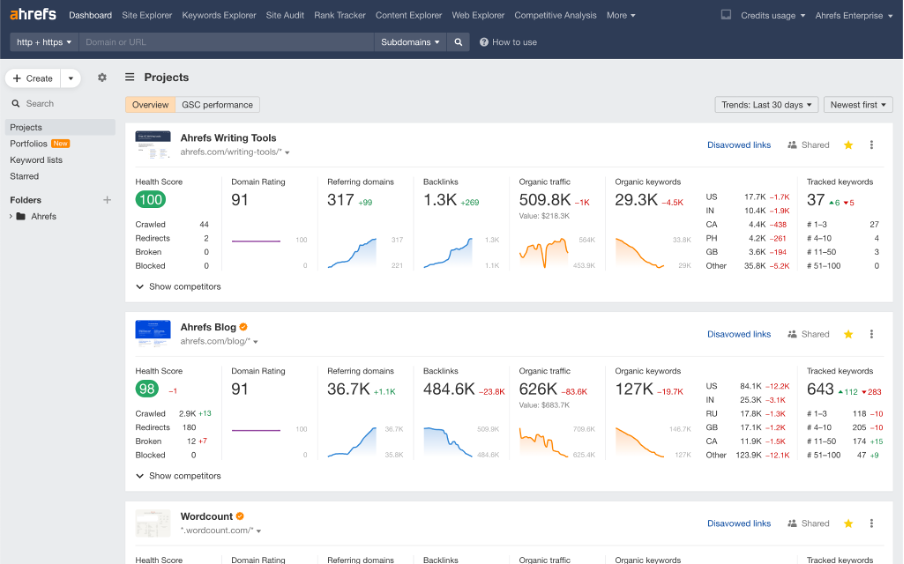
In recent years, the platform has also expanded its AI capabilities, introducing features such as AI-powered keyword suggestions, search intent analysis, content optimisation, and tools for tracking brand visibility across AI-driven search experiences. The platform is commonly used as a starting point for backlink analysis and off-site SEO planning.
Screaming Frog – improving your website from the inside
Strong backlinks alone won’t deliver results if a website has technical SEO issues. Screaming Frog SEO Spider is widely used to audit websites, identify broken links, analyse metadata, detect indexing problems, and improve overall site health.
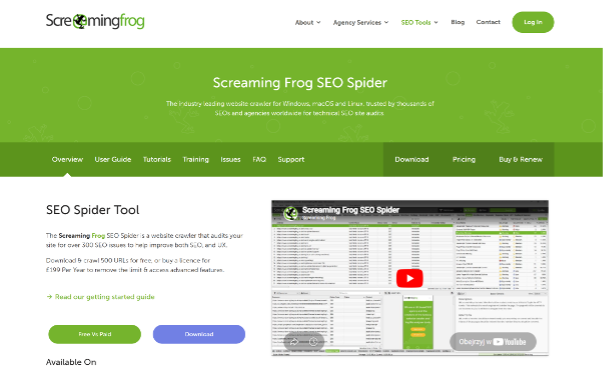
Keeping pace with the AI era, recent versions integrate with models such as OpenAI, Gemini, and Anthropic, allowing users to automate tasks like content analysis, page summaries, semantic classification, and other large-scale SEO workflows directly within the crawler. The software is commonly used as part of technical SEO audits and website maintenance.
WhitePress® – streamlining content distribution
Once an SEO strategy is defined, one of the main challenges is executing content campaigns across multiple publishers and markets. Managing outreach, publications and campaign reporting manually can be both time-consuming and difficult to scale.
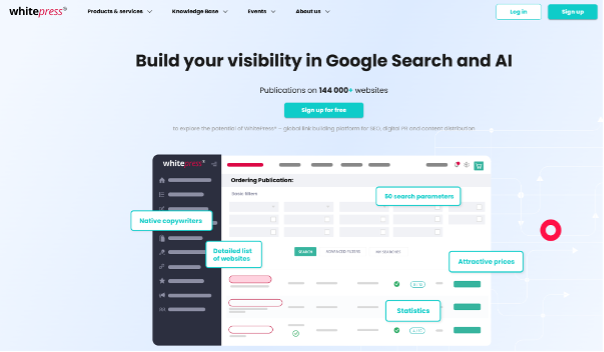
WhitePress® is a link-building and content distribution platform designed to support this process. is one of the platforms designed to support this process, connecting advertisers with more than 140,000 verified websites and blogs across multiple countries and languages. In addition to link building, it supports sponsored content, digital PR, copywriting and content distribution through a single interface.
Source: WhitePress.com
According to the company, the platform offers publisher filtering based on SEO metrics, traffic, industry and language, along with integrated campaign management and performance tracking. The platform is intended to simplify the management of international content campaigns while supporting online visibility across both search engines and AI-powered search environments.
Visibility is becoming a long-term investment
As competition for online attention continues to grow, businesses need more than isolated SEO tactics. Technical optimisation, data-driven analysis, and high-quality publications increasingly work together as parts of a single visibility strategy.
Tools such as Ahrefs, Screaming Frog and WhitePress® address different aspects of digital visibility, from technical optimisation and analytics to content distribution and publisher outreach. Together, they illustrate how modern SEO increasingly combines technical expertise, high-quality content and authoritative publications.




AI
Spain Quietly Bans Controversial US Tech Firm Palantir From Public Contracts Over National Security Concerns


 THE Spanish government has quietly decided to ditch controversial tech firm Palantir from involvement in sensitive public contracts amid growing concerns over national security. According to El Confidencial, officials have
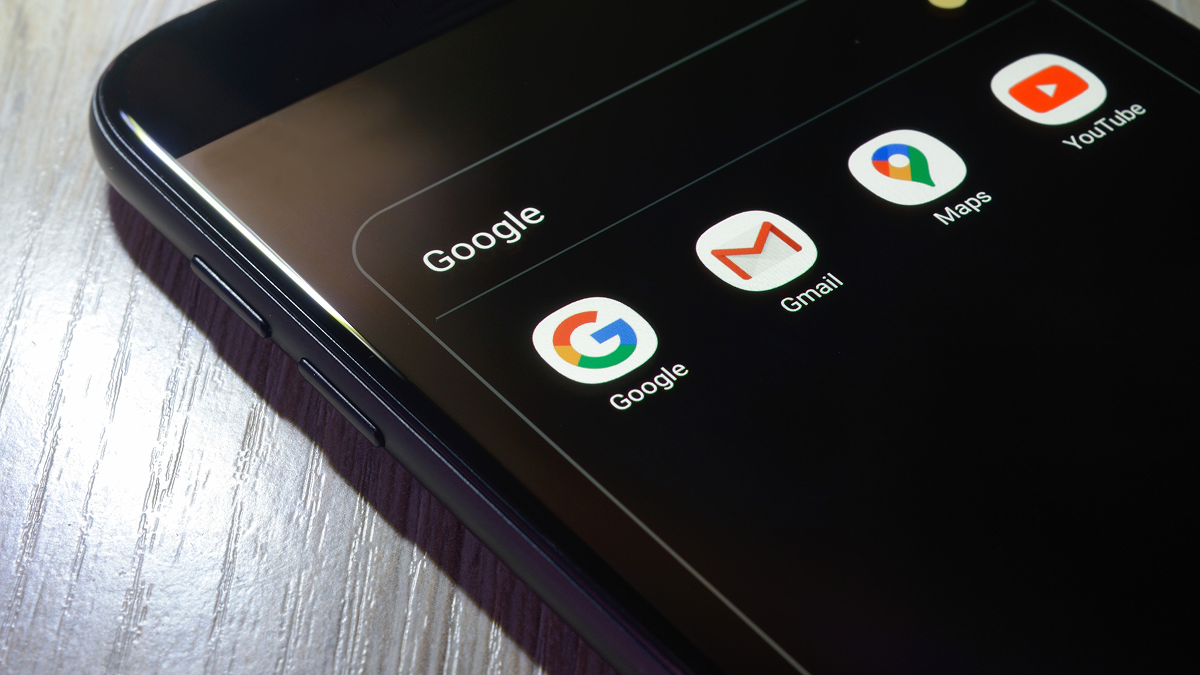
Android phone defaults are back under EU scrutiny. Credit: L-51 / Shutterstock
Many Android users never actively choose the browser or search app their phone opens first. On Thursday, July 2, Europe’s top court confirmed Google’s €4.125 billion Android fine, turning an old competition case into a fresh reminder of how phone defaults shape our digital habits, and the corporate slight-of-hand going on behind the curtains.
How Android phone defaults became a €4.1bn EU case
The Court of Justice of the European Union, known in Spain as the Tribunal de Justicia de la Unión Europea (TJUE), has dismissed the final appeal by Google and its parent company Alphabet in a long-running Android competition case.
The Luxembourg-based court confirmed the penalty imposed over Google Search’s abuse of a dominant position in the context of the Android operating system, according to the court’s own press release listing for the case of Google and Alphabet v Commission. The fine, widely reported as €4.125 billion, remains the European Union’s largest antitrust penalty.
The case began with a European Commission decision in 2018, when Brussels fined Google €4.34 billion for restrictions linked to Android mobile devices. The Commission said Google had used Android to strengthen the position of its own search engine by imposing conditions on manufacturers and mobile network operators.
The fine was later reduced by the EU’s General Court in 2022, before Google took the case to the EU’s highest court. Reuters reported that Thursday’s decision dismissed Google’s final appeal and confirmed the lower penalty.
Google’s monopoly on Android pre-installed apps
The dispute was not simply about Google Search or Chrome appearing on Android phones. It centred on whether Google used the popularity of Android to make its own services harder to avoid and rival services harder to reach.
According to the Commission’s original 2018 decision, Google required manufacturers to pre-install Google Search and Chrome as a condition for licensing the Google Play Store. It also objected to payments linked to exclusive pre-installation of Google Search and restrictions on devices using alternative versions of Android, often called Android forks.
The Commission stressed in 2018 that its decision did not challenge Android as an open-source system or the Android operating system itself. Its case was about specific contractual restrictions imposed around Google’s own apps and services.
Google has argued that Android created choice and helped keep mobile devices competitive. After Thursday’s ruling, Reuters reported that the company said the judgment failed to recognise its investment in keeping Android open, interoperable and free, adding that it had adapted its agreements after the original 2018 decision.
Anyone using an Android phone can check which apps are set as defaults. Google’s own Android Help pages say the default browser can be changed through Settings, then Apps, then Default apps or Choose default apps, before selecting the Browser app.
The ruling isn’t a dramatic household event, but it has given people another perspective on the ongoing changes occurring in the tech industry today. The infamous search engine is now being called out and fined €4 billion for their abuse of power over Android phones, they are competing heavily with other up and coming search engines, and AI services are rapidly becoming many people’s default go-to for general enquiries.
Android AI services are already the next EU battleground
The Android case also lands at a moment when Brussels is looking beyond browsers and search bars.
In April 2026, the European Commission said it had sent preliminary findings to Google under the Digital Markets Act (DMA), the EU law designed to make large digital platforms, known as gatekeepers, fairer and more open. The Commission said the proposed Android measures were aimed at ensuring third parties have effective access and interoperability with key Android capabilities.
That newer process includes competing artificial intelligence (AI) services. The Commission said the proposed measures would help rival AI services interact with apps on Android devices, such as sending an email through a user’s preferred email app, ordering food or sharing a photo.
This is where the story becomes more forward-looking. The browser and search engine battles of the past are now moving into AI assistants, voice tools and automated phone tasks. And the next changes may be less about a fine already imposed and more about whether future phones make it easier to choose the services that open, search, answer and act first.


Gibraltar Renames Its Airport After The ‘Father Of The Gibraltarians’ One Week Before Spanish Police And Customs Move In Under New Treaty
Drug raid in Spain takes bizarre turn as Guardia Civil discover exotic reptile
Haitam case in Torremolinos reopens after family appeal succeeds in Malaga court

Red Bull set for radical new design in desperate bid to keep Max Verstappen

F1 Qualifying Results: 2026 Austrian Grand Prix times and grid positions
Spain’s traffic warning for summer 2026: These are the weekends the DGT says you should avoid


-
 Uncategorized2 weeks ago
Red Bull set for radical new design in desperate bid to keep Max Verstappen
-
 Uncategorized1 week ago
F1 Qualifying Results: 2026 Austrian Grand Prix times and grid positions
-
DGT2 weeks ago
Spain’s traffic warning for summer 2026: These are the weekends the DGT says you should avoid
-
best places to view the solar eclipse in mallorca2 weeks ago
Mallorca solar eclipse 2026: Best viewing areas and what to know
-

 %2 weeks ago
Spain’s Heat Reaches Highest Level In 76 Years
-
Latest2 weeks ago
CONFIRMED: Spain Breaks June Heat Record
-
Latest1 week ago
EU Worries Jet Fuel Supply Situation To Worsen
-
Latest2 weeks ago
Spain’s Former PM Requests His Corruption Probe Be Nullified