
armada
The Strange Tale Of The Frigate That Traveled The Mediterranean Buying Archeological Artefacts

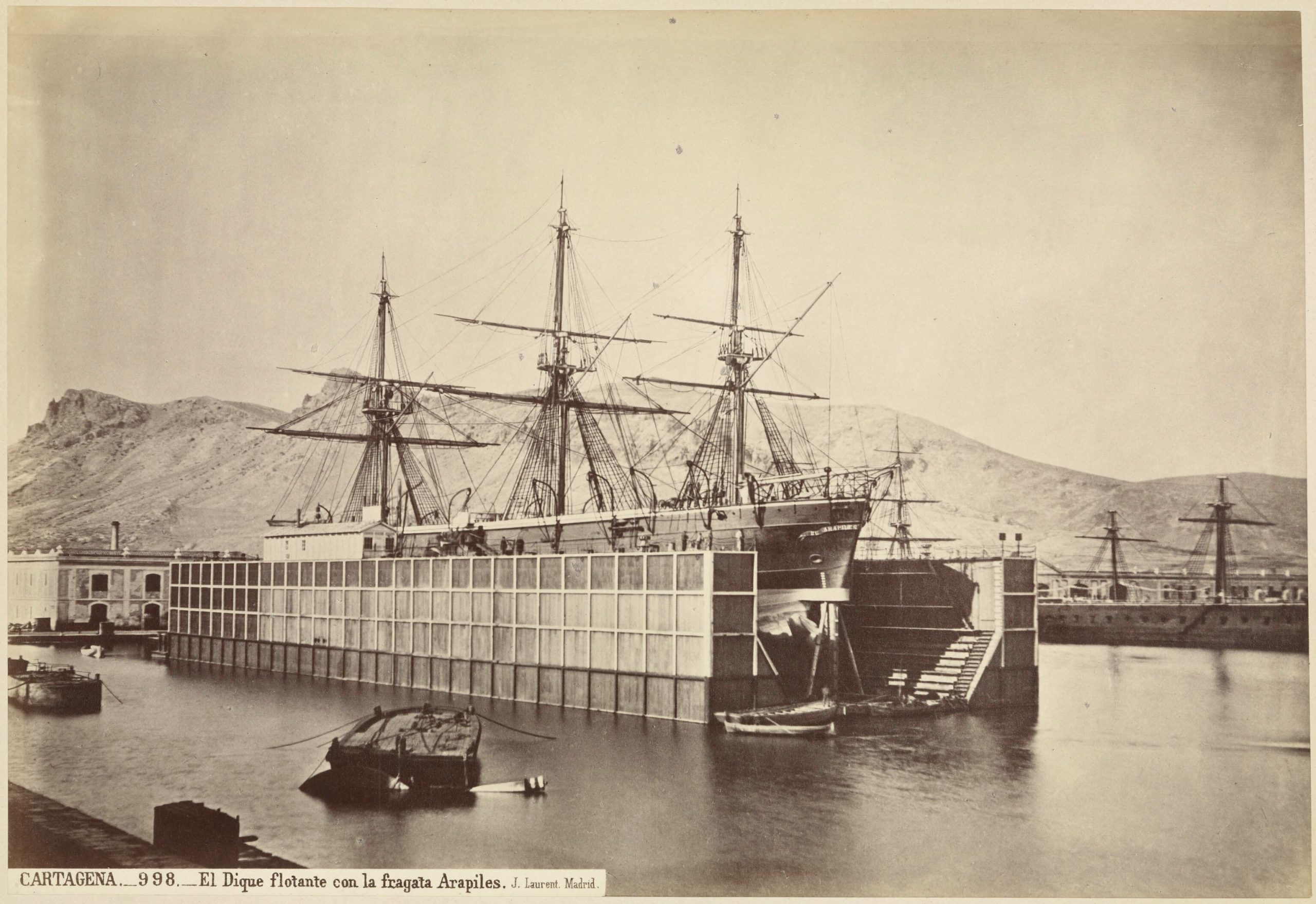
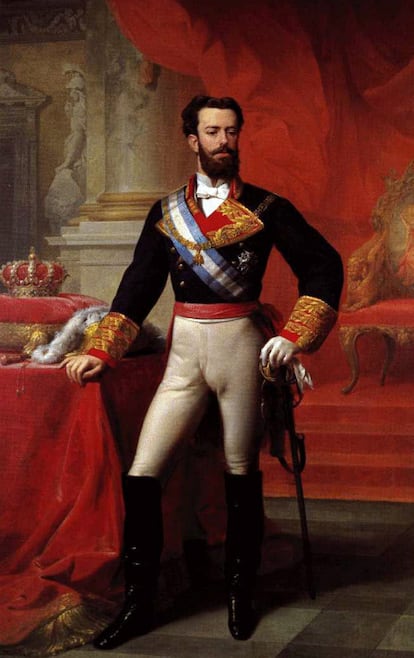
During the reign of Amadeo I of Spain (1871-1873) one of the most outlandish archaeological expeditions in history was carried out: the frigate Arapiles was sent to buy antiquities in the eastern Mediterranean to fill the halls of Spain’s recently inaugurated National Archaeological Museum (MAN). But there was one problem: the ship did not even carry enough funds to buy the coal needed to sail.
“Zero funds, help us minister with your legitimate influence,” the director of the scientific commission, Juan de Dios de la Rada, telegraphed from Constantinople. He did not receive a response.
Surprisingly, the mission achieved a measure of success, and the frigate returned to Spain with 319 archaeological objects, packed in 22 crates, along with 250 photographs and drawings. The question, however, remained: what exactly had they bought — or accepted as gifts? Nothing was entirely clear.
“Collecting implies choosing, an option that the commission to the East did not have. The compilation was not based on a specific and systematic research project. This methodological shortcoming aligns it more with illustrated collecting, but still far from a modern archaeological program,” writes the historian and Navy reservist, Carmen García, in The Archaeology that the Navy Brought by Sea. The Commission to the East of the Frigate Arapiles in 1871.
Winner of the last Don Juan Alvargonzález Naval History Prize, the book gives a detailed account of the ship’s odd journey that saw it cross the Mediterranean just when sailing ships were being abandoned in favor of steam power. The frigate had both systems, something that came in handy given the total lack of fuel. The crews had to wait for the winds to be favorable to begin the voyage.
At the end of the 19th century, Europe was creating its great museums, such as the British Museum and the Louvre. Spain launched the MAN. And although the great European museums filled their spaces with oriental objects, that was not on the cards for Spain; the country did not lead any of the great archaeological expeditions to the Middle East, which were mainly in the hands of the British, French and Germans. The Arapiles was presented as the solution. If you couldn’t loot, you could at least try to buy.
But soon the crew and the archaeological team came face to face with reality. “Today I only have 28 days of provisions left; the monthly payment in the box will barely suffice, a current monthly payment that, although I keep 520 tons of coal in the coal kilns, makes it absolutely impossible even using the sail as much as I can to travel the great distance that remains,” wrote the captain of the ship, who predicted that they would never reach Constantinople or Egypt, and the mission would fail.
Despite the challenges, the ship did, however, manage to reach present-day Turkey, where those on board discovered that other European countries were trading with Constantinople, while no ship with a Spanish flag was in evidence. They found that Italian, Greek, Austrian, French and English consuls lived in the finest villas in each of the country’s cities and invited local authorities to parties in huge palaces, something highly valued by the Ottomans. On the other hand, the Spanish diplomatic leaders resided in very modest houses where no high-ranking Turkish leader would deign to be seen.
When they went ashore, the culture shock for the Spanish expedition was severe. They understood absolutely nothing about Islam. In fact, one episode nearly triggered a serious incident: as a gesture of gratitude to some dockworkers, they offered them carefully wrapped pieces of bacon. For that reason, although the Spaniards were initially wary, the crew sought direct contact with the descendants of the Jews expelled from Spain four centuries earlier.
“On this trip to the East, the Sephardic Jews went from being a sector of the Ottoman population that was an object of official distrust, to being a group that the Spanish traveler valued for its hospitality and familiarity, making them feel at home,” says García.
The pieces that archeologist De la Rada acquired and that entered the MAN “were almost all gifts from the [Spanish and foreign] consuls, but not the vases that he acquired in Syracuse from his merchant friends who were gallant and attentive.” However, García adds that “Dr. Paloma y Romanas from the MAN affirms that the oinócoe [wine vessel] that was part of the grayish ceramic collection with black figures [that the expedition bought] is a forgery that managed to deceive De la Rada.”
The objects donated by the diplomats or otherwise acquired by the Arapiles included a large relief, a Greek stele (an upright stone or wooden slab monument), lanterns, a Roman head, torsos, fragments of marble sculptures, a Ptolemaic bust, a column from Pompey, ceramics, glass objects, coins and various statues. It was a not inconsiderable cache given the meagre amount of money available to the expedition.
Once back home, the Arapiles, which featured a wooden hull that could not support the armor it carried, ended up in Cuba and was scrapped. The ship cost 6.6 million pesetas but its wood and iron were sold for just 157,000 pesetas. Green, the U.S. shipbuilding company that sold the ship to the Spanish, was still demanding payment 40 years after the Arapiles was launched, claiming that the Spanish government had never paid for the frigate. Admiral Pascual Cervera responded: “I am almost absolutely certain that, if the books of the Green house are judicially searched, the sum they claim from us will be seen to have been paid.” Green did not insist again.
Carmen García wonders, given De la Rada’s denial of the forgeries, whether, on the right budget, he would have avoided such objects and bought instead only bona fide archeological pieces. Or if he would have fallen into a trap which García says is “as old as archaeology itself.” It is an unanswerable question, because he never had the chance to say, “I’ll take one of those mummies,” since the lack of funds meant he could never truly venture into the land of the Pharaohs. He only stopped in Alexandria — and only briefly and by sheer luck.
Sign up for our weekly newsletter to get more English-language news coverage from EL PAÍS USA Edition












Marshal reacts after being SLAPPED by angry racer following crash

The Strange Tale Of The Frigate That Traveled The Mediterranean Buying Archeological Artefacts

Why Your Weekly Shop In Spain Feels More Expensive Than Last Year
A major EU border system goes live today – What changes for travellers?
El Pentágono, Evacuado Por Una Falsa Alarma Ante La Sospecha De Un “incidente Con Materiales Peligrosos”
Mallorca launches new plan to save its beaches as coastal erosion threatens popular resorts


-
EU rules1 week ago
A major EU border system goes live today – What changes for travellers?
-
America2 weeks ago
El Pentágono, Evacuado Por Una Falsa Alarma Ante La Sospecha De Un “incidente Con Materiales Peligrosos”
-
Coastal erosion2 weeks ago
Mallorca launches new plan to save its beaches as coastal erosion threatens popular resorts
-
fira de ses herbes2 weeks ago
Selva herb fair returns: Mallorca’s most magical tradition blooms again
-
european airport delays1 week ago
1,225 delays at major European airports raise summer warning for Spain travellers
-

 %1 week ago
Barcelona Tests Olive Pit Asphalt That Could Transform How Cities Build Roads
-

 Uncategorized2 weeks ago
WATCH: Kim Kardashian steals F1 Monaco GP winner Antonelli
-

 Casa Real2 weeks ago
Victoria Federica De Marichalar Fue Vestida De Dior Para Ver Al Papa