Connect with us

%

Why Your Weekly Shop In Spain Feels More Expensive Than Last Year

Published

on

why-your-weekly-shop-in-spain-feels-more-expensive-than-last-year

, food prices in the country have continued to rise over the past year. Photo credit: Guillem de Balanzo/Shutterstock

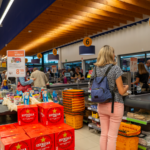
If you have noticed your supermarket bill going up even though you are buying the same things, you are not imagining it. Basic food items in Spain have risen again over the past year and it is showing most clearly in the weekly shop.

Eggs, coffee, vegetables and other everyday essentials are all more expensive than they were a year ago. None of it feels dramatic on its own, but it builds up quickly. A few cents extra on several products becomes several euros more at the till without you really changing anything.

According to Spain’s National Statistics Institute (INE), food prices in the country have continued to rise over the past year, with categories such as eggs, coffee and fresh vegetables among those recording the strongest increases in the consumer price index. That is what most people are noticing. Not one big jump, just steady increases across normal shopping baskets.

Eggs, coffee and vegetables are driving most of the increase

Eggs are one of the clearest examples of recent price rises. Coffee has followed a similar pattern, moving up again after already expensive periods in previous years. Fresh vegetables have also increased, partly because supply changes with seasons and weather conditions.

Even supermarkets own brand products, which many people rely on to keep costs down, have not stayed stable. They have moved up alongside branded items, which means switching brands does not always reduce the total anymore.

The impact is most obvious because these are not occasional purchases. They are part of almost every weekly shop. Milk, bread, fruit, pasta, oil and vegetables form the base of most households’ spending. When those go up together, it is noticeable straight away.

Why the same items now cost more without obvious changes

There is no single reason behind the increase. It comes from several pressures feeding into the final price. Production costs have risen, transport is more expensive, energy costs have been higher and supply chains have been under strain at different points. When those costs increase, supermarkets eventually pass them on. Even if the rise happens gradually, it still reaches the customer.

What makes it harder to notice in real time is that prices do not move in a straight line. Some weeks nothing changes, then suddenly a few key items jump at once.

Why your receipt keeps changing even when your shopping does not

One of the most frustrating parts is that there is no single moment where prices clearly go up. It happens in small steps. One week eggs are more expensive. A few weeks later vegetables change. Then coffee shifts again. Because it is spread out across different products, it never feels like one clear increase.

Instead, it shows up as a slightly higher total at the end of your shop. If you compare receipts from a year ago, the difference is often there, but it is made up of lots of small changes rather than one big jump. That is why many people feel like their budget is being stretched without really knowing when it started.

What a typical weekly shop looks like now

For a standard basket including milk, eggs, bread, pasta, fruit, vegetables, coffee and cooking basics, the total is usually higher than it was last year even if nothing extra is added. It is not that people are buying more. It is that the same list costs more to complete.

Even small increases across multiple items make a difference over time. A few euros extra each week adds up across a month, especially for households on fixed incomes. This is why food inflation is often felt slowly rather than suddenly.

Why prices are unlikely to drop back quickly

Food prices tend to stay high once they have risen. Even if production or transport costs ease, retail prices do not usually return to previous levels. Supermarkets operate on tight margins and adjust slowly. When costs go up, prices rise. When costs stabilise, prices tend to stay where they are.

That means households often adjust to a new normal rather than seeing prices fall back. It is one of the reasons the weekly shop feels permanently higher once it has changed.

What people actually notice at the supermarket

Most shoppers are not tracking inflation data or price charts. They notice something simpler. The same items they always buy now cost more at checkout.

Nothing about the shopping list has changed. The routine is the same. The products are the same. The only difference is the total at the end. And that is what sticks.

%

Why Mercadona Fish Comes In Blue And Green Boxes — And What It Actually Means

Published

on

why-mercadona-fish-comes-in-blue-and-green-boxes-—-and-what-it-actually-means

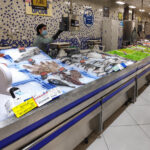
the boxes are part of an internal system that helps staff organise fish depending on how it arrives. Photo credit: m.e.s.t.o.c.k/Shutterstock

If you have ever stopped at the fish counter in Mercadona, you have probably seen it without giving it much thought. Some fish are placed in blue boxes, others in green ones.

It is one of those details that sits in the background for years. Then one day you notice it and suddenly start wondering what it is actually about. A lot of people assume the colours are just for organisation, or that they might show something about quality.

What the blue and green boxes actually mean

The colours are used to show where the fish comes from before it reaches the store. Blue boxes contain farmed fish. These are fish raised in controlled environments and supplied in a standard way to stores across the country. It allows Mercadona to keep a consistent supply available all year round.

Green boxes contain fish that comes from local fish markets. This is fish that arrives through daily catches and is selected locally depending on what has been brought in that day. So in simple terms, blue is farmed fish and green is fish sourced from local markets.

Why people started noticing it

For a long time, most shoppers did not think twice about it. The boxes were just part of the counter setup. That changed when social media posts and short videos started pointing out the colour difference. Once people realised there was a system behind it, curiosity took over.

And when there is no explanation in front of you at the supermarket, people naturally start guessing. Some thought it was about quality, others thought it was about the country the fish were coming from and then there were some that thought it was simply decoration. That is how the confusion started, not because the system is complicated, but because it was never really explained to the customer in the first place.

Why many people prefer the green boxes

For a lot of shoppers, fish from local markets feels more traditional. It comes from daily catches, so what is available depends on the day. That means the selection can change depending on season, weather and local supply.

Because of that, many people associate green-box fish with freshness and a closer connection to local fishing. Farmed fish, on the other hand, is more consistent. It is produced in controlled environments and supplied steadily throughout the year. That reliability is a big part of why it is widely used.

What actually matters when you buy fish

Even though the box colour gives you a quick idea of where the fish comes from, it is not the most important thing to look at.

The label at the counter is what tells you the full information, including:

  • the species of fish 
  • whether it is farmed or wild 
  • where it comes from 
  • pricing and traceability details 

That is the information that really matters when you are deciding what to buy.

A simple system most people never notice

The blue and green boxes are not there as a code or a marketing trick. They are simply a practical way of separating two different supply types inside the store.

One is farmed fish that arrives in a steady flow. The other is fish from local markets that changes depending on the day.

Most people walk past it without ever thinking about it. Then one day it clicks, and suddenly the fish counter does not look quite the same again.

Continue Reading

%

Love To Sing Choir Stages Free Casares Costa Concert To Fund Gambia School

Published

on

love-to-sing-choir-stages-free-casares-costa-concert-to-fund-gambia-school

All in the western Costa del Sol receive an open invitation to a free charity concert organised by the Love to Sing Choir on Thursday, June 26. The event takes place at the Carlos Cano Amphitheatre in Parque Rosario, Casares Costa, starting at 7pm. Funds raised will go to support the MolBehTaa Charity and its project to build a children’s school in Gambia. Casares Town Hall is backing the plan, which also encourages community participation through the most wonderful music.

Event information

People can attend without charge and enjoy an evening of live music in the outdoor amphitheatre. Arrivals should begin early to make sure they get the best seats and soak up the atmosphere before the performance begins. After the concert ends, Café Jardines del Rosario will stay open for tapas and drinks. Thirty per cent of sales from food and beverages at the café will go straight to the fund for the school construction project in Gambia. This arrangement allows attendees to extend their evening while contributing even further to such a good cause.

Guest performer

Singer and guitarist Gary Fearon is joining the evening’s entertainment roster with an acoustic set. His appearance adds variety to the evening and draws extra interest from music fans across the Costa del Sol. The Love to Sing Choir will perform a selection of popular songs during the main part of the show. Organisers expect strong turnout from both local residents and international visitors.

Charity impact

Event organisers stress that every contribution counts toward completing the new school building. Community gatherings like this one connect people in Casares Costa with wider efforts to improve lives abroad through practical support.

Choir background and how to get involved

Love to Sing brings together singers from across the Costa del Sol. The group uses music and performances to back charitable projects while building friendships and community ties. Weekly rehearsals prepare members for public shows that often raise money for local and international causes. New singers with experience are still welcome to contact the group.

Denise handles enquiries on +34 664 01 26 39 or via lovetosingchoirmanilva@gmail.com. Updates also appear on the Facebook page under Love to Sing CDS. Attendance at the Casares Costa concert offers a direct way to enjoy live music and community togetherness as well as assist an education project at the same time.

Continue Reading

%

Seine Swimming Brings Relief To 1000s Of Parisians

Published

on

seine-swimming-brings-relief-to-1000s-of-parisians

Paris takes the plunge into the Seine. Credit: @SitgesFranck X

Paris police had to put strict limits in place for the Fete de la Musique on Sunday, June 21, to handle large crowds and the extreme heat. Thirty-four other departments entered red heat alert status that Sunday too. Two bylaws published just the day before stopped undeclared processions and gatherings on key sections of the Seine quays from 3pm. Right bank zones ran from Henri IV Quay to Tuileries Quay. Left bank rules covered areas from Tournelle Quay to Malaquais Quay. Heavy turnout in tight spots and temperatures close to 40ºC formed the main reasons for these steps. Two deaths in a similar large event last month raised extra caution.

Alcohol limits introduced on riverbanks and canals

Alcohol consumption, possession and transport of drinking glasses became forbidden from 8am on lower quays in multiple areas. Similar rules hit parts of the Saint Martin canal quays from early morning too. Sales of alcoholic drinks stopped in the zones except for inside licensed restaurants and bars. Risks to public order and the added dangers of alcohol in hot weather explained the choices. Health officials warned that drinking raises the chance of dangers of drowning and dehydration as many sought to cool off by taking the plunge into the River Seine. Although, it does not seem many adhered to the rules.

Forte affluence au canal Saint-Martin transformé en piscite géante alors que la canicule continue à Paris.#canicule pic.twitter.com/qD6TVOp5PM

— Luc Auffret (@LucAuffret) June 21, 2026

Swimming stays open in city waterways

City officials confirmed that the Saint Martin canal was allowed to stay open for swimming from 4pm to 8pm on Sunday. This step gave people a chance to cool down during the hot festival day in a river that was, until recently, considered far too polluted to swim in. Swimming in the Seine moved from a strictly forbidden activity to an accepted option in only recent times. Many chose this option to find relief from the soaring temperatures while music played across the capital. Designated spots in the river are supposedly deemed safe for those wanting a dip. And tens of thousands of Parisians took advantage to cool off in the green waters.

🚨🇫🇷 LES GENS DU SUD VONT AVOIR DU MAL À Y CROIRE : la Seine est littéralement prise d’assaut par des milliers de baigneurs en plein Paris. Enfants, adolescents, familles, touristes… l’eau est noire de monde, au point de donner l’impression d’être sur une immense plage en plein… pic.twitter.com/gf2UeOtTHt

— Cpasdeslol (@cpasdeslol_X) June 20, 2026

Past prohibition gives way to new access

Decades of poor water quality kept the Seine very much off limits to swimmers for a long time. Major investment in cleaning the river reversed that position since the Paris Olympics. Events such as the Fete de la Musique let residents and visitors enjoy both the music and a swim in suitable parts of the river. This change added a fresh element to summer festivals in Paris and showed how the city had improved its waterways. Progress benefited both locals and tourists who saw the river as a place for recreation rather than just transport or views.

Continue Reading

Trending

Copyright © 2017 Spanish Property & News