
ElPais
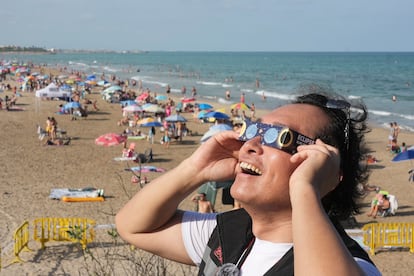
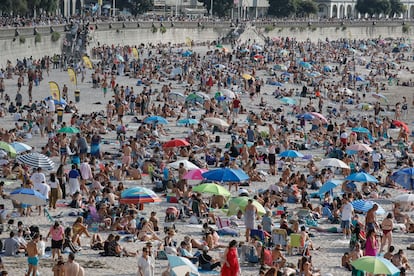
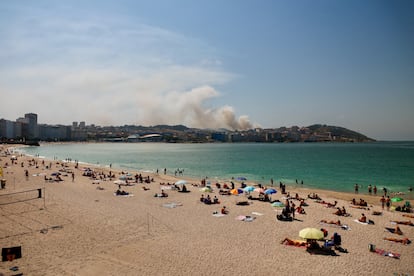
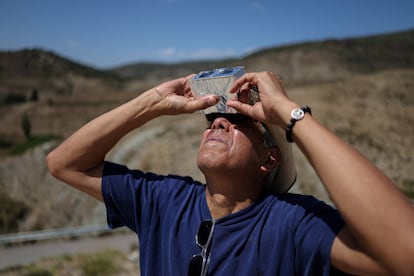
The Total Eclipse In Spain, In Pictures



23 fotos
The astronomical event crossed the Iberian Peninsula on Wednesday, with totality visible only along a narrow west-to-east corridor






















Carrefour
Aquaculture Is Depleting The Oceans: A Farmed Salmon Can Consume More Than Six Times Its Weight In Wild Fish

Empty fish counters. That is what shoppers found when they arrived at Madrid’s Mercado de la Paz last September. The stock had not sold out. Instead, they were looking at an advertising campaign organized by Apromar, Spain’s aquaculture industry association, which wanted people to imagine a country without farmed fish.
“Seafood could become a luxury affordable only to a few,” the ads warned, before adding: “The real fortune is living in a country where aquaculture exists and guarantees fish for everyone.”
The message was straightforward: consumers want more fish, wild fish stocks are being harvested to their limits, and fish farming is the way to meet growing demand while preventing the collapse of the oceans. This same logic, producing more to catch less, drives a global aquaculture industry worth €270 billion ($311 billion), the fastest-growing food sector in the world. Today, half of all seafood products come from aquaculture, and Spain is the European Union’s largest producer by volume.
There is, however, a problem. “The industry’s sales pitch is incorrect,” says Daniel Pauly, director of the Sea Around Us project at the University of British Columbia.
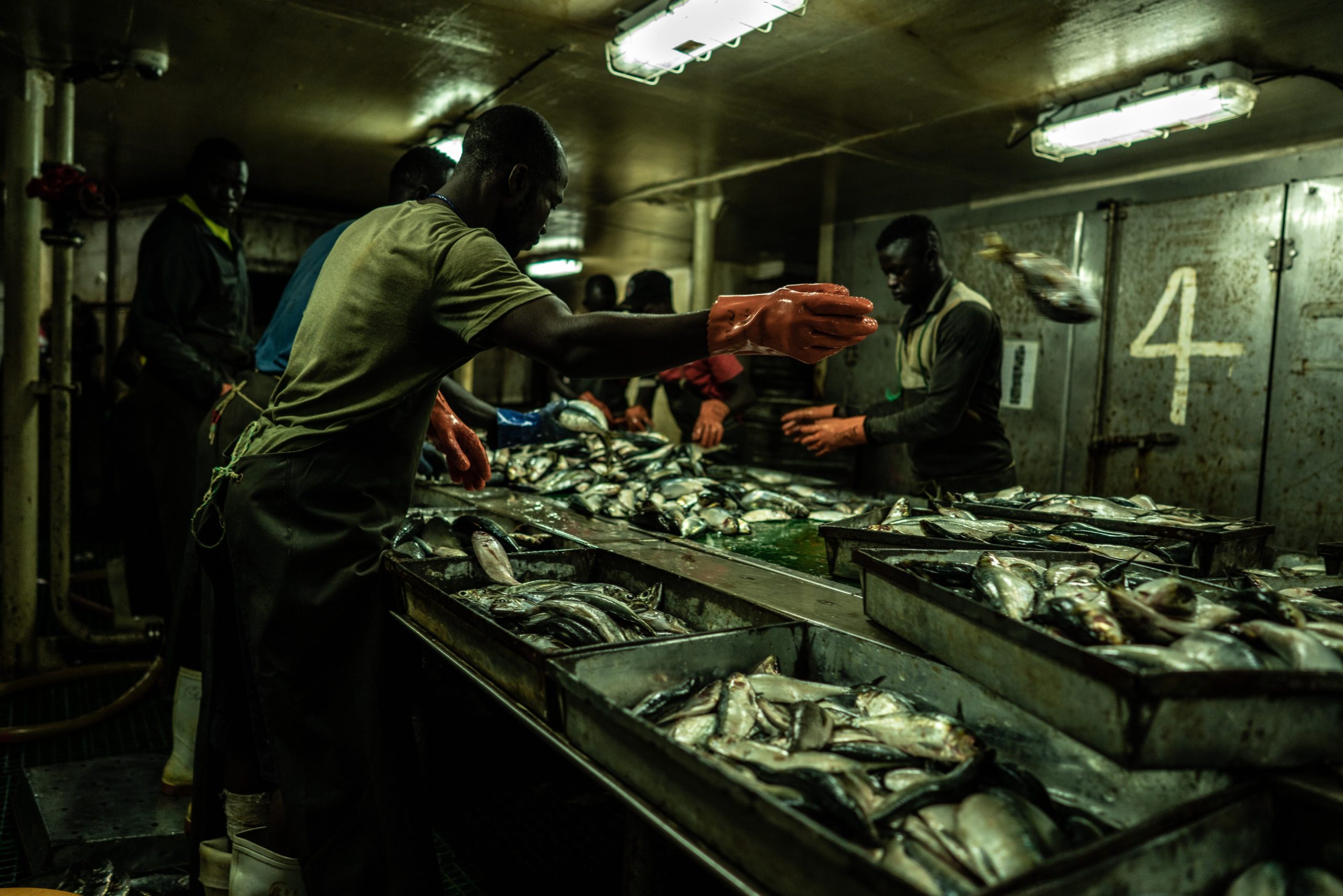
The most popular farmed seafood products in Spain and other countries, including salmon, shrimp, trout, sea bass and sea bream, are fed with the very same wild fish species that aquaculture claims to be saving, thereby accelerating ocean depletion. Two-thirds of global aquaculture raises species that are fed fishmeal and fish oil, ingredients made by cooking and grinding fish caught in the wild. Before reaching the market, a farmed salmon may consume, in some operations, more than six times its own weight in wild fish.
An investigation by The Outlaw Ocean Project, a Washington, D.C.-based journalism organization, uncovered a range of impacts linked to the industry, including the loss of jobs in small-scale fisheries, chronic exposure to chemicals, preventable workplace deaths and violent protests, mostly triggered by the unbearable stench of fishmeal plants. The investigation concluded that these social and environmental costs fall largely on poorer countries where the raw material is caught and processed, far from the places where the seafood products are consumed.
In Gambia and Mauritania, the investigation documented how the industry worsens food insecurity as fish that once sustained local communities are increasingly diverted to fishmeal factories for export. On remote islands in Russia’s Far East and in China’s Xinjiang region, reports described the use of forced labor on fishing vessels, farms and in factories.
In other countries, including India and Peru, the industry was linked to at least 80 episodes of social conflict, some of them violent, typically involving labor strikes and community protests sparked by water pollution or the stench from factories processing thousands of tons of rotting fish.
For example, shrimp sold by major retailers in Spain, including El Corte Inglés, E.Leclerc and Carrefour, and raised on farms in Ecuador, is fed with fishmeal sourced from plants across Latin America that have been linked to at least five worker deaths, 20 cases of illegal fishing and more than half a dozen protests over odors from fishmeal factories, according to Bait to Plate, an online tool that tracks the seafood industry and its supply chains.
Carrefour Group said it had launched an investigation into issues related to its supply chain and would “take all necessary measures if violations are confirmed,” including potentially excluding suppliers that fail to meet its ethical and environmental standards. El Corte Inglés and E.Leclerc did not respond to requests for comment.
The investigation, which took two years to complete, mapped virtually the entire global fishmeal industry, including more than 1,400 plants operating in 64 countries, and traced supply chains from fishing vessels to processing plants, feed mills, fish farms and seafood retailers.
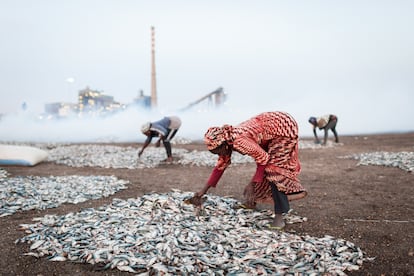
The study found that the fishmeal industry also contributes to geopolitical tensions. In 2021, for example, about a dozen Turkish bottom trawlers fishing illegally in the Aegean Sea allegedly attempted to ram a Greek research vessel after scientists began filming their activities. In 2018, riots broke out in Saint-Louis, Senegal, after a fisherman was shot dead by Mauritanian coast guards during what Mauritanian authorities described as a cross-border incursion by a vessel linked to the fishmeal industry.
Since the mid-1970s, Morocco has maintained military control over Western Sahara, a presence deemed illegitimate by more than 10 rulings of the Court of Justice of the European Union. Nevertheless, Moroccan vessels routinely fish in Western Saharan waters and process their catches into fishmeal at plants located in the territory before exporting it to aquaculture farms around the world labelled as Moroccan.
In 2020, a violent confrontation involving several trucks, many of them carrying fish and fishmeal from Western Sahara, led to the collapse of a 29-year ceasefire. Until 2024, a fishmeal plant in Western Sahara supplied fishmeal to Irida, a company that manufactures feed for many fish farms in Greece, including those supplying farmed sea bream and sea bass to Mercadona, Spain’s largest supermarket chain. Irida and Mercadona did not respond to requests for comment.
A significant share of the fishmeal used by Spanish fish farms, around 128,000 metric tons in 2024, is imported, linking Spanish consumers to these hidden and cross-border social impacts. Some 70% of Spanish aquaculture production consists of bivalves such as clams, oysters, scallops and mussels. These species are comparatively more sustainable because they generally do not require feed and need relatively little land and freshwater. Among species whose production depends on fishmeal, the most common in Spain are European sea bass and gilthead sea bream.
The investigation examined more than 2,400 vessels involved in fishmeal production operating in the waters of at least 30 countries. Most vessels in the global fishmeal fleet were purse seiners or trawlers, which use large nets to capture dense schools of fish, indiscriminately sweeping up substantial amounts of bycatch and non-target species. At least half of the species landed by the vessels analyzed had been classified as “overexploited” by scientific studies.
More affordable products
Modern aquaculture also has its benefits. In India, for example, it is a key source of employment, especially for women. In Bangladesh, its expansion has helped drive down prices, making seafood more affordable for lower-income households. The industry’s carbon emissions are also considerably lower than those from beef or pork production.
Bivalve farming has an especially low carbon footprint. As early as 2022, roughly one-third of global aquaculture production required no external feed inputs. Even so, more than two-thirds of farmed seafood today still depends on feed from the sea. According to the Food and Agriculture Organization of the United Nations, global fishmeal consumption is projected to increase by nearly 10% between 2022 and 2032.
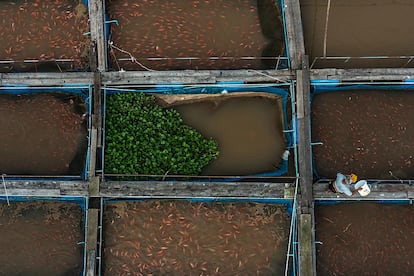
Asked about concerns over the sustainability of her sector, Véronique Jamin, spokesperson for IFFO, the international fishmeal and fish oil association, said aquaculture is “the most efficient animal protein system.” She added that “sustainability frameworks will not work if they ignore the economy of the real world,” and argued that seafood companies must respond to “what people actually want to buy and eat.”
Researchers have explored alternative protein sources such as algae, cassava waste, black soldier fly larvae and even single-cell proteins derived from fungi or bacteria, but none are yet affordable at scale. For now, the pattern remains the same: wild fish are caught and converted into feed, while the costs of this production are borne elsewhere.
The investigation revealed the hidden role that forced labor and land dispossession play in the expansion of China’s aquaculture industry. China now farms more than four times the amount of fish it catches from the wild. One of the industry’s fastest-growing regions is the mountainous and desert interior of western China, particularly Tibet and Xinjiang, two areas known for intense political repression.
The investigation identified more than 1,000 aquaculture farms in Xinjiang and Tibet producing farmed seafood worth an estimated €436 million ($502 million) annually, much of it exported to more than a dozen countries. China’s push to expand fish farming in these regions is facilitated by extensive state repression, including widespread land seizures, intensive surveillance, and the imprisonment of tens of thousands of people. European Union legislation does not specifically target China, but it does prohibit the importation or sale within the EU of products made using forced labor.
Seafood companies are also facing growing legal challenges related to problems in their supply chains. Since 2020, at least nine lawsuits alleging deceptive marketing practices have been filed against six seafood companies across six U.S. jurisdictions. The cases center on a common pattern: marketing claims portraying products as sustainable or ethically sourced despite supply-chain evidence suggesting otherwise.
Plaintiffs challenged terms such as “sustainable,” “eco-friendly,” “all natural,” “wild-caught,” and “from the coast of Maine,” as well as claims of superior labor standards. The Outlaw Ocean investigation reviewed more than 500 seafood companies making similar, and in some cases even stronger, marketing claims and found that more than half had documented violations or irregularities within their supply chains.
Sign up for our weekly newsletter to get more English-language news coverage from EL PAÍS USA Edition


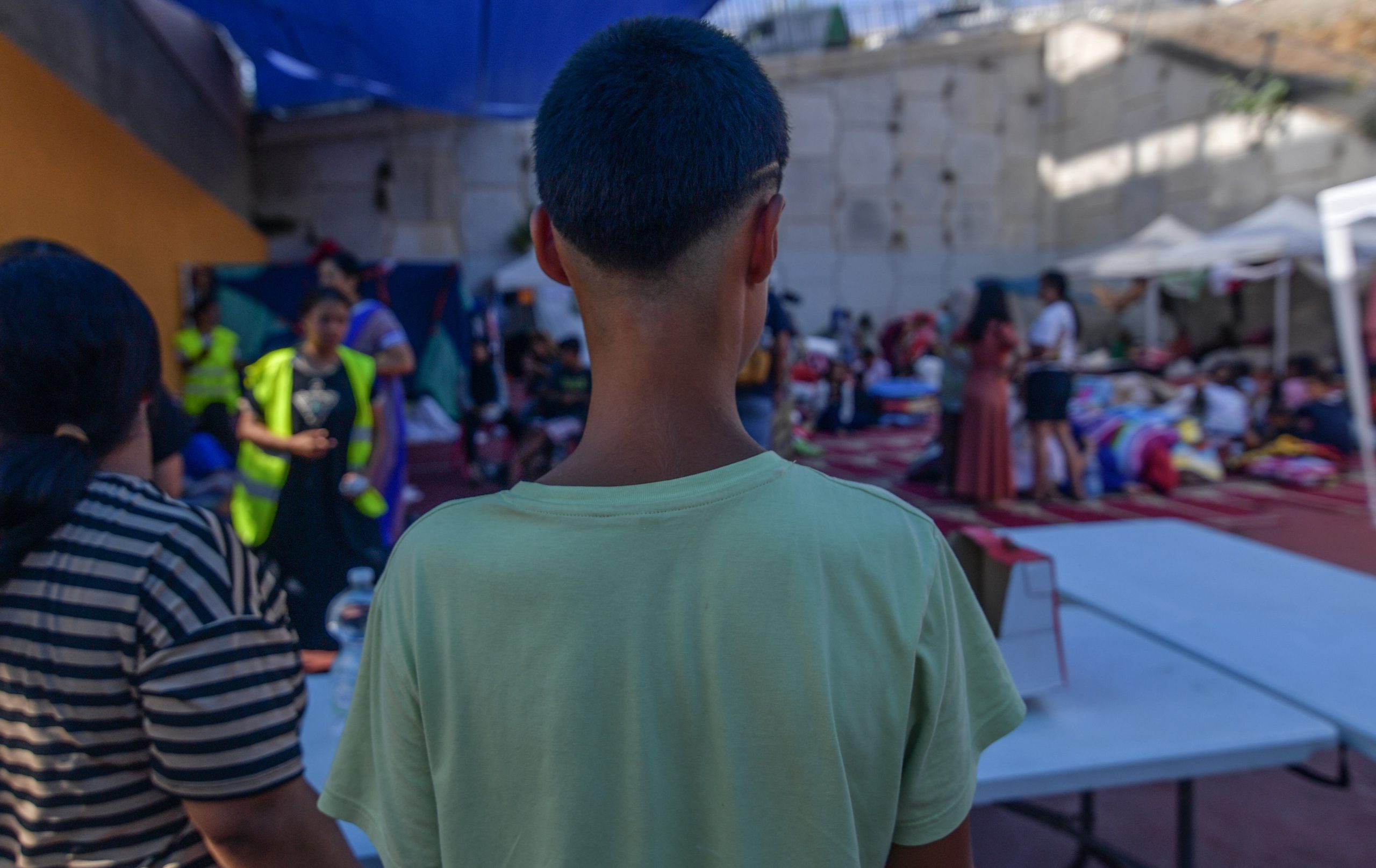
They share their dreams on an outdoor futsal court that’s been fenced off and turned into a makeshift camp by residents of the La Reina neighborhood in Ceuta. Some 350 women and children who arrived in the Spanish enclave city after swimming from Morocco 11 days ago sleep in the camp every night. They sit here waiting, on the ground, or, if they are lucky, on a rug.
They are waiting because, beyond these four fences and the two men guarding the entrance through the night, the world seems a safer place. Among them are children who dream of becoming footballers, studying technology or training as nurses. Children who have crossed the sea and who, without realizing it, have become the subject of a political debate before anyone has taken the time to listen to them.
EL PAÍS asked them to write letters so that politicians, especially those who say they do not want them in Spain, could learn about their aspirations. They do not write about borders or laws. They write about their dreams, because sometimes behind the word “migrant” there is a child who has not yet stopped imagining who they want to become.
Hello:
My name is Ismaíl. I want to stay in Spain to fulfill my dream of becoming a great footballer. If you let me stay in your country, you would help me a lot. With a bit of luck and a lot of hard work, one day I could become a talented player and represent Spain in the national team.
Ismaíl is 12 years old and completely alone in an unfamiliar country where he does not speak the language. Even so, he smiles often, proudly revealing the gaps where some of his teeth have yet to grow in. He arrived in Ceuta by swimming alongside his 20-year-old brother. He has not seen him since.
He sleeps on the ground. To wash, he goes to the vacant lot beside the camp and pours water over himself, fully clothed, using a pink beach bucket. Afterwards, the bucket passes from hand to hand among the women and children living there.
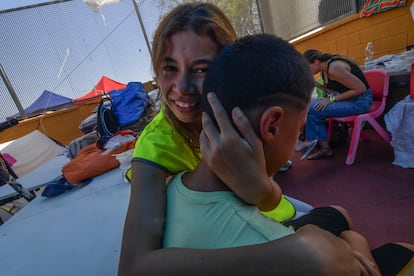
The little boy knows nothing about the controversy sparked by the arrival in Ceuta of hundreds of unaccompanied minors. He does not know that the Spanish Minister of Youth and Childhood, Sira Rego, has convened a meeting this Thursday to address the crisis in Ceuta. He also does not know that the far-right political party Vox is against receiving them. He knows nothing of the political arguments, the borders or the language others have chosen to use when discussing his future. But despite his young age, he is not surprised this is the case. He says he “knows very well that politicians in Spain do not want Moroccans to enter their country.”
Beside him sits 15-year-old Maryam. Her dark hair is tied back in a braid and she is still wearing the clothes she arrived in. With a ballpoint pen, she writes in Arabic in a notebook:
I wanted to come to Spain to work and help my family. I dream of finishing high school and becoming a nurse so I can help other people. Please regularize my status so we can build a better country together. We will show that we are worthy of your trust. We only want a better future.
She had been thinking about coming for three years. On July 30, at 4 a.m., she decided to try. She left Tetouan with a cousin and two friends. She was frightened because she is not a strong swimmer and knew that leaving her mother behind would not be easy. When she reached Spain, the first thing she did was log on to Instagram to talk to her mother. She had not warned her she was leaving and wanted to apologize. “She was very worried, but when I told her I was okay, she wished me all the success in the world because she understands that coming here had always been my dream,” says Maryam, smiling shyly when asked why she did not tell her mother about her plans.
Samia, 20, was a teacher in Morocco. Now, after arriving in Ceuta by swimming, she acts as a translator for Maryam. She explains that there are far-right parties that oppose relocating migrant minors to other regions in Spain. Maryam opens her eyes, surprised. “But why don’t they want to give us papers?” The question comes out plainly, without any understanding of political parties or political rhetoric. Samia laughs.
The hours drag on beneath the scorching heat. The ground burns when someone tries to sit down. In the vacant lot just outside the enclosure, two workers are attempting to install a portable toilet. It will be only the second for the more than 350 people taking refuge here.
The city council has just provided it after repeated appeals from the neighborhood association president, Abdellah Mustafa, who also spearheaded the idea of turning the soccer pitch into a safe haven for migrants.
Next to the toilets, a woman washes clothes beside a stroller while her baby crawls across the ground. When the mid-afternoon sun becomes unbearable, the child bursts into tears. Nearby, several girls sit exhausted on the curb, shaking out their clothes.
Despite everything, they are the lucky ones; at least they have a place to spend the night. More women continue to arrive asking whether there is any space left, but the enclosure is full. There is no room for anyone else. The volunteers guarding the site cannot take them in, and they will have to spend another night out in the open. Save the Children estimates that more than 1,000 minors in Ceuta are sleeping on the streets outside the official protection system.
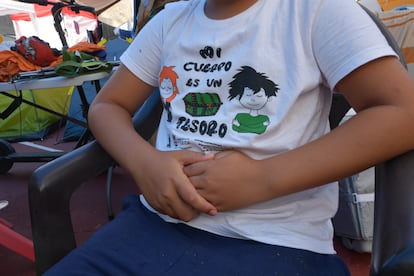
Mohamed and his mother watch the scene unfold while playing clapping games to pass the time. The boy is eight years old, with large, dark-brown eyes. Whenever someone asks him a question, he falls silent for a few seconds, thinking carefully about his answer, mouth slightly open and cheeks flushed, before finally speaking.
Until they found shelter here, Mohamed and his mother were sleeping on the street, outside a house. He says he felt terrified every time he saw the soldiers deployed across Ceuta.
Like Ismaíl and Maryam, Mohamed also writes his dream on a piece of paper:
I want to be a police officer and work to help my mom. I want to get the documents I need because I deserve a chance to prove myself.
In the meantime, he waits. He cannot explain why, but he is convinced this limbo will last another two weeks. Until then, he will follow the same routine every day: have breakfast, find another child to play with, eat lunch and wait for another day to pass. “And then the same again,” he says
Sign up for our weekly newsletter to get more English-language news coverage from EL PAÍS USA Edition

The San Roque Club – Townhouses For Sale

Attaoui Saca Un Bronce En 800m De La Casi Nada

Aquaculture Is Depleting The Oceans: A Farmed Salmon Can Consume More Than Six Times Its Weight In Wild Fish


-
easyJet2 weeks ago
First EasyJet passenger from UK refused entry to Gibraltar after new treaty
-

 New Developments2 weeks ago
Inside The Most LUXURIOUS Apartment Building In Spain!
-

 Uncategorized1 week ago
Lewis Hamilton hits gold with $10bn jackpot but British star snubs Monaco move: F1 News Recap
-
Latest2 weeks ago
Trump And Far Right Seize On Spanish Migration Crisis
-

 Latest2 weeks ago
Suspect In Murder Of Hungarian Woman In Benahavis Attempts To Slit His Own Throat As Guardia Civil Make Arrest
-
Airport Parking2 weeks ago
Elche closes second illegal airport parking site near Alicante-Elche Airport
-
2 wheel case2 weeks ago
To push, pull or carry? Which luggage option is best for your posture and journey.
-
Charity padel tournement2 weeks ago
Nueva Alcantara Club and children’s charity come together for a padel weekend with a purpose