
2029
NASA expert warns humanity must prepare for asteroid impacts

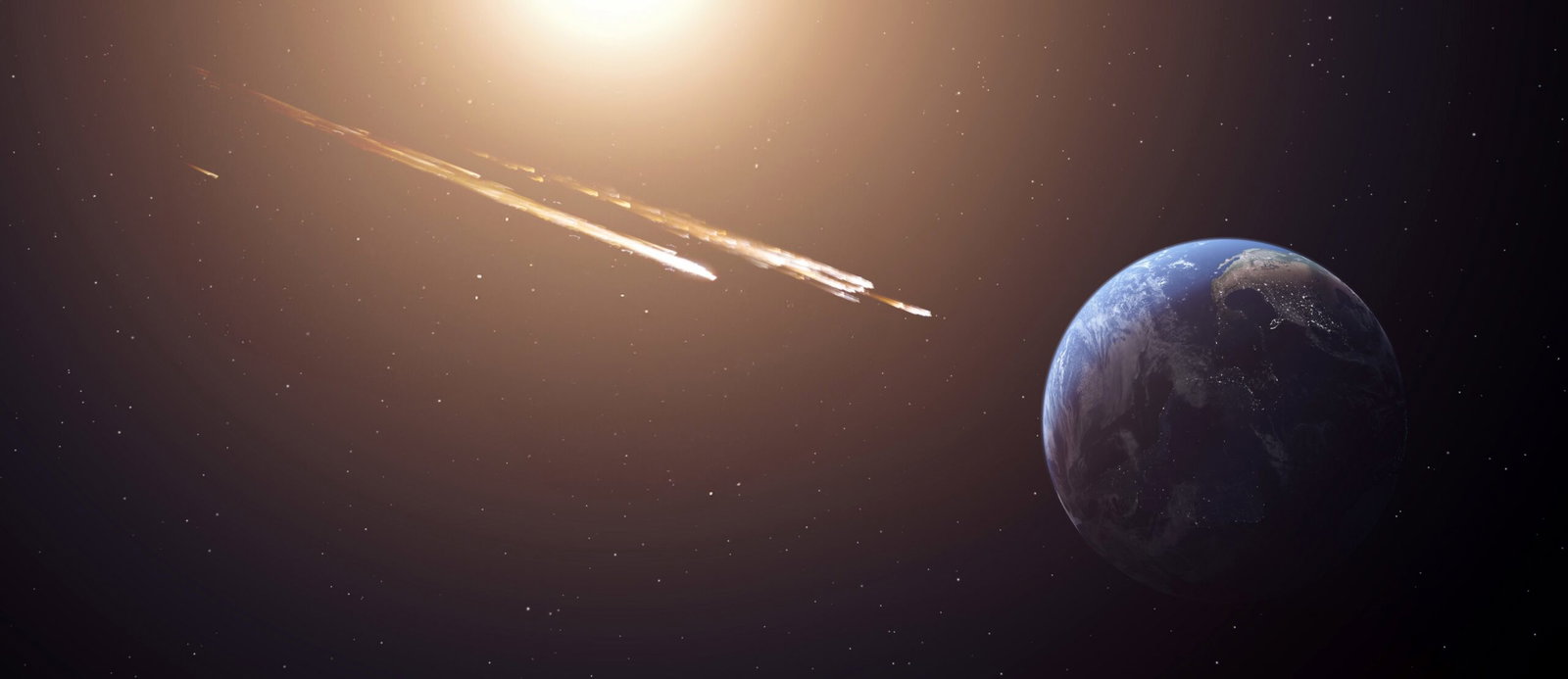
The situation becomes far more difficult if an object is discovered only months or weeks before impact. Photo credit: Triff/Shutterstock
A giant asteroid is heading towards Earth, and although this one is not expected to hit us, a NASA-linked asteroid expert says humanity must be prepared for the day a space rock really does come our way, and that day will come. The warning comes ahead of the arrival of Apophis, a near-Earth asteroid that will pass exceptionally close to our planet on April 13, 2029.
At its nearest point, it will come within around 32,000 kilometres of Earth’s surface, closer than many geostationary satellites. NASA says there is no risk of Apophis hitting Earth for at least the next 100 years. But its approach is giving scientists a rare opportunity to examine what happens when a large asteroid passes so close to our planet and to consider how humanity would respond if the next one were actually on a collision course.
‘It will happen again’
Asteroid specialist Humberto Campins, who has worked on NASA’s OSIRIS-REx mission and its successor OSIRIS-APEX, has warned that an asteroid impact is something humanity will eventually have to face. His message is not that Apophis is about to strike Earth, but that planetary defence cannot be treated as a problem to solve after a dangerous asteroid has already been discovered.
The distinction is crucial, Earth has been struck by asteroids throughout its history, and scientists know that sufficiently large impacts can cause devastating consequences. The challenge is identifying a dangerous object early enough to do something about it. That means finding potentially hazardous asteroids, calculating their orbits and developing methods capable of changing their trajectories before they reach Earth.
Apophis will come remarkably close
Apophis is estimated to be around 370 metres across, making its 2029 encounter particularly significant. NASA says it will pass about 32,000 kilometres above Earth’s surface, a distance that sounds enormous until compared with the scale of space. The asteroid will actually pass closer to Earth than the altitude of many communications satellites in geostationary orbit. It will also be travelling close enough for Earth’s gravity to affect it.
Scientists expect the encounter to alter Apophis’ rotation and potentially produce changes on its surface. NASA’s OSIRIS-APEX spacecraft is being used to study the asteroid after the flyby, providing an opportunity to examine the effects of the encounter at close range. The European Space Agency is also preparing its Ramses mission to study Apophis around the time of the close approach.
The asteroid that once frightened scientists
Apophis has already demonstrated why planetary defence matters. When it was discovered in 2004, early observations suggested there could be a significant possibility of an impact in 2029. NASA subsequently obtained additional observations and ruled out that scenario, with further tracking eliminating the previously considered impact risks.
Today, NASA is confident that Apophis poses no impact threat for at least a century. That does not make the asteroid unimportant, its trajectory provides scientists with an unusually well-predicted close encounter involving an object of substantial size. NASA describes it as an opportunity to improve understanding of Apophis and other near-Earth asteroids that could pose a genuine danger in the future.
What happens if the next one is different?
That is the question behind Campins’ warning. If astronomers identify an asteroid heading directly towards Earth, the response would depend heavily on how much warning humanity had. A large object detected decades before a potential impact could potentially be diverted by changing its orbit by a very small amount. Given enough time, even a tiny alteration can cause an asteroid to miss Earth by thousands of kilometres.
The situation becomes far more difficult if an object is discovered only months or weeks before impact. NASA has already tested planetary-defence strategies using hypothetical asteroid scenarios. One of the most important lessons is that detecting an object early is just as important as developing technology capable of deflecting it.
Earth has no current asteroid emergency
For anyone worried about the 2029 encounter, there is no asteroid impact warning for Earth. Apophis will pass close enough to attract enormous scientific attention, but NASA’s calculations show that it cannot collide with Earth during the 2029 encounter and that there is no impact risk from it for at least 100 years. The real concern are the asteroids we have not discovered yet.
There are countless objects moving through the Solar System, and astronomers continue searching for those whose orbits bring them close to Earth. Most pose no threat. The danger comes from finding a sufficiently large object on an impact trajectory without enough time to respond.
When the asteroid passes Earth, scientists will be watching its every movement. Its close encounter will provide valuable data about how asteroids behave near our planet, while also offering a stark reminder that Earth exists in a Solar System filled with objects capable of causing catastrophic damage. Apophis is not coming to destroy Earth. But the next dangerous asteroid may not give humanity the same reassurance, and NASA experts want us ready before that day arrives.





Man impersonated 30 people in Spain with AI to obtain their digital certificates
Major fire erupts near Charles de Gaulle as runways close
Jellyfish surge hits Mallorca’s waters as beachgoers warned to take extra care


-
easyJet2 weeks ago
First EasyJet passenger from UK refused entry to Gibraltar after new treaty
-
Latest2 weeks ago
Thousands Of Migrants Swim From Morocco To Spain’s Ceuta Territory
-
Latest2 weeks ago
Trump And Far Right Seize On Spanish Migration Crisis
-

 New Developments2 weeks ago
Inside The Most LUXURIOUS Apartment Building In Spain!
-

 Uncategorized2 weeks ago
Ex-Sky Sports star teases tell-all after shock F1 exit
-

 Latest2 weeks ago
Suspect In Murder Of Hungarian Woman In Benahavis Attempts To Slit His Own Throat As Guardia Civil Make Arrest
-

 Banca2 weeks ago
CaixaBank Gana Un 8,5% Más En El Primer Semestre Y Pulveriza Su Récord De Beneficios
-

 Uncategorized6 days ago
Lewis Hamilton hits gold with $10bn jackpot but British star snubs Monaco move: F1 News Recap