Elon Musk
Thomas Piketty: ‘The Future Billionaires Are Preparing For Us Is Dystopian’
Published
4 days agoon
Most of the planet with incomes equivalent to €5,000 a month (nearly $5,600) by 2100. Average temperatures only 1.8 degrees Celsius above preindustrial levels. Less meat, industry and mining. More health care and education. And who would lose out? The world’s Jeff Bezos, Larry Ellisons and Elon Musks. A tiny group of billionaires representing 0.001% of the population would see their share of global wealth fall from the current 6.4% to 0.05%, while the poorest 50% of the planet would rise from holding just 2% to 30%.
Those are the numbers from the Global Justice Project, estimated by a team of 200 researchers, with which French economist Thomas Piketty and 44 co‑authors seek to present an alternative to the dystopian future of floods, fires, masters and serfs that artificial intelligence, inequality and climate change seem to be sketching out. Piketty, 55, spoke to EL PAÍS by video call to explain the basis for these conclusions.
Question. Is it possible to achieve those figures? Or are they merely an ideal to aim for?
Answer. If people want to debate some of the numbers, fine. What we offer is a toolbox to think about possible trajectories, giving orders of magnitude rather than precise numbers. But even those orders of magnitude can change with more democratic deliberation. We are simply trying to take seriously the aspiration of the global South for prosperity. The big message is that we can achieve shared prosperity, but this will come with conditions. A slow transition to a low‑carbon economy by transforming the energy system is not enough. We also have to reduce inequality and embrace what we call “sufficiency”: shorter working hours, changing food habits, and shifting importance away from industry and mining toward the immaterial sector. We don’t need to have 10 iPhones per person. But the exact magnitude of all this can and should be discussed.
Q. The project has been criticized as utopian…
A. It is hard to achieve, but what is the alternative? All scenarios will be complex. If we maintain the inequality between Africa and Europe, for example, are we going to deploy millions of drones across the Mediterranean for a century? Business as usual is not an option: more fossil fuel extraction, more economic and social inequality, conflicts over territory and resources, militarized borders… It is not only [U.S. President Donald] Trump who is going crazy. Europe is too. Or does anyone really believe a plausible strategy is to return to the traditional family so women will stay home, have more children and thereby increase fertility in Europe?
Q. The report stresses, as if that made it easier, that the main challenge is not technical but political: achieving an international coalition.
A. International cooperation is hard, but conflicts over territory and resources are also very hard. Our path is not easy, but compared with the alternatives it is the most desirable and also the most doable. A world in conflict over resources, with growing inequality within and between countries, leads to the collapse of democratic institutions, with states allocating more resources to the military than to education, health care or low‑carbon energy infrastructure. That is solving none of our problems.
Q. To what extent did the social‑democratic revolution that drastically reduced inequality in Europe require the catastrophe of the two world wars?
A. In the 20th century, major catastrophes were needed to legitimize halving working hours and increasing public spending that brought universal health care and education. “This will be the collapse of the economy,” anyone asked in 1900 would have replied if you suggested moving from the roughly 3,000 hours worked annually in Europe then to the 1,500 of today. We do not know whether catastrophes will play a role in the coming decades. Nobody knows. What we do know is that we need to discuss alternative development paths before one happens.
Q. Why?
A. In times of crisis, societies must take decisions very quickly. And often they invent new institutions, new solutions that were once considered impossible. That is why anything democratically debated in advance has a better chance of shaping debate during a crisis. Before the major crises of the 20th century, unions, parties, intellectuals and social scientists had already discussed social security and progressive taxation. But major catastrophes are neither sufficient nor necessary, as the development of the welfare state in Sweden during the 20th century shows — a country that suffered comparatively less destruction than other European nations during the two world wars.
Q. Sweden was less involved in the wars, but its ruling classes feared the expansion of Soviet communism, as elsewhere in Europe, and that threat has disappeared…
A. Today we face the threat of global warming. It is not the same context, but current conditions are also bad for many people worldwide. Demand for change in the North — and even more so in the South — will be very strong. Even if not channeled through organizations like 20th‑century trade unions, which were strong on certain issues but did not care about planetary habitability, gender equality, colonial reparations or racial discrimination, future mobilization will arise around the issues I just listed. And it can be equally powerful. Seeing Brazil and South Africa push for a global wealth tax at the G‑20 summit in 2024 was a very important sign of change.
Q. That proposal for a global wealth tax did not advance.
A. But in Europe, and even in the U.S., the reaction was not outright rejection. They said, “let’s see how,” but it was not a frontal refusal. When the issue resurfaces — and it will in a few years — countries of the South will once again say: “Your historical responsibilities for emissions are huge and we have a right to development; it is your responsibility to pay for some of the climate damage you have imposed on us.” And that will not be paid by the average taxpayer in France or Spain, but by those at the top, who have the greatest historical responsibility for investment decisions. If billionaires were making all the necessary investments in clean energy, education and health, and the world were becoming fantastic thanks to their leadership, I would even be happy to let them keep deciding on investments, media and policies. But that is not happening. The future the billionaires are preparing for us is dystopian.
Sign up for our weekly newsletter to get more English-language news coverage from EL PAÍS USA Edition
You may like
-
Abdul El‑Sayed, The Democrats’ Riskiest Bet For The Midterms: ‘We Will Have To Hold Trump Accountable For All The Harm He Has Done’
-
The AI Labor Apocalypse Is On Hold (For Now)
-
Challenging The Neoliberal Agenda From The Left: The Proposals Of The World’s Leading Progressive Economists
-
Sánchez Mocks Bezos Over Spain Housing Crisis
-
Amazon Recorta Plantilla En La División Minorista Tras Prescindir De 30.000 Personas En 2025
-
La Cara Oculta Del éxito De Starship: Musk Deja Fuera De Juego A La NASA Con Su Plan Para Dominar El Cielo
Abdul El-Sayed
Abdul El‑Sayed, The Democrats’ Riskiest Bet For The Midterms: ‘We Will Have To Hold Trump Accountable For All The Harm He Has Done’
Published
4 days agoon
October 17, 2026By
Luis Doncel
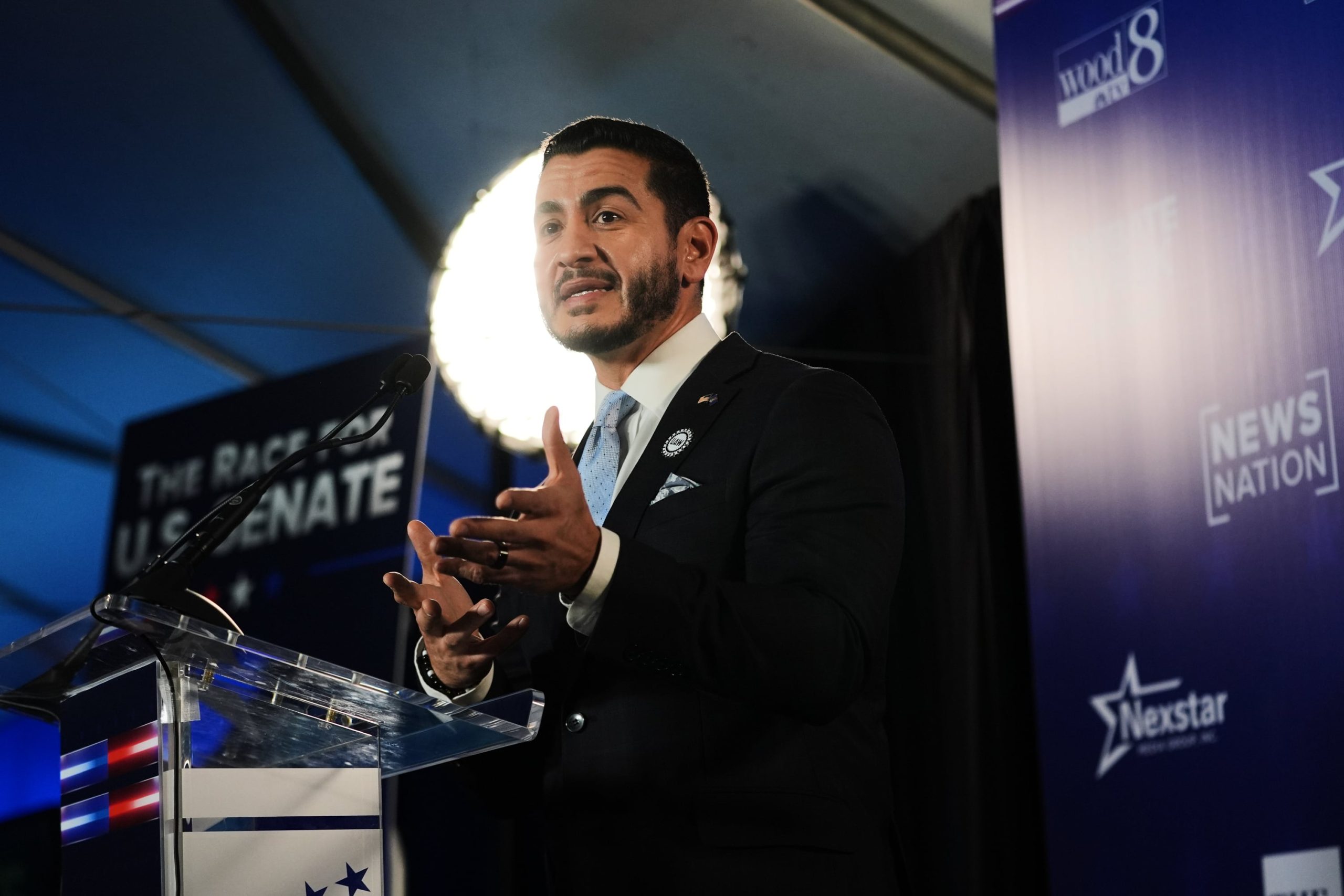
There is still over an hour before the protagonist appears, but the line already wraps around the block. Dozens of people wait patiently for their turn to see the man who has become the great hope of the Democratic left wing. When he begins to speak, pandemonium breaks out: “My name is Abdul El‑Sayed and I am going to be your next senator in Washington.” Over the next hour, the hundreds gathered in this venue will applaud, laugh, and cheer every word from the mouth of the new star of American politics, who has already made a fitted black T‑shirt and jeans his trademark look. We are in Lansing, Michigan’s capital, where one of the most gripping battles of the midterm elections — just over two weeks away — is being fought.
A few days before this meeting, El-Sayed answered questions from EL PAÍS over the phone. During that conversation, he made it clear that his priority is to fight to improve the lives of Michigan’s citizens. But he also gave a glimpse of what lies ahead for Donald Trump if, on November 3, he and a few other Democrats take their seats in the Capitol and — as some polls suggest — win a majority in the House of Representatives and, perhaps, in the Senate as well.
― What is your plan if you win the elections?
― I think we need to make sure that we make life more affordable for everyday folk. That means ending the stupid war we shouldn’t be fighting. It means making sure that we’re rebuilding the important agencies of government that are currently failing because of DOGE and Elon Musk. And it means fighting to provide more healthcare rather than the cuts to ACA and Medicaid that we’ve seen under Trump. And I think it’s really important that we make sure we hold the Trump administration accountable to the worst that they’ve done in office.
― Do you mean that the Congress seated in 2027 should pursue the president’s removal or impeachment?
― That’s not a choice I’ll make as U.S. senator. That’s a choice that the lower house will make. But you know, my focus is gas, groceries, the ability to see a doctor, but I also think when you look at [Defense Secretary] Pete Hegseth and his failure when it comes to this war, and people like [Health Secretary] Robert F. Kennedy, it’s important to investigate exactly what they’ve done and why they’ve done it.
In the phone conversation he provides no further details. But when pressed after the Lansing event about what he means when he calls for investigating the Republican administration’s actions, El‑Sayed offers one example: how the government handled an outbreak of explosive diarrhea this summer caused by cyclospora‑contaminated lettuce. “Thousands of people suffered the consequence. That’s not something that should happen in America. That was entirely because they doged out the part of the FDA that is supposed to protect you from that. I want to understand what happened. Who okayed that? I would like to ask Kennedy, specifically and directly, who ordered the shit lettuce and what are you going to do about it because I’ve seen nothing done about it yet.”
The Michigan battle
On November 3 Americans will vote to renew the entire House of Representatives and one third of the Senate, in addition to electing countless state and local officials. Until recently, seizing control of the upper chamber seemed all but impossible. But Trump’s unpopularity and the surprising strength of some candidates — like James Talarico in Texas or Mary Peltola in Alaska — have moved that once‑distant prospect into the realm of the imaginable.
In this context, the Michigan race stands out for several reasons. Here, Trump narrowly beat Democrat Kamala Harris in 2024 by only 80,000 votes. This Midwestern state of just over 10 million people must now fill the seat of a Democratic senator who decided to retire. Everything seemed set for Representative Haley Stevens to inherit the seat; she had the enthusiastic backing of the party establishment and the very generous Israeli lobby.
AOC has spent her career taking on the powerful on behalf of everyday people, and she has shown all of us what courageous, smart, values-driven leadership looks like. I’m deeply honored to earn her endorsement. Onward to victory.
2018➡️2026 pic.twitter.com/5U149jlP44
— Dr. Abdul El-Sayed (@AbdulElSayed) July 2, 2026
But El‑Sayed, a 41‑year‑old physician, a Muslim, son of Egyptian immigrants and well-connected to the orbit of Alexandria Ocasio‑Cortez and Zohran Mamdani‑aligned socialists, crossed her path. El‑Sayed gained momentum over the summer with a campaign whose slogan — “Money out of politics, money in your pocket and Medicare for all” — he repeats relentlessly.
Much of his success stemmed from a bold social media strategy, with videos showing him lifting weights — one of his passions — or performing choreographies to hits by Whitney Houston and Taylor Swift, always adapting the lyrics to his campaign slogan.
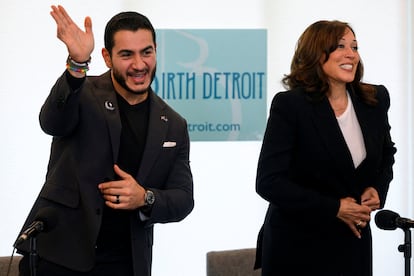
His speech denouncing the enormous influence of money in American politics attracted many young people who were disillusioned with their leaders and outraged by their country’s support for the Israeli government during its massacre in Gaza. What seemed impossible happened and the little‑known contender defeated the experienced politician. But at a high price. El-Sayed’s victory over his Democratic rival, by a handful of votes, showed just how divided the Democrats were between their two factions. Since then, heavyweights such as former president Barack Obama and former vice president Kamala Harris have tried to mend the party’s wounds by backing the Michigan candidate.
A historic milestone
If he wins on November 3, El‑Sayed will make history. He would become the first Muslim U.S. senator and would also demonstrate that the progressive wave that Mamdani started in New York is not confined to large liberal cities. A senator named Abdul El‑Sayed could be the signal Representative Ocasio‑Cortez needs to see there is traction outside the big cities and prompt her to run for president in 2028. His victory would confirm that leftists, too, can win swing territories — those within reach of both parties. He is aware of all this, but prefers to talk about other issues.
— Is Michigan the definitive test of how far the Democrats’ progressive wing can go?
— Maybe, but my focus is more on the future of Michiganders than it is on the future of the party.
Polls so far show El‑Sayed with a very slight lead that is essentially a technical tie with his Republican opponent, Mike Rogers, a former congressman closely aligned with Trump. All these factors weighed on last Friday’s meeting with voters in Lansing, turning the event into an electrifying occasion.

The event was full of true believers, like Joshua Pearl, 19, who joined El‑Sayed’s campaign this summer, drawn primarily by his hardline stance against Israel. “The idea that my taxes help fund a genocide blows my mind,” he said. But there were others, like Chuck Golden, 85, who has voted Republican and Democratic over the years and attended the event to see for himself whether he can trust this new candidate. For this retired engineer, the main motivation right now is to punish Trump.
Campaign of fear about Islam
El‑Sayed’s candidacy has shown how prepared Republicans are to use his Muslim faith as an electoral weapon. In the television debate the two candidates held on October 8, Republican Rogers accused him of receiving funding from Hamas, Hezbollah, and Al Qaeda. He used the word Muslim nearly a dozen times. Trump routinely attacks the Michigan Democrat, whom he prefers to call by his middle name, Mohamed, in a strategy similar to how he referred to Barack Obama as Hussein.
After the debate, the president called El‑Sayed a “Jihadist lunatic who hates our Country [and] the Black People of Detroit.” The latter insult makes sense in that it targets some of the Democrat’s weaknesses: he has substantial support among young people and Muslims but is far less popular among Black voters, Jews, and older voters. Last August, he was forced to apologize for remarks he had made a few months earlier, when — following an antisemitic attack on a synagogue — he said that “hurt people hurt people,” a comment that was interpreted as an attempt to downplay the attacker’s guilt.
In this campaign, El-Sayed has avoided speaking proudly of his Muslim faith or highlighting the milestone that his election to the Senate would represent. Instead, he opts for a more patriotic tone, in which he consistently extols a United States that embraces all differences.
— A quarter of a century after the jihadist attacks of 9/11, Islamophobia remains a real problem. What would it mean for the Muslim community to have its first senator?
— America is big enough for all of us. You know, there are some people who want to make America small. We want to make America big, and this movement that we’re building — people who are Muslim, Jewish, Christian, Hindu, Sikh, atheist — we want a big America where we come together to focus not on our differences, but on what our country can be for all of us.
— But do you believe your victory would have special meaning for Muslims in the United States?
— I think every community wants to see itself in the leadership of this country, and I think it’s important that our leaders reflect our country. Regardless of who you are, I hope that this race can remind you that you belong here too, right? If you pray like me or don’t pray like me, regardless of how you pray, if you pray, who you love, how you identify the color of your skin, you deserve to see yourself in this place. We’re demonstrating the greatness of this country and how much it means to all of us.
When El‑Sayed is asked to look back and to explain what it means that the son of Egyptian immigrants who arrived in the United States in the late 1970s earned a medical degree from Columbia and is now one step from winning a Senate seat, he reaches for his grandmother. “She never got to go to school, but she was the smartest, wisest person I ever met,” he replies.
But he immediately shifts back into campaign mode: “She never lived in America. She visited a couple times, and she believed in this place. She understood how lucky I was to be born and raised here. I want to build a future for people like her — people who are very smart and capable but without the opportunities they need. And I want to be able to build an America where every single kid can look up and say, ‘I got an incredible life waiting for me. I’m so blessed to be born and raised here.’ And I say that understanding just how unlikely that is for me, and recognizing that the work is about making it more likely for any kid anywhere in our in our country.”
Only a couple of weeks remain to find out whether El‑Sayed will achieve what not long ago seemed impossible. His anti‑corruption message can attract voters across the ideological spectrum, although it remains to be seen whether Democratic divisions will cost him. Meanwhile, he is convinced the risky bet is worth it, above all because of his chief obsession: securing a universal public healthcare system — common in other countries but revolutionary in the United States.
He puts it like this: “It’s less about other models in other places. It’s more about what we can do when we put our mind to it. I believe America is the greatest country in the world. I believe when we put our mind to solving a problem, nobody does it better than us. We have the resources if we’re willing to stand up to the corporations who keep trying to nickel and dime us simply because we get sick.”
Sign up for our weekly newsletter to get more English-language news coverage from EL PAÍS USA Edition
Anthropic
The AI Labor Apocalypse Is On Hold (For Now)
Published
1 week agoon
October 11, 2026By
Claudi Perez
There are three versions of Saint John’s Book of the Apocalypse, a text that never loses relevance and now seems to presage the impacts of artificial intelligence (AI).
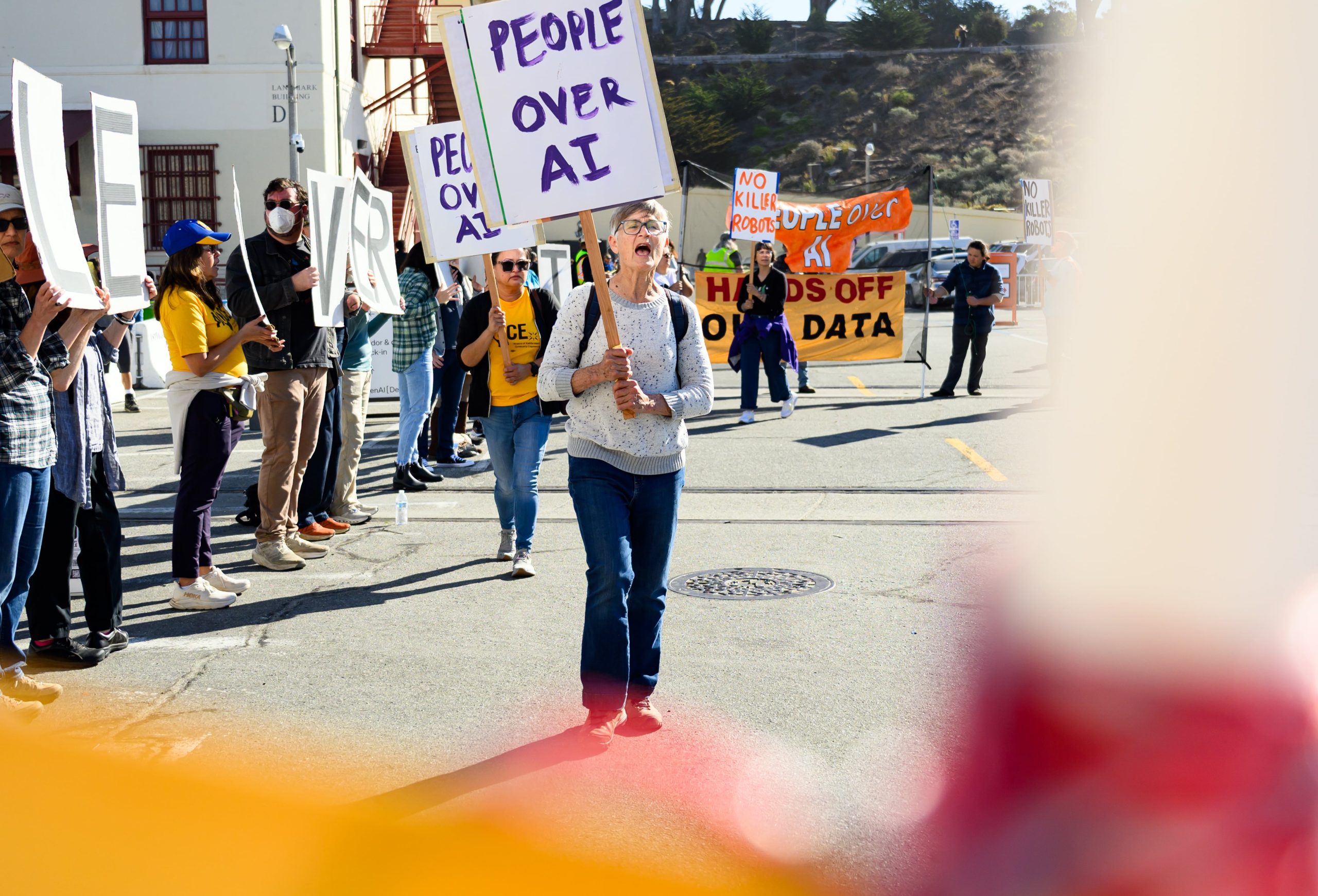
One: the recent and terrifying prospect of death raining down from swarms of autonomous, AI-driven killer machines, in a reprise of Stanley Kubrick’s 2001.
Two: a sector whose impossible expectations are inflating the mother of all financial bubbles to levels that make the Great Recession and its grapes of wrath look tame.
And three: the end of work — a brutal reconversion and, at worst, the disappearance of millions of jobs, for the first time disproportionately affecting the best-educated, potentially pushing the global economy toward depression, unprecedented levels of inequality and a blend of technofatalism, resentment and rage (something that is already happening, by the way, but magnified a thousandfold).
Utopias and dystopias are storytelling machines. They spit out punchy headlines, fin-de-siècle lyrical flourishes and syllables swollen like storm clouds. But they often prevent us from seeing what is really happening: those hyperbolic visions serve vested interests. Most of these fears are being inoculated by the companies themselves or by the governments that shield them, who are thinking about power and the bottom line.
Manuel Castells, a Spanish sociologist, scholar of the information society and former minister, says that fear of AI “is legitimate and, to some extent, logical, because the risks are real,” but he told this newspaper that it is “suspicious” that the sector’s own companies “are the ones sowing those fears in the paperwork they file for their initial public offerings on the stock market: scaring people is one of the ways to make a fortune.”
“And it is even more suspicious that China, which is replicating frontier innovations in six months, does not seem to show the slightest fear of this supposed armageddon led by uncontrolled AI,” he adds by phone, fresh from a trip to China, dismantling the first of those nightmare scenarios.
Wall Street also downplays the financial crisis theory, the second catastrophic risk: “No, there is no bubble,” financial sources say tersely; “companies are investing exorbitant sums and at some point a bubble will emerge, as happens with all disruptive innovations, but for now both projected profits and actual revenues are solid.”
Markets are even pricing in lower valuations than they otherwise would to allow for the possibility that some of these companies may fail, the same sources stress. It may be that the AI moguls are pushing up yields on debt and thus helping to incubate the next crisis. They are piling up mountains of debt to develop the technology, including data centers that suck huge amounts of water and energy. But wars, inflation and central bank activism explain that spike in interest rates much more than artificial intelligence does.
When debunking those two possible catastrophes, you must pepper your sentences with conditionals so that reality and its accelerations do not run over articles like this one. But the end of work, the third rider of the supposed apocalypse, resembles Kipling’s poem If. It is full of shades of gray, threatening predictions, grim accounts — and, again, vested interests — with little or no support so far from that old relic called data, those dull official figures. Is AI going to eliminate millions of jobs?
For fans of short answers: in one word, no. Or better, in a concise phrase: at least in the short term, no. The long answer includes plenty of nuances. It depends on how fast AI becomes widespread and how companies and governments act. The halting and ambiguous answers about the labor market’s impact, in short, appear in the string of paragraphs that follow, with half a dozen authoritative voices starting from this point.
Impact of AI
Employment figures across the OECD are at historic highs, but workers are jittery. Surveys clearly show more fear than during the Great Crisis nearly 20 years ago, which wiped out millions of jobs. The International Monetary Fund estimates that AI’s impact will be felt in 60% of Western jobs. The major AI companies go further and, once again, wave the specter of those fears. Anthropic claims that in the West, unemployment could reach 10%, even 20%, by 2030.
Those figures have been common for years in countries like Spain, but they are typical of a depression elsewhere: there is a Japanese film, Battle Royale, that begins with social unrest when the unemployment rate reaches 15%. Bill Gates, Microsoft’s founder, says that in a world where AI delivers on its promises, people would not be necessary for the majority of tasks. And Sam Altman, of OpenAI, warns there could be “a significant labor disruption” as companies adapt.
The prevailing mantra is that white-collar jobs — held by the most skilled workers — are the ones most at risk. That is a new feature, compared with earlier technological revolutions. Also, recent graduates are the ones who will feel it most: the entry door to the job market is narrowing for young people.
But those claims ought to be seasoned with data, and there are not yet figures that back them up: AI created one million jobs in the past year and destroyed about 200,000, according to official U.S. statistics. A Stanford University study analyzing hundreds of thousands of job postings in 41 countries finds that companies that use AI most have increased employment by 3.3%. Some problems are detected here and there — in consulting, among programmers — but they remain more anecdotal than categorical. Not even in the most mature markets, such as the U.S., is there evidence that that narrative has begun to take on the cold charisma of statistics.
The labor apocalypse, then, is postponed for now. Machines may ultimately leave millions without a paycheck, but it is most likely not going to happen now. The steam engine took four decades to settle in: this time it will be faster, but we may still be talking about years; no one dares to set deadlines for that horizon. Yet the narrative has rooted so deeply in our societies’ psyche that we can ask economists, sociologists, technologists and even philosophers why, when a narrative sinks in so deeply, it risks becoming a self-fulfilling prophecy.
The economists consulted are not exactly optimistic, but they avoid the darkest tones: to date we see computers and AI everywhere except in competitiveness statistics. Simon Johnson, Nobel laureate in Economics, tells EL PAÍS from the Massachusetts Institute of Technology (MIT) that the effects will eventually be felt, but admits that for now the impact is more qualitative (task reorganization) than quantitative (layoffs). And that the consequences will depend on public policies: “In the end, the mix of AI and robotization will cause job losses, but the future is less bleak than it seems if the public sector and companies focus on continuously upskilling the workforce,” as some Nordic countries already do. “There is nothing inevitable about AI, although it is true that the decisions the tech sector is making are not exactly encouraging,” Johnson adds.
Juliet Schor, from Boston College, predicts that rather than mass layoffs we will see “reductions in hours worked” and “four-day workweeks.” And another Nobel laureate, Daron Acemoglu, sees dangers beyond employment on the inequality front — one of the economic maladies of our time: across the West corporate profits have been eating into labor’s share of income, and Acemoglu expects those numbers to worsen, with serious effects on middle-class discontent and the fragile health of democracies. A kind of existential crisis in which the risk, beyond some sci‑fi arguments, is that we become overly submissive to AI’s demands and that undermines the rule of law.
With Donald Trump and Elon Musk, we have already seen a kind of preview, with a tech magnate embedded in the White House and a billionaire president ready to help Silicon Valley in whatever it needs with the support of working‑class voters at the ballot box.
Adaptation
If economic history is any guide, the arrival of a new technology has never reduced overall demand for labor. There are no technological apocalypses: some jobs disappear, others are created and, above all, many of the tasks that workers perform change, forcing them to adapt, retrain and educate themselves to stay afloat in a sort of occupational Darwinism. That happened during the Industrial Revolution, with automation, with the arrival of computing and, more recently, with the last wave of new technologies straddling the last century and this one. Total employment and the economy continued to grow. But history does not always repeat itself: seven out of 10 Americans believe AI will make finding a job harder than ever, and one in three fears millions of layoffs.
The most advanced AI models are moving at full speed. Even mathematicians are scared. Yet in some professions once thought finished (radiologists, legal assistants) there is more work than ever before. “And still Westerners are sounding the ‘wolf is coming’ alarm. The Chinese do not, because they are optimistic about their future. But European and American societies believe we face a massive reallocation of resources that will cause political convulsions,” Castells sums up.
It is curious: Karl Marx dreamed of a society where machines did the heavy lifting and allowed humans to “hunt in the morning, fish in the afternoon and do literary criticism after dinner.” The liberal John Maynard Keynes hoped for something very similar. Just when that might come to pass, fear paralyzes us: pop historian Yuval Noah Harari warns of the emergence of a “useless class” and the danger of nihilism; according to that narrative, the dystopia is not a future of Terminator‑style robots but of depressed humans.
Philosopher Daniel Innerarity forecasts a thorny transition similar to the Industrial Revolution, or perhaps to the early‑century technological revolution: “In some respects more radical, in others more promising, when low‑value tasks are automated, allowing resources to be reassigned to more productive, more creative tasks.” “The key will be regulating that transition so people are not left behind: it is not about halting this technology, but about introducing the right incentives to raise the value of work and avoid excessive automation,” Innerarity concludes.
AI is fiercely new, but those debates have resurfaced with every technological revolution. Automation and robotization have already hit the most routine work (in German car factories, for example) and produced polarization (in the U.S. Rust Belt, for example). Brad DeLong, from Berkeley, explains in his books that the previous wave already removed strong hands and the most automatable part of intellectual work, and he bets that AI will leave us with smiles (service‑sector jobs, for example) and roles to ensure human oversight of AI.
In Germany, robotization did not destroy jobs: there were no widespread layoffs, but there were more difficulties for young people looking for jobs. That is again the canary in the coal mine: rather than looking at aggregate unemployment rates, experts favor monitoring entry flows, especially among young people and in the most exposed occupations. There, the consequences could be serious, in the disruption of early‑career trajectories for recent graduates.
Andrés Monroy, a Princeton professor, says forecasting has always been a high‑risk profession, but it is even harder with a technology that is advancing exponentially. “One should treat excessively pessimistic biases with skepticism; earlier waves wiped out elevator operators and doormen and the world kept turning.” “But it is wise to take what is coming seriously, because it will affect all professions, all sectors, every one of us: AI will create and destroy jobs, but above all it will change the labor market from top to bottom,” this researcher adds.
Monroy points to the emperor with no clothes: “The greatest risk is that the AI economic model is overly centralized in a handful of companies. Excessive dependence on a tool we do not own is very dangerous,” he reflects. “Big U.S. companies are calling for regulation, but beware, because what they really want is to eliminate open‑source options — the model China favors — so they can keep the whole pie,” he warns.
Extreme scenarios, in short, have fully entered the story we tell about AI. Job collapse has not yet arrived, but the experts consulted agree on the state’s obligation to create safety nets. Among policy tools, some advocate slowing the change: China urges its companies to adopt AI without laying off employees, for example. The debate also includes the need to raise taxes on capital and lower them on employment. Some call for levies on data centers. And there is a renewed plea for Europe to do its homework — to invest and avoid falling further behind. The idea of a universal basic income has even been revived, something that a few years ago seemed an impractical utopia.
What do thinkers say about the future of work? U.S. sociologist Richard Sennett wrote a handful of books in the first decade of the 21st century depicting a hostile scenario in which structural changes in employment destroyed the pillars of human identity. He anticipated some of the nastiest twists of our current era of revenge and fundamentalism. He was often right.
In a conversation with this newspaper, Sennett agrees that a labor apocalypse is not in sight, but he does see increasingly vulnerable, more unequal societies, with a gap “between top‑tier jobs with multimillion-dollar paychecks and low‑level jobs with miserable wages.” Technology is the watershed: “Not only AI, but also that alignment we already suffer from with so‑called smartphones. It is curious because all these tools describe themselves as intelligent, but if we are foolish enough to use them badly it will be we who stop being intelligent.” “A very confusing world is coming. But from that confusion the narrative about what lies ahead feeds mainly on conjecture,” he admits.
Sennett was born in Chicago and lives in the United Kingdom, but he paraphrases a Caribbean proverb: the most certain thing is, who knows.
Sign up for our weekly newsletter to get more English-language news coverage from EL PAÍS USA Edition
Ciencia
La Cara Oculta Del éxito De Starship: Musk Deja Fuera De Juego A La NASA Con Su Plan Para Dominar El Cielo
Published
2 weeks agoon
October 4, 2026
Elon Musk pisa el acelerador con su Starship. Su nave estrella, la más grande de la historia, entró por primera vez en órbita este lunes; y su compañía espacial, SpaceX, ya tiene autorización de la administración federal de EE UU para que, si quiere, pueda agilizar la actual fase de pruebas y lanzarla dos veces más en octubre. Y Musk no pretende quedarse ahí: “En dos o tres años, despegará una Starship cada hora”, declaró la semana pasada en su red social X.
Mallorca’s Thrilling Triathlon
Hunter Schafer Habla Sobre Su Operación De Reasignación De Género: “Fue Increíble Y Me Encanta”
La Victoria De Romina Que Protege A Todas Las Víctimas De Violencia Machista: “Decidí Que No Me Iba A Rendir”
F1 Bahrain Grand Prix will be live and FREE on TV this weekend
Brussels takes action against Spain over failure to update blackout plan
How To Get A Tourist Rental Licence In Andalusia (Spain) – Step-By-Step Guide 2025
Tags
Trending
-
Uncategorized3 weeks agoF1 Bahrain Grand Prix will be live and FREE on TV this weekend
-
Blackout preparedness3 weeks ago
Brussels takes action against Spain over failure to update blackout plan
-
New Developments3 weeks agoHow To Get A Tourist Rental Licence In Andalusia (Spain) – Step-By-Step Guide 2025
-
EU3 weeks ago
EU nicotine crackdown sparks warning that ex-smokers could be driven back to cigarettes
-
Foreign demand4 weeks agoMarket Snapshot: German Market In Q2 2026
-

Uncategorized3 weeks agoLewis Hamilton F1 wish could come true as stunning plans for new track revealed
-

New Developments3 weeks agoLuxury Villas For Sale, Estepona – ProjectL1
-
Housing access / crisis / affordability3 weeks agoRadical Housing Decrees Defeated As Snap Election Talk Grows