Connect with us

%

Torrevieja Reopens Three Sports Facilities

Published

on

torrevieja-reopens-three-sports-facilities

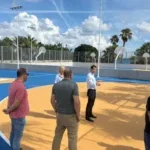
Torrevieja reopens sports facilities. Credit: Ayuntamiento de Torrevieja.

Residents in three Torrevieja neighbourhoods have access to improved outdoor sports facilities following a €640,211 investment programme. Courts in La Mata, Cabo Cervera and Los Balcones have reopened after work to renew playing surfaces, improve accessibility and safety, repair damaged infrastructure and install energy-efficient lighting.

Three neighbourhood sports facilities upgraded

Torrevieja has reopened three outdoor sports facilities following a €640,211 programme of improvements in La Mata, Cabo Cervera and Los Balcones.

The work has renovated the multi-sports court in Parque Perfecta Rodriguez in La Mata, the sports court at Cabo Cervera and the facilities in Los Balcones, close to Reina de la Sal.

Improvements were designed to tackle deterioration caused by age and make the facilities safer and more accessible for residents.

The investment means people living in the three areas can once again use the courts for sport and recreation close to their homes.

Playing surfaces and fencing renewed

Playing surfaces have been renewed and finished with non-slip sports paint and regulation markings, while fencing and enclosures in poor condition have been replaced.

Damaged elements, including perimeter walls, paving and stands, were also removed or repaired, and access points have been improved to make the facilities easier to use.

The work was carried out by Construcciones Hermanos Espin SL as part of Torrevieja Council’s investment in neighbourhood sporting facilities.

New LED floodlights allow evening sport

New LED sports floodlights have been installed, allowing the courts to be used after dark while also reducing energy consumption.

The new lighting extends the hours during which residents can make use of the facilities, particularly during periods when daylight hours are shorter.

Together with the resurfacing, repairs and accessibility improvements, the lighting forms part of the wider renovation of the three outdoor sporting areas.

Improved courts encourage healthier lifestyles

Sports councillor Diana Box said the improvements would give residents in La Mata, Cabo Cervera and Los Balcones safer facilities close to their homes.

She added that the courts provide places where children, young people and adults can exercise, spend their free time and meet others, while encouraging healthier lifestyles across Torrevieja’s neighbourhoods.

The reopening returns the three facilities to community use following the programme of improvements, providing upgraded outdoor spaces for sport and recreation across different parts of the municipality.

%

Is Andalucia Earthquake-Ready? We’re About To Find Out

Published

on

is-andalucia-earthquake-ready?-we’re-about-to-find-out

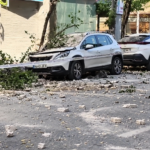
Rubble-strewn street in Granada after August earthquake. Credit: Junta

Andalucia’s emergency services are preparing for a major earthquake exercise in the Granada Province on November 10, when around 200 participants will test how effectively authorities can coordinate their response to a serious tremor.

Known as Respuesta26, the Junta de Andalucia-led exercise will examine how emergency plans are activated, command centres established, resources deployed and communications maintained between different organisations.

The test comes just months after a damaging earthquake sequence shook Granada province, forcing hundreds of residents from their homes and triggering extensive building inspections. It will put the region’s emergency arrangements under scrutiny, although the Junta has not confirmed whether the November scenario will recreate the specific problems experienced during the summer.

What will happen during the Granada earthquake test?

Respuesta26 will bring together regional emergency teams, firefighters, medical services, municipal authorities, local police, Civil Protection volunteers and representatives of central government. Granada Provincial Council, universities and professional organisations are also expected to participate.

The exercise will test four key areas: activating emergency plans, establishing command posts, mobilising personnel and equipment, and ensuring effective communication between the organisations involved. The Junta has described Respuesta26 as the largest earthquake exercise in Spain involving different levels of government.

These arrangements are crucial when a major emergency crosses municipal boundaries and requires several organisations to work together. Emergency teams need to know who is in charge, where resources are required and how reliable information will reach those making decisions.

However, the precise operational scenario has not been publicly confirmed. It is not yet clear whether participants will also practise rescuing people trapped in damaged buildings, evacuating residents or assessing properties at risk of collapse, as in previous exercises.

Andalucia has also staged large-scale emergency simulations involving different hazards. In 2025, the Junta organised Response25, a major tsunami emergency exercise in Cadiz, based on a hypothetical earthquake-triggered tsunami.

Granada’s earthquake damage raises the stakes

The exercise follows the seismic sequence that began on August 14 and included two magnitude 4.8 earthquakes, on August 15 and 18. More than 1,500 earthquakes were recorded during the sequence by early September, according to the Junta. The tremors caused damage to buildings across the Vega de Granada and led to precautionary evacuations.

By September 7, around 600 people had been evacuated from their homes, with many subsequently allowed to return following safety assessments. Technical teams carried out inspections to establish whether affected buildings could be occupied safely.

The Junta also approved €7 million in funding for repairs to public infrastructure and facilities in 27 towns affected by the earthquakes. The regional government’s funding announcement sets out the support for towns affected by the seismic sequence.

The scale of the response illustrates the demands placed on authorities when an earthquake causes widespread disruption. As well as dealing with immediate emergencies, officials must assess damaged properties, determine whether residents can return home and coordinate recovery work.

Will the exercise test real earthquake emergencies?

Granada has previously rehearsed the practical consequences of a major earthquake. A council-led drill in 2019 included simulated building damage, injured people, individuals trapped under rubble and missing persons.

That earlier exercise shows that local emergency services have experience of practising scenarios involving rescue operations and damaged buildings. It does not, however, establish that Respuesta26 will repeat those elements.

The distinction is important because testing command structures and communications is not the same as rehearsing a complex rescue operation. Both are important, but each presents different challenges.

One question for the Junta is whether the November exercise will test the full chain of emergency response, from the initial alarm and deployment of rescue teams to building inspections and decisions about evacuating or returning residents to their homes. Confirmation of the scenario would help establish exactly what lessons the exercise is intended to deliver.

Continuamos para bingo.
#Terremoto Here We go

#Granada https://t.co/s0ebQOL78T

— Fornizio Rumano (@FornizioRumano) August 18, 2026

What could the results mean for people?

For people living in Granada and elsewhere in Andalucia, the value of Respuesta26 will depend on what it reveals about the region’s ability to respond under pressure. An exercise can help identify communication problems, clarify responsibilities and expose weaknesses in emergency procedures before a real disaster occurs. Its findings can then inform improvements to plans and coordination between agencies.

The August earthquakes also revealed that the consequences of a tremor can extend well much further than just the initial shaking. Building safety, evacuation decisions and the return of displaced residents can all require sustained cooperation between emergency services, engineers and local authorities. The Junta has not yet confirmed whether these specific challenges will form part of the November simulation.

Respuesta26 will therefore provide an opportunity to test the readiness of important parts of Andalucia’s earthquake response. Whether it also examines the practical difficulties faced by residents during the Granada emergency remains a key question ahead of November 10.

Continue Reading

%

24 Parrot Eggs Hidden In Woman’s Bra And Two Are Arrested In Gran Canaria

Published

on

24-parrot-eggs-hidden-in-woman’s-bra-and-two-are-arrested-in-gran-canaria

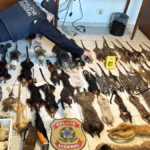
Stuffed animals and skulls laid out by Brazilian police after the raids. Credit: Policía Federal Rio de Janeiro

A woman told airport police they were just chicken eggs, but they started hatching the very next day and the chicks turned out to be threatened Brazilian parrots. A year on, the trail has led investigators to two men arrested in Gran Canaria, an island with plenty of parrot breeders and parks.

A bra, nylon stockings and a diplomatic passport

Brazilian police stopped a Swiss passenger at Rio de Janeiro’s Galeão airport in October 2025 as she tried to board a flight home. She was carrying a diplomatic passport and 24 eggs hidden under her clothes, most of them tucked inside her bra and held in place with nylon stockings. She told officers they were garnizé (bantam chicken) eggs. However, they began hatching the very next day after they were seized, and only nine chicks survived. 

The chicks were protected South American parrots, the red-tailed amazon and the red-spectacled amazon, with the latter listed as vulnerable to extinction.

One woman, 17 trips to Brazil

She was released at the time, but that wasn’t the end of it. Brazil’s Federal Police later found she’d flown to Brazil 17 times between 2019 and 2025, usually for short stays and sometimes flying back to Europe the same day she arrived.

Investigators now believe members of the group have been travelling between Brazil and Switzerland for around 20 years. They describe a clear division of labour, with some finding the eggs, others organising trips and smuggling them, and others receiving the birds abroad. 

Two men arrested in Gran Canaria 

The case came to a head on Monday October 19 in what’s been named Operación Nido Vacío (Operation Empty Nest). Spain’s National Police arrested two men described as the alleged leaders of the network in Gran Canaria, reportedly after they travelled there together from Switzerland.

Their names haven’t been released yet, and there’s no detail on what they were doing on the island. Reports note that Gran Canaria also has several breeders and parks for parrots and other wild birds on the island, though it hasn’t been directly related to the incident.

At the same time, Swiss customs officers searched three addresses in Weinfelden, while Brazilian police arrested two suspects and searched three addresses in Curitiba, where stuffed animals, bones and skulls were seized. The Swiss woman now has an arrest warrant and is on an Interpol red notice.

It isn’t the first exotic animal case linked to the Canaries

In June, the Guardia Civil’s nature protection unit (Seprona) broke up a separate network after a suitcase of undocumented protected animals bound for Las Palmas de Gran Canaria was intercepted at Sevilla airport. Officers seized 256 specimens, including spectacled caimans, savannah monitors and red-eyed tree frogs.

As for the parrot case, investigators are now trying to identify the suppliers, the middlemen and whoever was meant to receive the birds. Those charged will face prosecution in Brazil for international wildlife trafficking, animal mistreatment, smuggling and criminal association.

Continue Reading

%

Spain’s New Menopause Sick Leave Rules

Published

on

spain’s-new-menopause-sick-leave-rules

Spain introduces new sick leave protections for menopause-related conditions from December 1 Credit : Miljan Zivkovic, Shutterstock

Women working in Spain who suffer from certain debilitating menopause-related conditions will soon be entitled to enhanced sick leave protection, with payments starting from the day after they stop working and no minimum contribution period required. The changes form part of a new Social Security reform published on Wednesday, October 21, and will take effect on December 1, 2026.

The measure is intended to support women whose menopause-related health conditions prevent them from carrying out their jobs. Unlike ordinary sick leave for common illnesses, which generally requires a minimum contribution history and does not provide statutory payments for the first three days, the new arrangement offers financial protection from the beginning of a medically certified absence.

However, the reform does not introduce automatic paid leave for every woman experiencing menopause. Eligibility depends on a qualifying medical condition, an inability to work and the relevant Social Security requirements.

The change is included in Royal Decree-law 31/2026, published in Spain’s Official State Gazette, alongside other measures expanding protection for families and workers.

Who qualifies for Spain’s new menopause-related sick leave?

The new provision recognises a specific category of temporary incapacity, known in Spanish as incapacidad temporal, for women affected by a medically recognised, limiting condition associated with a secondary menopausal disorder.

Under the legislation, the condition must be sufficiently serious to prevent the woman from performing her work, and she must be receiving medical care through Spain’s public health service.

The legislation refers specifically to a qualifying condition identified through the appropriate medical coding. This distinction matters because menopause itself is a natural stage of life and does not automatically establish an entitlement to sick leave.Women experiencing symptoms that interfere with their work will therefore need a medical assessment to determine whether their condition meets the requirements for the new category.

The measure is designed to address circumstances in which menopause-related health problems have a substantial impact on a woman’s ability to continue working. The reform comes as women in Spain continue to face difficulties accessing some menopause treatments, following shortages of several hormone replacement therapies.

The legislation also introduces a separate special sick leave category for women whose injuries resulting from gender-based violence prevent them from working. Both changes form part of a wider reform of Spain’s temporary incapacity system.

According to the Spanish government’s announcement on October 20, the aim is to provide more appropriate protection in circumstances where existing sick leave arrangements may not adequately reflect particular health and social situations.

How much will workers receive during sick leave?

One of the most significant changes concerns when payments begin.

Under the ordinary rules for sick leave caused by a common illness, statutory benefits generally begin on the fourth day of absence. Sick leave has become an increasingly significant issue for Spain’s Social Security system, with its financial cost and impact on employers attracting growing attention.  Workers must normally have contributed to Social Security for at least 180 days during the preceding five years to qualify.

For the new special category covering qualifying menopause-related conditions, no minimum contribution period will be required.

The employer will pay the worker’s full salary for the first day of medically certified absence. From the following day, the statutory temporary incapacity benefit will become payable through the responsible Social Security managing or collaborating body.

The amount will be calculated using the worker’s base reguladora, or regulatory base, which is determined according to the applicable Social Security contribution rules.

The government has confirmed the following payment rates:

  • 60 per cent of the regulatory base until the twentieth day of sick leave.
  • 75 per cent of the regulatory base from the twenty-first day onwards.

These percentages do not necessarily correspond to the same proportion of a worker’s usual take-home pay, because the regulatory base is calculated using contribution information rather than simply the net salary received each month.

For someone with a regulatory base of €1,500 per month, a simplified illustration would be €900 per month at the 60 per cent rate or €1,125 per month at the 75 per cent rate. Actual payments would depend on the duration of the absence, the relevant daily calculation and individual circumstances.

The new arrangement does not mean workers will automatically receive their full salary throughout the absence. Any additional payments would depend on applicable employment agreements or other relevant provisions.

The main improvement is that qualifying workers will no longer have to wait until the fourth day for statutory sick leave payments, nor meet the usual minimum contribution requirement for common illness.

When do the new rules take effect in Spain?

Although Royal Decree-law 31/2026 was published in the Official State Gazette on October 21, the new special temporary incapacity provisions will apply from December 1, 2026 and until the relevant provisions take effect, existing temporary incapacity rules continue to govern cases according to the circumstances involved.

The reform was approved by Spain’s Council of Ministers on Tuesday, October 20. As a decree-law, it is also subject to the parliamentary validation process required under Spanish law.

The government has presented the changes as part of a broader package intended to strengthen Social Security protection, including additional measures concerning family benefits, survivors’ pensions and support for people caring for seriously ill children.

For women who may be affected, the practical starting point is a medical assessment. A qualifying diagnosis and medically certified inability to work will be essential to determining whether the new special category applies.

Workers should also distinguish between the medical justification for taking sick leave and the financial conditions governing the benefit. The reform improves the latter for eligible cases, but it does not remove the need to establish that a medical condition prevents the person from working.

The new rules mark a change in how Spain’s Social Security system recognises certain menopause-related health conditions. From December 1, eligible women will have access to statutory payments from the day after their absence begins, without the usual minimum contribution period required for ordinary sick leave.

Continue Reading

Trending

Copyright © 2017 Spanish Property & News