Connect with us

Ceuta crisis

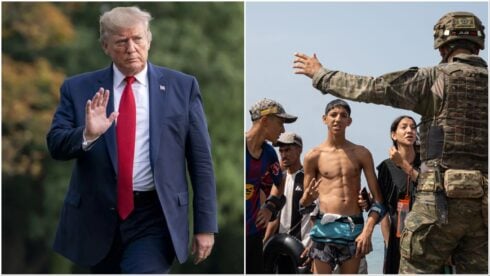
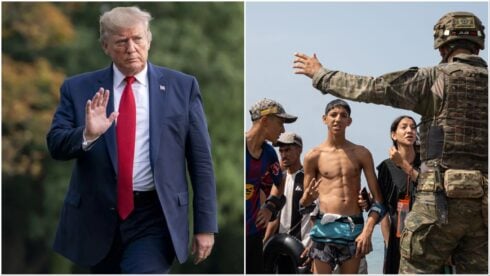
Trump Turns Ceuta Migrant Crisis Into Campaign Rallying Cry Ahead Of Crucial November Midterms

Published

on

trump-turns-ceuta-migrant-crisis-into-campaign-rallying-cry-ahead-of-crucial-november-midterms

Ceuta crisis

Africa’s richest monarch celebrates 27 years as Madrid-Rabat ties under new border pressure

Published

on

By

King Mohammed VI has completed 27 years ruling Morocco, confirming his place as Africa’s richest monarch while the kingdom’s industrial expansion continues to draw praise from world leaders. Yet the same week thousands of young Moroccans entered Spain’s North African enclave, exposing social gaps that still drive people abroad and testing the future of the Madrid-Rabat partnership.

Congratulatory messages arrived for the royal anniversary celebrations held at the palace in Tetouan. Britain’s King Charles III, Dutch King Willem-Alexander, Belgian King Philippe, Swedish King Carl XVI Gustaf and Jordan’s King Abdullah II all sent good wishes. Oman’s Sultan Haitham bin Tarik, Bahrain’s King Hamad bin Isa Al Khalifa, Saudi Crown Prince Mohammed bin Salman, Chinese President Xi Jinping, Russian President Vladimir Putin, Egyptian President Abdel Fattah El-Sissi and Senegal’s Bassirou Diomaye Faye also paid tribute. Estimates put Mohammed VI’s personal fortune near $5.7 billion, largely through the royal family’s Al Mada holdings.

From quiet economy to industrial strength

When Mohammed VI took power in 1999 after King Hassan II, Morocco relied heavily on farming, tourism, phosphates and money sent home by workers abroad. Factories stayed limited and many rural families struggled. Heavy investment since then has altered the picture. Ports, roads, high-speed trains, solar and wind projects plus industrial zones have taken shape. Tangier Med now ranks among Africa’s top ports, giving the country a clear logistics gateway to Europe and beyond.

Car and aircraft makers have set up plants and supply chains, drawn by trade deals and closeness to European markets. Per-person income has nearly doubled since the late 1990s. Growth reached about 4.8 per cent in 2025, and forecasts point to 4.4 per cent this year, helped by farming recovery and building work. Foreign investment almost doubled to roughly $3.34 billion last year, with electric vehicles, batteries and clean energy projects leading the way. Defence ties have grown too, including a ten-year roadmap with the United States running to 2036 and deals covering missiles, Apache helicopters and possible F-35 jets.

Social gaps and the border pressure

Benefits have not reached everyone. Youth joblessness remains high and inequality still bites. Protests led by young people flared in September 2025 over work, hospitals and schools. Some turned messy before officials promised talks and extra funding. Euro Weekly News has already reported the full details of the late-July events at the Spanish North African enclave, when an estimated 50,000 to 60,000 people crossed by land and sea. At least 67 died. Most went back within a day or two once Spanish forces regained control.

Spanish officials pointed to people-smuggling gangs and social-media claims that the border stood open after a court ruling. Questions remain over how freely Moroccan forces acted in the early hours. EU figures show around 275,000 cases of Moroccan citizens found irregularly across the bloc between 2021 and 2025. The episode left Madrid under pressure from other European capitals and reminded both sides how population movements can still dominate the relationship.

Looking ahead for Madrid and Rabat future

Trade between the two countries now runs well over €20 billion a year, making Spain Morocco’s top commercial partner. Cars, wiring, clothes, fruit, vegetables and energy move both ways. Plans for a rail tunnel under the Strait of Gibraltar keep moving forward, with studies confirming it is technically possible. Realistic opening dates sit between 2035 and 2040. Spanish funding for technical work has continued even after the recent border pressure.

Madrid has chosen careful language, calling Morocco a reliable partner on border management while reinforcing the enclave’s sea barrier. Future ties will rest on balancing strong business links and long-term tunnel vision against repeated population movements and youth frustration at home. Mohammed VI’s next years in power will show whether industrial gains can finally create enough jobs to keep more young Moroccans from risking the journey north.

The next few days of diplomatic tussle will only tell what happens to the relationship.

Continue Reading

%

Africa’s Richest Monarch Celebrates 27 Years

Published

on

africa’s-richest-monarch-celebrates-27-years

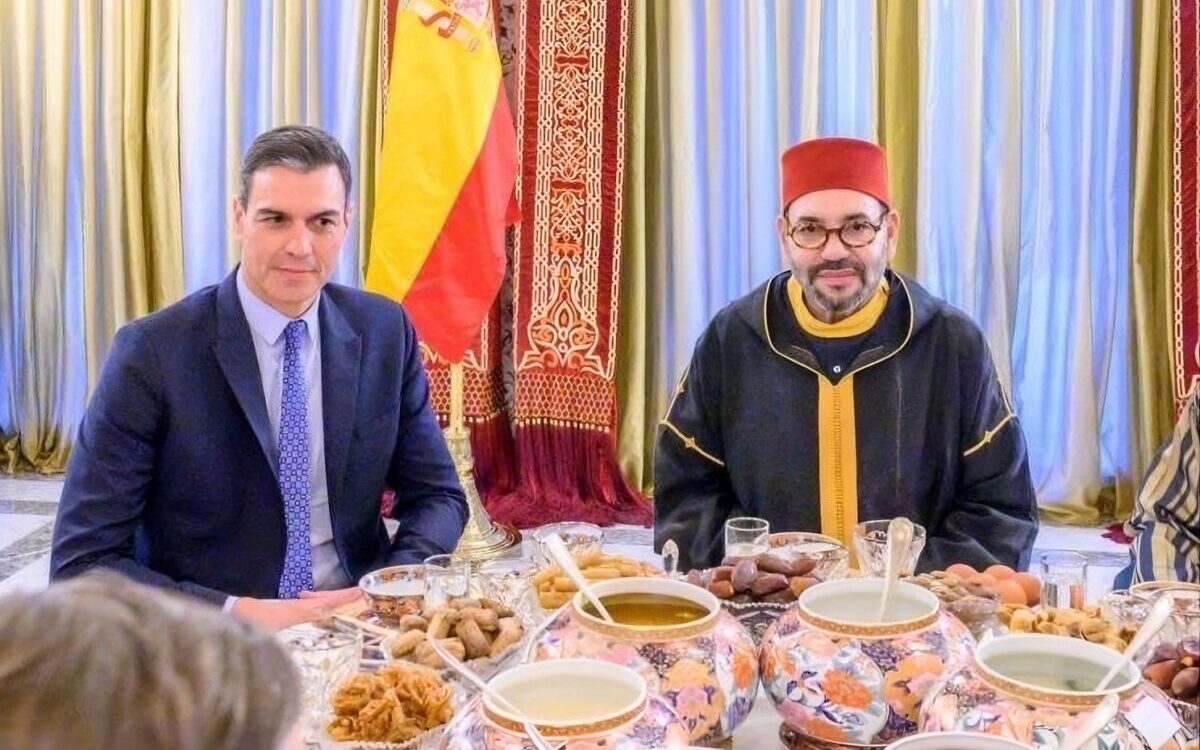
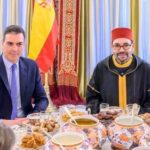
Pedro Sánchez and King Mohammed VI. Credit: maroc.ma/ar

King Mohammed VI has completed 27 years ruling Morocco, confirming his place as Africa’s richest monarch while the kingdom’s industrial expansion continues to draw praise from world leaders. Yet the same week thousands of young Moroccans entered Spain’s North African enclave, exposing social gaps that still drive people abroad and testing the future of the Madrid-Rabat partnership.

Congratulatory messages arrived for the royal anniversary celebrations held at the palace in Tetouan. Britain’s King Charles III, Dutch King Willem-Alexander, Belgian King Philippe, Swedish King Carl XVI Gustaf and Jordan’s King Abdullah II all sent good wishes. Oman’s Sultan Haitham bin Tarik, Bahrain’s King Hamad bin Isa Al Khalifa, Saudi Crown Prince Mohammed bin Salman, Chinese President Xi Jinping, Russian President Vladimir Putin, Egyptian President Abdel Fattah El-Sissi and Senegal’s Bassirou Diomaye Faye also paid tribute. Estimates put Mohammed VI’s personal fortune near $5.7 billion, largely through the royal family’s Al Mada holdings.

From quiet economy to industrial strength

When Mohammed VI took power in 1999 after King Hassan II, Morocco relied heavily on farming, tourism, phosphates and money sent home by workers abroad. Factories stayed limited and many rural families struggled. Heavy investment since then has altered the picture. Ports, roads, high-speed trains, solar and wind projects plus industrial zones have taken shape. Tangier Med now ranks among Africa’s top ports, giving the country a clear logistics gateway to Europe and beyond.

Car and aircraft makers have set up plants and supply chains, drawn by trade deals and closeness to European markets. Per-person income has nearly doubled since the late 1990s. Growth reached about 4.8 per cent in 2025, and forecasts point to 4.4 per cent this year, helped by farming recovery and building work. Foreign investment almost doubled to roughly $3.34 billion last year, with electric vehicles, batteries and clean energy projects leading the way. Defence ties have grown too, including a ten-year roadmap with the United States running to 2036 and deals covering missiles, Apache helicopters and possible F-35 jets.

King Mohammed VI of Morocco has named the 1,055-km Tiznit–Dakhla road the President Donald J. Trump Highway. pic.twitter.com/2juYzJwmvV

— Globe Eye News (@GlobeEyeNews) July 27, 2026

Social gaps and the border pressure

Benefits have not reached everyone. Youth joblessness remains high and inequality still bites. Protests led by young people flared in September 2025 over work, hospitals and schools. Some turned messy before officials promised talks and extra funding. Euro Weekly News has already reported the full details of the late-July events at the Spanish North African enclave, when an estimated 50,000 to 60,000 people crossed by land and sea. At least 67 died. Most went back within a day or two once Spanish forces regained control.

Spanish officials pointed to people-smuggling gangs and social-media claims that the border stood open after a court ruling. Questions remain over how freely Moroccan forces acted in the early hours. EU figures show around 275,000 cases of Moroccan citizens found irregularly across the bloc between 2021 and 2025. The episode left Madrid under pressure from other European capitals and reminded both sides how population movements can still dominate the relationship.

Looking ahead for Madrid and Rabat future

Trade between the two countries now runs well over €20 billion a year, making Spain Morocco’s top commercial partner. Cars, wiring, clothes, fruit, vegetables and energy move both ways. Plans for a rail tunnel under the Strait of Gibraltar keep moving forward, with studies confirming it is technically possible. Realistic opening dates sit between 2035 and 2040. Spanish funding for technical work has continued even after the recent border pressure.

Madrid has chosen careful language, calling Morocco a reliable partner on border management while reinforcing the enclave’s sea barrier. Future ties will rest on balancing strong business links and long-term tunnel vision against repeated population movements and youth frustration at home. Mohammed VI’s next years in power will show whether industrial gains can finally create enough jobs to keep more young Moroccans from risking the journey north.

The next few days of diplomatic tussle will only tell what happens to the relationship.
Continue Reading

%

The King’s Fury Over Ceuta Crisis As Felipe VI Delivers One Of The Strongest Statements Of His Reign

Published

on

the-king’s-fury-over-ceuta-crisis-as-felipe-vi-delivers-one-of-the-strongest-statements-of-his-reign

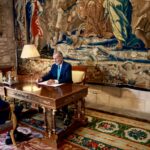
The King watched the events in Ceuta with “great concern and indignation”. Photo credit: La casa Real de S.M el Rey on X

Spain’s monarch breaks with tradition after deadly migration emergency, demanding the State guarantees the security of Ceuta and Melilla Spain’s King almost never speaks like this but as politicians traded accusations over the worst migration crisis to hit Ceuta in years, Felipe VI abandoned the measured language expected of a constitutional monarch and delivered a message that has reverberated across the country.

The King said he had watched the events in the North African enclave with “great concern and indignation”, before issuing a serious warning: “The State must ensure the security of Ceuta and Melilla and prevent these events from happening again.” For a monarch whose constitutional role depends on political neutrality, the choice of words was extraordinary. It was not simply a message of sympathy. It was a clear declaration that what unfolded on Spain’s southern frontier was unacceptable.

A crisis that reached the Royal Palace

The statement, issued by the Royal Household from the Marivent Palace in Mallorca, came after a day of unprecedented scenes in Ceuta that stunned Spain and much of Europe. Thousands of migrants crossed into the autonomous city in a matter of hours, overwhelming security forces, emergency services and local authorities. The humanitarian cost quickly became apparent, with dozens of lives lost during the chaos and countless others requiring medical attention. 

As the scale of the emergency became clear, Felipe VI remained in constant contact with Prime Minister Pedro Sánchez, Ceuta president Juan Jesús Vivas, Melilla president Juan José Imbroda and opposition leader Alberto Núñez Feijóo. Behind palace walls, the King was being kept informed as one of Spain’s most sensitive border emergencies unfolded. When the Royal Household finally broke its silence, the language reflected the seriousness of the moment.

Not politics, but a constitutional warning

Spanish monarchs do not govern, they do not set migration policy, negotiate with neighbouring countries or direct the security forces. Their role is deliberately removed from day-to-day politics. That is precisely why Felipe VI’s intervention has attracted so much attention.Rather than criticising the Government or entering the political battle now raging in Madrid, the King focused on what he described as the State’s constitutional responsibility: protecting Spanish territory and ensuring the security of its citizens.

He also insisted that Ceuta and Melilla should receive “a united, clear and determined message” that they have the backing of the entire country. For many observers, the King’s use of the word “indignation” was almost as significant as his demand that the crisis must never be repeated.

How did Spain get here?

The political fallout has been immediate, the Government has admitted it failed to foresee the scale of the mass crossings, acknowledging that better intelligence could have changed the response. Opposition parties have accused ministers of losing control of Spain’s borders, while pressure continues to mount for answers over what happened in the hours before thousands of migrants reached Ceuta.

Questions have also been raised about Morocco’s role after reports suggested border controls on the Moroccan side were initially relaxed before later being reinforced. Madrid and Rabat remain in diplomatic contact as investigators attempt to establish exactly how one of the largest irregular border crossings in Spanish history was able to develop so quickly.

Ceuta at the centre of Europe once again

Although geographically located in North Africa, Ceuta is Spanish territory and forms part of the European Union’s external border. That makes every migration crisis there an issue that extends far beyond Spain. The emergency has once again exposed the enormous pressure placed on the city whenever diplomatic tensions or migration flows suddenly intensify. For residents, the scenes were unlike anything they had experienced before.

Emergency workers, police officers, Guardia Civil personnel and military units were stretched to their limits as they dealt with exhausted migrants, frightened families and an unfolding humanitarian tragedy. In his statement, Felipe VI paid tribute to all those who worked throughout the crisis, acknowledging the professionalism shown under exceptionally difficult circumstances.

A message that carries weight

Royal speeches are carefully crafted, every sentence is scrutinised, every word considered and every phrase weighed for constitutional neutrality. That is why Saturday’s statement immediately stood apart. The King did not simply express sadness over the loss of life or solidarity with those affected. He made it clear that Spain has an obligation to guarantee the security of Ceuta and Melilla and that the events witnessed this week cannot become the new normal.

Whether his intervention changes the political debate remains to be seen. What is certain is that when Spain’s monarch, a figure renowned for measured language and restraint, publicly says he is “indignant”, the country takes notice. For the people of Ceuta, who have spent days living through one of the darkest chapters in the city’s recent history, the King’s words will be seen as recognition that what happened was not simply another migration incident. It was a national crisis, and, in the eyes of Spain’s Head of State, one that must never be allowed to happen again.

Continue Reading

Trending

Copyright © 2017 Spanish Property & News