Connect with us

%

Brits Warned Of Power Cut Risks As Hacks Increase

Published

on

brits-warned-of-power-cut-risks-as-hacks-increase

London without power. Credit: Anwar Budhi Dharmawan – Shutterstock

Britain is preparing for the possibility of major electricity disruptions, with new emergency arrangements allowing rolling power cuts and the country’s cyber security chief warning that artificial intelligence could make attacks on essential infrastructure more dangerous.

The warnings have led to renewed questions about how prepared the UK is for a widespread blackout. However, there is currently no indication that households should expect electricity supplies to fail this winter.

UK introduces emergency rolling blackout arrangements

Under changes approved by energy regulator Ofgem, the National Energy System Operator (NESO) can now use a Demand Control Rotation Protocol to arrange rotating electricity disconnections if supplies become critically short. The regulator approved the changes in July, with the protocol taking effect in August.

The measures, reported by The Guardian on August 10, could see selected areas disconnected for periods of up to three hours, with as little as eight hours’ warning. The arrangements are intended as a last resort, after other options to balance electricity demand have been exhausted. Hospitals, water treatment facilities and certain other essential sites would receive protection.

The purpose is to prevent a localised electricity shortage from developing into a much wider failure affecting millions of households. Britain has experienced previous power cuts affecting thousands of UK homes, although those incidents were not evidence of a nationwide supply failure.

Cyberattacks raise fresh concerns

Cyber security has become another source of concern for British authorities. On November 3, the National Cyber Security Centre (NCSC), part of GCHQ, warned that AI-powered malware would be highly likely to feature in ransomware attacks against Britain’s critical national infrastructure by 2028.

Its chief executive, Dr Richard Horne, warned that criminals and hostile states could use artificial intelligence to identify and exploit weaknesses in outdated computer systems much more quickly. The National Cyber Security Centre’s warning about AI-powered cyberattacks sets out the potential threat in greater detail.

An attack on essential infrastructure could disrupt services that people depend on every day, including electricity, water, communications and transport. The warning does not mean a blackout is necessarily expected, but it goes to show the importance of protecting systems that keep the country running.

Is Britain at risk this winter?

Despite these concerns, the latest assessment from NESO is reassuring. Its Winter Outlook for 2026/27, published on October 23, forecasts an electricity surplus of 5.9 gigawatts, equivalent to a 9.5 per cent buffer above expected peak demand.

The operator says supplies are expected to be sufficient throughout the winter, with its assessment based on testing 30,000 possible scenarios. There is therefore no current forecast of widespread power cuts, although the operator will continue monitoring weather conditions, electricity demand and generating capacity.

Government urges households to be prepared

On October 22, the British Government launched its updated Be Ready campaign, encouraging households to take simple precautions in case essential services are disrupted. The advice covers emergencies ranging from severe weather to interruptions affecting electricity, water supplies and internet connections.

Households are encouraged to think about how they would manage for up to three days if normal services were temporarily unavailable. The government’s Be Ready emergency preparedness advice explains how families can make simple preparations without spending a fortune.

It is a precautionary approach rather than a warning that a major emergency is imminent. EWN has previously reported on European emergency preparedness advice for households.

While the prospect of widespread power cuts remains unlikely, Britain’s latest warnings are a useful reminder that being prepared makes sense. Households do not need to go overboard, but having a torch, battery-powered radio, drinking water, some non-perishable food and a charged power bank tucked away could make an unexpected interruption considerably easier to manage. After all, it is better to have these things and never need them than find yourself searching for a torch when the lights go out.

🚨 NEW: The Government’s “Black Sky” contingency plans for a national water or power blackout

– Around 100 BBC staff would be deployed to run an emergency RM radio studio stocked with enough food, water and fuel to keep it running for 3 days

– The BBC would broadcast pre-written Government scripts through the studio, including how to ration water, what to do if toilets stop working and which food to eat first (see scripts below)

– Radio masts would switch to diesel generators to keep broadcasts going for up to 72 hours without electricity

– BBC teams would use satellite phones to stay in contact, with agreed meeting points and backup arrangements if those phones stop working

– They would also report from emergency centres across the UK using satellite-equipped BBC vehicles to help keep information flowing to the public

– Emergency services would have alternative ways to communicate if mobile phone networks stopped working

– The Government is putting £70m towards aircraft that could restore mobile phone and internet coverage across the UK for over a week

— Politics UK (@PolitlcsUK) November 7, 2026

%

Fake Rental Homes: Seven Arrested In Malaga

Published

on

fake-rental-homes:-seven-arrested-in-malaga

Malaga-based National Police. Credit: Pavel Larsson – Shutterstock

Seven people have been arrested after a criminal network allegedly tricked people looking for long-term homes in Malaga into paying deposits for properties they had no right to rent out.

Police believe around 20 people have already fallen victim to the scam, with losses estimated at €150,000. Another three people are being investigated in connection with the alleged operation.

What made the fraud particularly convincing was that the properties were real. Members of the gang would first book tourist apartments for just one day before advertising them as available for long-term rental.

They then arranged viewings, showed prospective tenants around the homes and collected money for reservations and deposits. Payments were made through Bizum, Spain’s popular mobile payment service, or bank transfers.

In some cases, the same apartment was offered to several different people on the same day, with each being led to believe they had secured a place to live.

Suspected ringleader operated from Thailand

According to the National Police investigation, reported by EFE, the organisation was based on the Costa del Sol but had an international element. Its alleged ringleader operated from Thailand, where he coordinated the fraudulent activity and recruited people in Spain to carry out the practical work.

Different members had clearly defined roles. Some published advertisements on social media and arranged appointments, while others showed prospective tenants around the apartments and collected their money. Investigators also uncovered a system involving numerous telephone numbers and bank accounts, with cryptocurrency allegedly used to launder some of the proceeds.

Benalmadena featured in the operation, with one suspect responsible for collecting money and arranging the movement of funds and apartment keys. Another allegedly received cash and converted it into cryptocurrency.

Police warn more victims could come forward

The investigation began after several complaints were received by the National Police’s Central District station in Malaga. Officers subsequently identified the properties involved and carried out operations to catch suspects in the act. Several further scams were prevented when prospective tenants arrived to reserve apartments.

Seven people have now been arrested and three others are under investigation for alleged offences including membership of a criminal organisation, fraud and money laundering.

Police believe the number of victims could increase as the investigation continues, given how many people were reportedly shown the same apartments. The case is another warning for people searching for rental accommodation in Spain. EWN previously reported on how fake landlords were targeting desperate renters across Spain, with criminals exploiting the pressure on people to find somewhere to live.

Anyone searching for a long-term rental should check the identity of the person offering the property and establish that they are the owner or have proper authority to rent it out. Paying a deposit before verifying these details can leave prospective tenants seriously out of pocket.

For more home renting advice, see EWN’s guide to avoiding rental scams in Spain.

Continue Reading

%

Expert Expat’s Guide To Getting It Right At The Hospital

Published

on

expert-expat’s-guide-to-getting-it-right-at-the-hospital

Hospital Costa del Sol. Credit: Junta

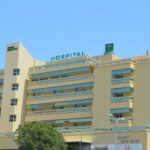
Visiting a large Spanish hospital for the first time can be a daunting experience, particularly if you are not confident speaking Spanish. But a little preparation can make all the difference, according to British expat Steve Marshall, who has put together a practical guide to help English-speaking residents navigate their way around the Hospital Universitario Costa del Sol near Marbella.

Steve says, “Getting older often means more frequent visits to doctors and hospitals. While appointments at a local health centre may be relatively straightforward, larger public hospitals can be confusing, busy and difficult to navigate, especially when language becomes a barrier.”

Steve’s guide focuses on the Hospital Universitario Costa del Sol, situated just off the A-7 at kilometre 187, near Marbella. His message is simple: “be prepared, know where to go and don’t be afraid to ask for help.”

Here is his step-by-step guide.

1. Prepare before leaving home

Having the right paperwork and information with you can save considerable time and frustration.

Steve recommends taking:

  • Your hospital appointment letter or SMS confirmation.
  • Your Spanish health card, TIE or passport.
  • A list of your current medicines and their dosages.
  • Any recent X-rays, test results or relevant medical paperwork.
  • A written list of your main medical concerns.

One particularly useful tip is to use Google Translate to produce a Spanish version of your medical concerns. This gives you something to show your consultant if communication becomes difficult.

Steve also advises checking that your mobile phone is working and fully charged. Take some water, a face mask if you prefer to wear one, and allow plenty of time to get there.

2. Finding the hospital

The hospital has been extended and, according to Steve, visitors should use the new entrance at the front of the extension rather than looking for the former main entrance. There is free parking available, while public transport provides alternatives for those without a car.

From Fuengirola:

  • Take the M-220 bus.
  • Get off at Los Monteros.
  • Walk approximately 350 metres to the main hospital entrance.

From Marbella:

  • Check the timetables for bus lines 6, 12 and 13.

Steve recommends checking current bus services before setting off, as routes and timetables can change.

3. Checking in: where to go first

Once inside the hospital, turn right towards the reception area. For English-speaking patients, Steve recommends looking for the desk marked with a Union Jack flag. This is where patients can seek assistance if they are unsure about their appointment or where they need to go. Wheelchairs are also usually available near the entrance.

If you already know where you are going, the automated check-in consoles offer another option:

  1. Do not check in more than 30 minutes before your appointment.
  2. Select ‘English’ in the top right-hand corner of the screen.
  3. Enter your NIE number.
  4. Collect your numbered ticket.

Large directory notices on the walls help visitors find their way around.

Still unsure? Take your ticket to the member of staff at the Union Jack desk. Steve says patients can also request a free interpreter service there if needed.

4. Finding your consultation room

Once checked in, follow the directions to your designated waiting room.

Find your room number and take a seat. A television screen will display patient identification numbers, corresponding to the numbers printed on the tickets issued at reception.

Keep an eye on the screen. When your number appears, it is time to go into your consultation.

5. During and after your appointment

Consultations usually involve both a consultant and a nurse. Steve says most consultants he has encountered speak English, although this is less common among nursing staff.

Patients are normally given a written medical report in Spanish after their consultation. If you do not have an interpreter with you, your smartphone can be particularly useful.

Steve recommends using the translation app on your phone to:

  • Translate the written medical report into English.
  • Help you understand.

Continue Reading

%

Barcelona Airport Halts Departures As Baby’s Medical Emergency Forces Plane To Land

Published

on

barcelona-airport-halts-departures-as-baby’s-medical-emergency-forces-plane-to-land

The aircraft was directed to park very close to the runway exit. Photo credit: Santi Rodriguez/Shutterstock

A flight to your holiday destination is unlikely to go exactly to plan if you end up making an unscheduled stop in another country. But for one family travelling with a baby, the diversion to Barcelona was not an inconvenience or a change of travel plans. It was an urgent race to get their child medical attention.

The aircraft was flying from Casablanca in Morocco to Istanbul in Turkey when the crew reported that an infant, just a few months old, needed urgent medical assistance. The flight was diverted to Barcelona-El Prat on Sunday, November 8, so the baby could be taken off the plane and transferred for treatment.

A medical emergency thousands of feet above the ground

There was no option to continue towards Istanbul and wait until the aircraft reached its scheduled destination. The crew requested an emergency diversion to Barcelona after reporting that the baby had medical problems requiring immediate attention.

The child’s condition has not been disclosed, and there is no information about whether the baby became unwell during the flight or had an existing medical problem. What is clear is that the crew considered the situation urgent enough to change course and request priority landing at another airport.

Barcelona airport gives the aircraft priority

Air traffic controllers coordinated a direct approach to runway 24L, allowing the aircraft to land as quickly as possible. The runway is closest to the sea and is normally used for take-offs, rather than arrivals. The airport also had to consider the amount of fuel still on board and the aircraft’s weight before the landing. Once the arrangements were made, the flight was given priority, with other movements adjusted to leave the runway clear.

The emergency landing briefly disrupted normal operations at Barcelona-El Prat. Take-offs were stopped temporarily, while other aircraft waiting to land were held until the diverted flight had safely touched down. The reports do not specify how many flights were affected or how long the interruption lasted, but the pause allowed the aircraft carrying the baby to land without competing with other movements.

Ambulance ready to take baby from the plane

Getting the aircraft onto the ground was only part of the operation. The next priority was making sure medical staff could reach the baby without having to wait for the plane to taxi across the airport. After landing, the aircraft was directed to park very close to the runway exit.

This allowed emergency personnel to get to the plane quickly and carry out the evacuation, with the baby taken away by ambulance for medical attention. The positioning was arranged specifically to speed up access for the medical teams. Rather than following the usual route to a stand or terminal, the aircraft stopped in a location that allowed the infant to be transferred as soon as possible.

Controllers send message of support

Spain’s air traffic controllers confirmed the incident in a post on X, explaining that the crew had requested an urgent diversion because of the baby’s medical problems. They also thanked the flight crew, medical staff and airport operations personnel who helped coordinate the response. Their message ended with a wish for the baby to recover soon and well. It was a brief acknowledgement of the people involved in an operation where every minute mattered to the child waiting for medical care.

La tripulación del vuelo Casablanca Estambul solicita desviarse de urgencia al aeropuerto de Barcelona 🛬 Hay un bebé de apenas meses a bordo con problemas médicos que requieren atención urgente 👶🚨

Coordinamos aproximación directa a la pista 24L, la más cercana al mar y usada para despegues 🛫 Para ello, nos aseguramos de que podrán tomar y, una vez hecho, paramos despegues y hacemos esperar momentáneamente a los aterrizajes.

Una vez en tierra, se les facilita estacionamiento muy cercano a la salida de pista 🚑 Ahí, los servicios médicos pueden llegar se inmediato y realizar la evacuación. Reanudamos operativa.

Esperamos que el pequeño se recupere pronto y bien ❤️‍🩹
Gracias a todos los implicados en el operativo; personal sanitario, tripulación, operaciones…

#emergencia #atc #aviacion #airtrafficcontrol

— 😉Controladores Aéreos 🇪🇸 (@controladores) November 8, 2026

There has been no further public information about the baby’s condition, the treatment received or which hospital the ambulance took the infant to. The airline has also not released details about arrangements for passengers continuing to Istanbul. The aircraft’s diversion brought the journey to an unexpected halt in Barcelona, but the reports have not confirmed whether the flight later continued to Istanbul or what happened to the passengers. The baby’s condition also remains unknown.

Continue Reading

Trending

Copyright © 2017 Spanish Property & News