
Crimea
Ukraine Exploits Kremlin’s Weaknesses With New Weapons, Striking Key Targets In Russia

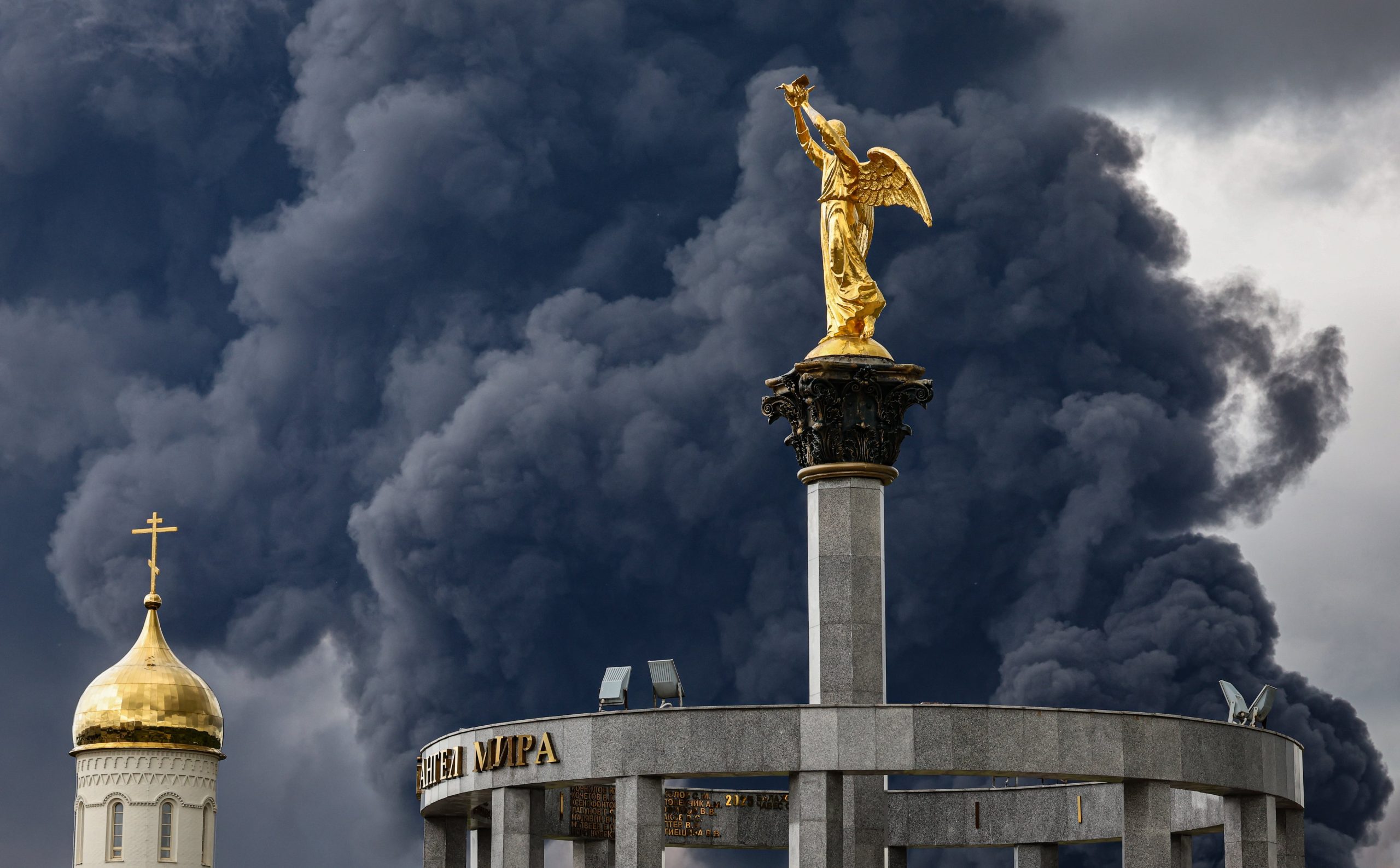
Upon waking up, Taras (a pseudonym to protect his identity) was overjoyed to see some of Russia’s most heavily-fortified areas ablaze. His ambition to defend Ukraine has gone from being a dream to becoming a reality in recent days. “It’s maybe the best feeling ever. Seeing that result is my greatest reward,” he stated during an interview with EL PAÍS in Kyiv. Taras, the head of a local defense company, has spent months with his colleagues developing and testing one of the weapons currently being used to strike Russian strongholds, such as Moscow and St. Petersburg.
The Bars-SM missile-drone program, developed in 2025, has become a key component of Ukraine’s offensive arsenal. It is one of the weapons that the troops are using to attack the southern front. There, another barrage of drones is jeopardizing the stability of the Crimean Peninsula, occupied by Russia since 2014.
Other sources consulted in recent days in the Ukrainian capital (including a former deputy defense minister and a military analyst) believe that this offensive, with its serious impacts on strategic points in the north, as well as in the south aimed at isolating Crimea, is achieving objectives that have never been obtained before. Targeting critical infrastructure within Russia, especially energy facilities, has been part of the Ukrainian strategy for the past year. On the other hand, the tactic of strangling the illegally-annexed peninsula with frequent and targeted attacks on roads, bridges, railways and even ferries is more recent. On Wednesday, June 24, Ukraine managed to cut off the power supply to Sevastopol — the largest city in Crimea, with some 350,000 inhabitants — after bombing its main power station.
In both cases, those consulted by EL PAÍS consider these to be partial victories. However, at the same time, they point to an unprecedented trend since Russian President Vladimir Putin ordered a major invasion in February 2022. Back then, a challenge like the current one being waged against the Kremlin’s forces was unthinkable. More than 52 months have passed — with hundreds of thousands of casualties on both sides — and Putin isn’t just far from achieving his objectives: he has even expressed his anger in recent days.
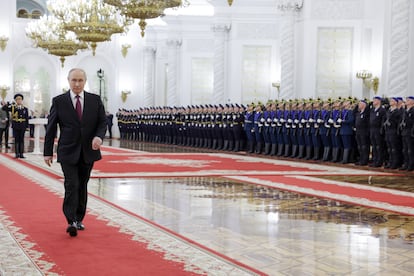
How have things changed so much in this time? Thanks to the rapid evolution of the arms race, “the attacks against St. Petersburg and Moscow are the most complex and sophisticated ever carried out by Ukrainian forces,” says Vadim Kushnikov, editor of Militarnyi, a defense media outlet.
This expert highlights the improvement in navigation and communication systems, as well as the greater range of the projectiles. There is, however, another aspect to understanding why it’s possible to bypass Russian defenses in some of the most heavily-fortified points of that vast country. “Russian troops are facing a shortage of surface-to-air missiles… and this is one of the reasons why Ukrainian drones and missiles are hitting targets inside Russian territory,” the editor of Militarnyi explains. In any case, he emphasizes that, without the modernization of the Ukrainian arsenal, this wouldn’t be possible, either.
“First, Ukraine has obviously increased its production capacity for long- and medium-range attack weapons. Second, it has managed to win the technological war, although that doesn’t mean [the advantage] will last forever,” says Alina Frolova, Ukraine’s former deputy minister of Defense. She’s currently the vice president of the Center for Defense Strategies (CDS), a research institute in Kyiv.
Frolova adds that, in parallel, “Russia is suffering from shortages of personnel, technology and money, compounded by sanctions.”
Furthermore, Ukraine, unlike Russia, “now has a strategy” that “is working,” the former deputy minister remarks. According to her, this is due to the new leadership of Minister of Defense Mikhail Fedorov, who was appointed this past January. He previously held the portfolio of Digital Transformation. Therefore, it’s not surprising that the military is now much more focused on technological development and that the Armed Forces of Ukraine have many new faces at the helm.
Ukraine is “persistently weakening the enemy’s military potential, disrupting logistics and striking critically important targets deep behind enemy lines. Drones now account for over 90% of enemy losses,” Fedorov stated on social media, on Monday, June 22. He claims that, since the beginning of 2026, they’ve attacked more than 800,000 Russian targets, including air defense systems, artillery, missile launch systems, drones, logistics vehicles, barracks, warehouses and electronic warfare systems.
The objective: “To liberate Crimea”
“In the eyes of experts,” Frolova comments, “deoccupying Crimea is simpler than, for example, deoccupying the Donbas (the volatile eastern region of Ukraine also coveted by Putin) because of the geographical characteristics” of that eastern region bordering Russia, which is connected to the Crimean Peninsula via a land corridor. What’s being sought in Crimea is “an isolation operation,” which is not going to produce short-term results. But if Russia loses this territory, she predicts, it “will be a disaster for Putin.”
Without supplies, fuel, water, or electricity, “what will you do with Crimea? You can’t maintain troops there normally… and I would say that most of the occupying authorities would try to flee,” she maintains, aware that the plan is only in its first phase on the path to the ultimate goal: “to liberate Crimea.” The next step, according to the former minister, should be to completely disable the large bridge that crosses the Kerch Strait into Russia. This is a coveted asset that’s already been attacked several times in recent years.
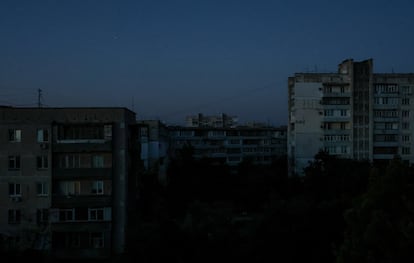
For Vadim Kushnikov, the editor-in-chief of Militarnyi, the focus is on “isolating the Crimean Peninsula to prevent the Russians from using this vast territory against Ukraine,” as it is “one of the largest military and logistical centers providing direct support to Russian troops.” Along the occupied peninsula, the Russians appear more vulnerable, despite having been established there for 12 years.
Furthermore, managing to attack Moscow’s largest refinery twice in a single week is the result of many months of “hard work.” Taras, the defense innovator, emphasizes this, without offering details. The Bars — the drone-missile manufactured by his company — can strike targets located up to 620 miles away (the straight-line distance from Kyiv to Moscow is approximately 470 miles). It reaches speeds of up to 435 miles per hour and can reach a maximum altitude of 16,400 feet for more than two and a half hours.
This device measures 8.5 feet long and 7.9 feet wide. Depending on the model, it has a maximum takeoff weight of 350 pounds and a warhead containing up to 132 pounds of explosives. It’s equipped with a Starlink internet connection system (owned by Elon Musk’s company), combining innovative technology with the possibility of mass domestic production at affordable prices, another key to the industry. Furthermore, the Bars’ navigation system allows it to detect enemy aircraft, distinguishing them from Ukrainian ones.
However, the Bars is just one of the many weapons developed by Ukrainians over these past years, in a dizzying race for survival. To strike Russia, Kushnikov explains, they also employ the FP-5 “Flamingo” cruise missile and the FP-1 and FP-2 drones, all three manufactured by Fire Point, a Ukrainian defense technology company. The Liutyi kamikaze drone and the Morok kamikaze drone, among others, are also produced domestically.
The effective and costly American Tomahawk missile, which President Volodymyr Zelensky has repeatedly requested from Washington, isn’t part of Kyiv’s arsenal. “Precisely for this reason, Ukraine has chosen to develop its own capabilities,” the director of Militarnyi explains.
He sees “two parallel paths” going forward. “The first is the diplomatic route: negotiations with the United States regarding the supply of cruise missiles. The second is the implementation of a missile program through our own efforts, along with the participation of [our] European partners,” he maintains.
Alina Frolova, meanwhile, emphasizes what’s not always so evident in these cases: “As the military says, hope cannot be part of the strategy.”
Sign up for our weekly newsletter to get more English-language news coverage from EL PAÍS USA Edition

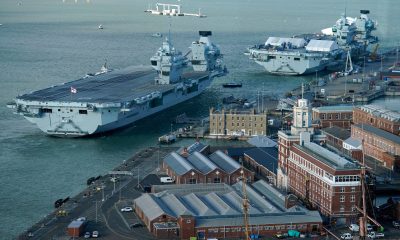

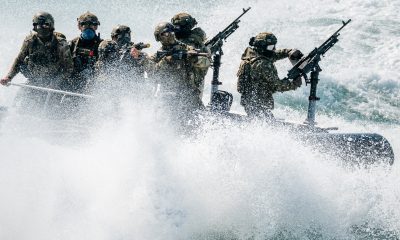




In Sevastopol, the most populous city on the Crimean Peninsula, a state of emergency has once again taken hold. Throughout its history, it has been the scene of repeated sieges and has been battered during the four years of Russia’s war against Ukraine. But now, the city is experiencing a siege of a different kind — one fought from afar, through the air. Russia’s main Black Sea naval base has had to ration fuel. No enemy is visible at the entrance to its imposing bay, but explosions tear through the sky at intervals of just a few hours. This is the new face of war: precision missiles and waves of low-cost drones.
The Ukrainian military has launched an offensive against infrastructure — bridges, roads, railways — intended to strangle the enemy’s logistics on the Crimean Peninsula, Ukrainian territory occupied by Moscow since 2014. Last week it managed to cut power to Sevastopol, a city of about 350,000 people. After a three-day blackout, authorities managed to restore power and many cafés reopened, although tourists have disappeared.
The return of electricity, however, proved to be little more than a brief reprieve. Sevastopol Governor Mikhail Razvozhayev announced on Tuesday that power restrictions were being reimposed.
“This measure is mandatory and necessary to resolve instability in the power grids outside our area. If possible, do not use elevators, and if you have electricity, charge your phones and power banks,” he said, among other recommendations.
Before the latest outages, an orchestra in a restaurant was playing the 1982 hit song Felicità, seemingly oblivious to the conflict. “Life goes on. We have to keep going, although I think things will get even worse,” says Tatiana with a note of resignation as she watches her daughter, about 10 years old, playing with a friend along the waterfront.
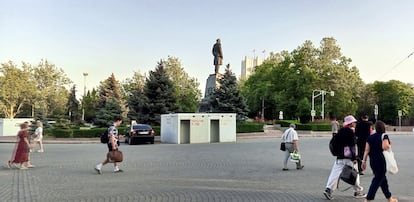
Sevastopol’s residents continue to stroll through the city and try to maintain a semblance of normal life despite everything. As in many Russian cities, the urban landscape has come to include massive concrete shelters known as ukrytiye, designed for quick refuge during attacks. But unlike before, buses and trolleybuses are no longer routinely evacuated when air-raid sirens sound. Public transport is operating normally again after the disruptions of recent weeks.
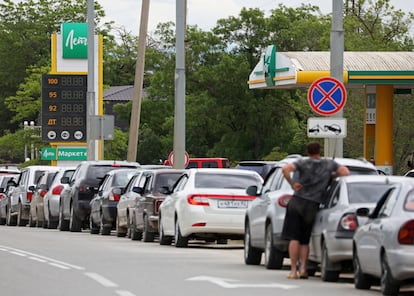
Governor Razvozhayev announced on Monday that residents would be limited to purchasing 20 liters of fuel per vehicle, using QR codes issued by the authorities on a case-by-case basis. Together with the growing use of hybrid and electric vehicles, the measure is helping to keep logistics functioning — just barely — in the Black Sea city.
“We were without power or water for three days,” Tatiana continues. “The food in the fridge went bad, and we had to buy everything, even water, in the shops. It’s terrible, [the Ukrainian forces] constantly attack military facilities, ships and energy infrastructure,” she adds, taking some comfort in the fact that her daughter and her friend, who arrived a month ago, “don’t understand what’s happening.”
As the sun sets over the entrance to Sevastopol Bay, a bride poses for wedding photos with her friends. In the distance, bursts of anti-aircraft fire can be heard, though no one pays much attention. Night falls. In the distance, tracer rounds flash in the sky and vanish. After 11 p.m., air-raid sirens suddenly wail across the city. Minutes after they stop, two powerful explosions shake the hotel room. Calm returns, but at 6 a.m. the alarm clock of war sounds again: first the sirens, then the explosions.
“Air defenses have repelled two Ukrainian attacks. Twenty-nine drones were shot down,” Sevastopol’s governor reported on Telegram. Six explosions were heard this time, though farther away. The city returns to its routine. Past noon the sirens sound again.
No gunfire had been heard in Crimea from the time Russia annexed the peninsula in 2014 until Moscow launched its full-scale invasion of Ukraine in February 2022. Nor has it ever faced shortages on this scale. Ukraine’s bombing campaign against Russian oil refineries this year has caused fuel shortages across much of the country, while the Black Sea peninsula has also been affected by Kyiv’s efforts to disrupt access through drone attacks on its two main supply routes: the Kerch Bridge and the R-280 highway from Donbas.
Unlike the rest of Crimea, Sevastopol remained a Russian naval base after the dissolution of the Soviet Union in 1991, while the remainder of the peninsula became part of independent Ukraine. Kyiv and Moscow initially agreed that the arrangement would remain in place until 2017, although it was extended in 2010 through 2042. It was from this enclave that Russian forces seized Crimea’s parliament in 2014, when Ukraine was being governed by an interim administration following that year’s Maidan protests against the pro-Russian government.
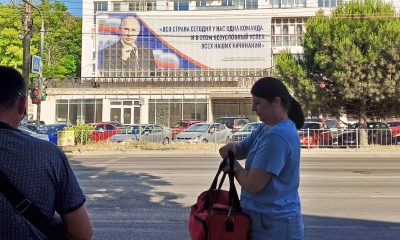
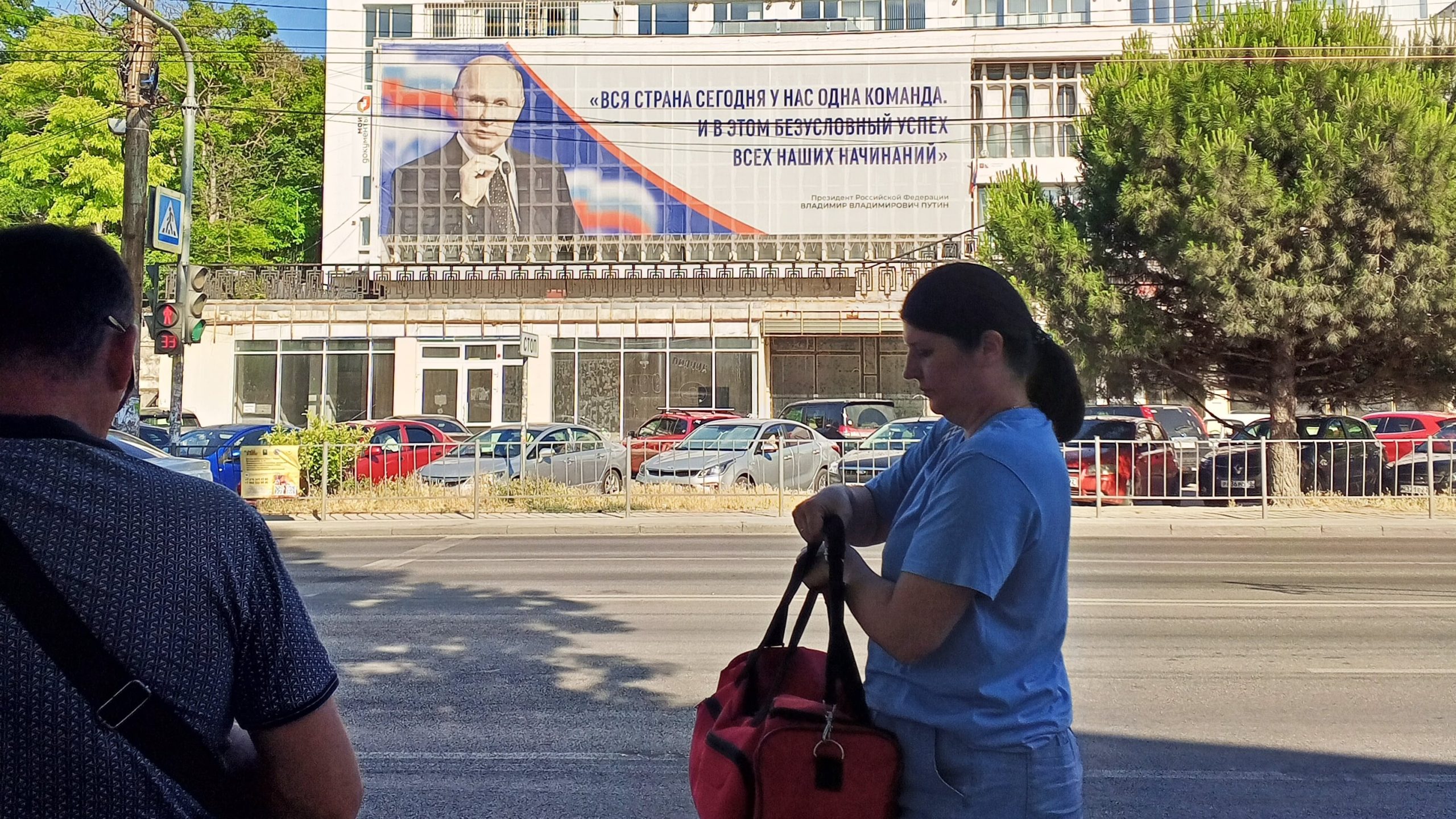
A mural at the entrance to Sevastopol recalls the final line of the speech Russian President Vladimir Putin delivered to his Federal Assembly in December 2014: “We are ready to take up any challenge and win.” That was how the Russian leader addressed lawmakers at the end of the year in which the Kremlin annexed Crimea in violation of international law and unleashed a war in eastern Ukraine while denying any involvement, insisting that Russian soldiers fighting there were simply volunteers on “vacation.”
Twelve years later, with Russia’s offensive extended across all of Ukraine, Crimea is under intense bombardment, and Putin still does not control Sloviansk, the city in Ukraine’s Donetsk region where the current war — the largest armed conflict Europe has seen in 80 years — first took root.
In Sevastopol, there is little room for anything but pro-Russian nationalist graffiti. “Where the Russians are, there is victory,” reads a mural painted over the czarist imperial flag in one of the bay’s gorges. “A united team, a strong country. Together we are Russia,” declare posters plastered across the city to commemorate Crimea’s annexation.
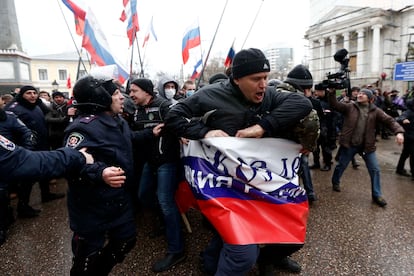
Spontaneous demonstrations — even by a single person — are banned in Russia. Yet the authorities have tolerated, or perhaps encouraged, three men collecting signatures in support of declaring a state of emergency and escalating the war against Ukraine.
“A war is being waged against our country,” they shout beside a flag bearing the image of a resolute Putin and a car topped with a mock-up of a nuclear missile emblazoned with the words: “To Washington.”
But not everyone shares that blind faith. Even some veterans admit to a measure of disappointment as Ukrainian strikes become increasingly frequent.
An elderly man pushes his grandson on a swing in Komsomol Park, named after the Soviet-era Communist youth organization that inspired the Kremlin’s own youth movement at the start of the conflict.
“The way Putin is waging this war, it will never end,” says Vladimir Ivanov, a retiree, former reconnaissance platoon commander in the naval infantry and member of a long line of military servicemen, as he plays with the child. Pausing for a moment, he turns to the boy. “Well, what’s up, cosmonaut?” he asks affectionately. “I have to keep him entertained because his dad is at the front,” he adds.
“I’m a fatalist. As the saying goes, the man destined to be hanged will never drown. All of this is sad. We have plenty of problems here, and on top of that we have to put up with the fascists,” he says, blaming Ukraine — whose government Russian propaganda routinely labels fascist — for the current conflict, as well as Soviet authorities, “who allowed the Banderovtsi [Ukrainian ultranationalists who follow the legacy of Stepan Bandera] to maintain a strong position in the west of the country.”
Ivanov notes that his great-grandfather’s name appeared in the museum dedicated to the defense of Sevastopol during the Crimean War of 1854–55. On June 10, a Ukrainian strike damaged the building and its vast mural by Franz Roubaud. The museum is now closed and is expected to reopen next year.
“We’ve heard attacks everywhere these past two weeks; it was to be expected that the situation would worsen,” says Liubov, who lives near the museum and is out walking her dog, Tioma.
She speaks with resignation about whatever may come next. “We wait and wait. One never knows what will happen; it’s not up to you,” she says. “The fuel situation is bad. There will undoubtedly be restrictions; it’s inevitable in a wartime scenario,” adds the retiree, who moved to Sevastopol 30 years ago with her first husband.
Many of the women who live in the city, like her, are or have been partners of members of the Russian armed forces. “This is a military city,” Liubov stresses, before carefully noting that what is happening in Ukraine is a “special military operation” and laughing as she recalls that the Russian authorities “have never declared that this is a war.”
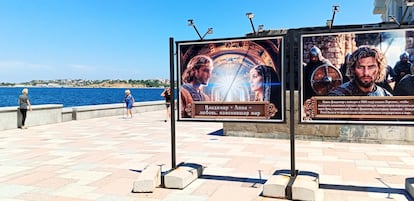
Majority support among Russians for the war against Ukraine, as reflected in opinion polls, is even more pronounced in a military hub such as Sevastopol, where it is difficult to find anyone who questions the decision to wage war.
“This will end up like the Chechen war. A truce will be signed and the fighting will resume a couple of years later, although perhaps less intensely,” predicts Alexei, an active-duty serviceman, as he strolls along the shore of Pivdenna Bay.
A sign posted at a lookout point warns that photographing the docks and ships of the Russian Black Sea Fleet moored there is strictly forbidden.
“You must be careful not to give the enemy clues. The Ukrainian idiots attack constantly, but the air defenses work,” says Alexei.
The threat posed by Ukraine’s long-range weapons has effectively sidelined the Russian navy from frontline operations and forced Moscow to relocate some vessels to the port of Novorossiysk, whose facilities still pale in comparison with Crimea’s strategic warm-water harbor.
The danger that modern missiles and drones pose even to the most powerful navies is now evident in the fighting in the Black Sea and the Strait of Hormuz. But it was already demonstrated in April 2022, when two Ukrainian missiles sank the Black Sea Fleet’s flagship, the Russian cruiser Moskva. Today, the ship survives only as a memory on the souvenir magnets sold in Sevastopol’s gift shops.
“The situation is going to get worse,” says the owner of one such stall on the waterfront, as air-raid sirens sound in the background. “Our forces are about to liberate Donbas, the special military operation will conclude and they [Ukraine] are trying [with these bombings] to divert Russian forces from the front.”
Curiously, the souvenirs bearing Putin’s face that used to be everywhere in these shops have disappeared from the shelves. Today in Sevastopol there are only three types of keepsakes for sale: city monuments, the Black Sea fleet and a single Russian historical figure: Joseph Stalin, the dictator who is increasingly viewed favorably in Russia.
Sign up for our weekly newsletter to get more English-language news coverage from EL PAÍS USA Edition
Drug raid in Spain takes bizarre turn as Guardia Civil discover exotic reptile
Haitam case in Torremolinos reopens after family appeal succeeds in Malaga court
Spain travel chaos as Cataluña wildfires close major roads and suspend trains

Red Bull set for radical new design in desperate bid to keep Max Verstappen

F1 Qualifying Results: 2026 Austrian Grand Prix times and grid positions
Mallorca solar eclipse 2026: Best viewing areas and what to know


-
 Uncategorized2 weeks ago
Red Bull set for radical new design in desperate bid to keep Max Verstappen
-
 Uncategorized1 week ago
F1 Qualifying Results: 2026 Austrian Grand Prix times and grid positions
-
best places to view the solar eclipse in mallorca2 weeks ago
Mallorca solar eclipse 2026: Best viewing areas and what to know
-
DGT2 weeks ago
Spain’s traffic warning for summer 2026: These are the weekends the DGT says you should avoid
-

 %2 weeks ago
Spain’s Heat Reaches Highest Level In 76 Years
-
Latest2 weeks ago
CONFIRMED: Spain Breaks June Heat Record
-
Latest1 week ago
EU Worries Jet Fuel Supply Situation To Worsen
-
Latest2 weeks ago
Spain’s Former PM Requests His Corruption Probe Be Nullified