
Claudia Sheinbaum
E











Cártel Jalisco Nueva Generación
Mexico Sends Trump A Message Of Effectiveness With The Arrest Of Drug Trafficker ‘El Jardinero’

With the arrest of Audias Flores, aka “El Jardinero” (The Gardener), one of Mexico’s most wanted drug traffickers and a leading contender to take over the decapitated Jalisco New Generation Cartel (CJNG), Mexico has not only dealt a brutal blow to that criminal organization, but is also trying to send a message of effectiveness to Washington and contain Donald Trump’s interventionist impulse in his crusade against drugs.
Just a few hours after the Mexican government released the image of the cornered drug lord, military authorities provided details of the capture. Not a single shot was fired, and the two-hour operation took place after 19 months of investigation. That same day, authorities also arrested César Alejandro N., alias “El Güero Contra,” in charge of the cartel’s finances and logistics, as well as Metro 9, the leader of one of the Gulf Cartel’s factions in Tamaulipas, on the border with the United States.
It was all in stark contrast to the bloody operation in February that captured the cartel’s leader, Nemesio Oseguera, alias “El Mencho,” and triggered a wave of violence across the country that left 25 soldiers dead. While the violence was quelled within 72 hours, it left a sense of chaos and uncertainty for several weeks.
The arrest of El Jardinero involved U.S. intelligence, a cooperation that Mexican President Claudia Sheinbaum wants to leave at that, given Trump’s repeated offers and pressure to intervene more directly on Mexican soil. Sheinbaum’s containment strategy hinges on demonstrating results to Trump to convince him that Mexico is capable of managing the problem by itself, at a tense moment in relations with Washington, with whom Mexico is negotiating the United States-Mexico-Canada Agreement (USMCA), vital to its economy.
El Jardinero, in addition to managing a significant flow of cocaine north and a large extortion network targeting truckers, had been a prime target of the DEA, the U.S. Drug Enforcement Administration, for years. While awaiting a judge’s decision on his legal future, the possibility of his extradition to the United States remains high, and it has been requested. The Sheinbaum administration has already sent 92 prisoners to the U.S. in the past year to face charges related to organized crime. “It’s another offering to Trump, yes, but also a victory for the Navy [one of the Mexican military branches], and they’ve done it with zero deaths,” explains Carlos Pérez Ricart, a researcher at the Center for Economic Research and Teaching.
In a new version of the Monroe Doctrine, Trump has been exerting strong pressure for months on several Latin American countries, in what he considers his hegemonic sphere of influence. The fight against drug trafficking, curbing migration, and limiting China’s influence in the region are the pillars of his Shield of the Americas, the alliance he presented a month ago with 12 leaders from the region, all ideologically aligned with him.
With Mexico, Washington employs a threatening rhetoric, hinting at attacks against cartels on Mexican soil and embracing the notion that the cartels control the country. And this isn’t limited to security matters; it also extends to Mexico’s alliances, such as the oil shipments to Cuba that ceased after Trump threatened tariffs on any supplier, and to economic relations as well. Last September, Mexico raised tariffs on Chinese cars to 50%, a move viewed in Beijing as a sign of submission to U.S. “coercion.”
Although security cooperation with the United States is fluid, as seen in these recent operations, the limits that Sheinbaum tries to impose often face even more pressure from the other side of the border. The arrest of El Jardinero, which had been in the works for months, also “serves to demonstrate the government’s effectiveness and decisiveness” to Washington, explains Maria Teresa Martínez Trujillo, a specialist in violence and professor at the Monterrey Institute of Technology.
Domestically, the president is sending a message of sovereignty, which has been called into question by the scandal generated by the fortuitous revelation—following a traffic accident in which two Mexican and two American officials died—of the presence of CIA agents on Mexican territory without the authorization of the federal government, once again raising concerns about interference.
Partisan use
Regarding the arrest of El Jardinero, Sheinbaum said on Tuesday: “There may be information from some U.S. government agency, but it has to be within the framework of the existing understanding and not from a ground operation with elements of any of the investigative agencies.” And she added, to emphasize the difference with other administrations: “That was the daily reality during [President Felipe] Calderón’s term. All Mexicans are very protective of our independence, and particularly the Mexican government. This government. The government of [Sheinbaum’s predecessor and founder of the leftist Morena party Andrés Manuel] López Obrador.”
The statement was also a swipe at the war on drugs that Calderón implemented starting in 2006, and which dramatically increased the number of homicides and disappearances by militarizing security. Calderón belongs to the right-wing National Action Party (PAN), the same as the governor of the state of Chihuahua, on the northern border, where CIA agents were involved in a joint operation with state officials.

Chihuahua is one of the few states not controlled by Morena, Sheinbaum’s party, and there are elections scheduled for next year. The president demanded explanations from the governor about the CIA agents’ presence in her state; this led to an investigation that ended with the resignation of the state prosecutor, who gave contradictory accounts of what happened.
“The president has been very harsh with the governor and very lenient with the United States,” says Pérez Ricart. “Many state governments have their own logic regarding cooperation with the United States; that’s a fact. But the president can’t acknowledge this publicly, and we only found out because they died in an accident,” he says. In this way, “Morena found a way to damage an opponent of the PAN party to weaken her in the lead-up to the elections.”
Sign up for our weekly newsletter to get more English-language news coverage from EL PAÍS USA Edition
Claudia Sheinbaum
The Many Lives Of The Gelman Art Collection: A Matter Of State And A Bank Loan Guarantee

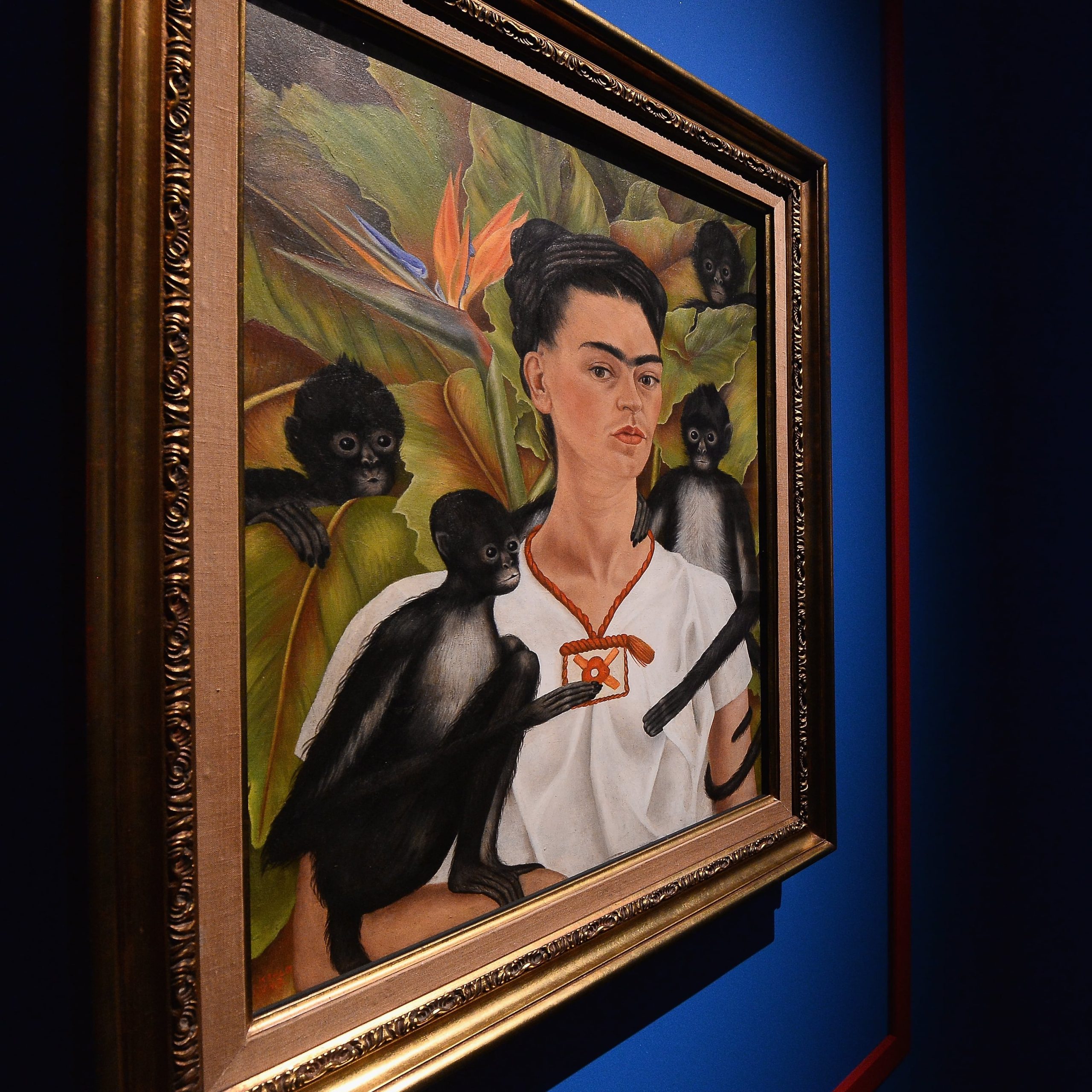
The fate of a few artworks by Frida Kahlo, Diego Rivera, and José Clemente Orozco has Mexico on edge, to the point of practically becoming a matter of state. Ever since the announcement early this year of a long-term agreement to transfer the Gelman collection to the Spanish banking giant Banco Santander, which will be responsible for the management (including conservation, research and exhibition) of part of one of the most significant collections of 20th-century Mexican art, a formidable controversy has erupted, forcing Mexican President Claudia Sheinbaum to step in and try to clarify the situation.
Part of the Mexican art world is accusing the government of favoritism, opacity, and a failure to protect a collection whose core is shielded by strict heritage laws that limit the export of emblematic artworks, in a delicate balance with private business interests. EL PAÍS followed the latest movements of the collection, valued at $356 million. This is the story of how a multimillion-dollar transaction that is commonplace in the art market ended up becoming a phenomenal mess with three main players: the Mexican owners of the art, the Spanish banking giant, and the Mexican government, responsible for overseeing protected works. The story also involves a $150 million loan granted by Santander to the Mexican collector, who put up the collection as collateral for the loan.
The Zambrano family are powerful members of the industrial bourgeoisie of northern Mexico. They own the country’s largest cement company, Cemex, and, like almost all great fortunes, they also have a tradition of art collecting. Following this path, Marcelo Zambrano, the third generation of the family and a Cemex executive, decided to embark on a high-stakes operation: acquiring one of the most important collections of modern Mexican art, the Gelman Collection, which for decades had been shrouded in a long history of intrigue and mystery. In late 2020, the businessman acquired at least a portion of it. The transaction was recorded in the annual tax return of the Vergel Foundation, owned by the American executor who controlled the collection after the death of the original owners.
Since then, Zambrano has been discreetly moving the collection, seeking funding to undertake a multi-million dollar operation. On October 11, 2023, he secured an initial loan from the financial arm of Sotheby’s auction house, as reported by the specialized publication Arteinformado and confirmed by this newspaper through public documents from the District of Columbia Property Registry. The loan was granted to Arte Mexicano por el Mundo, LLC and Comercializadora de Arte del Noreste, the companies established by the businessman in the United States and Mexico, respectively, to market the collection, which had languished for years, unexhibited and unseen by the public.
But years elapsed and the works remained in storage. Then, in late 2024, when the Zambranos already owned the Gelman Collection, there were headlines over an auction held by Sotheby’s in New York, where the Mexican government halted the sale of a painting by María Izquierdo, one of the artists protected by Mexico’s cultural heritage laws, and whose works were not authorized to be in the United States. Furthermore, Mexican authorities forced the sale in Mexico — instead of New York — of a piece by David Alfaro Siqueiros, another protected artist. The remaining works, some 30 in total, were sold in what was the first contact with the art market since the Zambranos entered the scene.

The next public development occurred on January 21 of this year. Banco Santander announced a long-term agreement with the Zambrano family for the management of a portion of the collection—160 out of of approximately 300 works—and their exhibition as the centerpiece of a new cultural center, Faro Santander, which the lender will inaugurate in June in the northern Spanish city of Santander, where the bank’s origins lie. That announcement ignited a wave of criticism, with demands for greater clarity regarding the agreement’s timeline and, above all, the role of Mexico’s National Institute of Fine Arts (INBAL), which must authorize and oversee any removal of the core of the collection from Mexico.
The statements made that day by Daniel Vega Pérez, director of Faro Santander, suggesting that “it’s flexible legislation,” didn’t help matters. Nor did the contradictory figures provided by Mexican authorities as the criticism mounted. First, they said five years, which is the term of the management agreement with Santander, not the export agreements for the artworks. Then they said two years, the usual timeframe in these cases, and a figure that was confirmed by Sheinbaum herself, who assured that the artworks would return to Mexico in 2028.
Santander loan
A crucial and previously unknown fact is that just a week before that press conference in Spain, on January 8, Santander granted Marcelo Zambrano a new loan for $150 million, refinancing the previous loan from Sotheby’s Financial Services. According to the contract registered with the Mexican Ministry of Economy and reviewed by this newspaper, the collection—156 works valued at $356 million—serves as collateral for the loan, which has a term of 12 and a half years.
The agreement, also registered in the U.S. District of Columbia (though without figures), details how these types of transactions work, similar to a mortgage, where the property serves as collateral in case of default. This theoretically opens the door for Santander to become the owner of the collection, although sources close to the negotiations indicate that “there are ways to refinance the loans and avoid that scenario.” Those close to the collectors’ family add that the entire legal framework “strictly adheres to Mexican law.”

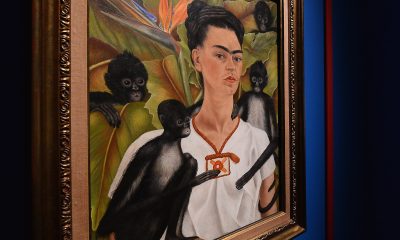
The jewel backing the loan is the artist Frida Kahlo. She is also the symbol of the protests by the Mexican art sector, which, in addition to demanding greater transparency from the INBAL, observes with dismay how the country’s modern heritage is being fragmented and sent abroad, despite the express wishes of the Gelman couple that it remain united and within Mexico. Kahlo’s Diego on my mind: $67.5 million. Self-Portrait with Monkeys: $45 million. Another $45 million backed by The Love Embrace of the Universe, the Earth… Gold, silver, and bronze for the pop icon, who presides over a substantial inventory that also includes works by Diego Rivera, José Clemente Orozco, David Alfaro Siqueiros, and María Izquierdo. Just 15 of Frida and Diego’s works represent 97% of the total value of the collection: such is the worth of this imposing artistic couple. Sources in the sector have confirmed that bank loans, common in the art world, usually cover approximately half the value of the collections.
Most of the artists listed in the inventory have been declared National Artistic Monuments, and this is the most sensitive point and the one that raises the most controversy, since the financial transactions involved in this operation are common practice in the market. Regulations restrict the export of works protected under this designation and, in the case of Frida Kahlo, who has the most stringent designation, prohibit her permanent export and urge the authorities to do everything possible to ensure her repatriation. Queried by this newspaper, INBAL declined to comment.
Banco Santander emphasizes that it does not comment specifically on its clients, and add that “in any case, any relationship Santander may have with the Zambrano family is secondary to the management and preservation of the Gelman collection. Under no circumstances will the collection leave Mexico outside of the current agreement, that is, always within the framework of a temporary export authorized by INBAL and in accordance with Mexican law.”
The export of the works
The most critical Mexican collectors and curators point out that, despite the clarification that the export permit for the works is for two years, and not the five initially announced, the INBAL has been more lenient in this case than in others. “The INBAL had been very strict with permits until now,” says a professional who participated in the sector’s public letter requesting greater transparency from the government.
The same source indicates that four Frida Kahlo oil paintings have been for sale in Mexico for years, but they haven’t sold because they’ve been priced at international market rates, and no one is willing to pay that much for works that can’t leave the country. “This Santander situation has set a precedent; now collectors are going to start asking for the same treatment,” the source adds.
The plan to monetize the collection doesn’t end with its piecemeal sale or its planned international tour, which includes stops every two years in Mexico to reassess the condition of the works. Between December of last year and January of this year, separate applications were filed to register the trademark “Gelman Collection” in the European Union (EU), Mexico, and the United States. The EU registration was officially published this Friday, April 24. This registration, filed by Zambrano’s company, protects the trademark from any commercial use, from prints or books to downloading files authenticated with tokens, as well as cultural events and educational services.
While the owners move forward with their collection management plan, controversy is growing within the country. The biennial returns to Mexico fail to satisfy the most vocal critics, who also fear the works may not withstand the repeated travel, and they do not address the underlying problem: a precarious public policy for protecting the country’s modern heritage.
This autumn, the Gelman collection will be the highlight of the opening of the new Faro Santander center. Its opening had been originally planned for this summer, but the image of all the “Fridas” leaving Mexico amidst World Cup euphoria was a scenario the Mexican government couldn’t allow. The current exhibition of part of the collection at the Museum of Modern Art in Mexico City will now run until after the soccer tournament, after which the works will fly to Spain, to return in 2028. This will mark the end of the penultimate chapter of a collection that has always been surrounded by controversy.
Sign up for our weekly newsletter to get more English-language news coverage from EL PAÍS USA Edition

E

E

Ryanair Warns Over France Passport Delays

Luxury Villas For Sale, Estepona – ProjectL1

Stylish 3-Bedroom Apartment With Panoramic Sea Views – Benalmádena
Brussels warns Spain that migrants regularised under controversial scheme will be deported back to Spain if they try to move to other EU countries


-
 New Developments4 weeks ago
Luxury Villas For Sale, Estepona – ProjectL1
-
 New Developments4 weeks ago
Stylish 3-Bedroom Apartment With Panoramic Sea Views – Benalmádena
-
eu response to spain migration policy3 weeks ago
Brussels warns Spain that migrants regularised under controversial scheme will be deported back to Spain if they try to move to other EU countries
-

 %4 weeks ago
Poland Disconnects Utilities At Russian Consulate That Moscow Refuses To Hand Over
-
Costa Calida3 weeks ago
Murcia unveils monument marking 175th anniversary of Burial of the Sardine
-
Costa del Sol3 weeks ago
Easter on the Costa del Sol: a time of renewal
-
ChatGPT4 weeks ago
He used ChatGPT to sell his home – and walked away with €100,000 more than expected
-
Fish Counters Being Removed3 weeks ago
Mercadona removes fish counters: T9 format brings shift to pre-packaged seafood