The 2026 midterm elections will be remembered not only for the Democrats’ landslide victory and the drubbing handed to the Republican Party and Donald Trump, but also for the consequences they will have for those hoping to succeed the MAGA leader. Commentators have been quick to write off the leading contender, Vice President J. D. Vance, arguing that his closeness to Trump and the president’s inner circle has fatally damaged his prospects as a future Republican nominee. Vance has tried to distance himself by blaming the defeat on the war with Iran, but without criticizing the man who decided to wage it.
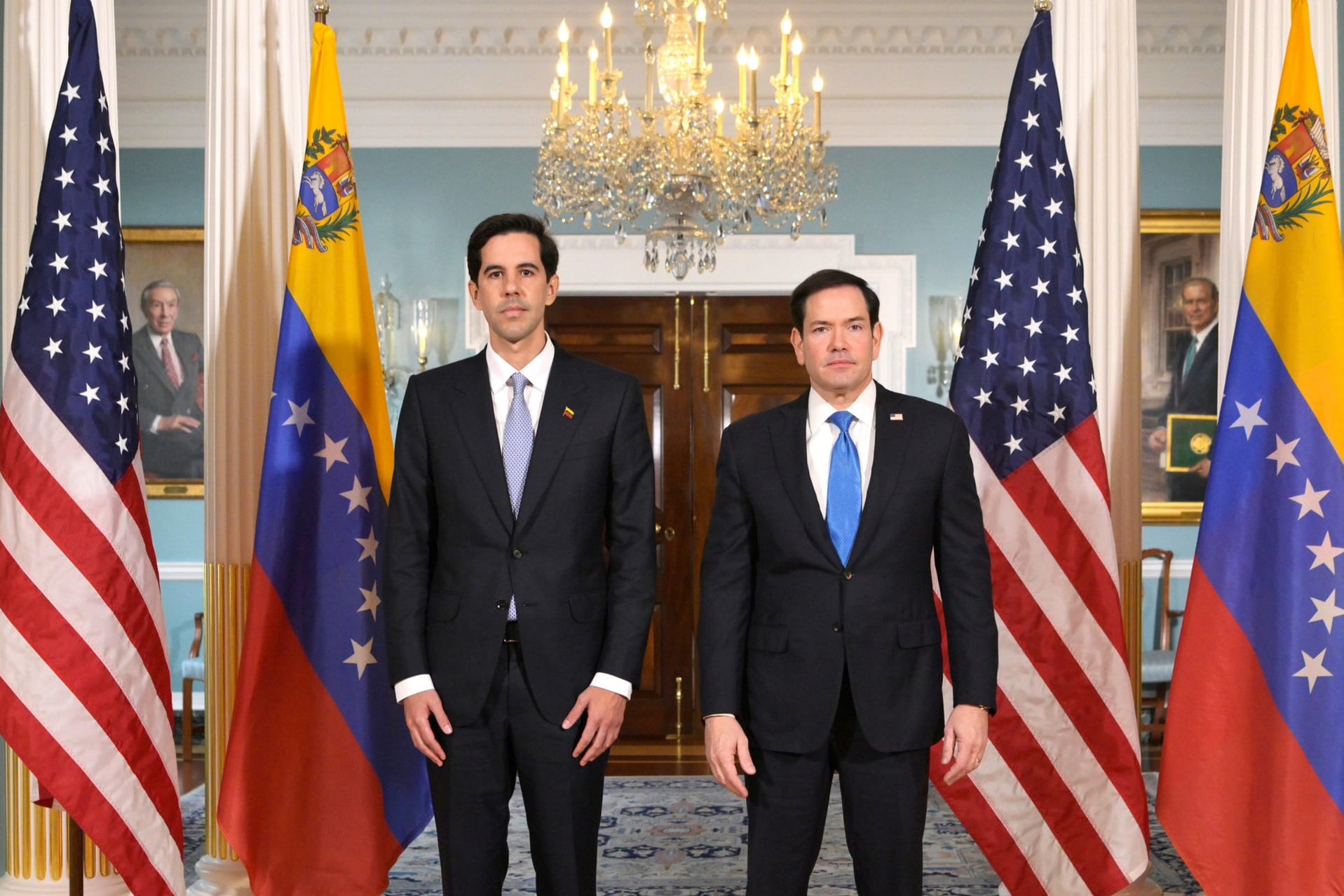
The other major Republican contender is, for now, Secretary of State Marco Rubio. Recently, he put some distance between himself and Trump and the MAGA movement by siding with legal immigrants, knowing that he enjoys a more favorable public image than his likely rival. But a cautious break does not guarantee him a path to the presidency. Vance already bears the burden of his proximity to Trump; Rubio bears the burden of U.S. foreign policy. If he wants to reach the White House, he will need something more convincing than simply having survived it.
Venezuela is one of his clearest bets. Following the capture of Nicolás Maduro on January 3, Rubio emerged as the chief strategist behind Venezuela’s transition. His three-phase plan, consisting of stabilization, economic recovery and political transition, has preserved a troubling hierarchy: stability and business first, democracy later, if at all. Venezuelans are hoping for regime change as soon as possible, not in 2028 or 2029. Rubio, too, has reasons to watch the calendar and feel the pressure: an open-ended transition is unlikely to serve as a compelling presidential credential.
The Republican defeat at the midterms does not force Trump to accelerate that process. He still has broad room to maneuver in foreign policy. But it does increase Rubio’s incentive to secure an achievement of his own before the succession battle dominates the agenda and turns every decision into a test of loyalty.
In that context, his latest remarks take on greater significance. On November 9, he expressed confidence that the transition is moving forward and reaffirmed a roadmap: a new Supreme Tribunal of Justice (TSJ) by mid-December, a new National Electoral Council (CNE) shortly afterward and, once both bodies are in place, a declaration that the presidency is vacant. According to Rubio, that declaration would trigger a six-month period in which elections must be held. It is not an exact date, but it is a benchmark against which progress can be measured and accountability demanded.
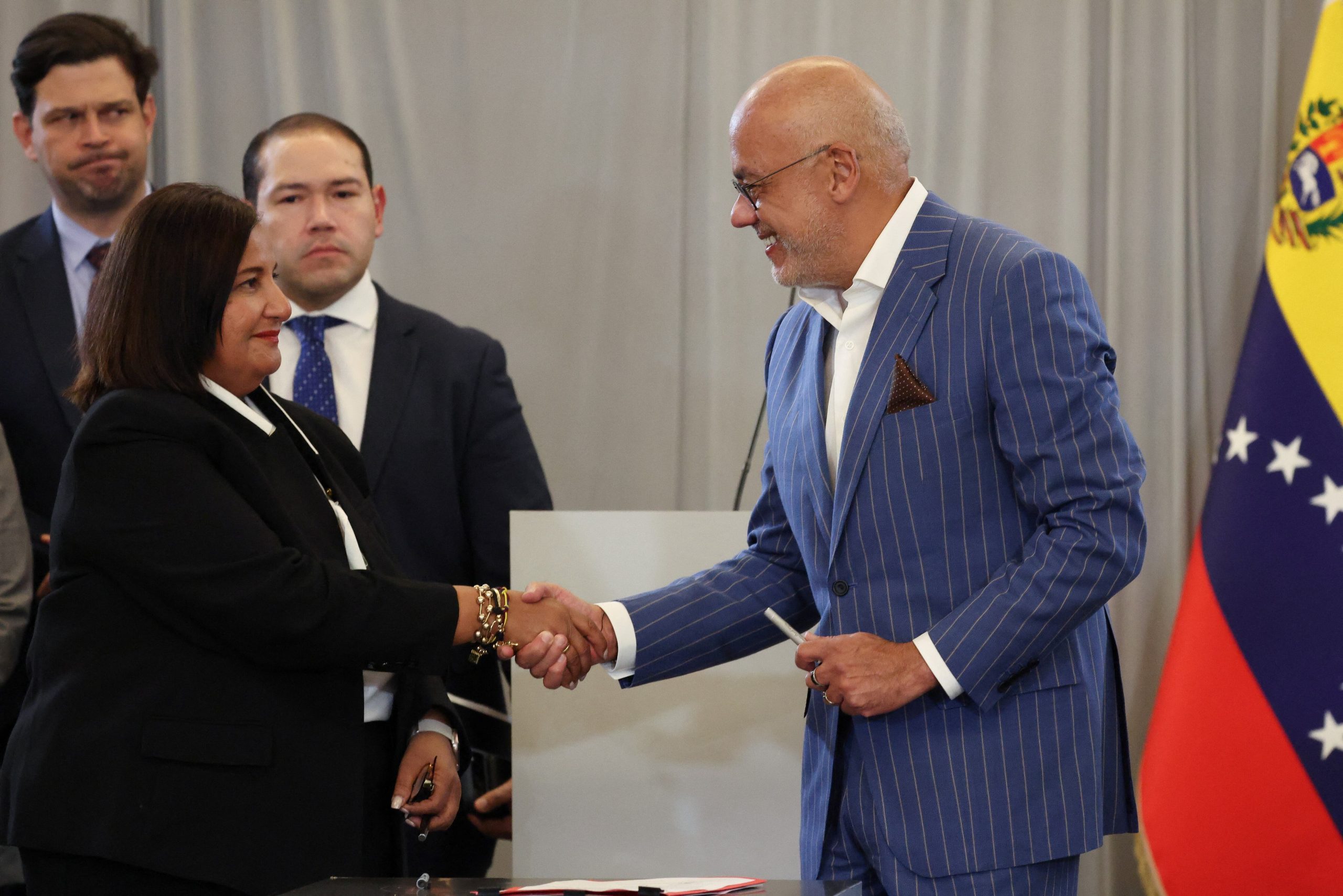
Meanwhile, in Caracas, Dinorah Figuera, the head of the opposition delegation negotiating with the government of acting President Delcy Rodríguez and her brother, Jorge Rodríguez, head of the National Assembly, has linked the renewal of the Supreme Tribunal and the National Electoral Council to the promise of free and fair elections. It does not take a master interpreter of political signals to understand that Figuera is telling Venezuelans she hears the public demand for change and that the negotiating table hears it too. Now she must prove it.
Renewing those institutions is essential, but changing their members is not enough to change their practices. The restoration of political rights, including the lifting of the bans that prevent María Corina Machado and other opposition leaders from running for office, should not be postponed indefinitely. It is essential to making any election credible, and it would give the political process both legitimacy and momentum.
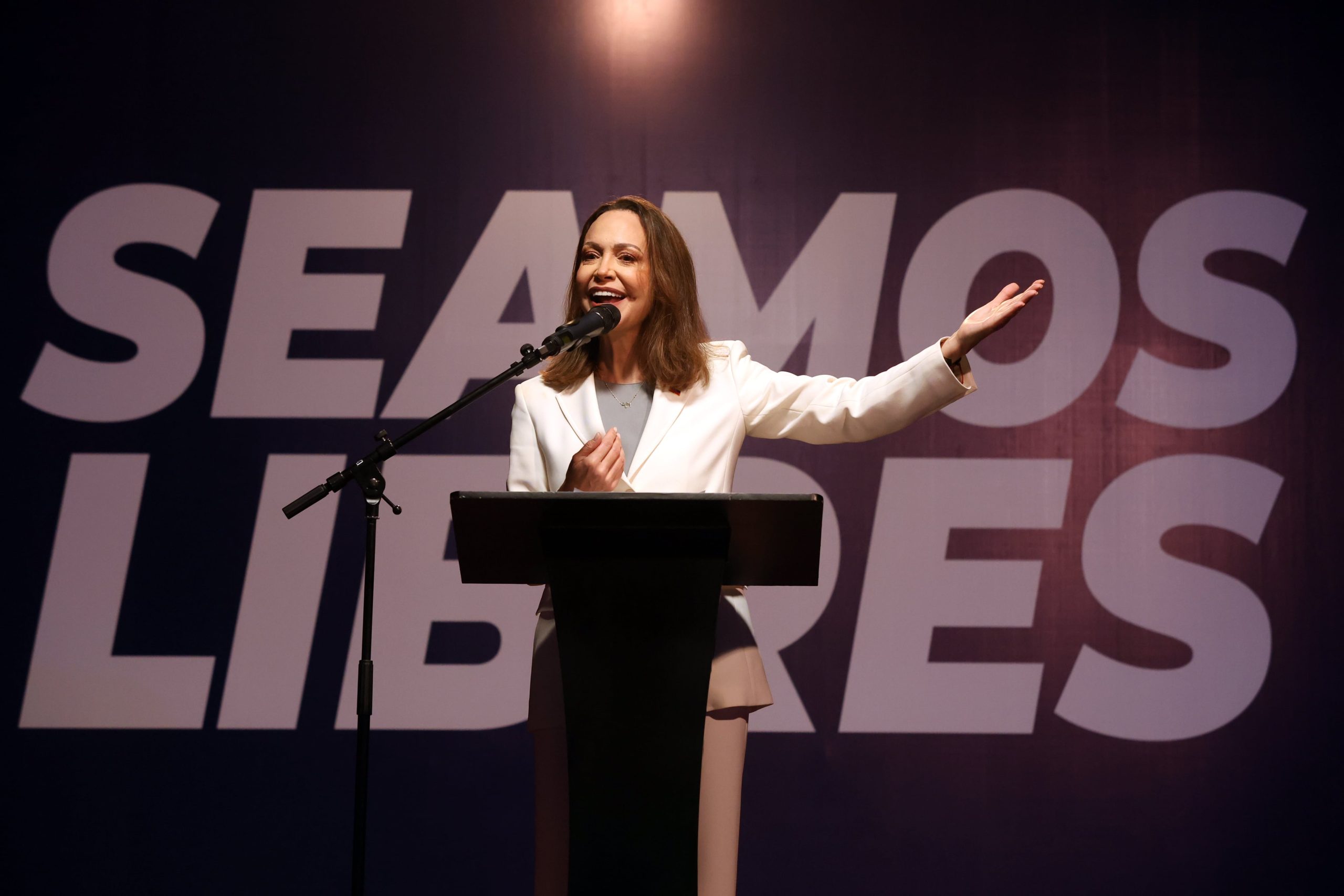
That step requires a political counterpart that is still missing. Machado and her movement, Vente Venezuela, are not represented at the negotiating table. This absence is an issue that directly concerns Marco Rubio, who will sooner or later have to bring Machado into major political decisions if he hopes the transition can become a pathway to reconciliation. Her inclusion would not resolve all divisions within the opposition, but her absence, even if it reflects her own preference, undermines the legitimacy of the agreement that is being built.
Although what many Venezuelans want most is regime change, it is essential to negotiate the conditions of the path that begins the day after.
Such a dialogue would not start from scratch, nor would it replace the current negotiations. Rather, it would broaden their scope. In the past, talks were aimed primarily at extracting concessions from the Chavista government. Now they must prepare for a transfer of power and define the distribution of guarantees, obligations and responsibilities among all parties involved. That includes investigating and prosecuting crimes, providing reparations to victims, and allowing Chavismo to compete as a democratic political force if it fully accepts the rules of that system. Criminal accountability cannot be diluted by a hollow reconciliation process, nor should Chavista political identity itself be treated as a stigma or a crime.
That will be a knot that must eventually be untangled if the long-term goal is to rebuild Venezuela in peace and stability.
Marco Rubio could play a pivotal role in that effort. He is not a neutral mediator. Washington has too many interests at stake, and too much influence, to pretend otherwise. His task would instead be to use that influence to bring together actors who, for nearly three decades, have been at odds and locked in conflict without ever managing to fully exclude or destroy one another.
But for that to happen, Rubio must navigate competing agendas: those of Trump and his inner circle, Jorge and Delcy Rodríguez and the interests aligned with them, Machado, civil society, the opposition negotiators and his own. He does not need to reconcile all of those interests, but he does need to convince every party to a potential agreement what it stands to gain from making it work and what it stands to lose if it falls apart.
To achieve that, the best thing he can do is roll up his sleeves and put away the remote control with which he has tried to steer the transition from afar. Meaningful engagement requires negotiating Machado’s inclusion, securing Jorge and Delcy Rodríguez’s commitment to verifiable guarantees for the transfer of power and political competition, and agreeing on how the outcome will be recognized and implemented.
Rubio’s boss has never been a politician known for long-term vision, except when it comes to advancing his own interests, such as erecting triumphal arches emblazoned with the Trump name in gold letters. But while Trump still enjoys considerable latitude in foreign policy, he is now a weakened leader. That does not free Rubio from his constraints, but it does give him an additional reason to pursue a policy whose success does not depend solely on his boss’s business interests and personal preferences.
The Rodríguez siblings have incentives to prolong their hold on power; Machado and the opposition have incentives to translate their popular support into effective political power; and Trump has incentives to preserve an arrangement that serves his interests. Rubio can pursue something different: a negotiated transfer of power that produces a legitimate and stable government. That would align his political ambitions with the interests of the Venezuelan people.
The opportunity exists, but the institutional roadmap that has been laid out needs to be turned into binding commitments, backed by the U.S. government and carrying consequences if they are not honored. Rubio does not need to break with Trump to pursue that goal, but he does need to move beyond the notion that stabilizing Venezuela is enough. If he wants to present the transition as an achievement of his own, he will have to negotiate its terms personally and secure safeguards that make the agreement durable. That would be a greater and more consequential accomplishment than merely administering a viceroyalty.
Sign up for our weekly newsletter to get more English-language news coverage from EL PAÍS USA Edition














 New Developments4 weeks ago

 New Developments3 weeks ago

 New Developments4 weeks ago

 %4 days ago
 Uncategorized4 weeks ago

 America4 weeks ago