Connect with us

Donald Trump

New Report And Lawsuit Reveal The Ordeal Of 733 Pregnant Women In ICE Custody

Published

on

new-report-and-lawsuit-reveal-the-ordeal-of-733-pregnant-women-in-ice-custody

Even when it comes to pregnant immigrants, the Trump administration has proven itself indifferent. In the first 16 months of the Republican’s second term, 733 pregnant women remained in the custody of U.S. Immigration and Customs Enforcement (ICE), most of them for extended periods. One of them was detained for seven months. Among those facing high-risk pregnancies, few had access to specialized medical care and were not released immediately.

These revelations appear in a report published Tuesday by the Women’s Refugee Commission (WRC), which questions the federal administration’s lack of empathy toward a particularly vulnerable population — both in ICE detention centers, which have been repeatedly cited for mistreating immigrants — and in local jail facilities that held contracts with the government and where most of these women were held.

The report accompanies a lawsuit that the WRC and organizations such as the Venezuelan Association of Massachusetts and the Workers’ Center of Central New York filed in a District of Columbia court. In it, they demand that ICE and the Department of Homeland Security put an end to the ordeal suffered by these women, who are caught up in Trump’s immigration crackdown.

“Immigration detention has become a black box of impunity,” said Zain Lakhani, director of the WRC’s Migrant Rights and Justice Program, in a statement. This organization, Lakhani said, has documented “a substantial increase in the number of pregnant women in detention and brought to light grave concerns about their treatment and care.” “Now, this data shows that these abuses are happening at scale,” he added.

Among these abuses, it is notable that of some 128 women diagnosed with high-risk pregnancies, only four were transferred to a “higher level of care.” The report details at least 16 cases of miscarriages recorded between January 2025 and February 2026.

Malnourished and sleeping on the floor

During Joe Biden’s administration, between 2021 and 2024, ICE released most of the pregnant women it had detained — either on parole or under a promise to appear in court.

But at the start of Trump’s second term, the number of women in detention began to rise as the president’s immigration crackdown intensified. From nine pregnant women in ICE custody in January 2025, the number rose to 128 last March, representing a 1,320% increase. Most of them — about 75% — were held in state or local facilities under contract with the government, which, according to the WRC report, “have lower medical standards and higher taxpayer costs.”

The report estimates that ICE spent at least $4 million on the detention of 557 pregnant women, not including the costs of medical care.

The Department of Homeland Security has not commented on this report and lawsuit, but in the summer of 2025, in response to an investigation by the office of Georgia Democratic Senator Jon Ossoff — which documented 14 credible reports of mistreatment of pregnant women in ICE custody — the agency denied having neglected these migrants.

The reports compiled by Ossoff’s office point to deficiencies such as a lack of adequate medical care and timely checkups, the absence of emergency care when needed, the denial of adequate snacks and meals, and the requirement to sleep on the floor due to overcrowding.

In its response, DHS stated that these women received medical care and nutritional support, and maintained that “the detention of pregnant women is rare and subject to rigorous oversight and review.” It added that “no pregnant woman has been forced to sleep on the floor.”

Seven months in custody

Human rights advocates, Democratic members of Congress, and journalistic investigations have documented an alarming increase in the number of pregnant women detained by ICE during the current administration, which is determined to deport as many undocumented immigrants as possible.

“Advocates interviewed more than a dozen women, and in their letter, also describe disturbing accounts of shackling and use of restraint during transport, solitary confinement, denial of prenatal vitamins, inadequate food, delayed or substandard medical care, and lack of interpretation during medical visits. One woman experienced a dangerous infection after a miscarriage due to ICE’s medical neglect,” states a letter sent by the American Civil Liberties Union (ACLU) to ICE in October 2025.

The indiscriminate detention of these women demonstrates that ICE has failed to comply with its own directive, established in 2021, which stipulates that, except in exceptional circumstances or for other legally justified reasons, pregnant women, women in the postpartum period, or breastfeeding women should not remain in the agency’s custody.

In its recent report, the WRC places special emphasis on the length of time these women spend in detention. During the Biden administration, the average was about five days. Under the Trump administration, that figure skyrocketed to 43 days — a 750% increase.

At least 145 women were held in custody for 90 days or more. The report highlights the case of one woman who was detained for 219 days — nearly seven months into her pregnancy.

To collect reports from these migrants, the WRC launched a tool called the Detention Pregnancy Tracker in September 2025. Through this tool, it gathered testimonies from women who suffered miscarriages, were malnourished, or did not receive specialized medical care.

The organization even traveled to Honduras to interview recently deported individuals. “There, we heard testimonies from women with life-threatening conditions who were denied medical care,” the group notes.

Sign up for our weekly newsletter to get more English-language news coverage from EL PAÍS USA Edition

America

In Miami, Food Banks Are Overflowing Ahead Of Thanksgiving

Published

on

in-miami,-food-banks-are-overflowing-ahead-of-thanksgiving

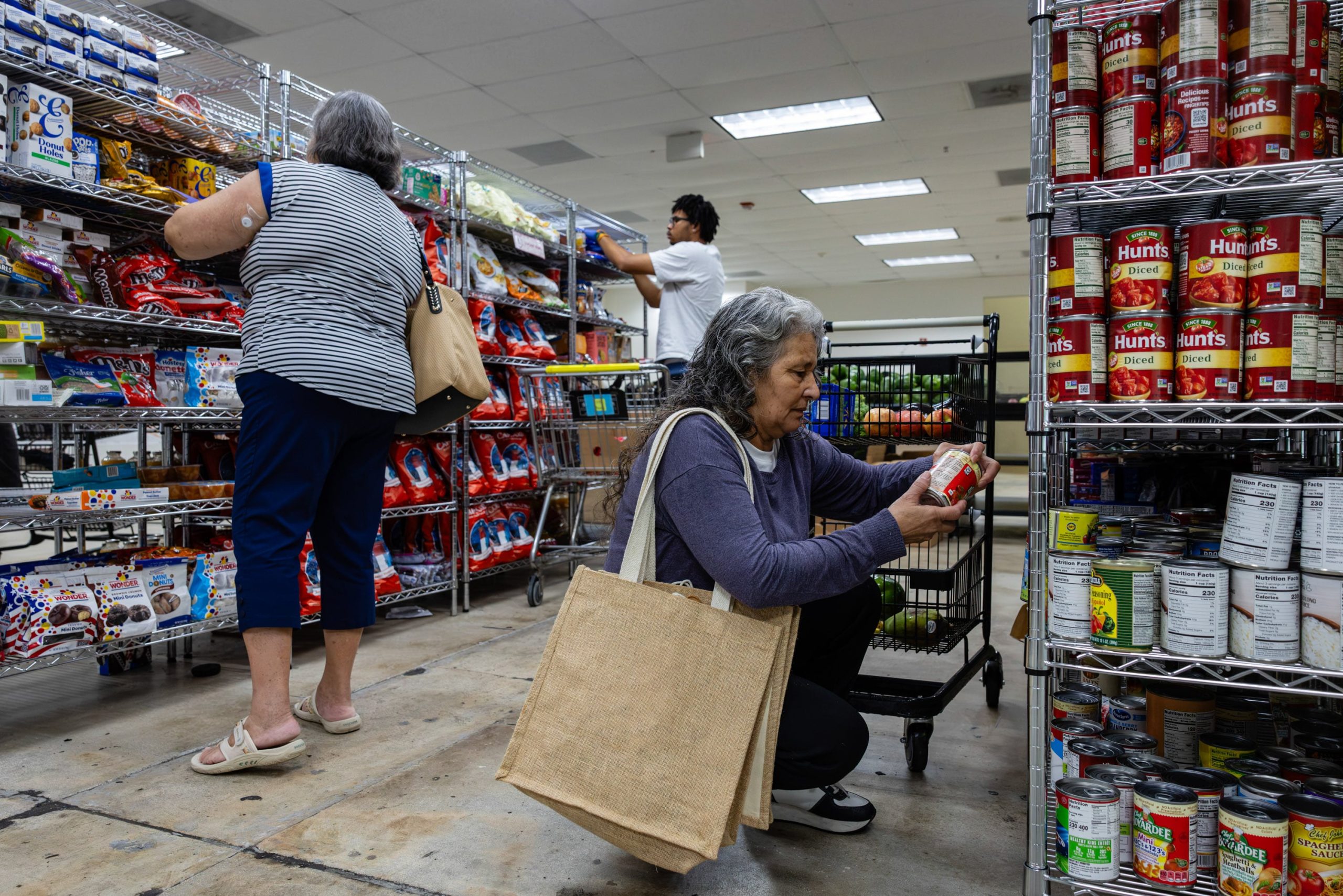
There are times of the year like Thanksgiving, when schools where some children receive food are closed, and the hunger crisis in Miami —one of the most expensive cities in the United States — is most noticeable. Despite heavy rains and the risk of flash flooding this Wednesday, hundreds of people, mostly working families, turned to free food pantries and food banks to secure a turkey and vegetables for the traditional dinner, and to offset the expenses that keep rising with inflation and the war against Iran.

At 60 years old and with three jobs, Sonia still needs to go at least once to pick up free food to complete the month’s diet. She cleans houses, takes care of children and pets, and earns $15 an hour. She bikes to work so she doesn’t have to spend on car, insurance, and fuel. What she earns goes to pay rent, electricity, and her son’s university in Chile, her home country. There she worked almost two decades as a secretary in a local government, and in the U.S. she has been changing fields as opportunities arise. She is now saving for dental treatment, which without health insurance costs thousands of dollars.

“I’ve been coming for about eight months and I keep seeing more people,” says Sonia, who prefers not to use her full name. She’s not surprised, because all the prices of all the products have gone up, “even at Dollar Tree,” the American store chain that boasted of selling all its products for one dollar.

The cost of living in Miami has risen so much that many families’ incomes are not enough to pay the minimum: shelter, food, and utilities.
In a 2026 survey conducted by Aspect Strategic for No Kid Hungry Florida, 82% of respondents said that the cost of food had increased more than their income in the past year. Around 70% indicated that their economic situation has worsened as a result of rising food prices, and 49% admitted to going into debt to cover that expense. One in two families also say they skip meals or eat less, and two out of three families have had to choose between buying food or paying essential bills.

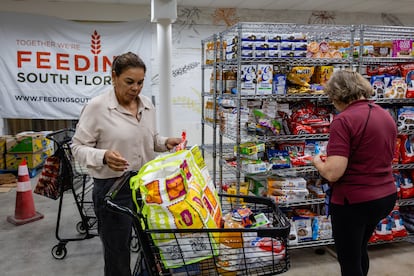
Demand for free food pantries has skyrocketed, explains Jessica Benites, chief of staff at Feeding South Florida, a nonprofit organization that receives and distributes donations in four counties in the region through 300 branches. “We are experiencing a very large increase in families coming to Florida to ask for food aid and we’ve had to expand our operations. Before, we served until 5:00 p.m., now we are serving until 8:00 p.m. We also had to increase Saturdays and Sundays to meet the very high demand we have now,” she says.

Federal and state aid for low-income families and elderly people to buy food has been reduced. Just over a year ago, the Donald Trump Administration approved the largest reduction of the Supplemental Nutrition Assistance Program (SNAP) since its creation in 1939. As a result, about two million people lost the benefit. In Florida alone, enrollment in the program fell by 22%, according to data calculated by the Associated Press agency.

The federal government’s immigration policy, which has set out to deport as many undocumented immigrants as possible, has also added pressure to the hunger crisis in the southern part of the state. Miami and the surrounding cities are home to the largest diasporas of Haitians and Venezuelans and other communities that have lost work permits and protections granted by TPS, the Temporary Protected Status that Trump has been chipping away at since returning to the White House.

On an average day, about 200 families look for food at Feeding South Florida’s largest location, in the Hallandale Beach area, about half an hour from downtown Miami. Many of them are immigrant families who have lost their work permits and mixed-status families—where at least one member has U.S. citizenship and access to public benefits—who have chosen not to apply for the SNAP benefit for fear of retaliation.

“Many people are already afraid to share the information, and sometimes people prefer not to apply because they feel exposed and don’t receive as much money as they used to,” says Benites. “And with TPS, people could work and can’t anymore, and when they lose their jobs, they have to look for organizations that can help them. In our case, with food.”

Sign up for our weekly newsletter to get more English-language news coverage from EL PAÍS USA Edition

Continue Reading

America

EE UU Propone Nuevos Aranceles Contra 15 Socios Comerciales, Entre Ellos China Y La UE

Published

on

ee-uu-propone-nuevos-aranceles-contra-15-socios-comerciales,-entre-ellos-china-y-la-ue

La Administración de Donald Trump ha propuesto este miércoles nuevos aranceles a 14 de sus principales socios comerciales, incluidos China y la Unión Europea, con el argumento de que esas jurisdicciones incurren en “exceso de capacidad industrial estructural” para rebajar precios de manera artificial. Horas más tarde, la Casa Blanca ha añadido un nombre más: el de Brasil.

Seguir leyendo

Continue Reading

Congreso EEUU

Múltiples Investigaciones, Rebelión Interna Y Financiación Circular: Los Riesgos Del Regreso De Huang A Nvidia

Published

on

multiples-investigaciones,-rebelion-interna-y-financiacion-circular:-los-riesgos-del-regreso-de-huang-a-nvidia

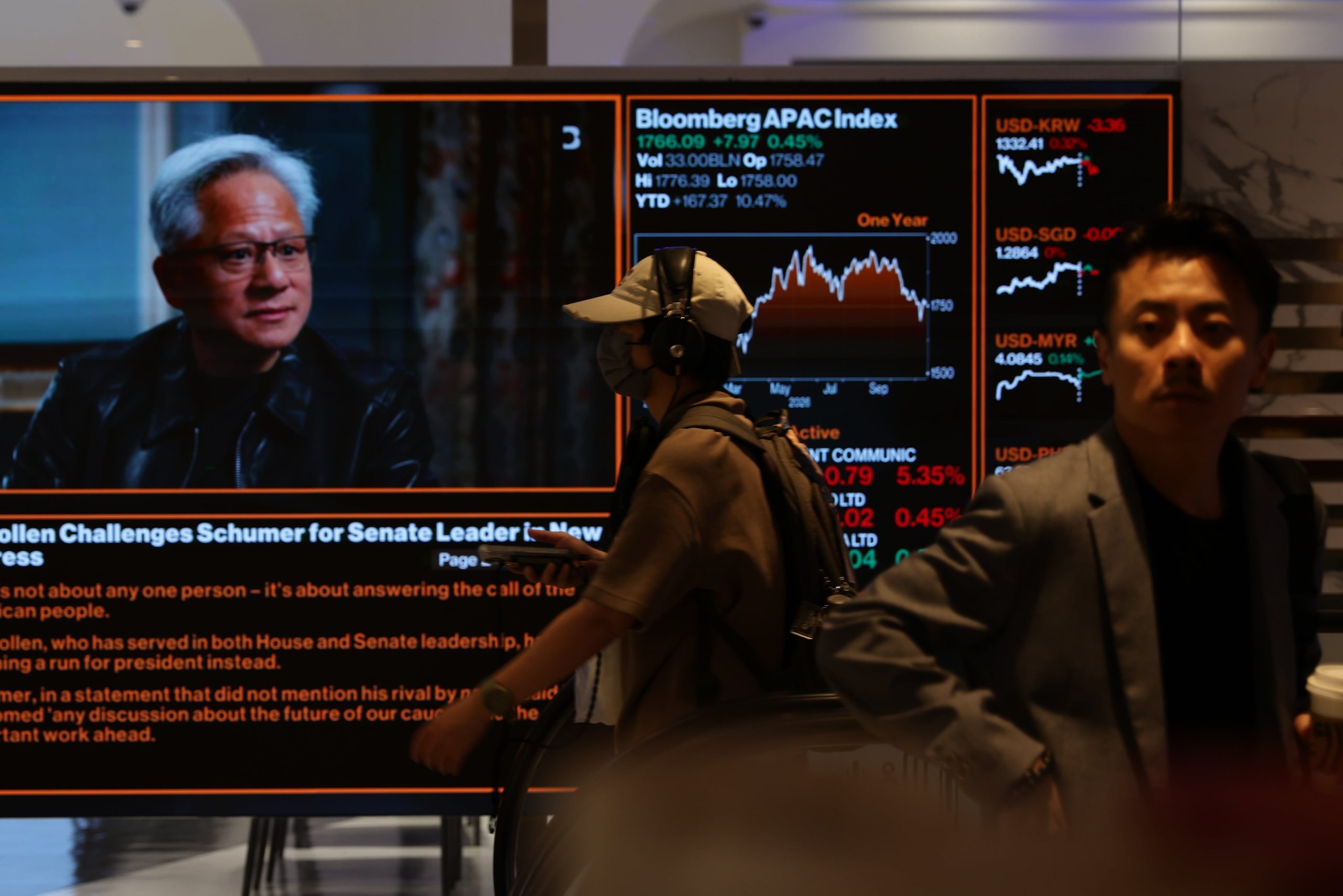
El retorno de Jensen Huang al puesto de consejero delegado de Nvidia, apenas 11 días después de su salida, no significa que la crisis en el gigante los chips de inteligencia artificial (IA) se haya terminado. El mercado premió a la acción en la jornada del lunes, con una subida del 31%, que añadió a su capitalización bursátil de 952.000 millones de dólares (unos 867.730 millones de euros), la mayor de la historia en una sola jornada. La recuperación fue un balón de oxígeno para el directivo, el mayor accionista privado, con cerca de un 3,5% del capital, pero la cotización aún está lejos de lograr la estabilización. Este martes, por momentos, las acciones llegaron a caer más de un 6%.

En términos generales, tal y como plantea The Wall Street Journal, la firma debe encarar los riesgos vinculados a su modelo de negocio y al ecosistema de la IA, del que Nvidia es uno de los grandes financiadores de su desarrollo, con una exposición de más de 110.000 millones de dólares, invertidos en docenas de empresas, incluidas start-ups como OpenAI y Nscale, junto a cotizadas como Anthropic, SpaceX, CoreWeave, Nebius, Intel, Marvell, Synopsys, Nokia, Coherent, Lumentum y Corning, entre otras.

En el mercado se han vuelto a extender las preocupaciones sobre lo que podría resultar en una financiación circular. En este sentido, el regreso de Huang no resuelve las preocupaciones estructurales sobre una burbuja de IA ni sobre el modelo de negocio conectado entre las grandes del mismo sector, en el que Nvidia proporciona préstamos, inversiones y garantías financieras para ayudar a los clientes a comprar sus propios chips. En su caída en Bolsa, que llegó a ser de casi un 50% en el peor momento, con respecto al máximo histórico, registrado el 6 de octubre, Nvidia arrastró a CoreWeave o Nebius, muy vigiladas por las agencias de calificación. También Nscale disparó las dudas sobre la IA al reconocer que necesitará nuevos fondos, tras multiplicar sus pérdidas y generar incertidumbre sobre su salida a Bolsa.

Todo ello, hacia el exterior. De puertas hacia dentro, la cuestión interna que debe resolver Nvidia es la relacionada con la política de buen gobierno y la sucesión de Huang. Distintos inversores y columnistas de la prensa especializada han criticado la falta de un plan de sucesión claro en la compañía, su fuerte dependencia de los acuerdos personales de Huang y la débil gobernanza del consejo de administración. Este órgano de gestión, además, ha quedado en una posición de debilidad tras revertir su propia decisión de destitución de Huang en menos de dos semanas, incluso tras descartar tajantemente la vuelta del cofundador, por boca de su presidente, Harvey Jones, quien insistió en que se estaba buscando a la persona más idónea para sustituir al cofundador. Las dimisiones en el consejo están contempladas por el mercado y los analistas. Y entre los que se pueden marchar se especula con la de la CEO interina, Colette Kress.

De nuevo ante el escrutinio exterior, y durante el anuncio de la vuelta de Huang, Nvidia recordó que, recientemente, su consejo de administración había creado un Comité de Seguridad Nacional y Control de Exportaciones, integrado por consejeros independientes, para supervisar el cumplimiento normativo en materia de comercio y los riesgos para la seguridad nacional. Según la empresa, este comité está consultando con asesores legales con experiencia en seguridad nacional, quienes a su vez contratarán a otros asesores con experiencia en la materia.

Además, Nvidia anunció que había iniciado un proceso de selección para cubrir un nuevo puesto de chief compliance officer (responsable de cumplimiento normativo), cuya función será supervisar el funcionamiento en toda la empresa e informar al Comité de Nominaciones y Gobierno Corporativo. Sorprendía que una empresa así no tuviera todavía esa figura en su organigrama.

Nvidia concluyó sus explicaciones del lunes asegurando que seguirá cooperando con las investigaciones y consultas gubernamentales en curso. No es para menos, porque Huang tiene que afrontar muchas aristas de gravedad que pueden afectar incluso a la seguridad nacional, aunque el presidente de EE UU, Donald Trump, le quitara hierro. Frente a esta posición, legisladores de ambos partidos han criticado la vuelta de Huang, al considerarla como un riesgo para la seguridad nacional

Actualmente, las autoridades de Estados Unidos tienen en marcha una investigación sobre la relación extramatrimonial que Jensen Huang reconoció tener con Alice Huang, una mujer de la que los funcionarios estadounidenses sospechaban que podría ser una agente de inteligencia china. La investigación debe determinar si se vieron comprometidos secretos corporativos o de seguridad nacional.

Según Bloomberg Intelligence, el regreso de Huang reduce la incertidumbre sobre el liderazgo y la hoja de ruta, pero los legisladores estadounidenses siguen exigiendo controles más estrictos sobre las exportaciones de chips de IA y una mayor revisión de las ventas de Nvidia en China.

Dentro de este proceso de análisis al legado de Huang, el comité especial del consejo de administración, integrado por independientes, debe continuar investigando las circunstancias que rodearon su destitución inicial y su conducta en el lugar de trabajo, incluidas las acusaciones de una relación extramatrimonial con una subordinada directa. Huang mantuvo una relación íntima con la vicepresidenta de Nvidia, Kimberly Powell, que forma parte del núcleo de mando del grupo. También habría una tercera relación con otra empleada del gigante tecnológico, de la que no se ha revelado su identidad.

Finalmente, está todo el bloque de análisis institucional. La Comisión de Bolsa y Valores (SEC) está investigando para determinar si las publicaciones corporativas de Nvidia pudieron engañar a los inversores, en paralelo con otras investigaciones de organizaciones como el FBI, el Departamento de Justicia de EE UU o el Departamento de Justicia de California.

Si no hay cambios, Huang comparecerá el 1 de diciembre a puerta cerrada en el Comité de Asuntos Exteriores de la Cámara de Representantes, y dos días después lo hará ante el Comité Bancario del Senado, que trata la revisión de las políticas de controles a la exportación de equipos tecnológicos sensibles.

El ejecutivo todavía va a tener que escuchar duras críticas en círculos parlamentarios. “Vamos a tener que poner más barreras de seguridad. Quizás incluso tengamos que ponerle una niñera a Jensen Huang”, dijo ayer el senador republicano Kevin Cramer en la cadena televisiva CNBC, insistiendo en que alguien debería estar a su lado, solo para asegurarse de que no haga nada que ponga en riesgo a Estados Unidos.

Continue Reading

Trending

Copyright © 2017 Spanish Property & News