
Donald Trump
With NATO Under Pressure, Europe Undertakes Its Biggest Rearmament Since The Cold War

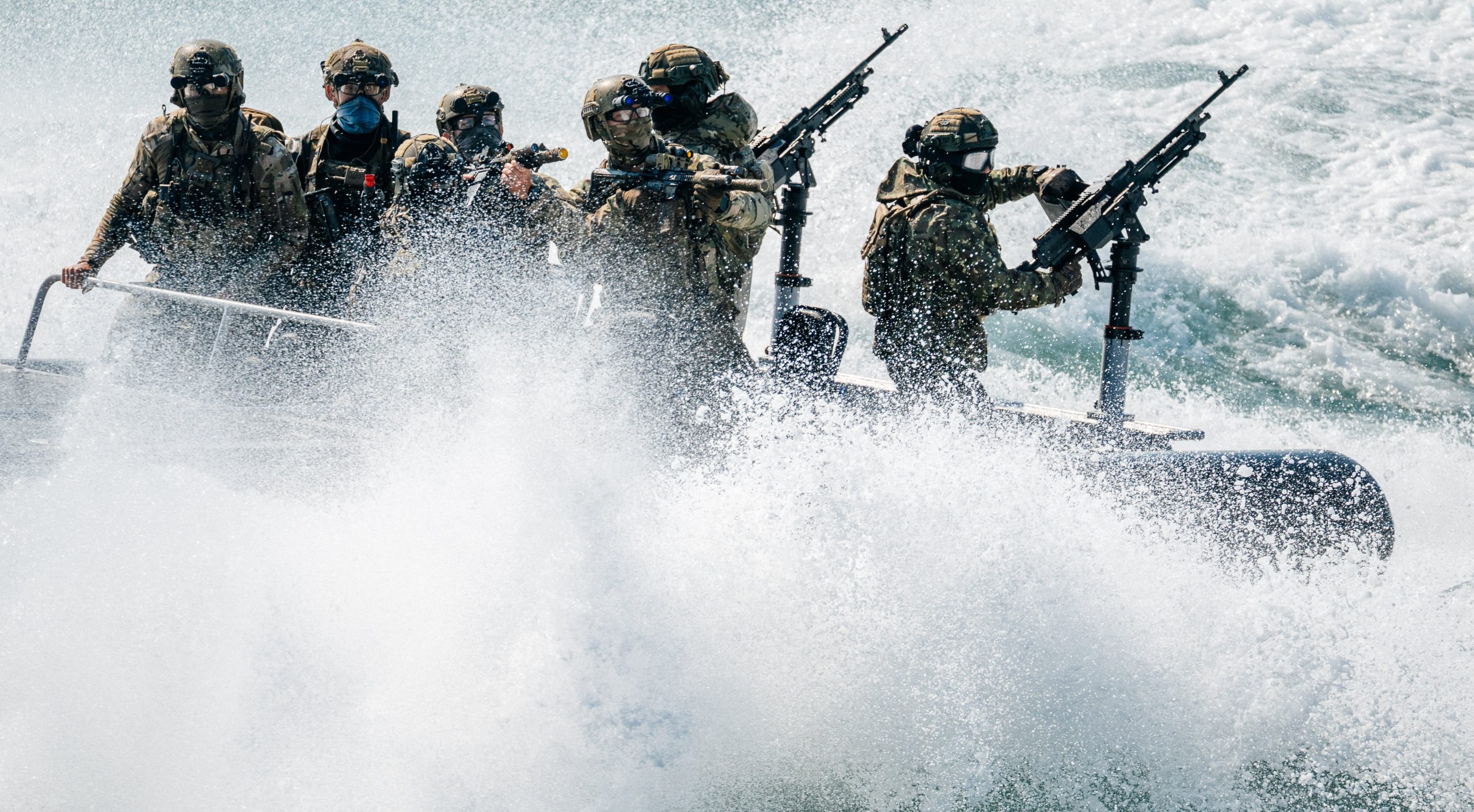
Europe is undergoing its largest rearmament since the end of the Cold War. Spurred by the war in Ukraine, the threat from Russia, as well as growing uncertainty about the United States’ long-term commitment to the continent’s defense, NATO’s European members are facing a historic shift. Consequently, they’re boosting their defense budgets to record levels and reshaping the entire continent’s security architecture. They’re preparing to embrace the paradigm transition toward a more European-centered alliance and are moving to fill the gaps that will be left by the troop cuts on the continent, which have been announced by Washington.
U.S. President Donald Trump’s repeated attacks against the military alliance — which he calls a “paper tiger” — and his constant questioning of the “loyalty” of several European allies are testing the organization’s resilience and structure.
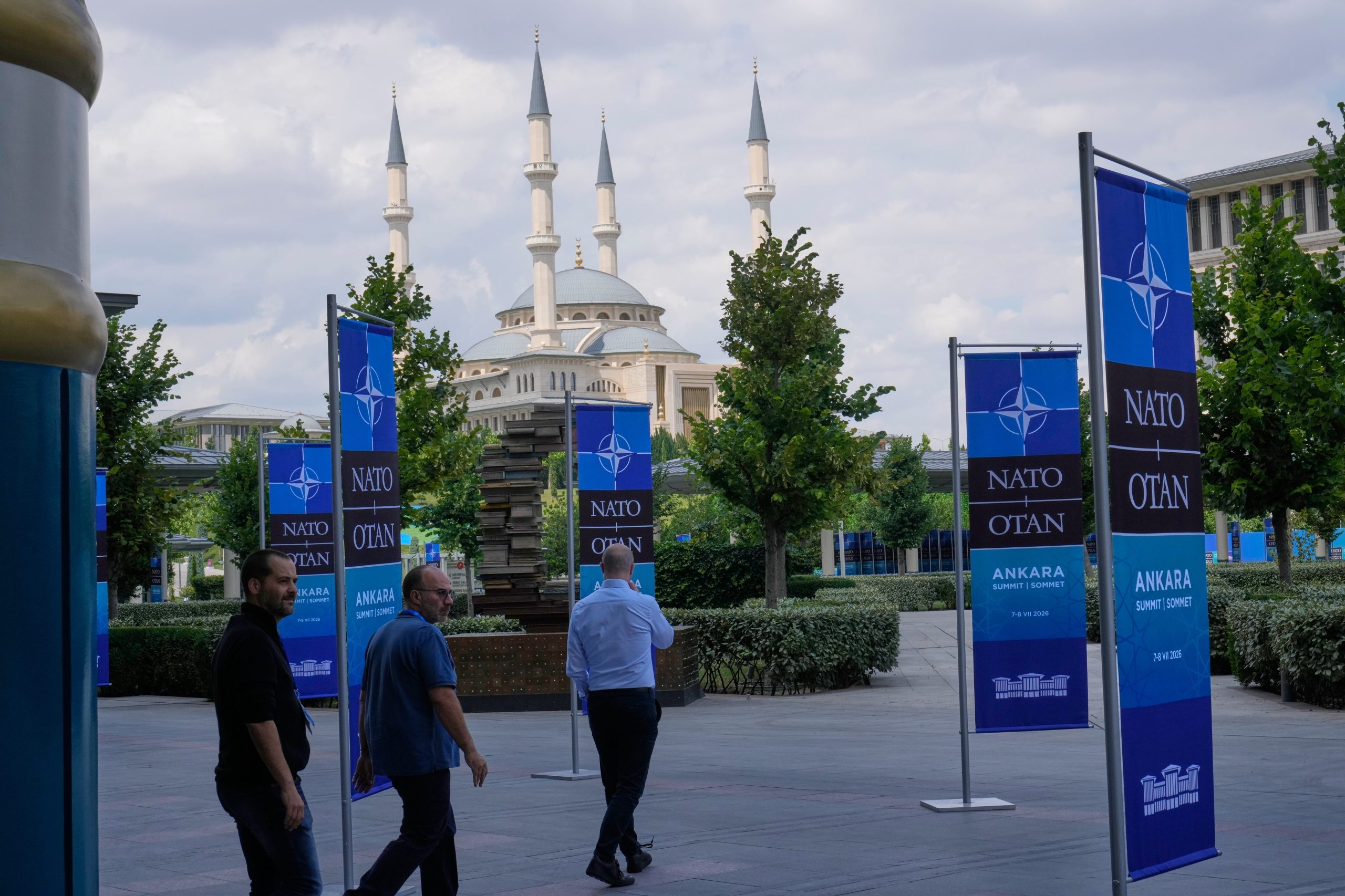
The real estate mogul — now the leader of the country that has guaranteed Europe’s security since the end of World War II — wants to express his discontent directly to his European allies. This will likely take place in Ankara, the capital of Turkey, where a NATO summit — predicted to be crucial for the organization’s very survival — will be held on July 7 and 8.
The meeting will be a major test — both of allies’ defence spending, which continues to rise but never seems enough for Washington, and of the United States’ own military commitments. It will also serve as a gauge of the alliance’s future in its current form, 77 years after its founding. Furthermore, the summit comes on the heels of an announcement made by the Trump administration: there will be a six-month-long review of the U.S. military presence in Europe and an analysis of the allies’ commitment.
“There’s no going back to the old Atlantic Alliance, and there’s no alternative to plan B, [which consists] of a European-led NATO, based on a European command structure and force model,” says Jamie Shea, who was a senior NATO official for 38 years.
“If the U.S. decides to contribute, so be it,” he adds, “but NATO cannot be built around a central U.S. conventional and nuclear presence in Europe as in the past.”
That’s the key to both NATO’s survival and the security of the Old Continent, according to analysts and experts. The draft declaration from the Ankara summit — which the allies are still working on — speaks of “a stronger Europe within a stronger NATO,” as several sources have described to EL PAÍS.
This path, however, conceals a paradox. Washington is pushing Europe to rearm, but without relinquishing strategic control and without giving up the expectation that this rearmament will largely translate into purchases of U.S. technology. It is, Shea points out, the art of wanting to have your cake and eat it, too. The urgency of capacity gaps — especially when it comes to missile defense, as the rate of consumption of Patriot and THAAD interceptors during the Iran war has created acute shortages — is pushing European capitals to buy U.S. systems, even when their industrial strategy points in another direction.
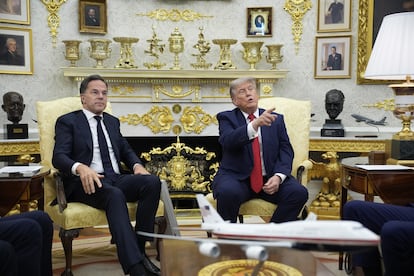
“For Washington, Europe ‘doing more’ has, for a long time, meant spending more on NATO priorities that [involved] U.S. leadership and spending more on U.S. weapons systems in particular,” notes Katja Bego, defense policy and transatlantic security analyst at the London-based think tank Chatham House.
The current push toward strategic autonomy and “European procurement” is disrupting that tacit balance. Bego warns that Washington increasingly perceives the shift in policy as an act of hostility by its European allies. “This is a view held not only by the Trump administration, but also by more transatlantic elements of the Washington security community. And it will only become an increasing source of tension as Europe rearms,” she adds.
The atmosphere leading up to the summit is tense. So, on June 24, NATO Secretary General Mark Rutte traveled to Washington to prepare for the summit and to do damage control with the Republican president. In the past, Trump has accused European allies of “free-loading,” even referring to them as “cowards” for not participating or collaborating in his war against Iran. In the Oval Office, he summarized his demand with a phrase that encapsulates the new American doctrine toward its European allies: “We don’t need their money, we don’t need anything. We have the most powerful military in the world by far, but I just want loyalty.”
Defense gap
Weeks earlier, Washington informed its European allies of plans to reduce the military assets available to NATO in the event of a crisis. According to several allies present at the meeting, the U.S. will make cuts in virtually all major categories. The number of fighter jets will be reduced by a third. There will be half as many strategic bombers. Washington will no longer contribute destroyers or submarines, while tanker aircraft and armed drone supplies will also be affected.
This cutback is part of the United States’ plan to focus on other areas, such as the Indo-Pacific. And it was accompanied by the withdrawal of 5,000 troops from Germany — including an armored brigade combat team and a long-range fires battalion — and the freezing of a program to deploy Tomahawk missiles on German soil. These decisions were made by the Trump administration after German Chancellor Friedrich Merz criticized the U.S.-Israeli offensive against Iran.
Demands for greater burden-sharing and the withdrawal of capabilities are occurring simultaneously rather than sequentially, notes Liana Fix, a fellow at the Council on Foreign Relations. “And that gap — the period between the withdrawal of conventional U.S. assets and the arrival of credible European replacements — is the most dangerous interval for deterrence since the early 1990s,” she warns.
After decades of enjoying the peace dividend — which allowed Europe to reduce its military budgets while the economy grew and the Russian threat seemed like a relic from the 20th-century — the continent began to rearm. This was due to Russia’s war against Ukraine, as well as Europe’s broader realization of its neighbor’s voracious ambitions. But the arms buildup began to take institutional form in June 2025, when — pressured by Trump — NATO leaders (with the exception of the Spanish prime minister) committed to investing 5% of GDP in defense and security by 2035.
Record spending
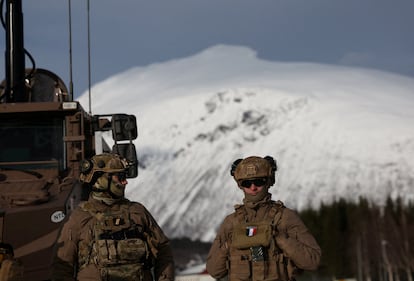
European allies and Canada increased their defense spending by 20% in 2025 compared to 2024 — the largest annual increase since 1953 — reaching a combined total of more than $574 billion at constant prices, according to the latest NATO data. Total annual NATO spending approached $1.6 trillion. Since 2016, European NATO members and Canada have added an extra $1.2 trillion to their defense budgets.
But money alone isn’t enough to close the gap. If the United States reduces its presence, Europe will also lose a number of critical capabilities. Without U.S. intelligence, surveillance and reconnaissance assets, space-based collection systems, signals intelligence and data-fusion networks, Europe would still possess sensors and weapons — but the operational picture would update more slowly, with less confidence and less depth.
Missile defense, for instance, would be less effective, in the opinion of Ruben Stewart, senior research fellow for Land Warfare at the IISS think tank. “The crucial question is whether Europe builds up not only more mass, but also its own capacity to see, decide, strike, protect and sustain itself at a theater scale — that is, across the entire European combat space,” he argues.
According to Shea, Trump didn’t create the problem: he simply brought it to light. “Europe must build a true defense union,” he says.
He proposes three simultaneous courses of action to achieve such a transition: Europeanizing NATO’s command structures by replacing U.S. officers with Europeans and appointing a European forces commander; creating a European Security Council led by the five major powers — France, Germany, Poland, the United Kingdom and Italy — as the political engine of a genuine defense union; and deepening European Union (EU) financial mechanisms to standardize equipment and reduce fragmentation. Today, NATO’s European allies operate five different types of fighter jets and 14 types of armored vehicles.
Europe had previously envisioned a slow transition to greater strategic autonomy. But that timeline has been thrown into disarray. “We expected to make this transition over 20 or 30 years,” says the former senior NATO official. “[But] Trump is forcing Europe to compress it into a decade.”
The question now is whether NATO can reinvent itself quickly enough to survive this new balance of power.
Sign up for our weekly newsletter to get more English-language news coverage from EL PAÍS USA Edition









America
Investigado Por Un Correo Crítico Con El ICE: Un Hombre De Nueva York Demanda A La Agencia Migratoria Por Vulnerar La Libertad De Expresión

Ankara
Ankara Recibe A Los Líderes De La OTAN Con Cientos De Detenciones Preventivas, Un Blindaje Total Y Taxistas Con Colonia


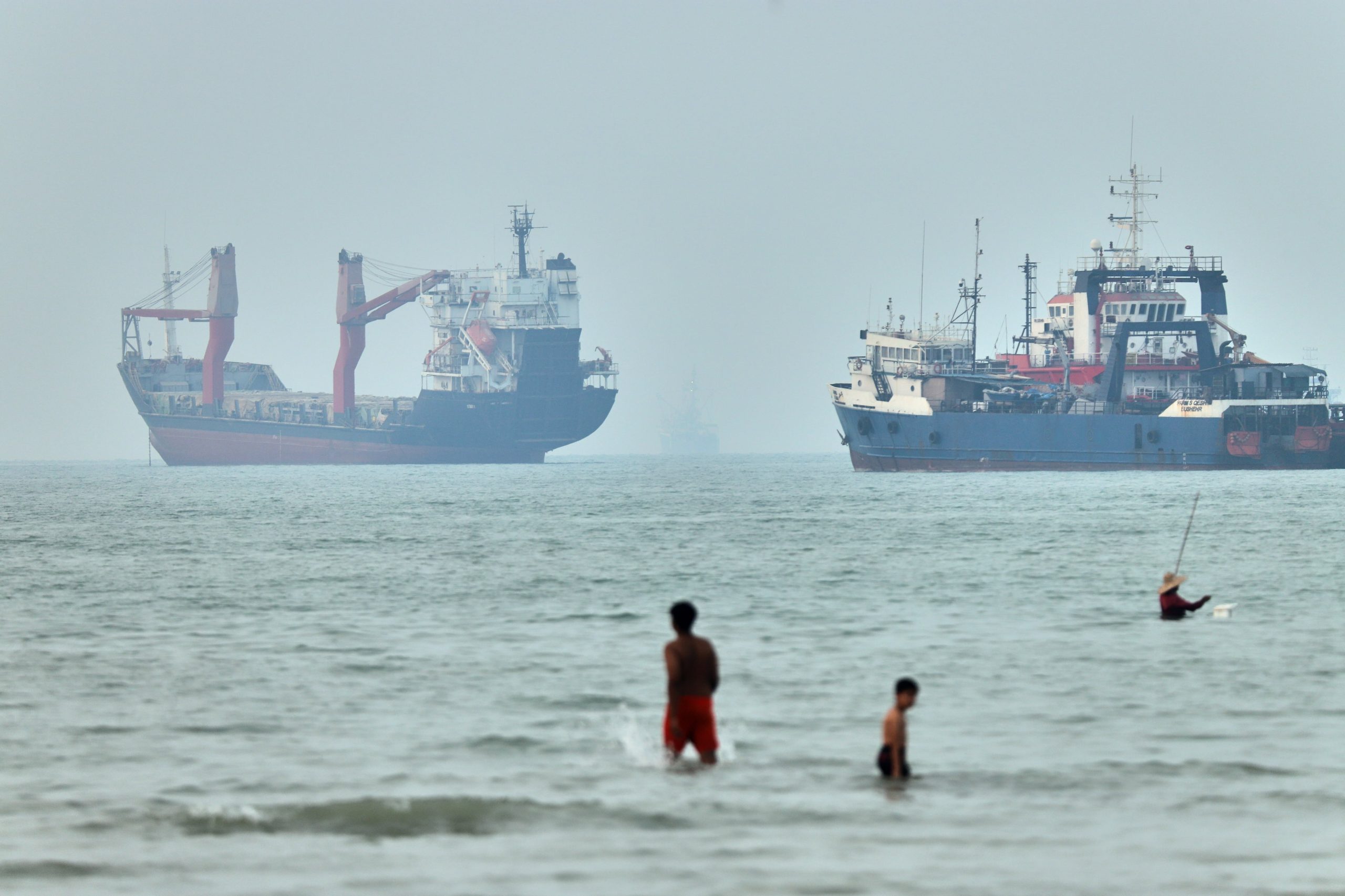
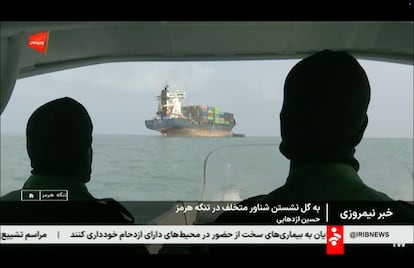
There has not been a single victory for the United States in Iran. The war launched in late February by Donald Trump and Benjamin Netanyahu appears set to alter — for the worse — the situation in the Strait of Hormuz, one of the world’s most critical arteries for the transport of hydrocarbons and fertilizers. Before the conflict, vessels travelled the strait freely, but that looks set to change significantly in the coming months, with an unprecedented system of tolls, fees for maritime services and other shifts.
For years, the possibility of the Strait of Hormuz’s closure or blockade by Iran has been one of the scenarios discussed in any prospective analysis of potential conflict with the nation. It was a theoretical possibility but — it was believed — one with little chance of materializing into real and tangible events. Recent history has proved that assessment wrong: the Islamic Republic has demonstrated its ability to control the strait, and that it is not willing to give up the ace up its sleeve. Hormuz is, in the words of Iranian Parliament Speaker Bagher Ghalibaf, “a divine gift” and Iran’s “greatest instrument of power.”
“Hormuz is defined under Iran’s command, not [U.S. armed forces] […] The region’s security will be ensured through the end of interventions and the U.S. withdrawal from the area, respect for countries’ sovereignty, and acceptance of new geopolitical realities — not under the military umbrella of America,” warned Iran’s deputy foreign minister for legal and international affairs and negotiator Kazem Gharibabadi on X. The words were a response to the announcement that Admiral Brad Cooper, commander of U.S. Central Command, had held a meeting with military officials from several Arab countries to discuss the situation in the strait.
Iran has made it clear that things will not be returning to the pre-war status quo. The fifth point of the brief and somewhat ambiguous memorandum of understanding signed on June 17 makes it clear that free passage through the Strait of Hormuz will only be granted for the 60 days following the agreement.
Furthermore, Tehran holds that its port and military authorities are responsible for managing maritime traffic during that period. Iranian authorities will also “conduct dialogue with the Sultanate of Oman, to define the future administration and maritime services in the Strait of Hormuz, in discussions with other Persian Gulf Littoral States, in line with applicable international law and the sovereign rights of coastal states of the Strait of Hormuz,” according to the memorandum.
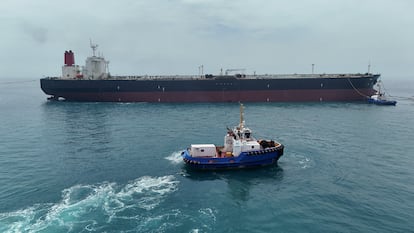
Negotiations between Iran and Oman have already begun, and a lot would have to change for them not to ultimately result in a payment — however it is labelled — for oil and methane tankers that pass through the strait on their way to the Arabian Sea. Last Monday, delegations from both countries met in the Omani capital of Muscat for the first meeting of the Joint Committee on the Strait of Hormuz to discuss its future administration.
The United Nations Convention on the Law of the Sea, which serves as the foundation of global regulations in this key area — worldwide, the bulk of goods are moved by boat — prohibits the application of “tolls” in exchange for the passage of merchant ships through natural straits. Canals like the Panama or Suez are a different matter, as their construction involved considerable costs. The treaty has been signed by Oman, but not Iran.
Billions at stake
Whatever the terminology, Iran is demanding that a fee be paid to pass through the Strait of Hormuz, and in a new development from recent weeks, Oman has not ruled out the option. In a recent interview with Radio Monte Carlo International, Omani Foreign Minister Badr al Busaidi said that his country opposes the imposition of “transit fees,” but did not rule out the possibility of charging for “maritime services,” such as maritime security or pollution control.
U.S. negotiators have already received an Omani proposal that mentions “voluntary contributions,” according to The New York Times. Al Busaidi himself explained that the model could be similar to those of the Malacca and Singapore Straits. There, a Japanese foundation has collected voluntary donations since 2008 for the maintenance of buoys and lighthouses, in addition to environmental conservation.
However, it has only received around $23 million in its first 15 years of operation. That figure is nothing compared to speculations surrounding the Strait of Hormuz. Iranian authorities expect to raise hundreds of millions or even billions of dollars — to be redistributed, of course, among the countries involved in the plan.
Ideas about a toll for extracting crude oil, natural gas or derivatives (diesel, gasoline, kerosene, fertilizers) have been floating around the Middle East for some time. In March, during one of the most intense phases of the war, an Iranian lawmaker confirmed the collection of $2 million per ship at a time of extreme global fuel shortages.
Tehran insists that payments will be mandatory, as is already the case in the Turkish straits of the Dardanelles and the Bosporus, where a fee of $6.70 per net metric ton of the vessel (without cargo) is charged to cover the costs of health inspections, lighthouses and rescue services, in addition to an extra fee if pilotage is required. Turkey collects approximately $229 million annually from such fees.
However, as Richard Meade, editor-in-chief of shipping news publication Lloyd’s List, notes that the key difference lies in the navigational hazards of the Turkish Straits, where the Bosporus narrows to a minimum width of 700 meters, compared with the Strait of Hormuz, which is just under 19 miles wide at its narrowest point. Moreover, the Turkish Straits are governed by the 1936 Montreux Convention, which predates UNCLOS.
“A transit fee through the Strait of Hormuz would, in practice, act as a new tax on one of the world’s most critical energy corridors,” Clair Jungman, director of maritime risk and intelligence at British consulting firm Vortexa, explains to EL PAÍS. “It would raise the costs of crude oil, liquefied natural gas, liquefied petroleum gas and motor fuels, while adding uncertainty to the planning of freight rates and shipping routes.”
Even if the Gulf’s exporting countries (the United Arab Emirates, Saudi Arabia, Kuwait and Bahrain, which are refusing to pay the fee) were to cover the cost initially, it would ultimately fall on importers in Asia and Europe, where the bulk of the region’s shipments end up.
“For exporters, the greatest risk is reputational and commercial: if the Strait of Hormuz comes to be perceived as less reliable or less neutral, freight rates, insurance costs and risk premiums would likely rise,” notes Jungman.
Dangerous precedent
“In the worst case, if it were one or two dollars per barrel, in the purely economic sense, the equation barely changes. The impact would be minimal, especially when taking into account that the barrel extracted by these countries is the cheapest on the market by far,” says Jorge León, vice president and head of geopolitical analysis at the Norwegian consulting firm Rystad Energy. “And in any case, if this is the price to pay so that the war ends and it is possible to cross Hormuz, it’s not very high.” The problem, he says, is the implication of the fee: “that Iran continues to have nearly absolute control of the strait and that it can close it again when it benefits them.”
For the market as a whole, ultimately, the impact would probably have less to do with the amount of the fee than with the precedent it would set. “Even if it were presented as a payment for maritime services or as a green surcharge, the market would likely interpret it as a transit toll,” Jungman warns. “That would increase volatility and reinforce interest in alternative export routes where they exist.”
“Money isn’t the problem for the [shipping] industry. The price would be passed on to charterers and customers, and ultimately absorbed into the [transportation] cost — assuming it isn’t an exorbitant rate,” explains Meade.
He points out, for example, that during the war shipping companies paid Iran between $1 million and $2 million to get their tankers through the Strait of Hormuz. However, after about six weeks of conflict, “prices fell rapidly” to between $120,000 and $160,000 per vessel.
“It’s still a high cost, but not one that would hinder trade, especially when you consider supertankers that can carry one or two million barrels of crude oil. In that sense, the shipping industry could withstand this type of negotiation,” he adds.
Like Jungman, the director of Lloyd’s List warns of the “dangerous precedent” set by the fee. “What happens in Hormuz will not stay in Hormuz: Malacca, the South China Sea, the Taiwan Strait… any of the many potential strategic points at sea could become the subject of geopolitical negotiations. That’s why the United States, its Western allies, the International Maritime Organization, and much of the industry are opposed to it,” Mead says. He warns that “global free trade is at stake,” given that more than 80% of goods are transported by sea.
It is no surprise, therefore, that aside from the technical negotiations on the various aspects of the ceasefire agreement with Iran — the immediate end to hostilities on several fronts, the nuclear issue, frozen funds — the Strait of Hormuz is one of the main focal points of the political talks. Nor is it surprising that Trump dispatched his negotiators Jared Kushner and Steve Witkoff to Qatar last week to negotiate — albeit indirectly — with the Iranians.
Aware that it would be a failure for the White House if the war were to end without any clear objectives achieved and with tolls imposed on passage through Hormuz, U.S. envoys have urged their Iranian counterparts not to take an inflexible stance on this issue and to think in the long term, according to the news outlet Axios. If the U.S. lifts all sanctions on Iranian oil, they reason, the revenue the Islamic Republic could generate “would be 100 times greater than what it would receive by using the gangster-like tactic of imposing tolls,” stated a U.S. source quoted by the outlet.
After being completely closed for much of the war, transit volumes have recovered “significantly” since the signing of the memorandum of understanding — and in the immediately preceding days, when both sides had already begun easing the pressure of the strait’s dual blockade — according to the latest analysis by Vortexa. From virtually zero, flows have risen to nearly half of their pre-war levels.
“The reopening is real, but partial, and consistent with ongoing mine-clearing operations and intermittent security incidents in the strait,” Jungman concludes, referring to the reciprocal attacks that took place at the end of June.
Sign up for our weekly newsletter to get more English-language news coverage from EL PAÍS USA Edition
Drug raid in Spain takes bizarre turn as Guardia Civil discover exotic reptile
Haitam case in Torremolinos reopens after family appeal succeeds in Malaga court
Spain travel chaos as Cataluña wildfires close major roads and suspend trains

Red Bull set for radical new design in desperate bid to keep Max Verstappen

F1 Qualifying Results: 2026 Austrian Grand Prix times and grid positions
Mallorca solar eclipse 2026: Best viewing areas and what to know


-
 Uncategorized2 weeks ago
Red Bull set for radical new design in desperate bid to keep Max Verstappen
-
 Uncategorized1 week ago
F1 Qualifying Results: 2026 Austrian Grand Prix times and grid positions
-
best places to view the solar eclipse in mallorca2 weeks ago
Mallorca solar eclipse 2026: Best viewing areas and what to know
-

 %2 weeks ago
Spain’s Heat Reaches Highest Level In 76 Years
-
Latest2 weeks ago
CONFIRMED: Spain Breaks June Heat Record
-
DGT2 weeks ago
Spain’s traffic warning for summer 2026: These are the weekends the DGT says you should avoid
-
Latest1 week ago
EU Worries Jet Fuel Supply Situation To Worsen
-
Latest2 weeks ago
Spain’s Former PM Requests His Corruption Probe Be Nullified