Connect with us

%

World’s First Octopus Farm Left Dead In The Water In Spain

Published

on

world’s-first-octopus-farm-left-dead-in-the-water-in-spain

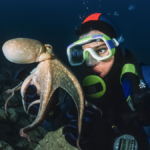
More than 300 scientific studies found “very strong evidence of sentience” in octopods. Credit: Angelo Giampiccolo / Shutterstock

Thousands of tonnes of octopus were meant to leave a purpose-built facility at Las Palmas port every year. Instead, the tanks will remain on paper, although Spain has neither banned the practice nor closed the door on another attempt.

The Las Palmas application is closing after five years

Nueva Pescanova formally withdrew its application to install the world’s first commercial octopus farm at Las Palmas port on July 23. The withdrawal document and Port Authority response said the concession file opened in May 2021 would now be archived, ending the project in its current form.

The company attributed its decision exclusively to business and regulatory considerations. It said new administrative requirements from the Canary Islands’ Environmental Assessment Commission had substantially changed the original project’s conditions, scope, timetable and regulatory demands. Environmental processing had identified issues requiring further examination and placed the project under an ordinary environmental assessment, a more extensive procedure than the simplified review initially conducted.

That earlier review identified possible significant adverse effects, including odours near a passenger terminal and deterioration of port water caused by organic waste, according to environmental documents examined by elDiario.es.

Nueva Pescanova said its withdrawal did not amount to an admission that octopus farming was environmentally unviable. It also left open the possibility of considering different technology, environmental measures or locations.

How the three thousand tonnes figure put octopus welfare under scrutiny

The Gran Canaria facility was intended to produce approximately 3,000 tonnes of octopus annually for domestic and international food markets. Nueva Pescanova previously said it had developed conditions that allowed octopuses to coexist in captivity without aggression or cannibalism. Its researchers had bred five generations at the company’s Galicia research centre, according to Reuters’ reporting from the facility.

The proposed scale, however, placed the intelligence and welfare of the animals under intense scrutiny. A London School of Economics review drew on more than 300 scientific studies and found “very strong evidence of sentience” in octopods. The researchers concluded that high-welfare commercial farming would be impossible under the proposed intensive conditions.

Separate peer-reviewed research into pain found that octopuses avoided places associated with injury and preferred locations where they had received pain relief. The study concluded that their behaviour was consistent with experiencing the emotional component of pain.

Supporters of aquaculture presented a different argument. Eduardo Almansa of the Spanish Oceanography Institute told Reuters in 2022 that wild fisheries had reached their limit and aquaculture was the only available alternative if current levels of octopus consumption were to continue.

How one documentary could have changed consumer’s minds

The 2020 Netflix documentary My Octopus Teacher introduced a vast audience to the intelligence and behaviour of a wild common octopus. The film won the 2021 Academy Award for best documentary and reportedly influenced some viewers’ diets. Sir Richard Branson was among those who gave up eating octopus after seeing it, according to an interview with filmmaker Craig Foster.

Similar reactions appear online. One contributor to a Reddit discussion about the documentary wrote: “After watching the documentary, I stopped eating octopus.”

These reactions show that the film changed some people’s minds, but may not establish a wider shift in public consumption or opinion. Spanish government figures are too fragmented to answer that question conclusively. In the 12 months to November 2025, household purchases in the combined squid-and-octopus category rose by 6.8 per cent. However, the Agriculture Ministry dataset says this category also includes cuttlefish, pota and chipirones. A much smaller tinned-octopus category fell by 37.5 per cent over the same period.

Neither figure measures overall octopus consumption by itself. There is therefore no firm evidence that people across Spain are eating less octopus.

The project is gone, but Spain has not banned octopus farming altogether

Campaigners have welcomed the withdrawal, but it was a company decision rather than a nationwide prohibition. A bill proposing to prohibit octopus aquaculture in Spain was admitted for parliamentary processing in June 2025. The Congress of Deputies’ current record shows that it is still awaiting consideration by the full chamber and has not become law.

There is also no specific European Union welfare legislation governing commercially farmed molluscs. Live cephalopods used in scientific research receive protection under EU rules, creating a legal difference between octopuses in laboratories and those raised for food.

Commercial research may continue. Nueva Pescanova’s aquaculture website still names octopus as one of the new farming species studied at its Pescanova Biomarine Center in Galicia. But the immediate questions are whether Spain’s Congress advances the proposed ban and whether Nueva Pescanova eventually explores another design or location. Under the withdrawn Las Palmas application, however, the farm will not be built.

%

Murcia Man’s Honesty Rewarded After Returning Sorolla Painting Worth €150,000

Published

on

murcia-man’s-honesty-rewarded-after-returning-sorolla-painting-worth-e150,000

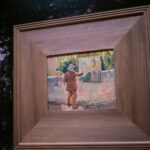
the reward was not about replacing the value of the painting. Photo credit: Oscar Gonzalez Fuentes/Shutterstock

Andrés Hurtado, the Murcia man who made headlines last month after mistakenly taking what he believed was a painting with a beautiful frame from the pavement while on holiday in Sevilla, has received a €1,000 reward after returning the artwork, later identified as a valuable Joaquín Sorolla piece. What began as an unusual holiday discovery has now ended with recognition for Hurtado’s decision to hand the painting back, despite its estimated value of around €150,000.

The reward, sent by the owner’s family through Bizum, was a gesture of gratitude for returning a piece of Spanish artistic heritage rather than attempting to profit from it. The latest chapter of the story has shifted the focus away from the painting’s surprising discovery and towards the choice that followed, one that has earned praise across Spain.

A reward for choosing honesty

The €1,000 payment represents only a small fraction of the artwork’s estimated value, but the gesture was not intended to match the painting’s market price. Instead, it recognised a decision that could easily have ended very differently. With the artwork believed to be worth thousands of euros, keeping it or attempting to sell it could have turned the story into a legal dispute rather than one about honesty.

Hurtado’s decision to return the Sorolla artwork has been praised by those who see the case as an example of integrity at a time when valuable discoveries can often lead to disagreements over ownership. For Hurtado, the reward was not about replacing the value of the painting, but about acknowledging the importance of returning something that was not his.

A valuable piece of Spanish art preserved

The artwork is linked to one of Spain’s most internationally recognised painters. Known as the “master of light”, Sorolla created hundreds of works during his career, capturing Spanish landscapes, portraits and scenes of everyday life. His paintings remain highly valued around the world, with collectors and museums continuing to seek his work.

The return of the painting means it can remain with its rightful owner and continue to be preserved as part of Spain’s artistic heritage. The recovery of the unique piece of artwork shows why privately owned works of historical and cultural value must be protected, as their importance is not only measured by their financial worth.

A different ending to a surprising discovery

Stories involving valuable finds often end with disputes, investigations or attempts to profit from unexpected discoveries. This case has taken a different path. Instead of becoming a battle over ownership, the Sorolla painting story has ended with the artwork returned and the person who handed it back receiving recognition.

The contrast between the painting’s estimated value and the reward received has become one of the most talked-about parts of the story. A work of art worth around €150,000 resulted in a €1,000 payment, but it also brought attention to the man who chose honesty over opportunity. The case has become a reminder that the value of an object and the value of an action are not always measured in the same way.

For Spain’s art world, the most important outcome is that a piece connected to one of the country’s greatest painters has been recovered and returned to its rightful owner. For Hurtado, the reward represents recognition for a decision that protected a valuable piece of cultural history. In the end, the story is not only about a valuable Sorolla painting. It is about what happened when one person had the chance to benefit from an unexpected discovery and chose to do the right thing instead.

Continue Reading

%

Ronda’s Ancient Mountain Harvest

Published

on

ronda’s-ancient-mountain-harvest

High in the hills above Ronda, workers armed with specialised axes are carrying out a harvest that hasn’t changed in generations

Traditional mountain harvest powers local economy

Forest bark is turning into valuable income for Ronda this summer. Publicly owned cork oak estates are undergoing their seasonal stripping, bringing a welcome cash injection for town hall spending and community projects. Last year’s harvest brought in more than €600,000 for public funds, showing just how important this yearly event is for local taxpayers. Town hall leaders have officially launched la saca del corcho, the traditional cork harvest, with target yields expected to hit nearly 490,000 kilograms of raw bark.

Essential income for town council finances

Forecasting estimates that workers will extract at least 10,650 quintales castellanos from local trees, which in old Spanish trade metrics, one quintal equals roughly 46 kilograms. Activity focuses on Las Majadas de Ronda and El Berrueco woodlands, situated in the Los Alcornocales Natural Park within the Cortes de la Frontera boundary.

Generating roughly 1,200 individual day-shifts for local workers, the harvest provides vital summer work for regional families. Experienced cork strippers work with specialised axes to slice away bark without damaging the living tree underneath. Stripped trees then require a strict ten-year recovery period before another harvest can happen. Rugged terrain makes heavy machinery unusable, requiring traditional muleteers and working pack animals to carry harvested slabs out from deep ravines.

Balancing forestry with local livestock needs

Local officials don’t just let the trees do all the financial heavy lifting. Town hall planners cleverly combine cork stripping with cattle grazing rights, pasture rentals, and routine timber thinning throughout the calendar year. Reinvesting the woodland profits keeps the mountains looking pristine while quietly footing the bill for practical everyday needs, like fixing potholed rural lanes, clearing summer firebreaks and keeping local parks shipshape for everyone to enjoy.

Continue Reading

%

“Beyond Extinguishing Capacity”: Terror As Madrid And Ávila Wildfires Merge Into One Unstoppable Blaze

Published

on

“beyond-extinguishing-capacity”:-terror-as-madrid-and-avila-wildfires-merge-into-one-unstoppable-blaze

The wildfire’s impact is spreading across central Spain with more than 24 secondary roads closed. Photo credit:@angusjf4 on X

The wildfire emergency gripping central Spain has taken a dramatic turn after it was confirmed that the fires burning across Madrid and Ávila have now merged, creating a much larger and more dangerous blaze that is pushing firefighters to their limits. The development has triggered a stark warning from Madrid’s regional government, which admits the fire has moved beyond its current extinguishing capacity. 

With crews unable to simply stop the advancing flames, the focus has shifted to containing the wildfire, protecting key areas and preventing further spread.The threat is no longer limited to those living close to the flames. A change in weather conditions is expected to carry smoke towards Madrid, potentially affecting millions of people with worsening air quality and reduced visibility in the coming days.

Fire reaches a point beyond extinguishing capacity

Madrid’s regional Environment Minister, Carlos Novillo, admitted that the wildfire has reached a stage where it is “beyond extinguishing capacity”, warning of the enormous challenge facing emergency services as crews battle unpredictable conditions. Instead of being able to eliminate every fire front, firefighters are now concentrating on containment, protecting strategic locations and preventing the flames from gaining further ground.

The merger of the Madrid and Ávila fires has created a larger and more complex fire area, with dry vegetation, high temperatures and changing winds making operations increasingly difficult. The blaze is spreading across areas west of Madrid, with locations including El Escorial, one of Spain’s most recognisable historical sites and a major tourist destination, among the areas facing the impact of the advancing wildfire.

Firefighters pushed to their limits as Europe sends help

For the crews on the ground, the scale of the wildfire has created some of the most demanding conditions they have ever faced. Veteran firefighters have described the operation as unlike anything they have experienced before, with rapidly changing fire behaviour making every intervention more dangerous. Some teams have found themselves trapped by advancing flames and forced to react quickly as conditions shifted around them.

But the crisis has also left many rural residents in Ávila facing heartbreaking decisions of their own. People living in cortijos and rural properties with animals have described being told last minute once the flames were upon them that they needed to evacuate, leaving them being abandoned and having to rely on themselves as they fight to protect their pets and livestock while flames approach their homes. 

Many have been working desperately to move animals to safety, protect their land and defend their properties while emergency crews focus on containing the advancing wildfire. For those living in isolated areas, the battle has not only been against the flames but also against the fear of losing the animals and livelihoods they have spent years caring for.

#ifburgohondo esto vivimos ayer en LA RINCONADA, abandonados a nuestra suerte, avisados con el fuego encima. Han puesto en juego vidas humanas y animales, QUE VERGÜENZA 💔 @Meteoavila2 pic.twitter.com/62K3Qmqnp9

— Ana Navazo (@blackxnitt) July 24, 2026

Europe sends reinforcements as Spain’s firefighting resources are stretched  

The pressure on emergency crews has prompted international support. Through the European Union’s civil protection response, additional aircraft have been sent to help Spain fight the blaze, including two firefighting aircraft from Italy and two from Greece. The arrival of European reinforcements draw attention to the sheer the scale of the emergency, with Spain requiring support as firefighters continue battling a wildfire that authorities admit has moved beyond normal extinguishing capacity.

At the same time, questions have been raised over Spain’s available aerial firefighting resources after reports that 15 Airbus A400M aircraft available to the government could not be used for direct firefighting operations because they did not have the necessary anti-fire kits installed.

Smoke threat moves towards Madrid

While firefighters continue battling the blaze, the consequences could soon be felt far beyond the areas directly affected by the flames. According to Meteoiberia, a change in wind direction towards northwesterly winds from Saturday is expected to push smoke from the Madrid and Ávila fires towards the capital.

The forecast warns that millions of people could experience poorer air quality and reduced visibility as the smoke plume moves across Madrid. The effects are also expected to spread to other parts of Spain’s interior in the following days. The development means that even people far from the wildfire itself could soon see the impact of the crisis through hazy skies, smoke pollution and worsening conditions outdoors.

Roads cut off as flames threaten key locations

The wildfire is also causing major disruption across central Spain, with several roads closed as emergency crews battle to contain the advancing flames. Among the affected routes are the M-512, M-521 and M-522 in the Madrid region, which have been closed due to the fire situation around the Sierra Oeste area. In Ávila, several secondary roads have also been affected as the merged wildfire continues spreading across the province.

Authorities have urged drivers to avoid affected areas and check the latest road information before travelling, as access restrictions remain in place to allow emergency services to work safely. The closures are affecting residents, commuters and emergency access routes, showing how the wildfire is impacting daily life far beyond the areas directly threatened by flames.

A wildfire threatening NASA’s link to deep space

The advancing flames have also placed the Deep Space Communications Complex at Robledo de Chavela under pressure,  a facility that plays a vital role in humanity’s exploration beyond Earth. The complex forms part of NASA’s Deep Space Network, a global system of giant antennas used to communicate with spacecraft travelling across the Solar System. The network allows scientists and engineers to send commands to missions exploring distant planets and receive the vast amounts of scientific data collected from space.

The Robledo de Chavela facility is one of only three major Deep Space Network locations worldwide, alongside sites in California and Australia, making it an essential part of NASA’s ability to maintain contact with deep-space missions. The possibility of the wildfire affecting such a strategically important site demonstrates the extraordinary scale of the crisis. This is no longer only a battle to protect forests and local communities; emergency crews are also working to safeguard infrastructure connected to some of the world’s most advanced scientific missions.

17:40 Antenas de Robledo de Chavela..

🔥 ardiendo la Base espacial de Robledo.#IfBurgohondo pic.twitter.com/bVrh6xJ3yd

— Infues Avila (@InfuesAvila) July 24, 2026

The coming days will be critical

The next few days will be decisive as firefighters continue working to contain a blaze that authorities admit has moved beyond normal extinguishing operations. With changing winds, extreme conditions and smoke expected to spread across central Spain, the impact of the wildfire is no longer limited to the areas where flames are burning.

What began as separate fires in Madrid and Ávila has now become one much larger emergency, testing firefighters, disrupting transport and threatening internationally important infrastructure as crews fight to prevent further destruction. For those on the front line, the challenge is no longer simply putting out the fire, it is stopping one of Spain’s most difficult wildfires from becoming even more destructive.

Continue Reading
Advertisement
Advertisement

Spanish Real Estate Agents

Tags

Trending

Copyright © 2017 Spanish Property & News