Connect with us

%

Ronda’s Ancient Mountain Harvest

Published

on

ronda’s-ancient-mountain-harvest

High in the hills above Ronda, workers armed with specialised axes are carrying out a harvest that hasn’t changed in generations

Traditional mountain harvest powers local economy

Forest bark is turning into valuable income for Ronda this summer. Publicly owned cork oak estates are undergoing their seasonal stripping, bringing a welcome cash injection for town hall spending and community projects. Last year’s harvest brought in more than €600,000 for public funds, showing just how important this yearly event is for local taxpayers. Town hall leaders have officially launched la saca del corcho, the traditional cork harvest, with target yields expected to hit nearly 490,000 kilograms of raw bark.

Essential income for town council finances

Forecasting estimates that workers will extract at least 10,650 quintales castellanos from local trees, which in old Spanish trade metrics, one quintal equals roughly 46 kilograms. Activity focuses on Las Majadas de Ronda and El Berrueco woodlands, situated in the Los Alcornocales Natural Park within the Cortes de la Frontera boundary.

Generating roughly 1,200 individual day-shifts for local workers, the harvest provides vital summer work for regional families. Experienced cork strippers work with specialised axes to slice away bark without damaging the living tree underneath. Stripped trees then require a strict ten-year recovery period before another harvest can happen. Rugged terrain makes heavy machinery unusable, requiring traditional muleteers and working pack animals to carry harvested slabs out from deep ravines.

Balancing forestry with local livestock needs

Local officials don’t just let the trees do all the financial heavy lifting. Town hall planners cleverly combine cork stripping with cattle grazing rights, pasture rentals, and routine timber thinning throughout the calendar year. Reinvesting the woodland profits keeps the mountains looking pristine while quietly footing the bill for practical everyday needs, like fixing potholed rural lanes, clearing summer firebreaks and keeping local parks shipshape for everyone to enjoy.

%

Murcia Man’s Honesty Rewarded After Returning Sorolla Painting Worth €150,000

Published

on

murcia-man’s-honesty-rewarded-after-returning-sorolla-painting-worth-e150,000

the reward was not about replacing the value of the painting. Photo credit: Oscar Gonzalez Fuentes/Shutterstock

Andrés Hurtado, the Murcia man who made headlines last month after mistakenly taking what he believed was a painting with a beautiful frame from the pavement while on holiday in Sevilla, has received a €1,000 reward after returning the artwork, later identified as a valuable Joaquín Sorolla piece. What began as an unusual holiday discovery has now ended with recognition for Hurtado’s decision to hand the painting back, despite its estimated value of around €150,000.

The reward, sent by the owner’s family through Bizum, was a gesture of gratitude for returning a piece of Spanish artistic heritage rather than attempting to profit from it. The latest chapter of the story has shifted the focus away from the painting’s surprising discovery and towards the choice that followed, one that has earned praise across Spain.

A reward for choosing honesty

The €1,000 payment represents only a small fraction of the artwork’s estimated value, but the gesture was not intended to match the painting’s market price. Instead, it recognised a decision that could easily have ended very differently. With the artwork believed to be worth thousands of euros, keeping it or attempting to sell it could have turned the story into a legal dispute rather than one about honesty.

Hurtado’s decision to return the Sorolla artwork has been praised by those who see the case as an example of integrity at a time when valuable discoveries can often lead to disagreements over ownership. For Hurtado, the reward was not about replacing the value of the painting, but about acknowledging the importance of returning something that was not his.

A valuable piece of Spanish art preserved

The artwork is linked to one of Spain’s most internationally recognised painters. Known as the “master of light”, Sorolla created hundreds of works during his career, capturing Spanish landscapes, portraits and scenes of everyday life. His paintings remain highly valued around the world, with collectors and museums continuing to seek his work.

The return of the painting means it can remain with its rightful owner and continue to be preserved as part of Spain’s artistic heritage. The recovery of the unique piece of artwork shows why privately owned works of historical and cultural value must be protected, as their importance is not only measured by their financial worth.

A different ending to a surprising discovery

Stories involving valuable finds often end with disputes, investigations or attempts to profit from unexpected discoveries. This case has taken a different path. Instead of becoming a battle over ownership, the Sorolla painting story has ended with the artwork returned and the person who handed it back receiving recognition.

The contrast between the painting’s estimated value and the reward received has become one of the most talked-about parts of the story. A work of art worth around €150,000 resulted in a €1,000 payment, but it also brought attention to the man who chose honesty over opportunity. The case has become a reminder that the value of an object and the value of an action are not always measured in the same way.

For Spain’s art world, the most important outcome is that a piece connected to one of the country’s greatest painters has been recovered and returned to its rightful owner. For Hurtado, the reward represents recognition for a decision that protected a valuable piece of cultural history. In the end, the story is not only about a valuable Sorolla painting. It is about what happened when one person had the chance to benefit from an unexpected discovery and chose to do the right thing instead.

Continue Reading

%

Spain State Of Emergency Over Madrid Wildfires

Published

on

spain-state-of-emergency-over-madrid-wildfires

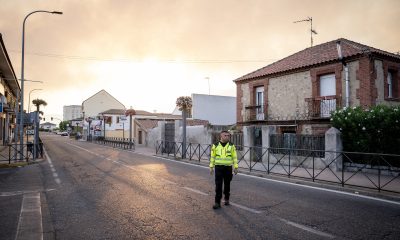
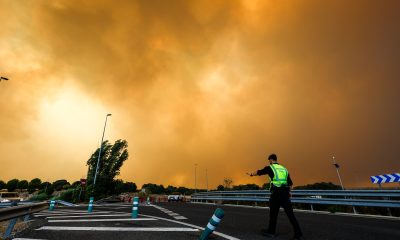
Spain declares state of emergency as Madrid wildfires force 10,000 to flee

By Lottie Verrier • Published: 24 Jul 2026 • 9:20 • 2 minutes read

More than 10,000 evacuated as Spain declares state of emergency

Pedro Sanchez declares state of emergency Credit: Facebook/AgenciadeSeguridadyEmergenciasMadrid112

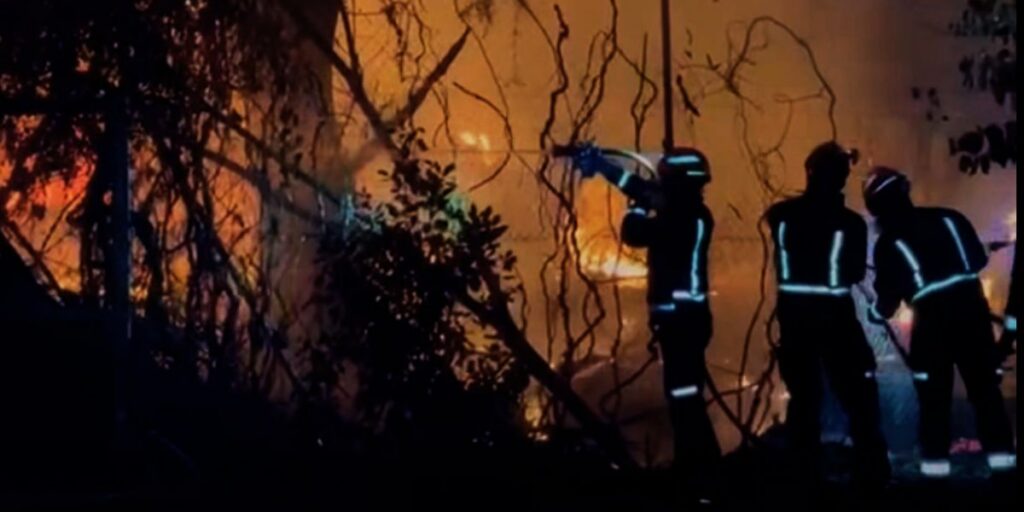
The numbers are shocking, but the human cost is impossible to measure. Behind every evacuation is a family forced to leave home with little warning, uncertain if they will ever see it again. Treasured possessions, cherished memories and entire communities are left behind as flames close in. For thousands of people near Madrid, ordinary life was shattered on Thursday as fast-moving wildfires tore through their communities.

More than 10,000 people have now been evacuated from the Community of Madrid, while a further 1,500 residents were forced from their homes in neighbouring Ávila as several major fires burned simultaneously.

As the crisis escalated, Spain declared a national emergency in the affected areas.

National emergency declared

Google News

Follow Euro Weekly News on Google News

Get breaking news from Spain, travel updates, and expat stories directly on your Google News feed.

Follow on Google News

Sign up for personalised news

Subscribe to our Euro Weekly News alerts to get the latest stories into your inbox!

By signing up, you will create a Euro Weekly News account if you don’t already have one. Review our Privacy Policy for more information about our privacy practices.

Continue Reading


Continue Reading

%

Has Spain Just Witnessed The Same Disturbing Pattern The UK Has Been Warning About For Years?

Published

on

has-spain-just-witnessed-the-same-disturbing-pattern-the-uk-has-been-warning-about-for-years?

Spain’s World Cup triumph will remain a historic sporting achievement remembered by millions. Photo credit: AI Generated image

Four days after Spain celebrated one of the biggest sporting moments in its history, a disturbing question has emerged: has the country just witnessed the same pattern that the UK has been warning about for years? While millions of fans took to the streets on July 19 to celebrate Spain’s World Cup victory, a very different picture was emerging away from the celebrations.

Calls to Spain’s 016 domestic violence helpline shockingly increased by 120.8% in the hours following the victory, according to figures from the Ministry of Equality. The rise, recorded between 11pm on Sunday and 7am on Monday compared with the same period the previous week, has triggered fresh concerns over whether major sporting events can coincide with increased risks for victims of domestic abuse.

A warning sign Spain cannot ignore

The figures have placed Spain at the centre of a debate that the United Kingdom has been examining for years. The issue is not that football creates violence, nor that supporters are responsible for the actions of individuals who abuse others.

However, researchers and support organisations have repeatedly warned that major football events can become flash points in households where abusive behaviour already exists, particularly when combined with factors such as alcohol consumption, heightened emotions and tension.

The question facing Spain now is whether this sudden rise follows the same pattern already identified in Britain, where domestic abuse reports have been shown to increase around major football tournaments.

The UK figures reveal a disturbing pattern

Research from Lancaster University examining domestic abuse reports during three World Cups found that incidents increased by 26% when England won or drew, but rose even further, by 38% when England lost. The findings highlighted that the result itself was not the cause of abuse.

Instead, researchers suggested that the intense emotions surrounding major football matches could contribute to situations escalating in homes where violence or controlling behaviour was already present. That pattern has led British police forces, charities and support organisations to launch campaigns before major tournaments, warning that victims may face increased risks during periods when the nation’s attention is focused on football.

Why victories and defeats can become dangerous moments

The concern is not about millions of fans celebrating safely. The vast majority of supporters watch matches without any problems, and a football result does not create an abusive person. The responsibility always lies with the individual choosing to use violence, intimidation or control against another person. However, experts warn that major events can expose problems that remain hidden behind closed doors.

Large celebrations, disrupted routines, alcohol consumption and emotional intensity can all contribute to already unsafe situations becoming more volatile. This is why authorities in several countries treat major sporting events as moments when awareness and support services are especially important.

Behind the statistics are women asking for help

The 120.8% rise in calls to Spain’s 016 service represents far more than a number. Behind every contact is an individual situation involving someone seeking protection, support or a way out. For many victims, reaching out for help can be one of the hardest decisions they make.

Fear of their partner’s reaction, concerns about children, financial dependence or years of isolation can prevent people from seeking support sooner. A phone call may come after months or even years of living with threats, intimidation or controlling behaviour.

A hidden crisis that often goes unseen

Domestic violence frequently takes place away from public view, meaning friends, relatives and neighbours may not realise what is happening until a situation becomes severe. Warning signs can include someone becoming isolated from their support network, appearing afraid of their partner, experiencing excessive control over their movements or constantly changing their behaviour to avoid conflict. Support organisations stress that people do not need to have all the answers to make a difference. Listening, believing someone who reaches out and helping them access professional advice can be a vital first step.

Spain’s response and where victims can turn

Spain’s 016 service provides confidential information and support for women experiencing gender violence, as well as advice for anyone concerned about someone else. The service offers different ways to seek help, including telephone and online support, allowing victims to choose the method they feel safest using.

Authorities continue to encourage people to seek help before situations become emergencies. Anyone affected by gender violence in Spain, or anyone worried about someone else, can contact 016 for guidance. In an immediate emergency, the number to call is 112.

A World Cup victory with another story behind it

Spain’s World Cup triumph will remain a historic sporting achievement remembered by millions. The celebrations, the crowds and the scenes of national pride will be remembered for years. But the figures that emerged afterwards have revealed another side to the story, one that took place away from the streets and behind closed doors.

The surge in calls to 016 has raised a difficult question: has Spain now seen the same warning signs that the UK has been highlighting for years? Because while millions celebrated a victory, some women were fighting a very different battle, one where the most important call was not about football, but about finding help.

Continue Reading

Trending

Copyright © 2017 Spanish Property & News