Connect with us

%

Would You Feel Safe On Spain’s Trains? Transport Minister Insists They Are Safe

Published

on

would-you-feel-safe-on-spain’s-trains?-transport-minister-insists-they-are-safe

By Nazario Rodriguez • Updated: 30 Oct 2026 • 21:01 • 3 minutes read
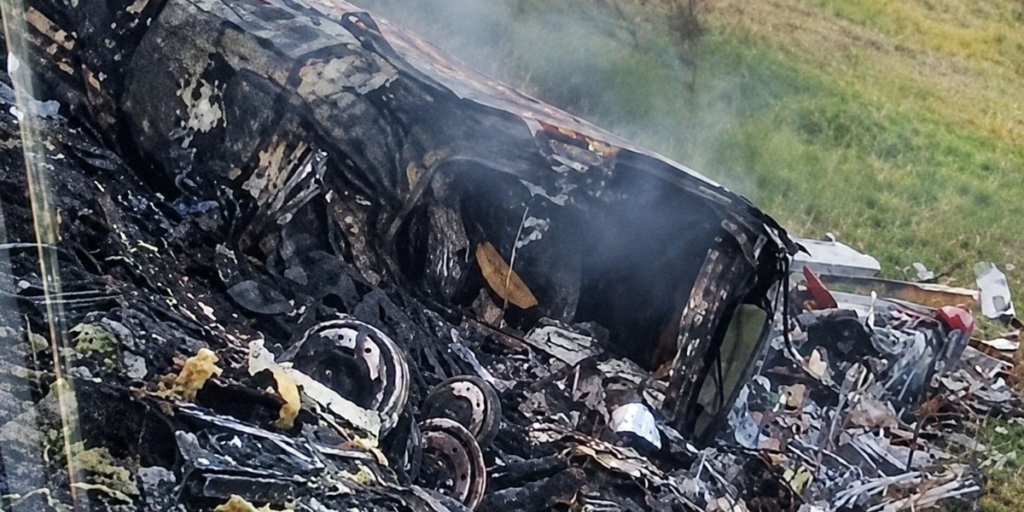
Spain high-speed train crash: Two carriages plunge down embankment as emergency crews rush to scene

Eyewitness described a desperate effort to rescue passengers Credit: Rafa Martín FB (passenger)

An unfinished safety upgrade, repeated outages and criticism of the minister’s response have left the Government facing questions that passengers deserve to see answered.

If you travel by train in Spain, the deadly collision near Toledo raises a question that affects every journey. What protects you when a safety system fails? With an overdue upgrade still unfinished and earlier faults already reported, passengers deserve to know why the remaining safeguards did not prevent the crash and what will change to keep them safe.

The collision between a Renfe AVE and an Iryo train near Urda killed 69 people. Investigators must establish exactly what happened. The Government must also explain the decisions, delays and arrangements that preceded it.

A safety upgrade remained unfinished

Adif awarded a €93.8 million contract in 2021 to replace the LZB train control system on the Madrid to Andalucía line with ERTMS. The project had a 52 month schedule, with completion expected in 2026.

The replacement was still not operational when the collision happened. Transport Minister Óscar Puente now says it is expected to enter service in early 2027, attributing the delay to the complexity of installing equipment while keeping trains running.

Earlier problems had also been raised. Three weeks before the crash, Iryo’s chief executive told a Senate committee that drivers had experienced trains stopping and taking time to reconnect after LZB faults.

These details do not establish that the delayed upgrade caused the collision. They do require an explanation of how the risks were assessed while the existing system remained in service.

A reliable system with 160 outages

During the transports minister’s appearance on Friday morning, he defended LZB as highly reliable while acknowledging 160 outages during 2026 so far.

According to 20minutos, the minister said 75 per cent involved external circumstances, including maintenance and track works. His argument was that the system responded correctly by stopping trains.

That distinction matters. An outage does not automatically mean the system failed to protect passengers. But repeated interruptions make the procedures used afterwards particularly important. If outages are expected, the arrangements for managing them must reliably keep trains apart.

In January, EWN questioned how repeated disruption had become normal on Spain’s railways. The Toledo disaster gives that concern a far more serious dimension.

Why did safety depend on a human decision?

We live in a world where passengers can follow an aircraft’s journey across continents on a phone. Trains also have tracking and signalling systems, making the circumstances of this collision difficult to comprehend. How could one train be authorised to continue towards another stopped on the same track?

Tracking a vehicle and automatically preventing a collision are different functions. Nevertheless, passengers deserve to understand why the information and safeguards available did not keep these trains apart.

Puente said that when technology fails, people must take over. He announced that protocols, training, staffing and the verification of decisions would be examined.

His explanation left a crucial question unresolved. When automatic safeguards become unavailable, what protects passengers if the person managing the situation makes the wrong decision?

Investigators must establish which protections remained available at Urda and how they were used. Saying that staff must take over does not explain why the remaining procedures failed to prevent the collision.

The transport minister’s response and the Ministry’s record

Puente’s first appearance after the crash drew strong criticism for focusing on an apparently mistaken instruction from Adif’s control room before investigators had established the full circumstances. Railway unions accused him of singling out a worker while wider questions remained unanswered.

On Friday, he ruled out resigning and promised not to use any worker as a shield. Identifying an operational mistake would not, by itself, settle questions about the delayed upgrade, maintenance, staffing or supervision.

The Ministry also faces a public trust problem shaped by the record of former minister José Luis Ábalos. In October, the Supreme Court rejected attempts by Ábalos and his former adviser Koldo García to overturn their corruption convictions. The offences included bribery and the misuse of public funds. The judgment also addressed jobs obtained for associates in public companies, as EFE’s reporting details.

Those convictions do not establish a connection with the collision. But they add another layer to concerns about a ministry where delays, faults and scandals risk becoming accepted as normal. Each requires its own answers. Together, they make assurances alone insufficient to restore public trust.

The Government must explain why the upgrade was delayed, how earlier faults were handled and whether the protections maintained during that delay were adequate.

Passengers should not have to choose between trusting technology and trusting that a worker will never make a mistake. They deserve a system designed to protect them when either fails, and ministers willing to answer for how that protection is delivered.

Google News

Follow Euro Weekly News on Google News

Get breaking news from Spain, travel updates, and expat stories directly on your Google News feed.

Follow on Google News

Sign up for personalised news

Subscribe to our Euro Weekly News alerts to get the latest stories into your inbox!

By signing up, you will create a Euro Weekly News account if you don’t already have one. Review our Privacy Policy for more information about our privacy practices.


%

100kg Wild Boar Smashes Into French Funeral Parlour

Published

on

100kg-wild-boar-smashes-into-french-funeral-parlour

Wild boar runs amok in village funeral parlour. Credit: archive image

A giant wild boar weighing around 100kg caused chaos in a small French village after charging through the streets, smashing its way into a funeral parlour and leaving two people terrified after a face-to-face encounter.

The extraordinary incident happened in Salviac, in the Lot department of south-west France, on Sunday, November 1, when the animal was apparently startled during a hunting expedition and headed towards the village instead of escaping into the surrounding countryside.

According to French newspaper La Depeche du Midi, people sitting outside the village’s La Poste bar had to rush indoors as the enormous animal came charging down the street.

Boar crashes into funeral business

The animal then crossed the road and repeatedly charged at the entrance to a funeral business, eventually smashing through its glass doors. Owner Catherine Figeac was inside meeting a client when the boar burst into the reception area. The pair suddenly found themselves face to face with the animal, which was so large that its back repeatedly struck the top of her 90cm-high desk.

Terrified, Catherine climbed onto her chair and shouted warnings to people outside as the boar charged through the premises. Although it damaged the entrance and some equipment, neither she nor her client was injured.

The animal subsequently headed towards a nearby restaurant, where it also attempted to force its way through the entrance before eventually fleeing towards the Dégagnac road. Members of the local hunting association later visited the funeral business and arranged for its insurance to cover the damage.

Wild boar increasingly close to homes

The incident has also drawn attention to the growing presence of wild boar around residential communities. A follow-up report by La Depeche on November 12 quoted the president of the Lot Departmental Hunters’ Federation, Michel Bouscary, who said encounters between the animals and residents were becoming increasingly common.

The problem is not confined to France. Wild boar have become a familiar sight in parts of Spain, particularly around the Costa del Sol, where easy access to food and water has encouraged them into built-up areas. Euro Weekly News has previously reported on wild boar running along the A-7 motorway in Mijas, as well as growing concerns over their presence in Fuengirola.

The Spanish government’s national hunting management strategy advises people who encounter wild boar not to run, approach the animals or feed them. Instead, they should leave an escape route and alert the authorities if necessary. Its guidance is particularly relevant to anyone walking dogs or living close to woodland and open countryside.

The Salviac incident ended without injuries, but it was a frightening reminder of what can happen when large wild animals suddenly find themselves in the middle of a residential community.

Continue Reading

%

Mijas Sows 33,000 Super Seed Balls

Published

on

mijas-sows-33,000-super-seed-balls

Mayor Ana Mata sowing superseeds. Credit: Ayto

Mijas distributes 33,000 super-seeds across its Sierra to regenerate plant life scorched by wildfires and combat creeping desertification.

In a hands-on bid to reverse decades of environmental damage, the Spanish town of Mijas has distributed more than 33,000 “supersemillas” across its Sierra, aiming to regenerate plant life scorched by wildfires and threatened by creeping desertification.

The plan, led by the Ayuntamiento de Mijas in partnership with the local firm Exploramás, relies on a centuries-old Japanese technique known as nendo dango. Volunteers crafted small balls of clay, natural fertilizer, substrate and meadow seeds. Once scattered on the ground, the clay casing shields the seeds from birds, wind and sun until rainfall gradually dissolves it, allowing germination without any need for planting or irrigation. A similar nendo dango approach has already been used on the Costa del Sol dunes.

Deployment of seeds follows successful experiments

The second phase of the project saw the seed balls dispersed around the former Los Arenales quarry near Mijas Pueblo and in the Hipódromo area, zones still recovering from recent fires. The effort builds on an earlier workshop held between 20 and 21 October at Cortijo Don Elías, where roughly 700 residents, students and association members rolled the balls by hand. Participants included pupils from the Las Lagunas, Sierra de Mijas, Torre Almenara and Villa de Mijas institutes, students from Kampus Formación, and members of the Fuenmijas Parkinson’s association and Afesol.

Organisers had originally planned for 27,000 seed balls; the final tally exceeded 33,000, a figure chosen in part to symbolically represent the workforce of General Electric, which supported the social action through Exploramás.

Mayor Ana Mata takes part

Mayor Ana Mata joined Environment Councillor Marco Cortés and Education Councillor Juan José Torres for the distribution. She described the Sierra’s recovery as a collective responsibility and stressed that involving schools, associations and businesses turns a practical restoration project into broader environmental education. This latest action continues broader volunteer-led efforts to revive the fire-damaged forests of the Sierra de Mijas.

“When administrations, companies, young people and social groups work together, we achieve results that go far beyond a single environmental action,” Mata said. “We are also teaching values and respect for nature.”

By combining traditional low-tech methods with broad community participation, Mijas is betting that a few tens of thousands of carefully made seed balls can help tip the balance toward greener slopes and greater resilience against the Mediterranean’s intensifying dry spells.

Continue Reading

%

US Flights Resume After Nationwide Ground Stop But Travellers Still Face Delays

Published

on

us-flights-resume-after-nationwide-ground-stop-but-travellers-still-face-delays

Los Angeles LAX brought to standstill. Credit: Rosemarie Mosteller – Shutterstock

Travellers flying between Europe and the United States on Saturday, 14 November, should check their flight status before leaving for the airport. US departures began to resume on Friday after the Federal Aviation Administration lifted a nationwide ground stop, but US Transport Secretary Sean Duffy warned that schedules would take time to recover. Passengers connecting through a US airport should check both legs of their journey.

The FAA halted departures across the United States on Friday, 13 November, after communications problems affected several regional air traffic control centres. The stop lasted more than four hours. Hundreds of flights were diverted, and more than 11,000 US flights were delayed or cancelled on Friday, according to FlightAware figures reported by The Guardian.

The disruption reached Europe on Friday night. British Airways cancelled its 10.30pm flight from Heathrow to New York. Passengers travelling between Spain and the United States should check directly with their airline for the latest departure time and any changes to onward connections.

Duffy attributed the outage to an overload in ageing communications equipment. Friday’s halt was the first nationwide ground stop since January 2023, when a separate FAA computer system failure led the agency to pause departures across the country.

The @FAAnews issued a nationwide ground stop for all U.S. airports following a communication issue impacting all Air Route Traffic Control Centers. FAA technicians are investigating the issue. We will provide immediate updates as we have them.

— Secretary Sean Duffy (@SecDuffy) November 13, 2026

Sign up for personalised news

Subscribe to our Euro Weekly News alerts to get the latest stories into your inbox!

By signing up, you will create a Euro Weekly News account if you don’t already have one. Review our Privacy Policy for more information about our privacy practices.

Continue Reading

Trending

Copyright © 2017 Spanish Property & News