Connect with us

%

Bull Breeder Dies After Savage Goring In Spanish Festival

Published

on

bull-breeder-dies-after-savage-goring-in-spanish-festival

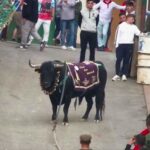
The San Marcos celebrations and “toros enogados”. Credit: Hermandad San Marcos FB

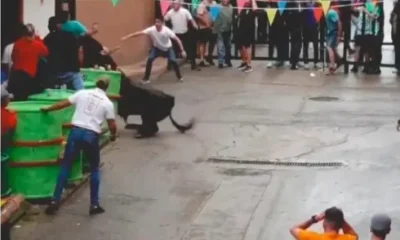
Horror was witnessed on the streets of Beas de Segura, in the Jaen Province of northern Andalucia when, during a traditional running of the bulls, one raging bull attacked and killed a 33-year-old cattle breeder during traditional festivities. Santiago Barrero San Román suffered multiple deep wounds to his abdomen, groin and chest in full view of shocked onlookers on April 24.

Deadly chaos in the toros enogados event

The incident took place around 7pm during the “desencajonamiento”, when bulls are released from crates and guided by ropes through the town to the local bull ring. Participants and spectators gathered for the San Marcos fiestas, declared of touristic interest in Andalucia. Video footage, which spread rapidly online, captured Barrero attempting to reach safety behind a barrier as the animal charged repeatedly. Several men tried to distract the bull and pull on its rope, yet the beast continued its assault, tossing and dragging the victim along the ground. Emergency teams rushed him to a temporary medical post, but he died about an hour later despite efforts to save him.

Foreign residents in Spain often encounter these popular bull events without full awareness of the risks. Unlike formal corridas in grand arenas, toros ensogados involve bulls on ropes running through streets, drawing the whole village into close proximity to the action. Unbeknown to many tourists visiting Spain each year, such activities carry genuine danger even for experienced handlers.

Caution for visitors considering bull-related events

Anyone curious about and thinking of attending a “corrida” or street bull festival should recognise the inherent hazards. Bulls weigh over 500kg and act on powerful instincts. Serious gorings like this one happen every season, sometimes with fatal results. Medical support exists at most events, yet proximity to unpredictable animals like this demands caution and respect for boundaries. Newcomers might view these colourful traditions as exciting fun, but participants and bystanders face real physical threats that demand experience and awareness.

Why incidents seem frequent in 2026.

Several high-profile cases have drawn attention early in the season. Just days earlier, star matador Morante de la Puebla suffered a severe goring in Seville’s Maestranza arena during the April Fair. The bull pierced his body and caused a painful internal injury that required emergency surgery. Another retired matador died in a corral accident in Malaga around the same period.

Spain hosts thousands of bull-related events yearly, from formal fights to local street releases. While overall fatalities remain relatively low, clusters of news stories create an impression of increased frequency, but numbers so far in 2026 have been relatively standard. Data from recent years shows no dramatic rise compared to previous seasons, but the sheer volume of festivals across Andalucia and other regions keeps risks present.

Fate of the bull after such attacks

Bulls involved in these incidents face the same outcome as others in Spanish taurine events. Organisers do not spare animals that cause injury or death. In street festivals like toros ensogados, the bull usually returns to its owner or proceeds to slaughter for meat consumption. Formal corridas end with the matador killing the bull by sword in the ring, after which its carcass leaves for butchering.

Very rare pardons occur only for exceptional bravery during a performance, unrelated to any harm inflicted on humans. Fighting bulls receive special breeding for strength and spirit, yet their role in tradition almost always concludes in death.

Current state of bullfighting in Spain

Spain maintains bullfighting as protected cultural heritage, with government support and subsidies helping maintain breeding ranches and events. Attendance at major arenas has declined over decades, yet thousands of popular fiestas continue each year, especially in rural areas where they form part of local identity and economy.

Many Spaniards, particularly older generations, see these events as living links to history, courage and rural life. Younger people show less interest these days, and animal welfare voices are growing louder, but legal protections prevent straightfoward regional bans. For foreigners living in Spain, understanding comes from recognising deep regional pride in tradition rather than viewing events solely through modern lenses.

Organisers in Beas de Segura held a minute’s silence and expressed sorrow for Barrero’s family. He left behind a pregnant wife and a young child, plus friends who remembered his passion for continuing his family’s cattle heritage with links to the respected Torrestrella line. The festival otherwise proceeded.

%

Europe’s Strangest Competition

Published

on

europe’s-strangest-competition

In a world of ultra-polished talent shows, one European contest is proving that chaos –  and a very convincing squawk – might be far more entertaining.

On Sunday April 26, the quiet Belgian seaside town of De Panne erupted with shrieks, feathers and applause as dozens of competitors gathered for the annual European Seagull Screeching Championship: a delightfully bizarre event that’s rapidly gaining global attention.

The strangest talent show you’ve never heard of

Forget singing or dancing: here, success depends on how accurately you can mimic the piercing cry of a seagull.

More than 70 contestants from 15 countries took part in this year’s championship, transforming a local pub into a stage for one of Europe’s most unusual competitions.

Participants of all ages, from young children to seasoned performers, took turns screeching, flapping and fully embodying the seabird spirit. Many leaned into the theatrics, arriving in elaborate seagull-themed costumes, complete with wings, feathers and dramatic stage presence.

And yes, it’s taken very seriously.

How do you judge a seagull impression?

A panel of judges scores each performance based on two key criteria: how realistic the sound is and how convincing the performance feels.

Contestants can earn up to 15 points for vocal accuracy and an additional five for showmanship… meaning a truly winning performance requires both pitch-perfect screeching and full-bodied commitment.

The result? A mix of hilarity, impressive skill and moments where you genuinely can’t tell if it’s a human… or an actual bird.

Why this competition even exists

While it might look like pure comedy, the championship has a surprisingly wholesome goal.

Organisers created the event to change public perception of seagulls, which are often seen as pests: stealing food, making noise and causing chaos in coastal towns.

Instead, the competition encourages people to appreciate their behaviour, intelligence and unmistakable presence by the sea.

As organiser Claude Willaert explained, the sound of seagulls is deeply tied to memories of holidays and the coast, something the event aims to celebrate rather than criticise.

Costumes, chaos – and serious talent

Despite its quirky premise, the championship has become a fully-fledged annual tradition, now in its sixth edition.

Crowds cheer loudly for each performance, turning every screech into a mini spectacle. Families compete together, seasoned contestants return year after year, and newcomers attempt to outdo viral-worthy performances from previous editions.

And some competitors are genuinely extraordinary, able to replicate multiple types of gull calls with eerie precision.

From niche contest to viral moment

What started as a small local event is now attracting international attention – and it’s easy to see why.

In an era of highly curated content, the raw, absurd joy of watching people fully commit to acting like seagulls feels refreshingly unfiltered. Videos from the event regularly circulate online, racking up views for their sheer unpredictability.

It’s silly. It’s chaotic. And it’s oddly impressive.

But most of all, it’s a reminder that sometimes the best kind of entertainment doesn’t take itself too seriousl,— even if the competitors absolutely do.

Continue Reading

%

Cartagena Celebrates Spring Mercado Del Encanto With Local Artisans

Published

on

cartagena-celebrates-spring-mercado-del-encanto-with-local-artisans

Cartagena artisan market draws crowds with crafts, fashion and raffle Photo Credit: Cartagena City Hall

The Costa Calida hub of Cartagena recently celebrated its Mercado del Encanto, a public market dedicated to design, crafts, and putting local artisans in the spotlight. Taking place at the Casino on Calle Mayor, the new spring edition of the market was celebrated over the weekend of Saturday, April 25 and Sunday, April 26, and saw great success with residents and visitors to Cartagena stopping by to purchase local goods and participate in a fun-filled raffle.

A meeting point for local creatives and excited shoppers

The Mercado del Encanto was a meeting point dedicated specifically to the creatives of the municipality, with a special selection of exhibitors, both local and national, showing off their products. Among the featured items available for purchase at the market were fashion items, accessories, jewelry, and interior decoration items, all original pieces with their own identity.

The winner of the raffle got the opportunity to take home a basket of products from all the exhibitors gathered there.

The market proved itself to be a prime opportunity for visitors to take home something unique and distinctly Murcian. Made by hand with locally sourced products and with special, creative care, the products were a huge success and made the Casino on Calle Mayor the popular spot of the weekend, especially for lovers of fashion, interior decoration, and handmade and unique products.

Giving small creators a much-needed boost

The event was also important for the boosting of local commerce and small creators and artisans, who depend on these types of markets to sell their goods and reach a wider audience. Over time, the Mercado del Encanto has been establishing itself as an essential event in the city’s cultural and commercial calendar, and offers a leisure experience in an emblematic setting, perfect for discovering unique pieces and enjoying a carefully curated atmosphere.

Cartagena officials invite all residents and visitors to be on the lookout for the next edition of the Mercado del Encanto and take part in this emblematic and fun celebration of local talents.

Continue Reading

%

Spain Reopens Tobacco Debate After UK Approves Lifetime Sales Ban

Published

on

spain-reopens-tobacco-debate-after-uk-approves-lifetime-sales-ban

For young adults in Spain, any future generational ban would be more significant. Photo credit: Mita Stock Images/Shutterstock

Spain is again facing questions over whether it should tighten tobacco laws after the United Kingdom approved a measure that will permanently prevent younger generations from legally buying cigarettes. The British Tobacco and Vapes Bill bars sales to anyone born on or after 1 January 2009, creating a rolling age limit that rises each year. It has cleared Parliament and is awaiting final formal approval.

The development has renewed discussion in Spain, where tobacco sales remain governed by a standard minimum age system. Under current Spanish rules, tobacco cannot be sold to anyone under 18. Adults who meet that age threshold can still legally purchase cigarettes and other tobacco products.

Health advocates quoted in Spanish media argue the country once led Europe on smoking restrictions but is no longer setting the pace. Spain introduced landmark indoor smoking bans in 2010, yet several countries are now pursuing stronger anti-smoking measures.

Could Spain legally adopt the same model?

A British-style system in Spain would require new national legislation. Instead of setting one fixed legal age, the law would have to define eligibility by date of birth. That would mean two adults standing side by side could face different rules depending on the year they were born.

Legal and political debate would likely follow. Supporters would frame the measure as a public health intervention aimed at preventing addiction before it begins. Opponents could question fairness, enforcement and whether the state should permanently restrict legal purchases for one generation while allowing them for another.

There is also a European dimension. Research published by the European Respiratory Society in 2025 argued that EU member states do have scope to introduce generational tobacco sales bans under existing frameworks, though each country would still need to legislate domestically.

What it could mean for British holidaymakers in Spain

For British tourists, the practical impact would depend on age and where the purchase takes place. Spanish retailers follow Spanish law, not UK retail law. That means an adult visitor who is at least 18 would generally be subject to Spain’s age-based rules while buying tobacco in Spain. In practice, this creates a contrast between the two systems. A British person covered by the UK generational ban could potentially be unable to buy tobacco at home but still encounter different rules abroad if local law allows sales to adults.

That does not automatically mean unrestricted use. Travellers would still need to respect airline rules, smoke-free hotel policies, local no-smoking zones, and customs limits when returning to the UK. Separate regulations can apply to carrying products across borders or using them in public places. For older British visitors not affected by the UK measure, holidays in Spain would be unlikely to change immediately unless Spain introduced further restrictions of its own.

What it could mean for young people living in Spain

For teenagers and young adults in Spain, any future generational ban would be more significant. Those born after a chosen cut-off date could reach adulthood without ever being able to legally buy tobacco. Supporters say that matters because most smokers begin young. If access is removed during the years when many people first experiment with nicotine, smoking rates could fall over time.

The policy is designed less to stop current smokers and more to reduce future uptake. However, many younger people have criticised the idea in online debate and public discussion. Some argue that once a person reaches adulthood, lifestyle choices should remain a personal decision. Others describe the proposal as a form of state control, saying governments should inform citizens about health risks rather than decide what legal products adults may or may not buy.

For young adults, the measure would therefore represent not only a health policy but also a wider argument about personal freedom, fairness between generations and where governments should draw the line in regulating private behaviour. Retailers would also need to adapt. Shops would have to check not only age but birth year, making identification checks more complex as different generations move through adulthood.

No immediate change, but pressure is growing

Spain has not announced a lifetime tobacco sales ban, and no such measure is currently in force. For now, the legal purchase age remains 18.

Even so, Britain’s decision has changed the European conversation. What once seemed politically unlikely is now active lawmaking in a major European country. That increases pressure on governments elsewhere to explain whether they intend to follow, modify or reject the same path.

For Spain, the question is no longer theoretical. It is whether the country wants to remain with traditional age limits or consider a tougher model aimed at making future smoking rates decline generation by generation.

Continue Reading

Trending

Copyright © 2017 Spanish Property & News