Connect with us

%

13 People Ill From Salmonella As Spanish Eggs Are Pulled In ‘serious’ EU Alert

Published

on

13-people-ill-from-salmonella-as-spanish-eggs-are-pulled-in-‘serious’-eu-alert

The brand behind the outbreak still hasn’t been confirmed. Credit: Elena Shishkina / Shutterstock

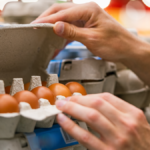
At least 13 people in Spain have fallen ill with salmonella after eating Spanish-produced eggs, with the batch, which was also sent to Portugal, now pulled from sale. However, shoppers still haven’t been told the brand, where it was sold or how many eggs were involved.

Which eggs are affected? 

At this stage, nobody outside the authorities can say. Spanish officials reported the outbreak to the RASFF (the EU’s Rapid Alert System for Food and Feed) on Thursday October 8, confirming the eggs were produced in Spain and formed part of a batch also distributed in Portugal.

That batch has now been withdrawn from the market. However, the brand, the areas where the eggs were sold and the quantity withdrawn haven’t been made public, and nor has the condition of the 13 people who fell ill.

According to the notification, laboratory results dated Wednesday September 23 identified Salmonella Enteritidis (a strain closely linked to eggs and poultry) as part of a food surveillance programme. The EU network has classed the incident as ‘serious’, the highest of the four risk levels a notification can be given.

Why it isn’t on AESAN’s alerts page

Anyone heading to the website of AESAN (Spain’s food safety agency) for a list of affected eggs won’t find one, with the agency yet to give any further detail on the case. In fact, the outbreak doesn’t appear on its food alerts page at all. This usually happens when the agency considers a product no longer poses a risk to the public, because steps such as pulling the batch from sale are judged enough to prevent new cases.

However, that’s little comfort to anyone wondering if some of those eggs are already sitting in their cupboards at home, and until AESAN or the Portuguese authorities say more, there’s no way of checking.

Symptoms can start within six hours

Salmonellosis (the illness caused by salmonella) comes on suddenly, anywhere from six to 72 hours after eating contaminated food. It brings diarrhoea, stomach pain, nausea, repeated vomiting and fever, along with a miserable, wiped-out feeling. Most healthy people recover within a few days without complications. However, it can be serious, and even fatal, for older people and those with underlying health conditions.

AESAN’s standard advice in its food alerts is that anyone who develops these symptoms after eating a suspect product should go to their health centre.

Spain’s second egg-linked outbreak since August

It’s not the first time eggs have been in the spotlight this year. On Sunday August 9, 29 people fell ill in Eibar (Gipuzkoa) after eating tortillas at a single establishment, with nine taken to hospital. Health officials traced those eggs to a farm in Aragón and ordered them withdrawn from other premises.

Nothing reported so far links the two cases. Further afield, at least 306 people fell ill in Belgium in an outbreak traced to a single egg producer, with Portugal among the countries told they may have received those eggs.

Part of the problem is the bacteria itself. Laying hens can pick it up from feed, water or wild animals, carry it without showing any signs, and pass it to eggs either before the shell forms or through droppings as the egg is laid. Vaccination and tighter hygiene have cut outbreaks sharply across Europe, but crowded farms and how hardy the bacteria is mean cases still crop up. 

How to cut the risk at home

Until more details are released, the usual food safety advice is the best protection, whether or not your eggs came from the affected batch. Castilla y León’s health service advises against buying eggs that are unlabelled, dirty, cracked or missing a best-before date, and says they shouldn’t be washed, as moisture helps salmonella get inside the shell. 

It also recommends avoiding raw or undercooked egg, not cracking eggs on the rim of the bowl you’re beating them in and not separating yolks using the shell. Homemade mayonnaise should be eaten straight away rather than kept, while custards, cakes and sauces belong in the fridge and should be eaten within 24 hours.

So until AESAN releases a brand or batch number, those everyday habits are the only protection shoppers have.

%

Surfari Mar Menor Brings 180 Windsurfing Athletes To Los Alcazares

Published

on

surfari-mar-menor-brings-180-windsurfing-athletes-to-los-alcazares

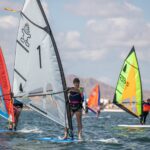
Surfari Mar Menor brings international athletes together for three days of watersports. Photo Credit: Estación Náutica Costa Calida

Los Alcazares welcomed around 180 watersports athletes from several countries as the 27th edition of Surfari Mar Menor brought three days of windsurfing and sailing action to the Costa Calida over the weekend of October 9 to 11.

Surfari Mar Menor welcomes national and international athletes

The annual competition attracted national and international participants from Spain, Portugal, Finland and the Dominican Republic, turning the Mar Menor into an international showcase for watersports. This year’s edition also introduced a new venue and additional varieties of sports.

New venue brings races closer to spectators

For the first time, Surfari Mar Menor took place at Playa Náutica de Las Salinas, a recently inaugurated watersports area in Los Alcazares. The new location brought competitors, organisers and spectators together in one setting, with dedicated spaces for equipment preparation, race information and the presentation of trophies.

The venue also allowed races to take place close to the shoreline, giving residents and visitors a better view of the colourful sails crossing the lagoon. Organisers hoped this would make the competition more accessible to people who wanted to watch the action without taking part themselves.

Windsurfing, wingfoiling and Formula Kite take centre stage

Windsurfing remained the central focus of the event, but this year’s programme expanded to include wingfoiling, a wind-powered sport where you stand on a hydrofoil board while holding a wing to glide above the water, and Formula Kite, a high-speed Olympic sailing sport where athletes on hydrofoil boards are pulled by ram-air kites. The latter, which made its Olympic debut at the Paris 2024 Games, also featured the Spanish Formula Kitesurf Cup.

These additional sports brought different ways of harnessing the wind to the competition, showcasing the range of watersports possible on Europe’s largest saltwater lagoon.

International competition boosts the Costa Calida’s watersports appeal

The event’s international participation further underlined the lagoon’s appeal as a destination for sailing and wind-powered sports. The Mar Menor’s relatively consistent sailing conditions are another major attraction, allowing participants to enjoy watersports while giving spectators a chance to watch the thrilling races from the shore.

The competition concluded on Sunday, October 11. Andalusian competitors secured seven podium finishes across five categories, while Canarian sailor Isidro Enríquez won the overall Windsurfer title by just one point.

With its new venue, expanded programme and international participation, the 27th Surfari Mar Menor re-established Los Alcazares’ reputation as a top destination for watersports, thrilling races, and an active supporting community on the Costa Calida.

Continue Reading

%

Costa Del Sol Expat Warns Spain’s Development Is Costing Residents Their Quality Of Life

Published

on

costa-del-sol-expat-warns-spain’s-development-is-costing-residents-their-quality-of-life

La Noria neighbourhood in Mijas. Credit: Google

A long-time Costa del Sol expat has warned that Spain’s drive for development is coming at the expense of the people who already live there, with older residents facing growing problems with traffic, housing costs and access to everyday services.

Steve Marshall, who moved to Spain with his family almost 30 years ago, says the promise of a better quality of life was a major reason for making the move. However, he believes the balance between development and residents’ needs has changed dramatically.

“When our family moved to Spain almost 30 years ago it was for a better quality of life,” Steve said. “There was a balance between achieving that goal and the need for development and growth.” He now fears that balance has been lost, with building projects taking priority over the infrastructure needed to support growing communities.

Steve Marshall questions the cost of development

“It appears that the authorities are hell-bent at building on every available piece of land with no obvious thought given to the necessary infrastructure,” he said. Steve believes new homes and other developments must be matched by investment in the services residents need to live safely and comfortably.

“By infrastructure I include such things as roads, parking facilities, water, sewage treatment, hospitals, doctors, nurses and police who are just part of the core infrastructure that should go with development,” he said.

He argues that the effects are already being felt in everyday life, particularly by older people who may find it more difficult to negotiate crowded streets or cope with heavier traffic. “Navigating building sites that spill out onto pavements is difficult and dangerous,” Steve said. “The massive increase in traffic makes it equally demanding for older residents.”

For people who depend on their cars because public transport is unavailable locally, he believes the situation is particularly worrying. “For those who want to use their car (because there is no local bus service) they now do so with unacceptable risk,” he said.

Older residents face rising housing costs

Steve accepts that development has an important role to play in Spain’s economy, creating jobs and bringing new opportunities. His objection is to growth that fails to take account of the people already living in an area. “There will always be the need for development,” he said. “It brings with it job creation and ‘progress’ but it should not be at the expense of a quality of life that we are all entitled to.”

He also believes local authorities have a responsibility to put the needs of their communities at the centre of planning decisions. “The role of the authorities is to serve their community,” he said. “That cornerstone of democracy does not appear to be at the forefront of their thinking these days.”

Housing affordability is another major concern for Steve, particularly for older residents living on fixed incomes. “As home prices rise so does the cost of renting,” he said. He claims that monthly rental payments can now exceed the pensions of some older residents who have built their lives in Spain. He also points to what he describes as excessively high deposits, which can make finding a new home even more difficult. “For some of our older neighbours they are faced with the previously unthinkable option of returning to the UK as owning/renting becomes unaffordable in Spain,” he said.

Steve calls for town halls to listen

Steve believes town halls and planning departments need to consider the impact of proposed developments on existing residents, rather than concentrating solely on construction and economic growth. He says he raised his concerns with his local Foreign Residents Department and was invited to put them in writing to the Planning Department. However, he says he was given a caveat that the department was under “no obligation to respond”.

For Steve, that experience raises a wider question about how much influence established residents have over decisions that directly affect their lives. His message is not that Spain should stop developing, but that growth should bring improvements for the people who already call the country home. As he put it: “It should not be at the expense of a quality of life that we are all entitled to.”

Continue Reading

%

San Pedro Del Pinatar Roman Group Joins National Heritage Parade In Lorca

Published

on

san-pedro-del-pinatar-roman-group-joins-national-heritage-parade-in-lorca

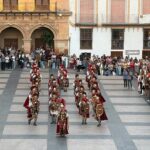
San Pedro del Pinatar Roman group celebrates Spanish heritage at national parade. Photo Credit: San Pedro del Pinatar Town Hall

A Roman association from San Pedro del Pinatar took part in a major parade in Lorca on Saturday, October 10, joining groups from across Spain for a celebration of the country’s historical heritage and traditions.

San Pedro del Pinatar joins national Roman parade

The Tercio Romano Hermenegildo Fresneda Pujol represented the coastal municipality at the grand parade of Roman groups, organised as part of the third National Congress of Roman Groups and Associations. The gathering brought together eight groups from different parts of Spain, highlighting the cultural significance of these organisations and their role in preserving historical traditions.

Eight groups celebrate Spain’s Roman traditions

The parade formed part of the wider gathering, which celebrates the history, cultural heritage and traditions represented by Roman associations throughout Spain. These groups play an important role in bringing historical periods to life through traditional costumes, public processions and participation in local cultural events.

Preserving historical heritage across generations

For San Pedro del Pinatar, the occasion was an opportunity to showcase its own Roman association alongside other organisations from different parts of Spain and strengthen connections between communities that share an interest in historical reenactment and cultural preservation.

The participation also highlighted the importance of maintaining traditions that are passed down through generations and continue to form part of Spain’s cultural identity.

Local representatives support cultural connection

The participation of eight Roman groups from different parts of Spain demonstrated the widespread interest in historical associations and their contribution to cultural life. Through their public appearances and participation in national gatherings, these organisations help keep historical traditions alive while encouraging communities to learn more about their heritage.

For San Pedro del Pinatar, the parade offered another opportunity to represent the charm and history of the municipality outside of its local boundaries, as well as celebrate the people who dedicate their time to preserving its cultural traditions.

The event also reinforced the value of cooperation between towns and associations in keeping Spain’s diverse historical customs alive for future generations to enjoy and practice.

Continue Reading

Trending

Copyright © 2017 Spanish Property & News