
Donald Trump
El Mundo En El Que Votará España: “La Extrema Derecha Avanza, Pero No Es Una Partida Decidida”



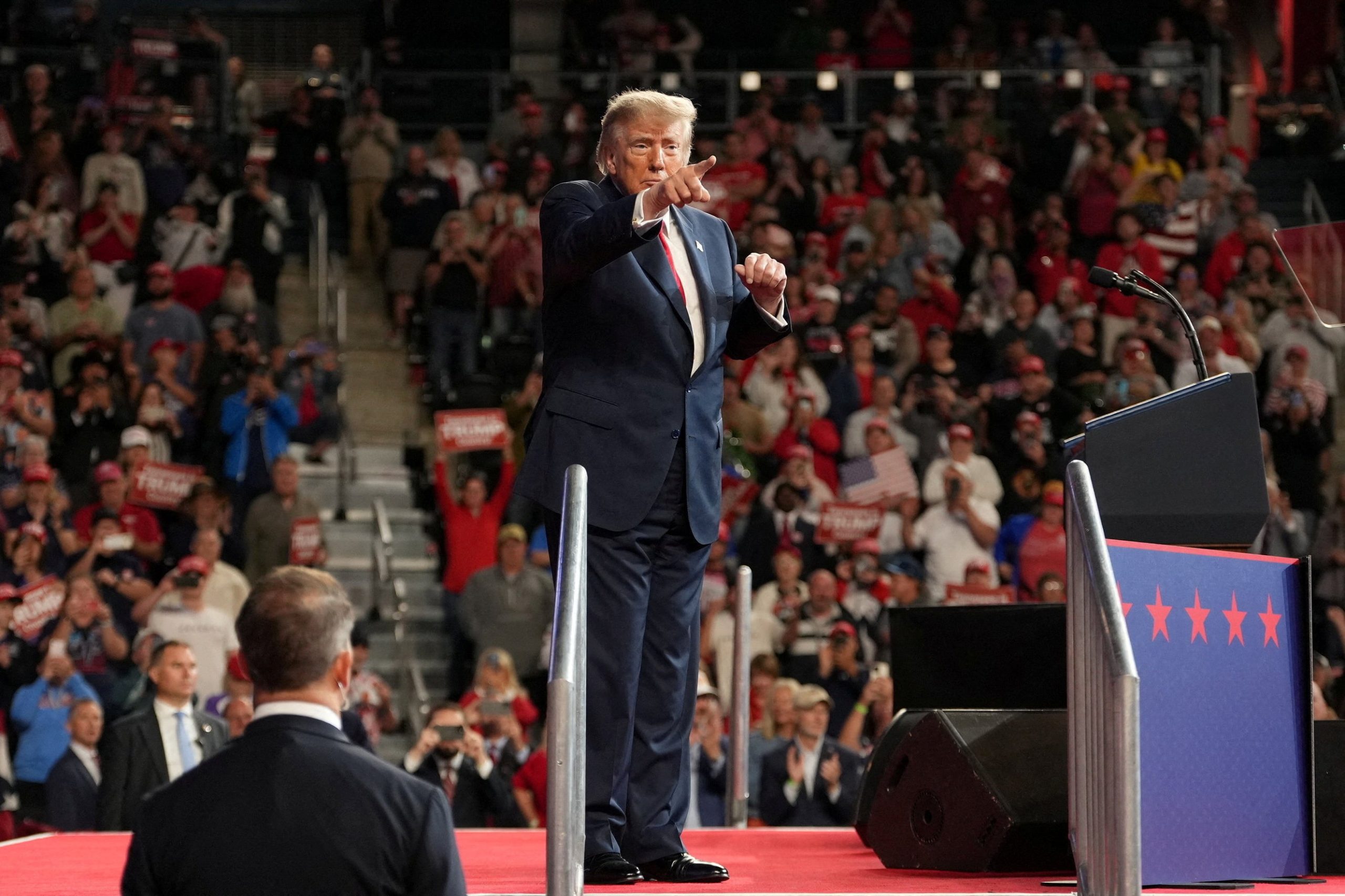
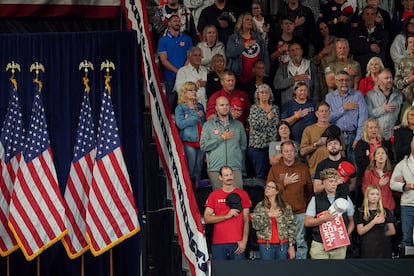
U.S. President Donald Trump was halfway through his speech at a campaign rally in Clarksville, Tennessee, this Saturday, surrounded by his usual supporters: mostly white, dressed in red, wearing MAGA hats, and displaying messages of support for the Republican. “It’s amazing. I could say the stupidest things and you’d clap me,” he boasted. On cue, the crowd, amid laughter, applauded.
A little later at the same rally, the president recalled executive orders he has signed during his year-and-a-half in office since reelection to rename the Gulf of Mexico and Lake Ontario at the Canadian border to Gulf of America and Lake America, respectively, on official documents. “We need a river, we need an ocean. So, I was thinking of either the Atlantic or the Pacific. We call it ‘Trump Ocean’ or ‘Ocean of the Americas,’” he said, again to applause and laughter from his followers.
This bluster is not especially new. The U.S. president has built his image and electoral success on statements like these — shocking and aggressive remarks, threats he may or may not carry out — to the delight of his audience, which cheers comments it would never tolerate from any other politician. He said it himself during his first term: that if he opened fire on a pedestrian on New York’s Fifth Avenue, he wouldn’t lose a single vote.
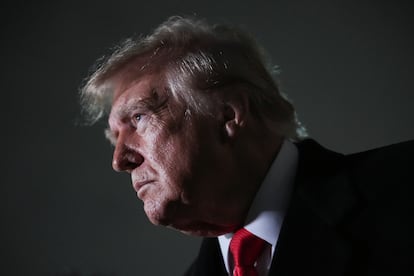
But he has hardened his tone and ramped up provocations noticeably in the final stretch before the midterm elections on November 3, in which Republicans trail in the polls. Convinced, like a modern Louis XIV, that the Republican Party is him, the president has launched an ambitious tour that takes him, almost daily, to states across the country where he won during the 2024 presidential election. And at each rally Trump — never known for holding his tongue — says increasingly whatever comes to mind: repeating one-liners, going on long tangents in which he can lose the thread, or lashing out cruelly and insulting his enemies, especially Democratic rivals.
At every rally and every press appearance he comes across as more defiant, more provocative, more polarizing. High fuel prices? They’re temporary, he insists. He says it’s worth paying them to prevent Iran from obtaining a nuclear weapon — the argument with which he launched the war in February. Iran? Its economy is a disaster, but the enemy could “take out” the Californian cities of San Diego and Los Angeles. The data centers voters hate? “Excellent sources of wealth!” The president surprised even his own party by announcing a deal to buy diesel from Russia — thereby aiding Moscow’s war against Ukraine — and by promising $5,000 checks to every citizen; but only if the Republicans win the elections.
In various appearances he has hurled insults at personalities he detests, from Nobel Peace Prize laureate Navi Pillay — “no one knows her” — to New York attorney general Letitia James (“disgusting dog”). On Saturday he blamed Ukrainian President Volodymyr Zelenskiy for high global diesel prices for bombing Russian refineries, although the shortages are due to the situation in the Persian Gulf.
He knows that these kinds of references, however rude or false they may be — or precisely because of that — succeed with his loyalists. And he also knows that in a country as polarized as the United States, where few voters remain undecided, the key to results on November 3 will above all be which party mobilizes its voters more, whatever the cost. Being an ever-more Trump-like Trump and turning this encounter with the ballot box into a referendum on himself is, in his eyes, the best way to galvanize his supporters. “Let’s pretend that I’m on the ballot,” he urges his followers. “I’m very popular. I really am,” he insisted, against all odds, to his devotees in Clarksville on Saturday.
Outside the ranks of the die-hards, the scene is no longer the same as during the presidential campaign, when he packed Madison Square Garden in New York. Nor is it the same as the 100 days after his return to the White House, when hundreds queued for hours to hear him at a sports center on the outskirts of Detroit. The venues for his rallies are now smaller and yet television cameras still show empty rows. Not even the conservative TV network Fox, to which he owes so much of his political career, broadcasts those events in full any more, to the president’s annoyance.
Each new poll is another pounding for the president. Only a quarter of voters approve of Trump’s handling of the economy, a figure that falls to 20% for his specific management of inflation, according to a survey published Sunday by the Financial Times. Two-thirds of respondents say the economy is headed in the wrong direction. Another Pew Research Center poll found that support for the president among those who voted for him in 2024 has fallen to 67%, down from 75% in July.
Even within his own party, some lawmakers are already rushing to distance themselves from their leader. After Trump announced an agreement with Russian President Vladimir Putin for Moscow to supply diesel fuel to the United States in order to lower prices, more Republican senators than Democratic senators — four and three, respectively — who are members of the Foreign Relations Committee signed a statement on Sunday demanding that the president cancel the deal on the grounds that it is illegal. “The United States must not provide Putin with a financial lifeline while Russia continues to kill Ukrainian civilians,” they wrote.
Trump insists everything is going according to plan and that his rallies are the perfect remedy for any Republican discouragement. “My Rallies, legendary they have already become, have made a tremendous difference with the enthusiasm of the Republican Party. They have been waiting for them to happen, even though I never thought I’d have to be doing Rallies again,” he wrote Sunday on his social media platform, Truth. “The good news is, I love them, the music, and the incredible enthusiasm, and will always be in favor of what’s good for America — and that means the Republican Party,” he added, announcing visits this week to Ohio and Alaska.
A touch of nostalgia
On his tour Trump always goes where Republican candidates are struggling. In part, this campaign has an almost nostalgic tone. About to become a lame-duck president — the term U.S. political language ascribes to an outgoing president, especially if his party loses its majority in both chambers of Congress on November 3 — his route includes solidly Trumpist states, like Tennessee, seemingly chosen to remind him of the good times. That he has fans who support him.
“You almost always go to a state where it’s close, and that makes sense, but I’ve gone to Alabama, where I won by 45 points, or something crazy like that. I’ve gone to Texas, where we won by 17 or 18… Why am I in Tennessee? I don’t need to be campaigning here. But sometimes it’s good to go to a place where you don’t need to, to thank the people who voted for you three times,” he told his followers in Clarksville on Saturday.
Whether it’s a Republican state or one where the race is much less clear-cut, there’s one thing the president won’t forgive: he wants people to talk about him during those visits, which—judging by what he says—sometimes seem to exasperate him: “I didn’t know it was going to be a Saturday afternoon. I could be doing a lot of other things on a Saturday afternoon,” he also remarked in Clarksville. And Trump gets angry when he’s ignored.
On social media last Thursday he complained that Fox News had not aired his rallies. “Sad to see that Fox & Friends (Sunday) is not covering our packed house and incredibly enthusiastic (beyond!) Rally that took place in Ohio last night, or the ones in Alabama, Texas, or Oklahoma, over the past two days,” he said. “Our people want to see our Rallies, and reports on our Rallies, on FoxNews, or they will very quickly stop watching (like I am doing right now!)”
The complaint about the coverage has not remained a mere anecdote. This Saturday, as the president was returning from Tennessee to the White House, the Department of Justice confirmed that it has launched an investigation into the five major television networks regarding their coverage of the president and whether their decision not to record his remarks was made while Trump’s order denying three media outlets access to the presidential compound was still in effect.
Sign up for our weekly newsletter to get more English-language news coverage from EL PAÍS USA Edition
Donald Trump
More Than 100 Feet Away And No Whistles: Activists Train To Respond To ICE At The Midterms


From the government, officials speak of unnecessary “alarmism,” but thousands of citizens are not convinced. They are training to respond to any potential interference in the upcoming midterm elections. Many were previously active in efforts to protect migrants from raids by Immigration and Customs Enforcement (ICE), and their focus has now shifted to defending democracy against possible threats.
One concern is that immigration agents could appear at polling places to carry out arrests. Even if no arrests are made, activists argue that their mere presence could intimidate voters and discourage them from exercising their right to vote. Several civil society groups that trained volunteers to monitor ICE activity during immigration raids have adapted that training for the November 3 elections.
“We are worried about several things,” says Zach Mueller, strategist at the organization States at the Core (STAC). “One is possible ICE activity; maybe not directly inside a polling place, but around it. Also, we know from informant reports that DHS [Department of Homeland Security] is looking for ways to use a specific incident — or the case of a few people who registered incorrectly — as a pretext to send ICE agents to polling places.”
“We don’t know if that will happen, but there is a real possibility it could, or that attempts will be made to question poll workers on election day to sow fear and intimidation,” he adds. His organization was formed when Trump began his second term. Since then, STAC says they have trained about 55,000 people to respond to ICE operations.
Mueller recently offered guidance to around 150 people who joined a Zoom session to receive training on how to respond to threats that could undermine democracy in the midterm elections. Two key points emerged from the hour-and-a-half discussion he led with several colleagues: people should act collectively rather than on their own, and they must be familiar with local laws to avoid breaking them.
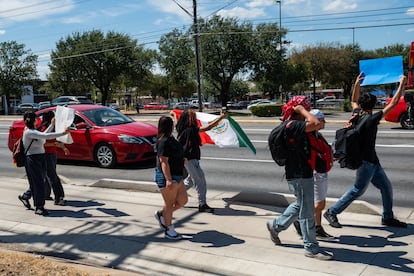
“Do not interfere, act nonviolently and avoid verbal or physical aggression even if what you witness is truly horrifying. If you document from outside polling places, you must also follow additional rules about how far you must stay from the voting location; generally the rule is 100 feet,” explained Jessica Acee, senior organizer at STAC. In some places, such as Tennessee, the required distance is greater.
Documenting events without interfering and de-escalating violence if an incident occurs were the guiding principles for volunteers responding to ICE raids, and are also central to election-monitoring efforts. There have been a few adjustments, however. One example is the use of whistles, which neighbors previously used to alert one another to the presence of immigration agents. At polling places, organizers fear that such alarms could frighten voters and discourage them from casting their ballots.
The session also covered how to organize teams of neighbors or friends and what role each person should play. Some record what is happening, others relay the information, others spread it more widely, while others specialize in calming potentially violent situations… Some members are assigned to drive voters to polls, advising them to remain in their vehicles until it is time to vote, and waiting until they have finished before taking them home.
These are precautions in case federal agents violate the law. A federal statute dating back to the Civil War prohibits the deployment of “troops or armed men” at places where elections are being held, “unless such force be necessary to repel armed enemies of the United States.”
Statements from the administration regarding the presence of agents at polling places have been ambiguous. In September, Markwayne Mullin, the secretary of the Department of Homeland Security (DHS), accused Democrats of “fearmongering” by expressing concern about the presence of ICE agents at voting sites. He said that agents would not routinely patrol or monitor polling places, although they could be present for specific purposes, such as making an arrest pursuant to a warrant or responding to a threat.
Trump unclear
When asked in a recent interview with Time magazine whether he planned to deploy ICE agents to polling places, Trump replied: “Haven’t thought of it.”
According to Mueller, “DHS and ICE have lied repeatedly after having taken part in lethal acts of violence. We’ve seen it throughout this year, and therefore, unfortunately, I think people are right to consider that ICE could show up.” He warns that intimidation could also come from other actors, such as the National Guard or the FBI.
One difference between the training for monitoring ICE raids and for monitoring elections is that, in this case, the people whose rights are being defended are all citizens. Trump continues to insist on the narrative that electoral fraud is widespread because foreigners who are not U.S. citizens vote in elections. In reality, such cases are exceedingly rare.
Instead, Latino, Black and Asian Americans have experienced harassment by ICE, being stopped or detained because of their appearance despite holding U.S. citizenship. Many have stopped attending churches, hospitals, schools and other places considered sensitive locations for fear of encountering federal agents. Civil rights organizations fear that the same thing could happen during the midterms.
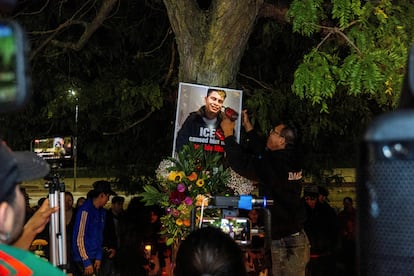
“We selected certain cities and counties because they are home to very dynamic and powerful communities of Black, Latino, Asian, immigrant and multilingual Americans; we considered them the places most likely to feel intimidated by this kind of rhetoric, and they also represent key electoral blocs in the midterm elections,” says Mary Corcoran, executive director of Save American Movement (SAM).
Her organization will deploy so-called trust teams made up of clergy, veterans, teachers and nurses in 20 key electoral districts in Georgia, North Carolina, Michigan and Ohio “to bear witness and provide confidence and reassurance to the community that will go to vote.” Those communities have traditionally voted for the Democratic Party.
Trump, who won the 2024 election thanks to a swing in Latino votes, fears losing elections in which so much is at stake. Voters will decide all of the House of Representatives and one-third of the Senate. The war in Iran, the high cost of living and the aggressive enforcement of immigration policies have driven down the president’s popularity, and polls suggest that the Republican Party could lose control of Congress in less than a month.
Corcoran founded SAM when the Trump administration launched large-scale immigration operations in Los Angeles in the summer of 2025. SAM organized teams to record and document agents’ activities, logging numerous instances of alleged abuse and violations affecting local communities. The group later carried out similar work in other cities that saw major enforcement operations, including Chicago, Charlotte and Minneapolis. On November 3, the mission will be the same: documenting and filming any potential intimidation or abuses by law enforcement officials or other actors seeking to intimidate voters.
“We wanted to make sure we did everything possible to help eligible voters who felt intimidated, worried or fearful about going to the polls because of ICE-related events over the last year and a half,” Corcoran explains. “We thought we could add value by bringing our Operation Liberty directly to the polls through the Vote Safe program, which is the initiative we are implementing for this election.”
To reassure voters, members of their trust teams will be easily identifiable by visible pins and other signs. What may happen remains uncertain, as these will be the first elections since Trump launched his aggressive immigration crackdown. “ICE as a possible instrument to intimidate voters represents a new, unknown factor that did not exist before,” says Corcoran.
Sign up for our weekly newsletter to get more English-language news coverage from EL PAÍS USA Edition

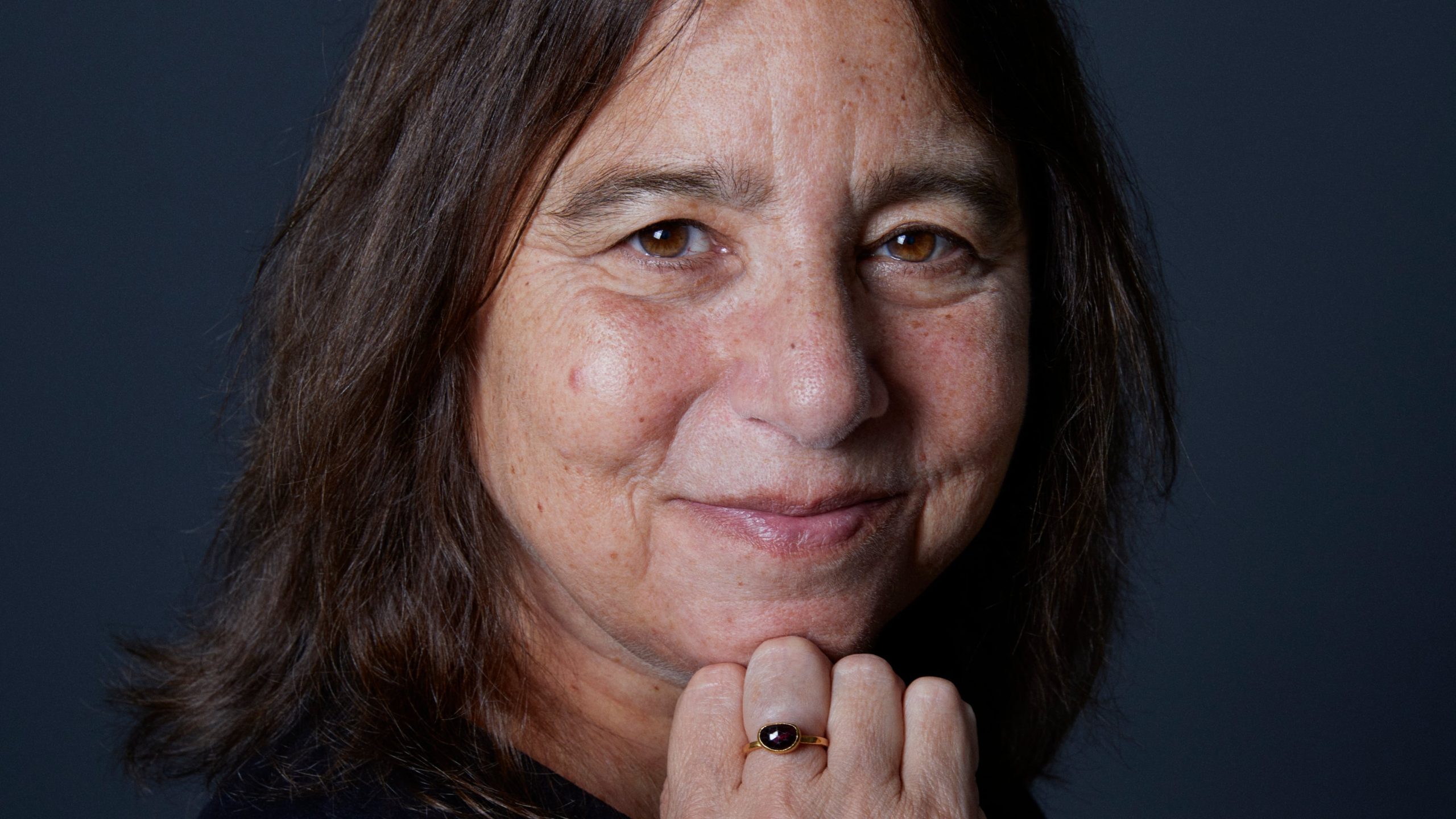
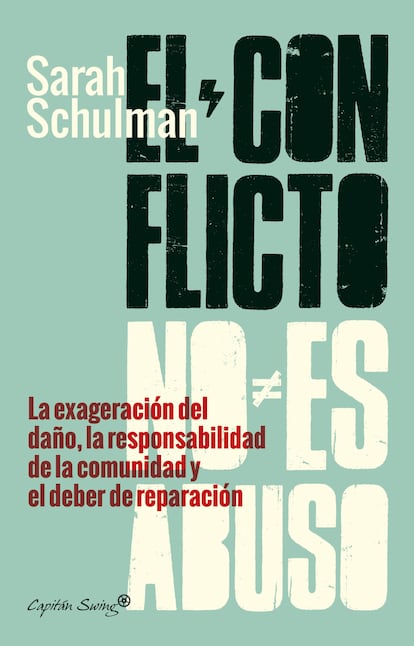
Victimhood, its exploitation and its political use to justify cruelty have been among the topics most extensively researched by Sarah Schulman. A decade has passed since the writer, LGBTQ+ activist and AIDS historian published Conflict Is Not Abuse: Overstating Harm, Community Responsibility, and the Duty of Repair, which is now being released in Spanish. “Sadly, it turns out the book was prophetic,” the 68-year-old author explains to EL PAÍS via video conference. “It came out before Trump was elected, and he’s proven all the arguments presented to be true. All of his rhetoric revolves around him being a victim. We see the same thing with Netanyahu. This idea of the perpetrator presenting themselves as the victim is now the global norm, unfortunately.”
Question. This line of reasoning can be applied to the far-right party Vox in Spain, or Milei in Argentina, or Le Pen in France. It’s the playbook of the so-called “reactionary international.” What’s behind this?
Answer. In the U.S., we have this rhetoric about how white men are so oppressed by everything. And how, if any woman or person of color has any job, they only have it because of DEI. The reality is that this dominant group feels repressed simply because they’re asked to be self-critical. This phenomenon already existed, but it has become more extreme.
Q. Why?
A. Because of the inability to recognize mistakes. People raised to dominate are told – and taught – that they should never feel uncomfortable. If you ask them to question themselves or reflect on how they relate to others, it’s as if you’re attacking them, mistreating them. On the other hand, there are also traumatized people… so much so that they have difficulty staying afloat and feel like they’re being attacked in every situation.
Both privileged and traumatized people feel deeply threatened by difference – by the expression and visibility of that difference. And the only way to go through life without ever feeling uncomfortable is for everyone around you to be repressed. Feeling uncomfortable is a sign of a healthy society; it’s something I think we should all want to experience.
Q. In the book, you highlight a complex nuance: that feeling like a victim doesn’t necessarily mean being right.
A. Unfortunately, now, in order to be eligible for compassion, you have to be a pure, flawless victim. And, if you say, “you know, maybe I participated in the problem, maybe I contributed,” everyone goes, “well then, you deserve whatever you get.” Acknowledging being part of a problem doesn’t diminish the value of having been a victim.
We’ve confused punishing others with repairing the harm done to us. We only feel relief from our suffering if someone is punished for it. But what would happen if we separated the two? What if we were listened to when we needed help? Punishment doesn’t work: it only creates more pain.
Q. Yet society has become more punitive, more punishing.
A. Every day, there’s more and more punishment. I live in a country where about 2,000 people each day are detained [by ICE] without having committed any crime… and they’re being deported to countries that they didn’t even come from. Right now, the level of cruelty in the United States is unbelievable. We have a government that doesn’t listen to the law. The country’s ruling class relies on blame and punishment… especially against immigrants. In the U.S., immigrants are the hardest-working people, but [the government] says that they’re stealing the nation’s wealth. It’s absurd. Right now, everything is topsy-turvy.
Q. In addition to anti-immigrant sentiment, there are also attacks on the LGBTQ+ community.
A. Especially against trans people. The government is repressing trans people and making an example out of them. They’ve always operated this way: they choose a very small minority that lacks power – a group that the majority of the population is unfamiliar with – and make them the object of all fears. It’s a historical pattern.
With gay people, it’s different. There’s a group of openly gay and lesbian men and women who are fascists: [the techno-oligarch] Peter Thiel; Bari Weiss, who runs CBS News and is also a Zionist; Alice Weidel, leader of the German far-right [AFD]… we can also talk about Caitlin Jenner, a trans woman and Trump supporter.
There have always been LGBTQ+ people in the elite who feel immune to everything. The only thing that matters to them is their money and their racial supremacy. This shows that identity may carry weight in our convictions, but what’s really important are the values you live by.
Q. One of the chapters in your book focuses on the 2014 Gaza War. Reading it is like watching the news… only now, it’s much more brutal.
A. Millions of people have taken to the streets for Palestine around the world. But many governments – like the American one – continue to send money to Israel. As an American Jew, I feel it’s my job to stop my government from continuing to fund Israel. This position is becoming increasingly popular. As soon as the United States stopped funding the killings, the Israeli government would collapse.
Q. American support for Israel has come from both Republicans and Democrats.
A. U.S. investments in Israel are also based on an imperial, racist and colonial past. Moreover, we have Christian Zionism – not just Jewish Zionism. In fact, there are more members in Christian Zionist organizations than Jews worldwide. There are alternatives to this. Spain has proved that: it has been inspiring. So has Ireland. Europe must lead the opposition to Trump. Canada, for its part, is now standing up to him. Many Americans are thinking, “Please, somebody say ‘no’ to Trump.”
Q. You’ve done a lot of research on LGBTQ+ activism and the worst period of the HIV/AIDS pandemic. Can that experience be of use today?
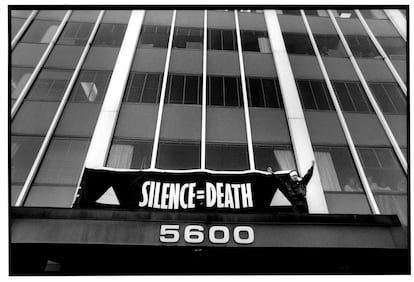
A. We have a lot to learn from it. I was part of ACT UP (the AIDS Coalition to Unleash Power, a leading organization that advocates for the rights of people living with HIV and AIDS) and a journalist specializing in covering AIDS. I even wrote a book – Let the Record Show: A Political History of ACT UP New York, 1987–1993 (2021) – about the organization’s history.
ACT UP achieved so many victories because it had a structure where you could disagree. They had a bottom line: direct action to end the AIDS crisis. A single sentence, not a 50-page manifesto. Within that framework, each person could do what they believed was useful. That structure of radical democracy – in which many different responses could coexist – is what made it so successful.
All movements that try to impose a single analysis or a single strategy fail in the end. We live in a situation where every community in the world is under attack from an oligarchy and threatened by the climate crisis. To ask all these different communities to have just one analysis is absurd. It’s never going to happen. So, we need a politics of strategic alliances, where we work with people [when] we agree with them and move forward.
Let me give you an example. The Catholic Church has been my enemy for my entire life, right? But now we have Pope Leo, and he supports migrants. When priests are arrested for confronting ICE, for the first time in my life, I’m on the same side as the priests. I still disagree with the Church on other issues, [but we can be] flexible and mature in our approach to politics. We have to get through this hell to reach a new future.
Q. That reflection could be taken into consideration by the left in many countries, including the United States.
A. For the first time, we have a left wing of the Democratic Party that’s getting some power. That’s something new here. It’s very exciting… and it’s happening all over the country. What happened in New York City (with the election of Zohran Mamdani, who hails from that faction) is a miracle. I’ve lived here all my life and I’ve never seen New Yorkers so proud of their city.
Q. Faced with the success of this leftist faction, Trump has responded by stirring up panic about what’s supposedly a communist “threat.”
A. Historically, the term “communist” has been used in the U.S. to silence people: the government even executed people for being communists, like the Rosenbergs [in 1953]. If you look at people with AIDS, Palestinians, or trans people, there’s a common pattern: they’re people who are in danger. They’re vulnerable, [yet they’re] falsely portrayed as dangerous, when the real threat comes from others, like tech oligarchs.
Q. You’ve written about how desire can become something that you get punished for. Is that still happening today?
A. At the highest levels of power [and] in everyday life, we’re still seeing so much of sexual violence. Right now, we’re in the midst of [learning about] terrible rape charges on university campuses (the “Cornell Seven” case). In recent years, women have changed enormously, but men haven’t changed at all.
On one hand, there’s an overreaction when somebody expresses desire for you. That’s not a crime. You should be able to simply say, “Thanks, I’m not interested.” And that should be the end of it. On the other hand, there’s a real threat: many straight men are still dangerous. People may overreact to that danger, and that has consequences, such as turning mere desire into something punitive. But it’s understandable.
Translated by Avik Jain Chatlani.
Sign up for our weekly newsletter to get more English-language news coverage from EL PAÍS USA Edition

El Veto Del Supremo A La ‘ley De Nietos’: “Voté En 2023, Pero Ahora Me Lo Prohíben”
El Mundo En El Que Votará España: “La Extrema Derecha Avanza, Pero No Es Una Partida Decidida”
One Spanish airport has beaten the world’s biggest hubs to take first place


-

 Uncategorized2 weeks ago
F1 Bahrain Grand Prix will be live and FREE on TV this weekend
-

 Foreign demand2 weeks ago
Market Snapshot: German Market In Q2 2026
-
Latest2 weeks ago
Why You Can’t Donate Blood In Spain If You Don’t Speak Spanish
-
Latest2 weeks ago
Spain’s Government Dealt Huge Blow As MPs Reject Housing Crisis Laws
-

 Uncategorized2 weeks ago
Lewis Hamilton F1 wish could come true as stunning plans for new track revealed
-
Blackout preparedness2 weeks ago
Brussels takes action against Spain over failure to update blackout plan
-

 Housing access / crisis / affordability2 weeks ago
Radical Housing Decrees Defeated As Snap Election Talk Grows
-
British tourists arrested in Magaluf1 week ago
British tourists arrested after taxi driver left bloodied in Magaluf