
ElPais
30 Years Of The Spice Girls’ ‘Wannabe’: Feminist Anthem Or Overrated Pop Hit?


Thirty years ago, a summer saw an unknown song begin to play in a handful of British nightclubs. No one could have imagined that, just a few weeks later, it would become pop music history — a song elevated to anthem status, capable of moving the masses from the United Kingdom to Japan, from Australia to Belgium, from Finland to Spain.
The song was called Wannabe, the debut single from Spice, the first album by the Spice Girls, a group made up of five women — Victoria, Emma, Melanie C, Melanie B, and Geri — who joined forces after responding to a newspaper advertisement seeking performers to form a girl band. On July 8, 1996, after making the rounds of a few clubs and smaller radio stations, Wannabe was officially released. Within just days, it had climbed to the top of the U.K. music charts.
The song dominated the charts throughout the summer — remaining at number one for seven weeks — and sold four million copies during that period. The Spice Girls reached number one in more than 30 countries and achieved the milestone of becoming the best-selling female group in history, with a total of 31 million records sold worldwide.
The impact of this hit on pop music cannot be measured in numbers alone. The song represented much more, both because of its message — an ode to female friendship — and because of the women singing it: five completely unknown young women in their twenties who bore little resemblance to the commercially successful artists of the time, whose music was more closely associated with R&B.
“Wannabe established a new canon in the music industry. It was a girl band song that didn’t sing about a boy but about sisterhood,” says Alberto Palao, music journalist at Los 40 and a social media content creator. “It put the emphasis on friendships rather than romantic love, with a cheeky, youthful attitude, moving away from the stern diva stereotype we saw everywhere in the 1990s, like Céline Dion or Whitney Houston.”
At the height of the romantic comedy boom, the Spice Girls developed their own narrative around romantic relationships and championed girl power at a time when the concept was still novel — if not entirely unfamiliar to most people — and far less overused than it is today. Even so, the group was not spared criticism from those who argued that they were commercially exploiting a political movement whose meaning extended far beyond a catchy chorus.
Leyre Marinas, a pop-culture journalist and author of the essay Fucked Feminist Fans, which examines the origins of #MeToo in musical pop culture, takes this view: “They appropriated and transformed a concept born from the Riot Grrrls’ punk feminism into a pop slogan backed by a very powerful marketing strategy.”
However, she also qualifies this criticism, noting that “reducing their impact to a commercial operation is to oversimplify what it meant in the mid-1990s for the Spice Girls to release a song like Wannabe, which managed to bring messages of empowerment, friendship and self-esteem to women of all ages around the world.”
There is no doubt that the Spice Girls made a great deal of money from their girl power message, but they also offered younger generations of women an alternative to the dominant model within entertainment culture, which was largely monopolized — across music, film, and television — by the male gaze.
“While some of the political substance of girl power was lost, the popularization of the term opened a new stage in which feminism began to occupy more media space; we could even say it became fashionable,” reflects musicologist Sara Armada Díaz.
The music video: Another success story
Two months before the song’s release, filming began on the music video, directed by Johan Camitz, a Swedish filmmaker whose background was more rooted in advertising than in the music industry. Originally, the video was supposed to be shot in Barcelona, but after issues arose with filming permits, the location was changed at the last minute to London’s Midland Grand Hotel, a Victorian neo-Gothic building. It was from its grand central staircase that the Spice Girls declared to the world that if anyone wanted to be their lover, they first had to get along with their friends.
On the night of April 19, 1996, Victoria, Emma, Mel B, Mel C, and Geri filmed what would later be named Best Video of the Year at the 1997 MTV Video Music Awards.
“I think that, although the music industry at first didn’t take them seriously [as happens with all girl bands and, to a lesser extent, with boy bands], the fact they were a group of girls helped fill a gap in the market, something young women in the 1990s needed,” Palao says. “In addition, each member had a distinct profile, making it easy to identify with one of them. I believe that’s what appealed so much commercially and, above all, to the public.”
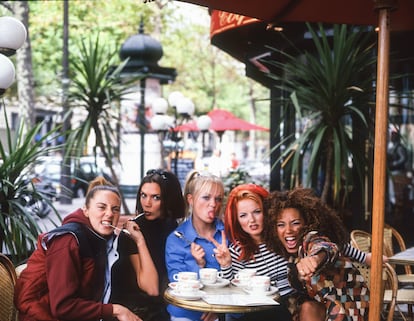
The video was their most ambitious calling card, and was packed with symbolism and references to their own story. In the interviews they gave while promoting their debut album, the group made it clear that they had worked tirelessly to find a record label that matched their vision. They initially worked with Bob and Chris Herbert but soon moved on to Simon Fuller, and as they explained, they had no qualms about showing up unannounced at management offices and radio stations to make themselves known.
The video sought to capture that determination — the attitude of people willing to do whatever it takes to achieve their goals. From the very beginning, the Spice Girls are portrayed as five young women who play by their own rules: they burst into a hotel, dance unapologetically under the astonished gaze of its guests, and unleash chaos before vanishing aboard a bus.
As Geri Halliwell recounted in her memoir If Only: “The idea of the video was to recreate the same energy and dynamism we showed when we stormed record companies and carried out that aggressive, frenetic selling.”
Although the public already knew them to some extent thanks to the success of their first television performances of Wannabe, the debut video introduced the five distinct personalities of the singers, each championing a role that — in the case of Victoria Beckham (then Adams), Posh Spice — has followed her for life.
Today it would be almost unthinkable, but the group did not even use a stylist for the video. The clothes they wore — outfits that helped define each member’s image — were chosen and purchased by the women themselves. That sense of authenticity and accessibility worked strongly in their favor.
“Their looks and personalities were like those of your friends and neighbors. Their outfits could be copied with clothes bought from the shop around the corner. That helped fans relate to them,” says Palao.
Marinas agrees: “In the video, each Spice Girl represents a different woman within a group of friends, and each has her own aesthetic and attitude, so any viewer can identify with her favorite. I think that audiovisual combination is one of the reasons the video remains so iconic and so 1990s.”
The song 30 years later
The video’s impact ultimately propelled the Spice Girls to global fame. But, as often happens when something becomes a cultural phenomenon, criticism quickly followed. In some countries, the video was even censored because its wardrobe was deemed inappropriate, specifically because Mel B’s nipples were visible through her top.
Over the years, Wannabe has ceased to be merely a pop song and has become a timeless, cross-generational hit — one capable of outlasting changing trends and maintaining an influence that endures to this day. In 2016, for example, the NGO The Global Goals released a reinterpretation of the song as part of a campaign supporting women’s rights. The Spice Girls publicly backed the initiative through their X accounts.
Yet is it really a feminist anthem, as it has so often been described, or is that an exaggeration?
“Personally, I don’t consider it a feminist anthem in a political sense; rather, Wannabe was a musical success that represented a particular kind of female empowerment within pop,” says Marinas. “The song doesn’t present explicit feminist demands, but it does place certain codes borrowed from the feminisms of the time — such as friendship among women, autonomy and the ability to decide about relationships — at the center of its message for a global audience.”
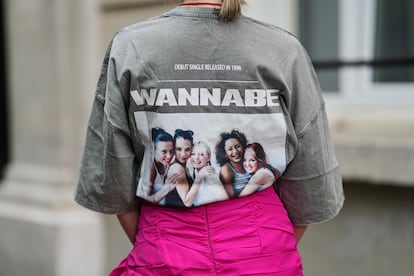
Three decades later, the girl power message of Wannabe and the Spice Girls remains evident in the careers of many artists who have spoken about how the British group sparked their interest in music and showed them what women could achieve. With the exception of K-pop phenomena such as Blackpink, no other female group has achieved such global impact.
Armada points to Little Mix, formed through the British edition of The X Factor: “They were also the first female group to win a Brit Award in 2021. During their acceptance speech, they themselves paid tribute to earlier girl groups such as Sugababes, Girls Aloud, and, of course, the Spice Girls.”
Billie Eilish, Dua Lipa, and Taylor Swift — who once met Emma Bunton (Baby Spice) at an event and told her that she had owned a doll with Bunton’s face on it as a child — are just some of the artists who have spoken about how the music of the Spice Girls has been a part of their lives.
Sign up for our weekly newsletter to get more English-language news coverage from EL PAÍS USA Edition



El Bulli
Luis Roger: ‘I Have Two Restaurants In Houston, One With A Michelin Star, And I Eat Two Days A Week In The Car’

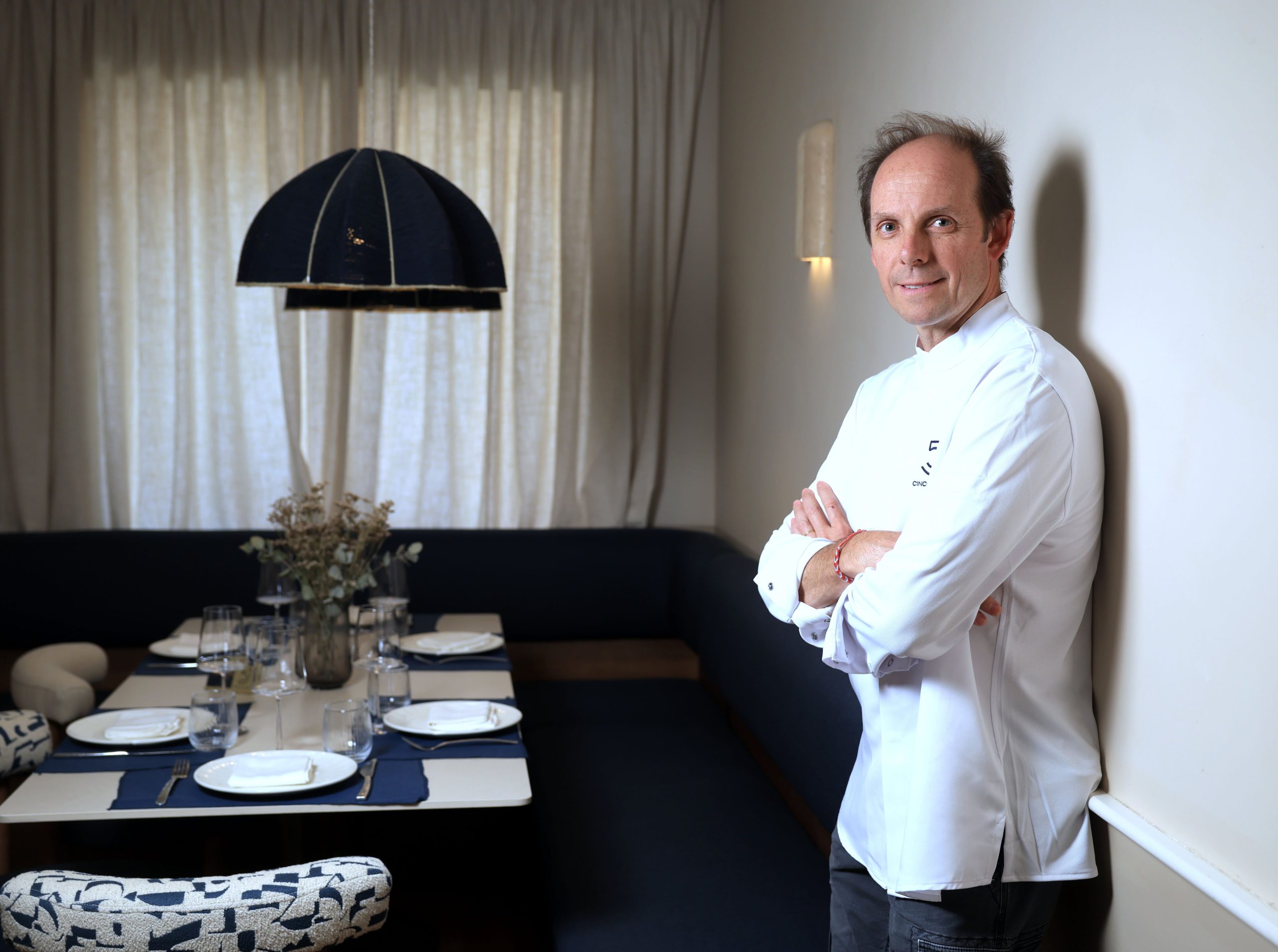
Luis Roger speaks quietly but clearly. He does not complain about the heat in Madrid because he says that he is used to the high temperatures in Houston, Texas where he has lived since 2012 and where he has two restaurants: the Michelin-starred BCN Taste & Tradition, and the more informal MAD – both names are inspired by the airports of Barcelona and Madrid.
Born in Barcelona, Luis Roger, 50, is visiting Spain, where he has come to prepare several dishes to feature on the menu of Madrid’s Cinco Jotas restaurant. At the top of his game, his success in the world of cuisine comes as no surprise. As a child he was most comfortable with his mother in his grandparents’ kitchen. Academia was not for him. Before doing his military service, his father enrolled him in the Hofmann School of Hospitality so that he would have something to look forward to when he was discharged. In 1998, he became an intern at elBulli, the famous restaurant run by Ferran Adriá until 2011. Once he finished at Hofmann, he went back. “I was there [at elBulli] for just four months, but it changed my life and my perception of gastronomy,” he says.
Roger subsequently worked as a chef on high-end yachts, during which time he met the businessman Luis Conde, founder of the headhunting company Seeliger & Conde, with whom he crossed the Atlantic. Conde hired Roger to manage the kitchens of his family farmhouse in Fonteta in Girona. It was in that house that Roger met another businessman, Ignacio Torras, president and founder of Tricon Energy, based in Houston since 1989. Torras proposed that they open a restaurant together in Houston.
At first, Roger’s wife and three children put the brakes on the project, but Torras insisted until in 2012 Roger gave in. “The first thing we talked about was the what, how and when. I worked on the BCN business plan and used it to get the visa,” Roger says. The restaurant was opened in 2014. “I spoke just enough English, but when you have nothing to lose you have to take risks,” he explains. Today, not only has Roger achieved a Michelin star, his two restaurants employ about 110 staff and boast a turnover of around $10 million (€8.8 million).
Question. Was Torras something of a visionary regarding your potential as a chef?
Answer. Totally, and he was persistent. Our idea was always to open a small restaurant, for a maximum of 60 customers, with traditional well-presented Spanish cuisine – a mixture of what I learned at Hofmann and elBulli.
Q. What exactly did you learn from working with Ferran Adrià and his team at elBulli?
A. Many things, but especially to observe and organize. Also respect for the product: if you have a tomato, it has to taste like a tomato, and nothing should overshadow that. I also learned about duck tongues there, which I have continued to work with, as well as foie gras and hot asparagus.
Q. Of all the chefs who have passed through elBulli, you are perhaps the one least seen in the media.
A. I love that. I like to be in the background; I’m more about the numbers and dealing with people. I love the work that José Andrés has done in the United States, but I’m more of an ant: I believe in the detailed, silent work.
Q. What helped to get you established in Houston?
A. When I arrived, I didn’t know anyone. Americans do not have a great gastronomic culture, but Houston is different, because there are a lot of travelers, with a broad knowledge and purchasing power. When we opened the restaurant, most of them already knew everything: they knew Ferran Adrià and were fans of the product we work with.
Q. The Spanish product?
A. Yes. What we avoided, at first, was tapas, paella and the folkloric aspect of much of Spanish gastronomy abroad. We wanted a fine restaurant, where you could eat well. And we invest in good products. Without a good product you can’t sell Spain. We bring Iberian ham, sea bass, suckling pig, cuttlefish, squid, octopus… BCN sells the most Vega Sicilia Único wine in all of Texas. We are committed to serving Spanish wine at a decent price. We also sell Iberian ham at cost price to compete with prosciutto. We can sell between 12 and 15 boneless shoulders of Cinco Jotas a week.
Q. How have Trump’s tariffs affected you?
A. They have not harmed us. I think it’s temporary. I’m not counting the cents.
Q. You got your first Michelin star 10 years after opening.
A. We didn’t expect it. That year we were in the running, which I didn’t like because it generated a certain nervousness among the team. Americans are immediately enthusiastic. I told them that it was unlikely, so that they would not be disappointed. But then we were asked to send a photo of the chef and some dishes. That’s when we curbed our expectations: we didn’t appear on the list of the 40 recommended and, for Bib Gourmand [a slightly lower rating] we are too expensive.
Q. Are you expensive?
A. A meal costs $150 per person. It’s expensive.
Q. Is it a profitable business?
A. Very profitable. I like to analyze everything. It’s something I learned at elBulli, where a number of different people tasted all the dishes. The amount of protein, fat, etc. were calculated, and the reaction to each dish was analyzed. When you sell a tasting menu, you also have to study it from a dietary point of view, so that there is no excess. A lot of priority was given to protein and fruit and vegetables. No one can end up vomiting on a tasting menu.
Q. In the end you succumbed and set up a tapas and rice restaurant in 2019.
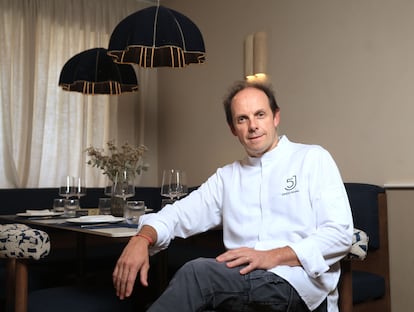
A. Yes, that was after we were established. At MAD, we offer a more informal cuisine, including wood-fired rice dishes. I sell tons of rice a year. We make the dishes individually – 38-centimeter paellas of different types: chicken, duck with Provençal herbs, using 90 grams of bomba [short-grain] rice. One of the best-selling tapas is chistorra [fast-cured sausage] and chicken wings with blue cheese sauce and crispy carrot. We seek perfection in everything we do.
Q. In Spain, the hospitality industry suffers from a lack of staff. Is the same happening in the United States?
A. Yes, the same thing happens. Texas is the epicenter of capitalism. In the United States if someone doesn’t toe the line, you can fire them right away, and, likewise, they can just leave. Many do not even give notice or simply don’t turn up to work. There is a high turnover rate: for $100 dollars they go somewhere else. One of my greatest satisfactions is being able to provide employment. That was the condition of my visa when I submitted the business plan. My head chef is Mexican and he started working with me in the fryer.
Q. It can’t be easy right now with the Trump administration’s persecution of immigrants.
A. Many come from Mexico and Guatemala and do not dare to expose themselves. It’s complicated because they usually have two jobs and work up to six days a week. They have a significant level of exhaustion, and their diet is not always adequate. I eat two days a week while driving.
Q. You have two restaurants and you eat in the car?
A. Yes. I have two restaurants, which I open only at night, and I take care of a lot of things. I need to go shopping. It is necessary; I cannot delegate that because of the cost. So two days a week I eat in the car.
Q. In Spain, less and less wine is consumed in the hospitality industry. Is the same happening in the United States?
A. Alcohol sales have dropped considerably. Thirty percent of customers have a gin and tonic before dinner. At the level of invoicing, it is important. I have lowered prices and I sell more: I sell a bottle worth $20 for $35, when it would usually sell for $60.
Q. Have you thought about returning to Spain?
A. I have two businesses and my family there. And I love working in the United States. Everything is immediate: the system makes things easier for you, there is less bureaucracy. My life is there.
Sign up for our weekly newsletter to get more English-language news coverage from EL PAÍS USA Edition
Donald Trump
David Albright, Nuclear Expert: ‘The Only Way To Stop A Nuclear Weapons Program Is For The Country Itself To Decide To Do So’


When the fog is thick — and these days it is — that is when it is most useful to listen to the people who really know. David Albright, 74, is among them: trained as a physicist, he was an inspector for the International Atomic Energy Agency (IAEA), a United Nations body, in 1990s Iraq, and he knows the Iran case in great detail. Today he leads the Institute for Science and International Security, based in Washington and which he founded more than three decades ago; he spends long periods in Münster, Germany, from where he spoke to EL PAÍS by videoconference.
Question. What practical implications does the memorandum of understanding between Washington and Tehran have for Iran’s nuclear program?
Answer. I can’t help but think of all the different memoranda of understanding that existed between the IAEA and Iran over the last 15 or 20 years. They were focused on inspections and they always ended badly. The pattern was that Iran just was not willing to provide adequate access to sites and people. Perhaps this new memorandum of understanding can finally settle the remaining issues, but there’s nothing in it that says that Iran has to come into compliance with its obligations under Nuclear Non-Proliferation Treaty. The United States will have to push hard to ensure Iran does so.
Q. Could the memorandum prevent Iran from building an atomic bomb?
A. Not by itself. It’s clear that the program to build nuclear weapons is severely damaged. That has to do first with the enriched uranium, as there’s a belief that Iran does not have any operating centrifuges to enrich it up to weapon-grade. Moreover, its facilities to make the nuclear weapon itself are heavily damaged [by the bombings]. They would likely need over a year to rebuild their capabilities.
Q. Will we see U.N. inspectors on the ground?
A. That is absolutely crucial, but I am skeptical that Iran will agree. It’s critical to discuss that right at the beginning: find out what Iran is willing to admit about its past and possibly ongoing nuclear weapons activities. The second effort would be aimed at determining if they would allow access to military sites, people involved in the nuclear weapons program. If Iran provides a complete nuclear declaration and cooperates, the inspection process could proceed quickly. Nonetheless, we should learn if Iran intends to comply right away.
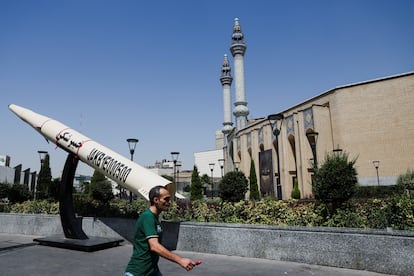
Q. How close is Iran to the nuclear bomb?
A. Before the [U.S. and Israeli] strike in June, it was only months away from having enough weapons‑grade uranium for a bomb, or even for about 10.
Q. How many months?
A. Up to six months to finish all the steps. After the damage caused by the war, Iran will need much more time: a year or more to build a nuclear weapon. Before June 2025, they had confidence that the weapon would work. Now, they would have far less confidence. To make a nuclear weapon, Iran would need to create a small plant to enrich up to 90%. Theoretically it could reach 60%, but it would then have to design a new weapon adapted to that level, and that would add time. Overall, I now think it would take them a year to accomplish all the steps needed to make the nuclear weapon. Moreover, they have lost a lot of skilled people.
Q. After last June’s strike, Donald Trump said Iran’s nuclear program had been severely damaged. Why another war?
A. We are not involved in all the decisions made by the Trump administration. From a nuclear weapons point of view, what emerged was that Iran was re-establishing a nuclear weapons capability at a new site north of Tehran. Satellite imagery after the June war showed they were also carrying out many recovery operations at the sites associated with nuclear militarization. Tehran was trying to rebuild that capability. Was it complete or merely conceptual? I don’t know. I also don’t know how comprehensive it was. They were also clearing entrances to the tunnel complex in Isfahan, where much of the enriched uranium is believed to be stored. The general sense was that Iran was doing things to reconstitute its program.
Q. Where do we stand now?
A. The only way to stop a nuclear weapons program is for the country itself to decide to do so. We saw that in Iraq in the 1990s, in South Africa in the late 1980s, and also in Belarus, Kazakhstan and Ukraine, which gave up the nuclear weapons they had inherited from the Soviet Union. With military strikes, all you can do is set the program back. This set of bombings is definitely the most destructive I have ever seen against a nuclear program. If Iran wants to rebuild it to get a bomb, it will take them a long time. In that sense, there is an opportunity to try to settle this and convince Iran that nuclear weapons are not a good future.
Q. So the attacks delay the process, but by no means solve the underlying problem.
A. Absolutely. In the end, it is an engineering process. Israel went after the people with hands‑on experience, but knowledge cannot be killed: it is in the books. [What we have seen these months] is a grand experiment of how far back you can set a nuclear weapons program through military means, including assassinations of key people. My impression is that the Iranian [nuclear] program was pretty seriously set back but that the wars didn’t knock it out completely. However, in the end, the only way to stop a nuclear weapons program is to persuade the government.
Q. Are there precedents?
A. I don’t think Iran will be like South Africa. There is no Nelson Mandela there who will appear and say: we want to live at peace with the world. It will remain a rival of the United States and much of the world. The regime has changed, but not in the way the White House had expected. And, you know, Trump is the guy who wants to take Greenland, who has created a big mess in Europe… Can he really negotiate a good deal with Iran? The result could end up being unpleasant for both sides.
Q. Trump says this war has ensured Iran will never have a nuclear bomb, that he is “sure” it will not get one. Do you agree?
A. No, no, no. I guess it’s a 50-50 chance they’ll start again. The leadership will continue to be interested in building nuclear weapons for obvious reasons. That said, they may be more hesitant to try because they are not sure they can obtain a bomb within a [sufficiently short] timeframe without being detected.
Sign up for our weekly newsletter to get more English-language news coverage from EL PAÍS USA Edition

Ankara Recibe A Los Líderes De La OTAN Con Cientos De Detenciones Preventivas, Un Blindaje Total Y Taxistas Con Colonia

El Reino Unido Revela Que Interceptó Una Aeronave Rusa En El Círculo Polar Ártico

From Darwin To Prairie Voles: The Paradox Of Attraction Between Cousins

Real Estate Agents In Barcelona Are Using AI To ‘pimp Up’ Dilapidated Homes – And It’s Not Illegal

More Than One Home Is Squatted Every Day In Malaga Province As PP Calls For 24-Hour Evictions And Bill Cut Offs

Red Bull set for radical new design in desperate bid to keep Max Verstappen


-
 ai generated property listings2 weeks ago
Real Estate Agents In Barcelona Are Using AI To ‘pimp Up’ Dilapidated Homes – And It’s Not Illegal
-
 Andalucia2 weeks ago
More Than One Home Is Squatted Every Day In Malaga Province As PP Calls For 24-Hour Evictions And Bill Cut Offs
-
 Uncategorized2 weeks ago
Red Bull set for radical new design in desperate bid to keep Max Verstappen
-

 Uncategorized1 week ago
F1 Qualifying Results: 2026 Austrian Grand Prix times and grid positions
-
 Andalucia2 weeks ago
Historic June Heatwave Forces Mass Cancellations Of Beach Bonfires On Usually Raucous San Juan Celebrations Over Forest Fire Fears
-
best places to view the solar eclipse in mallorca1 week ago
Mallorca solar eclipse 2026: Best viewing areas and what to know
-

 Uncategorized2 weeks ago
Marshal reacts after being SLAPPED by angry racer following crash
-
DGT1 week ago
Spain’s traffic warning for summer 2026: These are the weekends the DGT says you should avoid