
Costa del Sol
34 Málaga towns face severe earthquake risk under Spain’s new warning guide

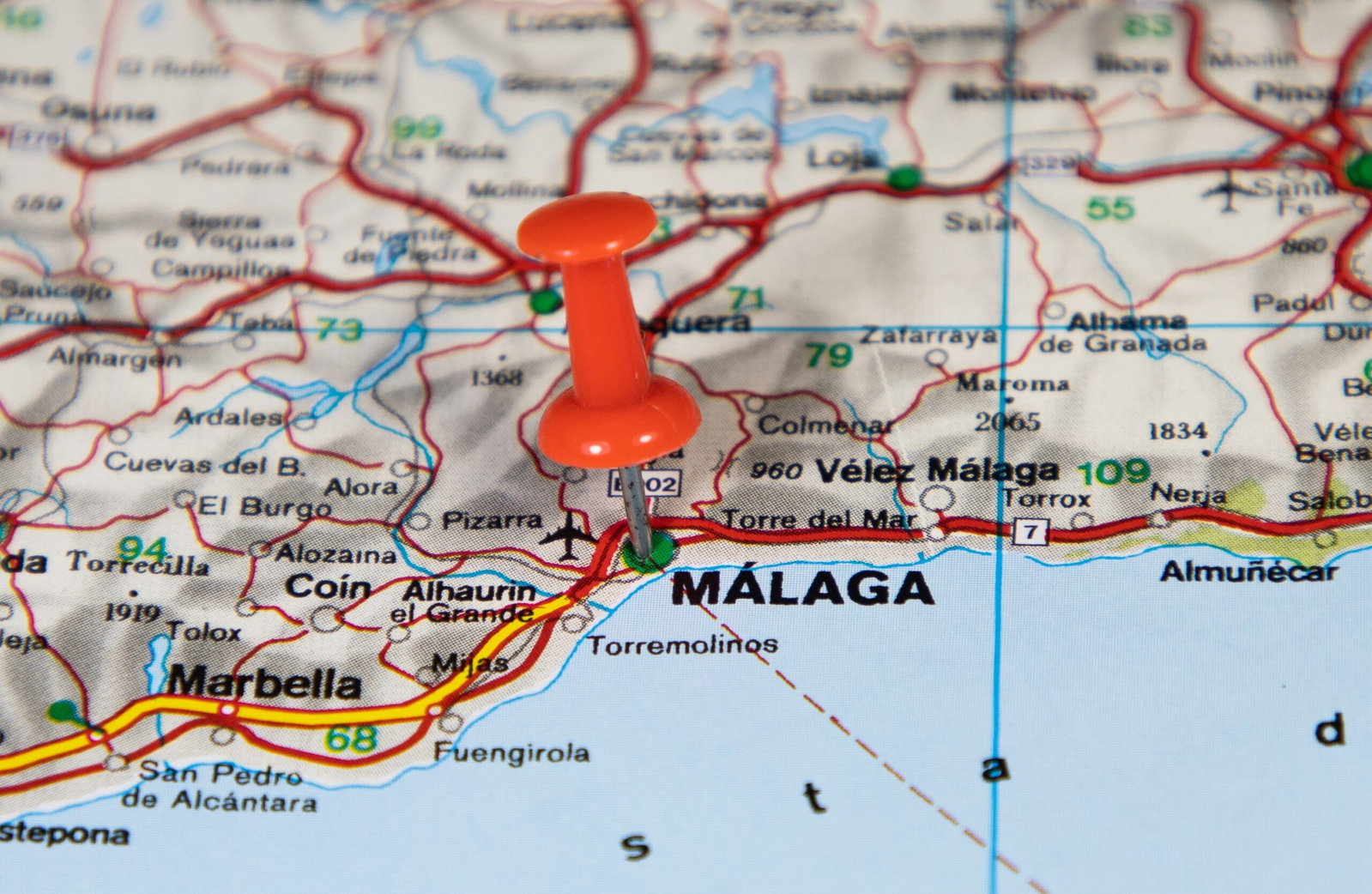
The classification uses the European Macroseismic Scale. Photo credit: Sebastian_Photography/Shutterstock
Residents in Málaga province could be living in areas where earthquake shaking capable of severely damaging buildings is considered possible. A new national civil protection guide places 34 municipalities in the province in its highest seismic hazard category, while requiring all 103 local councils to prepare plans for dealing with an earthquake.
The updated directive was published in Spain’s Official State Gazette (BOE) on 10 October 10, replacing the previous framework dating from 1995. It is based on seismic hazard studies by Spain’s National Geographic Institute (IGN), not a prediction that an earthquake is about to happen.
Which Málaga towns are on the highest-risk list?
The thirty-four municipalities are concentrated largely in the Axarquía, the area around Antequera and Málaga city itself. Several are popular with international residents and visitors, particularly along the eastern Costa del Sol.
The official list includes:
- Málaga city
- Axarquía and eastern Costa del Sol: Nerja, Torrox, Vélez-Málaga, Algarrobo, Frigiliana, Cómpeta, Canillas de Aceituno, Canillas de Albaida, Alcaucín, Almáchar, Benamargosa, Árchez, Arenas, Cútar, El Borge, Periana, Riogordo, Salares, Sayalonga, Sedella and Viñuela.
- Northern and inland Málaga: Antequera, Archidona, Alfarnate, Alfarnatejo, Casabermeja, Colmenar, Comares, Villanueva de Algaidas, Villanueva de la Concepción, Villanueva de Tapia, Villanueva del Rosario and Villanueva del Trabuco.
The list includes towns inland as well as coastal destinations. However, the western Costa del Sol resorts of Marbella, Fuengirola, Benalmádena, Torremolinos and Estepona do not appear in this highest-hazard category. That does not mean those towns are exempt from earthquake planning. They are among the municipalities covered by the wider provincial classification.
All 103 municipalities must prepare for earthquakes
The new directive places every municipality in Málaga province in the category where earthquake shaking of intensity VII or higher is considered possible under the assessment used for civil protection planning. That means all 103 local councils must prepare and implement local earthquake response plans within a maximum of four years.
The plans are intended to help authorities organise emergency services, assess damage, protect residents and coordinate the response if a significant earthquake occurs. For people living in the province, this is important. The 34 towns are in the higher category, where shaking of intensity VIII or above is considered possible. The other municipalities remain within the wider earthquake-planning framework.
What does ‘severely damaging’ actually mean?
The classification uses the European Macroseismic Scale, which measures the effects of an earthquake on people, buildings and the surrounding environment. Intensity VIII is described as severely damaging. Depending on the construction and condition of buildings, shaking at this level can cause substantial structural damage. Intensity VII, used for the wider planning category, can also cause damage.
The assessment uses a 475-year return period, equivalent to a 10 per cent probability of the specified ground motion being exceeded over 50 years. It does not mean an earthquake happens once every 475 years, or that one is due to strike a particular town. The guide is a tool for planning and reducing risk, not a forecast of the next earthquake.
What happens next?
Local authorities must use the updated classification to prepare for a potential earthquake, including how they would alert the public, coordinate emergency responders, assess damaged buildings and protect people who may need assistance. For residents, the practical benefit of these plans will depend on how effectively they are developed and put into practice.
Knowing which services would respond, how emergency information would be communicated and where assistance would be available could make a difference if a serious earthquake occurred. The new directive does not mean residents should expect an earthquake in the near future. It means local councils have a formal responsibility to plan for the possibility.


Local resident Brigitte and Estepona mayor José María García Urbano.
Credit: BVFB
Residents campaigning to ease traffic chaos in Cancelada have managed to get a meeting with the very busy mayor of Estepona, but discovered a solution could take time.
Brigitte Verhoye, who launched a petition calling for changes to a troublesome A-7 access road, met Mayor José María García Urbano on Monday, October 19, to discuss the problem affecting several residential developments.
According to Brigitte’s update to petition supporters, the meeting was constructive, with the mayor confirming that the council supports the proposed changes but faces legal and administrative obstacles.
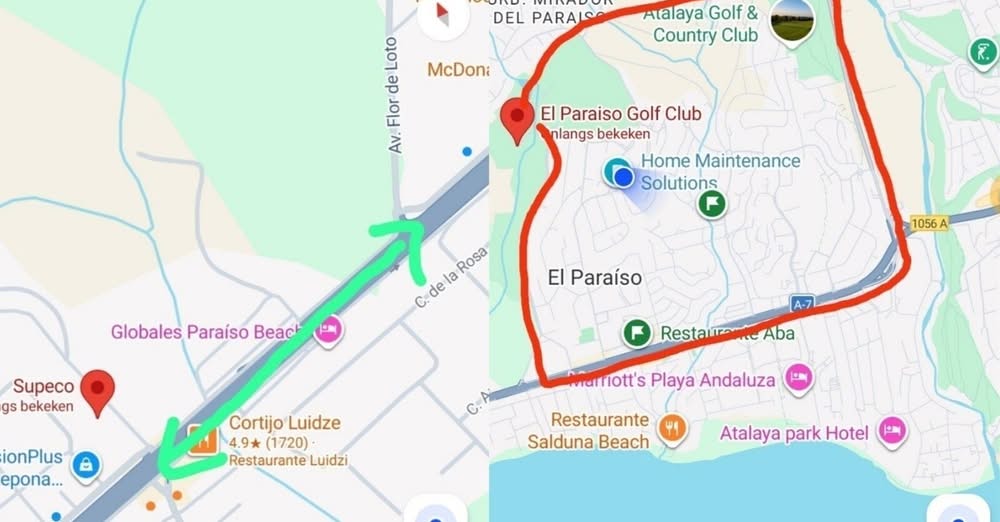
Why Cancelada residents want road changes
The campaign, organised through the residents’ group La Voz de las Urbanizaciones, calls for a 500-metre stretch of road between Avenida Flor de Loto and the Veritas/Supeco area to become two-way.
Its current one-way arrangement forces drivers heading towards Marbella to make a detour of more than four kilometres, crossing a bridge and passing through Cancelada’s already congested main roundabout. Residents of Bel Air, El Paraiso, Paraiso Alto, Riviera Beach and Bahia Azul say the arrangement wastes time, increases fuel consumption and adds unnecessary traffic to the junction. The petition also proposes closing an old A-7 access that campaigners consider dangerous, redirecting traffic through the main roundabout instead.
Why a solution could take time
Brigitte said the mayor explained that the road’s connection to the state motorway infrastructure means the council cannot independently authorise the changes. According to her account, the Ministry of Transport must approve the necessary arrangements.
She also reported that ownership of adjoining land presents another obstacle. The council has reportedly held discussions with a representative of the landowner, but no agreement has yet provided a way forward.
One possible longer-term solution could come if the adjoining land is sold and developed. Brigitte said this might allow a new internal road to be included in a future development plan, potentially giving the council greater control over the route. However, no timetable has been confirmed, and residents should not expect an immediate change.
Petition is still open
A-7 Cancelada residents at wits’ end with traffic and road chaos
Brigitte thanked supporters for helping bring the issue to the mayor’s attention and said the petition would remain online to demonstrate continued local backing. Residents can read the proposals and add their names through the Change.org petition calling for an end to Cancelada’s four-kilometre detours.
For now, the campaign has secured reported support from the town hall, but the next step depends on resolving the outstanding road and land issues.
Link to the petition:



Local resident Brigitte and Estepona mayor José María García Urbano. Credit: BVFB
Residents campaigning to ease traffic chaos in Cancelada have managed to get a meeting with the very busy mayor of Estepona, but discovered a solution could take time.
Brigitte Verhoye, who launched a petition calling for changes to a troublesome A-7 access road, met Mayor José María García Urbano on Monday, October 19, to discuss the problem affecting several residential developments.
According to Brigitte’s update to petition supporters, the meeting was constructive, with the mayor confirming that the council supports the proposed changes but faces legal and administrative obstacles.

Why Cancelada residents want road changes
The campaign, organised through the residents’ group La Voz de las Urbanizaciones, calls for a 500-metre stretch of road between Avenida Flor de Loto and the Veritas/Supeco area to become two-way.
Its current one-way arrangement forces drivers heading towards Marbella to make a detour of more than four kilometres, crossing a bridge and passing through Cancelada’s already congested main roundabout. Residents of Bel Air, El Paraiso, Paraiso Alto, Riviera Beach and Bahia Azul say the arrangement wastes time, increases fuel consumption and adds unnecessary traffic to the junction. The petition also proposes closing an old A-7 access that campaigners consider dangerous, redirecting traffic through the main roundabout instead.
Why a solution could take time
Brigitte said the mayor explained that the road’s connection to the state motorway infrastructure means the council cannot independently authorise the changes. According to her account, the Ministry of Transport must approve the necessary arrangements.
She also reported that ownership of adjoining land presents another obstacle. The council has reportedly held discussions with a representative of the landowner, but no agreement has yet provided a way forward.
One possible longer-term solution could come if the adjoining land is sold and developed. Brigitte said this might allow a new internal road to be included in a future development plan, potentially giving the council greater control over the route. However, no timetable has been confirmed, and residents should not expect an immediate change.
Petition is still open
A-7 Cancelada residents at wits’ end with traffic and road chaos
Brigitte thanked supporters for helping bring the issue to the mayor’s attention and said the petition would remain online to demonstrate continued local backing. Residents can read the proposals and add their names through the Change.org petition calling for an end to Cancelada’s four-kilometre detours.
For now, the campaign has secured reported support from the town hall, but the next step depends on resolving the outstanding road and land issues.
Link to the petition:


Making a will and arranging power of attorney are easy tasks to put off. But long-time Costa del Sol expat Steve Marshall is urging residents to stop delaying and get their affairs in order while they still can. Procedures in time of stress are very different in Spain, and there are lawyers just waiting for your partner’s worst moment.
“As we get older this is something we know we should do but for many of us we tend to put it off in the belief that there’s plenty of time. So it goes on the ‘back burner’,” he writes. “That’s all well and good if you could see the future – but you can’t. So if you have yet to make your will and assign Power of Attorney I urge you to do that without further delay.”
Why planning ahead matters
Marshall says he has watched people’s health and abilities deteriorate over the years, sometimes gradually and sometimes following a serious illness or hospital stay. “It starts gradually. A little forgetfulness now and again. Walking into a room and wondering what you were doing there!”
He warns that a prolonged hospital stay, often following a fall, can make existing difficulties worse. “If anything like this has happened to you please talk to your family while you have the ability to think clearly,” he advises.
British expats may need to consider Spain and the UK
For people with property, savings or other assets in both countries, getting the right legal advice is particularly important. The UK government has published a guide to planning for later life as a British person in Spain, covering wills, estate planning and powers of attorney.
“Making a will is an act of care and love for family and friends. It is not just a preparation for death,” Marshall says. Without appropriate arrangements, settling an estate can become more complicated, and assets may not be distributed as the person intended.
Having close relatives does not automatically give them authority to manage someone’s finances or make decisions on their behalf if that person loses the ability to do so. Marshall urges readers to take professional legal advice, consider how they want their assets distributed and make suitable arrangements for both Spain and the UK where necessary.
A Spanish will and a UK will need to be considered carefully together, while powers of attorney are subject to separate rules and may require specific formalities to be recognised across borders. EWN has also examined what expats in Spain should know before naming a charity in their will.
Don’t leave it until it’s too late
Planning ahead can help families understand a person’s wishes and avoid unnecessary complications at an already difficult time. Marshall’s message is straightforward: don’t assume there will always be time to deal with these matters later. “Please don’t wait until it’s too late. A little planning now, while you are still able, can spare your family considerable distress tomorrow.”
Readers can also find information about making a lasting power of attorney in England and Wales on the UK government website. British expats should take advice on the arrangements needed for their own circumstances in Spain.

El Cafecito De La Discordia: Una Panadería Cubana De Miami Recibe A Candidatos Demócratas Y Desata La Furia Del Exilio En Las Redes
Spain introduces new paid sick leave rules for menopause-related conditions
Britons over 55 offered new route to Gibraltar residency as government changes rules

F1 Bahrain Grand Prix will be live and FREE on TV this weekend
Brussels takes action against Spain over failure to update blackout plan

How To Get A Tourist Rental Licence In Andalusia (Spain) – Step-By-Step Guide 2025


-
 Uncategorized3 weeks ago
F1 Bahrain Grand Prix will be live and FREE on TV this weekend
-
Blackout preparedness3 weeks ago
Brussels takes action against Spain over failure to update blackout plan
-
 New Developments3 weeks ago
How To Get A Tourist Rental Licence In Andalusia (Spain) – Step-By-Step Guide 2025
-
EU3 weeks ago
EU nicotine crackdown sparks warning that ex-smokers could be driven back to cigarettes
-

 Foreign demand4 weeks ago
Market Snapshot: German Market In Q2 2026
-

 New Developments3 weeks ago
Luxury Villas For Sale, Estepona – ProjectL1
-

 Uncategorized3 weeks ago
Lewis Hamilton F1 wish could come true as stunning plans for new track revealed
-

 Housing access / crisis / affordability3 weeks ago
Radical Housing Decrees Defeated As Snap Election Talk Grows