Connect with us

%

Euro Banknotes New Design Plan Features Don Quixote Author Cervantes In Proposal

Published

on

euro-banknotes-new-design-plan-features-don-quixote-author-cervantes-in-proposal

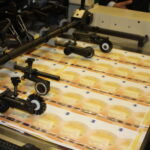
Don Quixote has been proposed as a potential face of the €50 note. Photo credit: European Central Bank

Spanish writer Miguel de Cervantes, best known as the author of Don Quixote, has been linked to discussions around the possible redesign of euro banknotes, according to the European Central Bank his name has been proposed in connection with the €50 note, which is the most widely used denomination across the eurozone in everyday transactions.

The suggestion places one of Spain’s most recognisable literary figures at the centre of debate about how European cultural identity could be reflected on currency used daily in shops, businesses and ATMs. At this stage, the reference to Cervantes remains part of a proposal under consideration rather than a confirmed design choice. No final decisions on specific individuals appearing on euro banknotes have been announced.

Shift in approach to euro banknote imagery

Euro banknotes have historically avoided depicting real people. Since their introduction in 2002, their designs have focused on abstract architectural elements such as windows, bridges and gateways, intended to represent cooperation and openness across the eurozone without highlighting any single country.

The discussion now emerging suggests a potential shift in approach, with cultural figures being considered as part of broader design ideas. In this context, Cervantes has been mentioned alongside other European historical and cultural personalities in media reporting. However, the inclusion of individuals would represent a significant departure from the euro’s original design principles, and any such change would require formal approval within the European Central Bank’s design process.

Why Cervantes is being highlighted

Miguel de Cervantes is widely regarded as one of the most influential figures in Spanish literature, with Don Quijote considered one of the foundational works of Western fiction. His cultural significance has made him a recurring reference point in discussions about Spanish representation in European cultural symbols.

His association with the €50 note in reports reflects both his prominence and the visibility of that denomination, which is the most frequently used euro banknote in circulation. As a result, any potential design featuring him would carry high everyday exposure across the eurozone.

Proposals remain under discussion

Despite media attention around specific names, including Cervantes, no official list of final candidates for euro banknote designs has been confirmed. The European Central Bank has not publicly endorsed any individual figures for inclusion.

The current stage of the process remains focused on exploring themes and collecting ideas, with multiple design directions still being evaluated. Cultural representation is one of several concepts under discussion, alongside other thematic approaches.

Final decisions on the appearance of future euro banknotes are expected to be made through the ECB’s formal selection process, which includes design development and approval stages before any introduction into circulation.

No immediate changes to currency in circulation

Existing euro banknotes remain valid and unaffected by ongoing discussions. Any potential redesign would apply only to future series of notes and would not involve immediate withdrawal or replacement of current currency.

As with previous updates to euro banknotes, any transition would be gradual and coordinated across eurozone member states, ensuring continued usability of existing cash throughout the process.

Conclusion

The emergence of Miguel de Cervantes in discussions around euro banknote redesign highlights a potential shift towards greater cultural representation in European currency. However, his inclusion remains at proposal stage, with no confirmation from the European Central Bank. For now, the debate reflects early-stage ideas rather than final decisions, with the future appearance of euro banknotes still subject to formal selection and approval processes.

%

Four People Injured As Fairground Ride Snaps Mid-Air Leaving Onlookers Horrified

Published

on

four-people-injured-as-fairground-ride-snaps-mid-air-leaving-onlookers-horrified

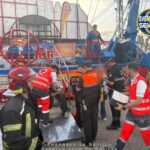
Two people were inside the capsule when the malfunction happened. Photo credit: Emergencias Sevilla

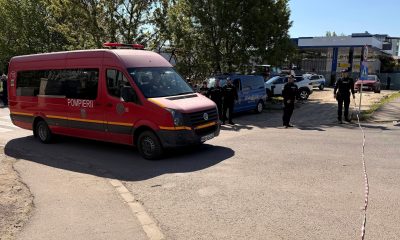
Four people including two minors have been injured after a fairground ride malfunctioned at Sevilla’s Feria de abril, leading to an emergency response and an investigation by police. The incident took place on Friday evening in the amusement zone known as Calle del Infierno, where temporary rides and attractions operate during the annual celebration.

The ride involved has been identified by Spanish media as Steel Max, a slingshot-style attraction that propels a passenger capsule into the air using two side cables. Reports state that one of the cables came loose during operation at around 08.20 pm local time, causing the capsule to swing into part of the structure before stopping above the ground.

Passengers rescued after impact

Two minors were inside the capsule when the malfunction happened. Emergency crews were called to the scene and worked to bring them down safely. Both passengers were later taken to a medical centre for checks after receiving initial assistance at the fairground. Two other people nearby have also been reported injured. Authorities said all four sustained minor injuries. No names, ages or further medical details have been released.

Videos shared online appeared to show the capsule striking one of the support towers after the cable detached. The footage also showed crowds gathering near the attraction as emergency services arrived and the area was cleared.

Emergency services secure the area

Firefighters, Protección Civil and Sevilla’s Policía local attended the scene shortly after the alarm was raised. Their first actions were to secure the ride, assist those involved and prevent access to the surrounding area.

The attraction was later sealed off while officials began examining its condition and checking the documentation required for operation at the fair. Barriers were placed around the site and members of the public were kept at a distance while the response continued. The wider fairground remained open after the incident, with activity continuing in nearby areas once emergency teams had finished their initial work.

🚨🎥 ACCIDENTE EN PLENA FERIA

Una atracción tipo “tirachinas humano”, Steel Max, en la Calle del Infierno, sufre un accidente este jueves sobre las 20:20 h.

🎡 Rotura durante el funcionamiento
🚑 4 heridos leves
🏥 2 trasladados a centro sanitario

Rápida intervención de los… pic.twitter.com/umBX0PRWwj

— SPLS – SINDICATO POLICÍA LOCAL DE SEVILLA (@splsevilla) April 25, 2026

Police inquiry under way

The Policía nacional has opened an investigation into the cause of the malfunction. Officials have not yet confirmed whether the problem was caused by a broken cable, a fault in the release system or another mechanical issue.

Investigators are expected to review the ride itself, inspect maintenance records and examine whether all safety checks had been completed before it opened to the public. No timeline has been given for the conclusion of the inquiry. It is also unlikely that the attraction will reopen during the remainder of the fair. Any decision is likely to depend on the outcome of the technical assessment and the findings of police.

One of Sevilla’s largest annual events

The Feria de Abril is one of Sevilla’s best-known events and attracts large numbers of residents and visitors each year. The celebration is centred on temporary marquees, music, food and horse parades, while Calle del Infierno hosts amusement rides and game stalls for families and younger visitors.

Although the fair continued after the accident, the incident caused concern among people nearby and quickly drew attention on social media after witness videos were posted online. Accidents involving fairground rides are uncommon, but when they occur they often lead to questions about inspection procedures, maintenance standards and the oversight of temporary attractions installed for major public events.

Further scrutiny expected

The focus will now be on determining exactly what happened in the moments before the cable came loose and whether the failure could have been prevented. Investigators will also consider whether the ride had shown any earlier signs of mechanical problems. For visitors, the immediate concern was the safety of those trapped in the capsule. With injuries reported as minor, attention has now shifted to the official inquiry and whether any wider lessons need to be learned before similar attractions are allowed to operate again.

The findings of the investigation are expected to determine not only the future of the Steel Max ride at this year’s fair, but also whether additional checks are introduced for other attractions at large seasonal events across Spain.

Continue Reading

%

Portugal Confirms High-Speed Rail Link

Published

on

portugal-confirms-high-speed-rail-link

Around seven stops are proposed, decreasing to less over time Credit: Spanish trains

Exciting news for travellers wanting to enjoy pastel de nata and patatas bravas within a few hours of each other, as Portugal has now confirmed plans for a high-speed rail connection between Lisbon and Madrid, setting a target completion date of 2034. Prime Minister Luis Montenegro has stated that all necessary conditions are now in place to deliver the long-discussed project, following agreements now reached. 

Journey times set to drop to around three hours

Plans indicate that travel between the two capitals could take roughly three hours once the full high-speed network is completed. Earlier phases are expected to deliver a journey of about five hours before further upgrades reduce the duration. 

Existing infrastructure already covers part of the route, particularly between Evora and the Spanish border. Technical validation currently underway may allow some completed sections to begin operating before the entire project is finished.

So where will the train stop? 

Proposed stops on the Lisbon to Madrid high-speed route are not yet confirmed but current planning outlines a series of key stops across Portugal and Spain. In Portugal, trains are expected to depart from Lisbon, with intermediate points including Poceirao and Evora before reaching a planned international station near Elvas, close to the Spanish border.

Crossing into Spain, the route plans to continue through Badajoz, followed by Merida and Caceres, before heading north to Plasencia. Further stops have been indicated in Navalmoral de la Mata and Talavera de la Reina, with connections into the wider high-speed network near Toledo before arriving in Madrid.

Service patterns have not yet been finalised, meaning some high-speed trains may operate non-stop between major cities while others call at additional intermediate stations. 

New track sections and river crossings

Development of the railway will include new track sections, improved signalling systems, and studies for a third Tagus River crossing near Lisbon. 

A positive step for the future between two great countries

The completion of the Lisbon to Madrid high-speed line will establish a direct rail link between the two EU capitals, replacing existing indirect routes. This infrastructure will boost commercial travel and tourism between Portugal and Spain, integrating the Iberian Peninsula into the wider European high-speed network where cross-border rail travel is standard.

With the high-speed connection currently scheduled for 2034 it will just miss out on the Spain, Portugal, and Morocco hosting of the 2030 FIFA World Cup. Despite missing the tournament deadline, the project still shows long-term commitment to improving international mobility. Once the service is up and running and fully operational, the faster transit times should strengthen regional ties for decades to follow. 

Continue Reading

%

Who Lives In The Camper Vans Outside The Hospital In Marbella?

Published

on

who-lives-in-the-camper-vans-outside-the-hospital-in-marbella?

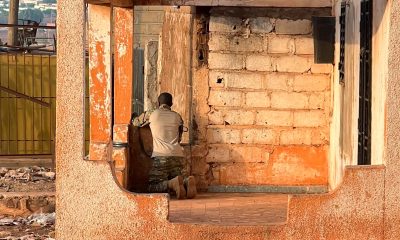
Hospital nurses accommodation. Credit: CSIF union

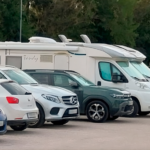
During the last few years motorhomes and camper vans have been accumulating and occupying spaces for cars visiting loved ones in the Hospital Costa del Sol in Marbella. And now, the situation is rising to fever pitch with foreseeable problems this coming summer.

They are inhabited by healthcare workers who have been suffering all this time living in vehicles parked at the hospital because rents in Marbella have soared beyond reach.

Nurses, doctors and support staff from the public Costa del Sol Hospital in Marbella regularly spend nights inside cars and camper vans parked in the facility’s own car park. Skyrocketing housing prices in Marbella have forced many essential personnel into these makeshift living arrangements simply to keep their jobs.

Alicia Ordóñez from the CSIF union explained that professionals accept temporary contracts to accumulate points on the regional job register in the hope of a permanent position elsewhere, yet face impossible choices. Without affordable accommodation nearby, they sleep in vehicles for weeks or even years while separated from families and normal home life. Others drive hundreds of kilometres daily from other parts of Andalucia to avoid giving up their positions.

Daily reality involves undignified conditions for hospital employees

One ex-employee was recently interviewed by Antena Tres News, saying after 5 years in the job, she felt obliged to quit after years of living in a camper van without a bathroom or a kitchen. She had sold her car, which she previously used to commute from Granada Province in, to be able to buy the camper van. The cost of petrol she had been spending on the commute was more or less what she was earning each day. After 5 years of not receiving what she had been hoping for, another posting in a reasonably priced town, she abandoned her career.

Workers who do take up roles often have to put up with exhausting routines. Some park camper vans, motorhomes, or cars overnight in the hospital grounds after failing to find any reasonable rental in Marbella or neighbouring areas. This hardship has become routine rather than exceptional, turning what should be stable employment after years of study into a daily struggle for dignity.

Union representatives warn that such circumstances damage staff wellbeing and create growing gaps in hospital rosters. Summer months will bring extra patient pressure from tourism, yet attracting replacement personnel for holidays is already proving extremely difficult when basic housing remains out of reach.

Transport cuts compound the housing difficulties

Cancellation of the regular bus service from Malaga and other coastal points since February has left many employees without reliable commuting options. Health professionals now face total isolation in their attempts to reach the workplace each day.

The CSIF union has formally asked hospital management to introduce immediate remedies before services collapse under the strain. One practical suggestion involves opening the nearby Marbella Public Holiday Residence, only three kilometres away and publicly owned, as temporary accommodation for medical staff. Authorities recently granted operation of this residence to a hotel operator.

Continue Reading

Trending

Copyright © 2017 Spanish Property & News