
News from Greece
Greece beach holidays are changing: sun-bed ban explained for summer 2026

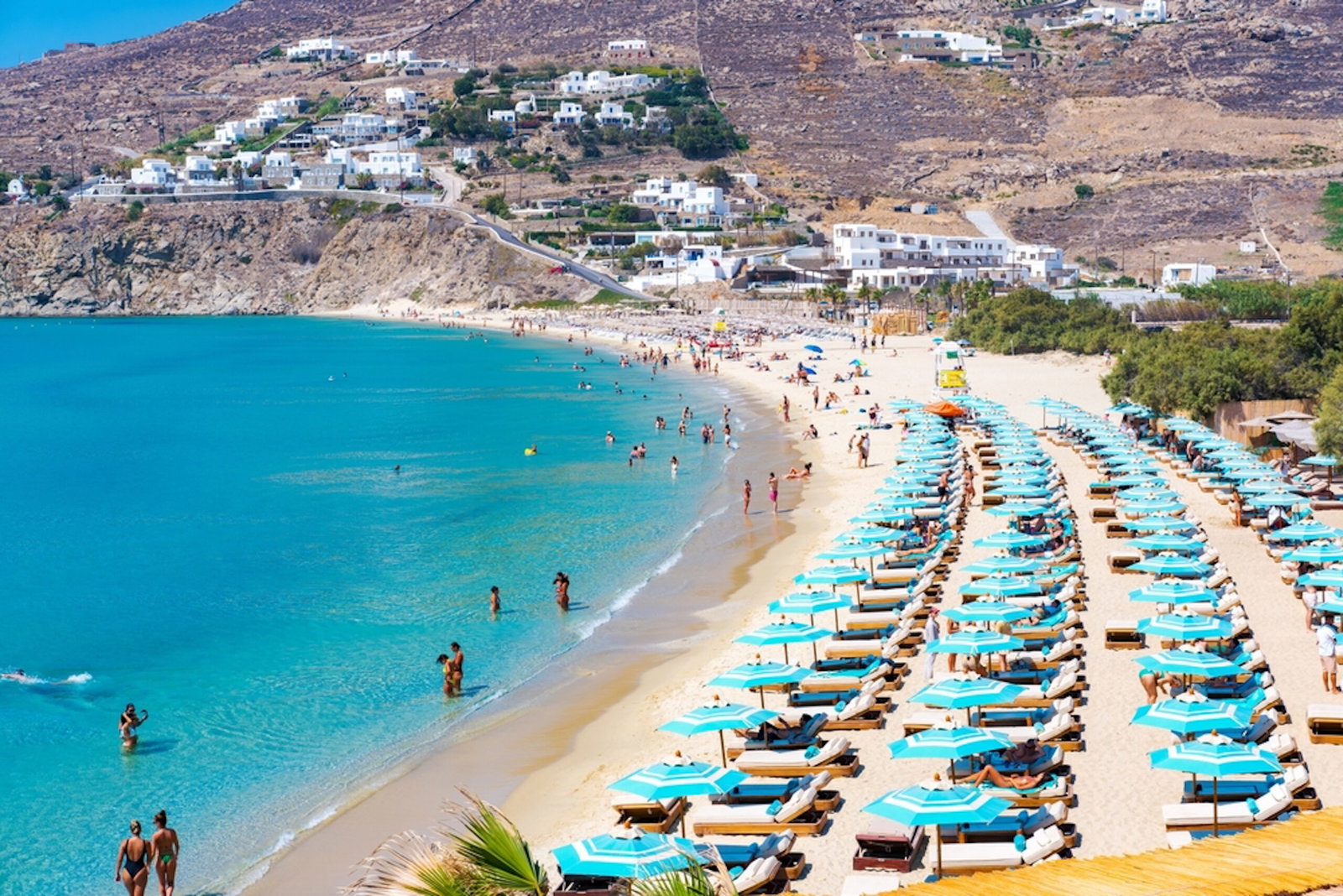
Planning a beach holiday in Greece this summer? New rules on over 250 Greek beaches could change how visitors experience the country’s famous coastline. Tourists must swap their sun-beds for a simple beach-towel as authorities declutter the coast, removing structures including sun-bed’s, parasols, speakers and shacks.
The Greece beach sun-bed ban for 2026 is part of a wider effort to protect natural landscapes and reduce over-tourism, so travellers should be prepared for more stripped-back, environmentally friendly beach days.
New Greece beach rules: sun-beds banned on over 250 beaches
The Greek Environment Ministry recently passed a new measure to ban sun-beds, parasols, and any other temporary structures from 251 beaches. The move forms part of a wider crackdown on unregulated beach use, particularly in protected and environmentally sensitive areas. Since the initiative has been put in place, crews have been seen tearing down beach shacks and removing any other items deemed a fire hazard or harmful to the coastline.
Authorities have also increased inspections, with stricter enforcement expected throughout the summer season. Businesses that fail to comply could face significant fines or lose their licences altogether.
Why Greece is restricting beach sun-beds
Greece’s coastline stretches more than 13,000km. In addition to its long, mythological history, one of Greece’s largest attractions are its beautiful beaches. More than 35 million visitors arrive each year, many of whom enjoy at least one beach day during their stay. But from now on, future visitors will have to settle for sunbathing on a towel in many locations.
While a booming tourism industry is great for the economy, it is not so good for the environment. Excessive tourism can severely impact wildlife habits, depleting natural resources and polluting local ecosystems. In some popular destinations, overcrowding and commercial overdevelopment have already led to erosion and habitat disruption.
Environmental protection and NATURA 2000 expansion
This measure is both a way to maintain the aesthetic integrity of Greece’s beaches and to protect valuable wildlife, flora and fauna. Many of the affected beaches fall within ecologically important zones, where human activity is now being more carefully controlled.
In a similar move, the government has increased the number of beaches protected under the NATURA 2000 programme, a Europe-wide conservation network designed to safeguard biodiversity. By limiting infrastructure such as sun-beds and umbrellas, officials aim to restore natural landscapes and reduce long-term environmental damage.
For travellers, the message is clear: expect a more natural beach experience, with fewer facilities but a stronger focus on preservation.




A new ranking of Europe’s most spectacular beaches has been unveiled for 2026, sparking fresh inspiration for summer travel.
While Greece has secured the top spot this year, Spain has delivered a strong performance with one of its most iconic destinations taking second place.
Greece named home to Europe’s best beach
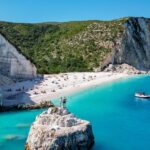
The coveted title of Europe’s best beach for 2026 has gone to Fteri Beach, a secluded cove celebrated for its striking natural beauty. Carved into the coastline of the Greek island of Kefalonia, Fteri Beach is known for its dramatic white cliffs, luminous blue waters and untouched, almost otherworldly setting.
Part of its appeal lies in its relative inaccessibility. Visitors typically reach the beach by boat or via a more challenging пеш hike, which has helped preserve its pristine condition and keep crowds to a minimum. Travel experts praised its raw, unspoilt atmosphere – a key factor in securing the top ranking this year.
Spain’s Cala Macarella takes an impressive second place
Hot on its heels is Cala Macarella, which has been named the second-best beach in Europe for 2026. Located on the southern coast of Menorca, the beach is widely regarded as one of Spain’s most picturesque coastal spots.
Cala Macarella is instantly recognisable for its horseshoe-shaped bay, framed by rugged limestone cliffs and shaded by pine trees. Its calm, shallow waters shimmer in vivid shades of turquoise and emerald, creating a tranquil environment that is ideal for swimming and relaxing.
Despite its popularity, the cove retains a sense of escape. Access is managed during peak months, with visitors often arriving via a scenic coastal path or shuttle service, helping to preserve the natural surroundings while still allowing access to its beauty.
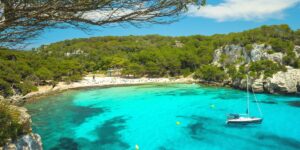
Credit: Shutterstock/Rulan
What sets these beaches apart
The ranking, compiled by travel experts, evaluates beaches based on a wide range of factors beyond simple aesthetics. Water clarity, environmental preservation, crowd levels, accessibility and overall experience all contribute to the final list.
Fteri Beach stood out for its dramatic isolation and untouched landscape, offering visitors a rare sense of discovery. In contrast, Cala Macarella impressed with its balance – combining postcard-perfect scenery with a more accessible, visitor-friendly experience.
This contrast highlights a growing trend in European travel: while remote, hidden beaches are increasingly desirable, there is still strong demand for destinations that offer both beauty and ease of access.
Spain continues to shine on the European beach scene
Although Greece has taken the top honour this year, Spain’s presence near the top of the list reinforces its reputation as one of Europe’s premier beach destinations. From the Balearic Islands to the Atlantic coast, the country offers an extraordinary variety of shoreline, each with its own unique character.
Cala Macarella’s runner-up position is particularly significant, as it showcases the enduring appeal of Menorca – often considered the quieter, more natural island in the Balearics compared to its neighbours.
A summer hotspot for 2026
With its high ranking now confirmed, Cala Macarella is expected to attract even more внимание in the coming months. Travellers planning a visit are likely to encounter increased demand, particularly during peak summer weeks.
Those looking to experience the beach at its most serene are advised to visit early in the day or outside the busiest periods. Even then, its natural beauty and calm atmosphere remain its defining features.
For 2026, the message is clear: Greece may officially be home to Europe’s best beach, but Spain’s Cala Macarella is a very close contender – and for many travellers, it may offer the perfect balance of beauty, accessibility and Mediterranean charm.


Paco Cantos sports complex Marbella gets major overhaul
The dark side of Padel: Up to 135 birds per court are dying each year – but Spain may have a solution
Greece beach holidays are changing: sun-bed ban explained for summer 2026
Brussels warns Spain that migrants regularised under controversial scheme will be deported back to Spain if they try to move to other EU countries
Murcia unveils monument marking 175th anniversary of Burial of the Sardine
Easter on the Costa del Sol: a time of renewal


-
eu response to spain migration policy4 weeks ago
Brussels warns Spain that migrants regularised under controversial scheme will be deported back to Spain if they try to move to other EU countries
-
Costa Calida4 weeks ago
Murcia unveils monument marking 175th anniversary of Burial of the Sardine
-
Costa del Sol3 weeks ago
Easter on the Costa del Sol: a time of renewal
-

 Caso Koldo3 weeks ago
Dinero En Efectivo Guardado En Casa Y La Devolución De Los Gastos Del PSOE: La Expareja De Koldo Protagoniza La Cuarta Jornada Por El ‘caso Mascarillas’
-

 Ataque contra Irán3 weeks ago
Última Hora De La Guerra De Estados Unidos E Israel Contra Irán, En Directo | EE UU Asegura Que Dos De Sus Buques Militares Han Cruzado Ormuz Para Desminar El Estrecho E Irán Lo Niega
-
Fish Counters Being Removed4 weeks ago
Mercadona removes fish counters: T9 format brings shift to pre-packaged seafood
-
 New Developments3 weeks ago
Inside The Most LUXURIOUS Apartment Building In Spain!
-
Calais4 weeks ago
One dead and 13 injured as train collides with truck in northern France