Connect with us

%

Snow Could Return To Spain In May

Published

on

snow-could-return-to-spain-in-may

Spain could see snow return next week as Arctic air pushes temperatures down. Credit : alvarobueno, Shutterstock

After weeks of storms, heavy rain and unstable weather, Spain could now be heading towards another sharp change with forecasters warning that Arctic air may bring an unusually cold spell next week, including fresh snow in mountain areas.

Weather models followed by meteorologists at Meteored suggest temperatures could plunge again from the middle of next week as a ‘nortada’ pushes colder air south across the country. Some forecasts are even pointing towards snowfall returning to parts of the Pyrenees and other mountain ranges despite Spain already being well into May.

For many people hoping warmer spring weather had finally arrived, the latest forecasts are looking more like March than the start of summer.

What is a nortada and why could it affect Spain next week?

A nortada is a weather pattern caused by cold northern winds descending from Arctic regions towards the Iberian Peninsula. When it develops strongly enough, temperatures in Spain can drop suddenly even during late spring or early summer.

According to Meteored, the first wave of cooler air arriving this weekend may only be the beginning.

Meteorologists are now closely monitoring a second possible influx of cold maritime air expected next week, which could create a much stronger cooling effect across large parts of the country.

Current models suggest the setup may form through a combination of Atlantic high pressure and several nearby low pressure systems creating a corridor that allows colder air to sweep southwards into Spain.

If the forecasts hold, the weather is expected to start becoming more unstable again from Wednesday onwards. But according to Meteored, the biggest temperature drop may not arrive until Friday and the following weekend.

Some forecasts are already showing temperature anomalies approaching 15°C below normal in certain areas. That would represent a major shift after recent weeks of unstable but relatively mild spring conditions.

Snow could return to Spanish mountains in the middle of May

One of the most surprising parts of the forecast is the possibility of fresh snow accumulating in several mountain regions.

Meteorologists say the combination of colder air and continued rainfall could lower snow levels enough for snowfall to return to higher elevations across parts of northern and central Spain.

According to Meteored, some areas of the Pyrenees and central mountain ranges could receive between 5 and 10 centimetres of fresh snow during the first phase of the cold spell.

Forecasts for next weekend are even more striking. Current projections suggest parts of the Pyrenees could accumulate up to 30 centimetres of new snow if the colder air fully develops as expected.

Some areas of the Cantabrian Mountains may also see snow accumulation approaching 10 centimetres. While snowfall in high mountain regions during May is not impossible, the timing still feels unusual after several weeks where parts of Spain were dealing with storms, hail and sudden bursts of warm weather almost at the same time.

The constant swings between warm and cold conditions have left many people wondering whether spring will properly settle at all this year.

The colder weather may spread far beyond northern Spain

The possible temperature drop is not expected to remain limited to the north.

According to current forecasts, colder conditions could gradually spread towards eastern and southern parts of mainland Spain later next weekend.

The Balearic Islands and even parts of the Canary Islands may also notice the change. That could mean another difficult week for anyone already frustrated by Spain’s unusually unstable weather this spring.

Large parts of the country have spent weeks alternating between sunshine, torrential rain, thunderstorms and sudden temperature swings. In some regions, people have barely had time to put winter clothes away before needing them again.

Meteorologists are still being cautious because weather models can change significantly several days in advance, especially with this type of atmospheric setup. Even Meteored says the forecasts need to be monitored closely over the coming days to confirm exactly how intense the nortada may become.

But if current projections are confirmed, Spain could soon find itself dealing with another abrupt return to cold weather just as many people were expecting spring temperatures to stabilise. And for mountain areas, winter may not quite be finished yet.

%

Spain Launches New €5,500 Car Grants

Published

on

spain-launches-new-e5,500-car-grants

Spain has launched new grants of up to €5,500 for electric vehicle purchases. Credit : Didaccc, Shutterstock

Drivers in Spain could soon save thousands of euros on a new car after the government officially launched the new Plan Auto 2030, a replacement for the previous MOVES III scheme. The programme includes grants of up to €5,500 for some vehicles, but the biggest change is how the money will now be applied.

Instead of waiting months for reimbursements or dealing with long administrative procedures, buyers will receive the discount directly at the dealership when purchasing the vehicle.

The new system is designed to make buying electric and low emission vehicles faster and less frustrating at a time when Spain is trying to modernise one of Europe’s oldest vehicle fleets.

The government says the plan is intended to encourage cleaner transport while reducing pollution and accelerating the transition towards more sustainable mobility.

How much money drivers in Spain could receive under the new scheme

For passenger cars, the maximum support available under the new plan will reach €5,500.

That figure combines up to €4,500 in direct public aid plus a mandatory minimum dealership discount of €1,000 applied to the final purchase price.

The exact amount drivers receive will depend on several factors, including the type of vehicle purchased, its efficiency level and whether the model was manufactured in Europe.

The programme mainly focuses on electric and highly efficient vehicles meeting specific environmental standards. Motorcycles and smaller electric vehicles are also included.

Electric motorbikes may qualify for grants of up to €1,100, while electric quadricycles could receive up to €1,500.

Spanish authorities say the system is designed to prioritise vehicles carrying the CERO environmental label.

The programme will also apply retroactively to eligible vehicle purchases made from January 1, 2026, even before the full application platform becomes operational.

The biggest change is that buyers will no longer wait months for the money

One of the main criticisms of previous vehicle grant programmes in Spain was the waiting time. Under older systems like MOVES III, buyers often had to pay the full price upfront and then wait months before eventually receiving the subsidy.

That created frustration for many drivers and uncertainty for dealerships. With Plan Auto 2030, the government wants the aid applied immediately during the purchase process itself.

That means buyers should see the discount directly reflected in the dealership price instead of dealing with long reimbursement procedures afterwards. The government says centralising the management of the grants should help speed up the process and reduce bureaucracy.

For many buyers, that may end up being more important than the grant amount itself.

The previous waiting periods discouraged some people from switching to electric vehicles because the financial advantage often felt too distant or uncertain.

Now the intention is to make the savings visible immediately. Spain plans to dedicate €400 million to the programme in 2026 as part of its wider strategy to promote cleaner transport.

Who can apply for the new Spain car grants

The programme will be open both to private individuals and businesses. Private buyers will generally be limited to one subsidised vehicle, while companies may apply for support covering several vehicles.

Vehicles must meet certain energy efficiency conditions and remain below maximum price limits established under the scheme.

Authorities have also confirmed that eligible vehicles must carry the CERO emissions label. The official digital platform handling applications is still being finalised and is expected to become fully operational between May and June 2026.

Even so, the government says eligible purchases made from January onwards will still qualify retroactively.

The launch comes at a time when Spain is continuing to tighten environmental rules affecting drivers in many cities.

Low Emission Zones are already operating in dozens of urban areas and future restrictions are expected to become stricter for older petrol and diesel vehicles over the coming years. That growing pressure is pushing more drivers to at least consider electric or low emission alternatives, even if many still remain concerned about charging infrastructure, battery prices and the overall cost of switching. The government hopes the new instant discount model will make that transition feel more accessible.

For drivers planning to replace an ageing vehicle in the coming months, the new grants could significantly reduce the final purchase price. But much will likely depend on how smoothly the new system actually works once dealerships and buyers begin using it nationwide.

Continue Reading

%

Spain’s Opposition Demands Accountability Over Security Policy And Migrant Regularisation Plans

Published

on

spain’s-opposition-demands-accountability-over-security-policy-and-migrant-regularisation-plans

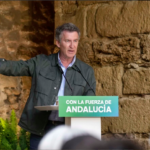
The opposition leader promised that a future PP government would declassify information related to the current administration’s migrant regularisation plans. Photo credit: PP. es

The leader of Spain’s conservative Popular Party (PP), Alberto Núñez Feijóo, has called for the resignation of Interior Minister Fernando Grande-Marlaska (Spain’s interior minister) following the deaths of two Guardia Civil officers during an operation against suspected drug traffickers off the coast of Huelva.

Speaking during a political event in Andalucía on Friday, Feijóo also pledged to declassify documents linked to the Spanish government’s migrant regularisation plans if the PP returns to power nationally.

The comments came during a day of mourning after two officers died when their patrol vessel was involved in a collision during a pursuit linked to narco-trafficking operations near the mouth of the Guadalquivir River, close to the province of Huelva in southern Spain.

Officers died during anti-drug trafficking operation

Two Guardia Civil officers died during an operation targeting a suspected narco-boat near Huelva province. Drug trafficking by high-powered speedboats, known in Spain as “narcolanchas”, has become a growing security issue along parts of the southern coast. The vessels are frequently used to transport hashish and other illegal substances between North Africa and Spain.

The incident has renewed political debate over the resources available to officers working in anti-trafficking operations. Feijóo accused the government led by Pedro Sánchez of failing to provide sufficient support and protection for security forces operating in high-risk coastal areas. During his speech, the PP leader said Grande-Marlaska should resign over what he described as failures in security policy and the management of anti-drug operations.

Spain’s Interior Ministry has not announced any intention for the minister to step down.

Feijóo promises to declassify migrant regularisation documents

Alongside his criticism over the deaths of the officers, Feijóo also focused heavily on immigration policy. The opposition leader promised that a future PP government would declassify information related to the current administration’s migrant regularisation plans. In Spain, “regularisation” refers to legal processes allowing undocumented migrants already living in the country to obtain legal residency or work status under certain conditions.

Migration policy has become an increasingly divisive issue in Spanish politics, particularly in regions facing increased migrant arrivals by sea or pressure on reception systems.

The Sánchez government has defended its migration policies as necessary for humanitarian reasons and labour market demands, while opposition parties have accused it of lacking transparency over long-term immigration planning. Feijóo said the public had a right to know the details surrounding the government’s discussions and decisions on the issue. The Spanish government has not publicly stated that any classified migrant regularisation programme exists, although migration agreements and administrative planning documents are commonly handled internally between ministries and European institutions.

Political pressure grows over security and migration

The remarks reflect continuing tensions between Spain’s government and opposition over immigration, organised crime and public security. The Popular Party has repeatedly criticised the government’s handling of organised drug trafficking in Andalucía, arguing that criminal groups have become increasingly violent and better equipped in recent years. Police unions and Guardia Civil associations have also raised concerns over staffing levels, equipment and working conditions in some coastal areas heavily affected by trafficking activity.

The government has defended its security policies and says it has increased resources dedicated to combating organised crime networks operating in southern Spain. The deaths of the officers have prompted tributes from political leaders across the country, with officials from multiple parties expressing condolences to the families, colleagues and members of the Guardia Civil.

The incident is expected to intensify political debate surrounding Spain’s immigration policies, anti-drug operations and coastal security measures in the months ahead.

Sign up for personalised news

Subscribe to our Euro Weekly News alerts to get the latest stories into your inbox!

By signing up, you will create a Euro Weekly News account if you don’t already have one. Review our Privacy Policy for more information about our privacy practices.

Continue Reading

%

ChatGPT Can Now Alert A Trusted Contact

Published

on

chatgpt-can-now-alert-a-trusted-contact

OpenAI has added a new trusted contact feature to ChatGPT. Credit : arda savasciogullari, Shutterstock

OpenAI has introduced a new ChatGPT feature that allows users to choose a trusted person who could be alerted if the AI believes they may be facing a serious safety risk. The system lets adult users select a friend, relative or caregiver who may receive a notification if ChatGPT detects conversations suggesting the person could be in crisis or at risk of harming themselves.

The new option is already attracting attention because it changes the role ChatGPT can play during deeply personal conversations. While many people still mainly use AI for work, studying or everyday questions, OpenAI says increasing numbers of users are also turning to ChatGPT during difficult emotional moments or periods of personal stress.

The company says the new feature is designed to provide an additional layer of support rather than replace professional mental health care or emergency services.

How the new ChatGPT trusted contact system works

The feature is called Trusted Contact and can be activated through ChatGPT settings by adult users.

Once enabled, users can choose someone they trust who could potentially be contacted if ChatGPT identifies signs of serious danger during conversations.

According to OpenAI, the system relies on automated safety monitoring already used to detect discussions linked to self harm or situations where a person’s safety may be at risk.

If the AI detects language suggesting a severe concern, the conversation may then be reviewed by trained members of OpenAI’s safety team.

If the situation is considered serious enough, the trusted contact could receive a notification encouraging them to check on the user and offer support.

OpenAI says the notification may arrive through email, text message or app notification if the trusted contact also uses ChatGPT.

The company says the idea is to help reconnect people with someone they already know and trust during moments where they may feel isolated or overwhelmed.

The feature is optional and will not activate automatically. Users remain responsible for selecting their trusted contact and the chosen person must first agree to take on the role.

After being selected, the contact receives an invitation explaining how the system works and has one week to accept it. If they refuse, the user can choose another person instead.

Why OpenAI says more people are having personal conversations with ChatGPT

OpenAI says the update reflects how people are increasingly using AI assistants in more emotional and personal ways.

In a statement published on its blog, the company explained that many users turn to ChatGPT not only for information or productivity tasks, but also to think through personal issues, stressful situations or emotional difficulties.

That shift has created growing debate around how AI should respond when users appear vulnerable.

Some people see chatbots as useful companions during lonely or difficult moments. Others worry that people may begin relying too heavily on artificial intelligence for emotional support instead of seeking help from real people.

OpenAI says ChatGPT is designed to respond empathetically while still encouraging users to seek professional support and human connection where necessary.

The company insists the new trusted contact system is meant to strengthen those real world connections rather than replace them.

ChatGPT will also continue directing users towards emergency services or crisis helplines when appropriate.

The new feature builds on safety systems already used for younger users, including parental safety notifications. But applying similar ideas to adult conversations raises much bigger questions around privacy, trust and how much involvement AI companies should have when users appear emotionally distressed.

The new feature is likely to divide opinion

Some people will probably welcome the idea of a trusted friend or relative being alerted during a serious crisis.

For users who live alone or struggle with isolation, knowing someone could potentially be notified may feel reassuring rather than intrusive.

Others, however, are likely to feel uncomfortable about the idea of personal conversations with an AI system being analysed closely enough to trigger human review and outside notifications.

Even though OpenAI says trained staff only review conversations when severe safety concerns are detected, the feature is already likely to raise wider questions about privacy and how AI moderation systems operate behind the scenes.

There is also the difficult question of interpretation. Human emotions are complex and conversations are not always straightforward. People often express frustration, fear or dark humour online without necessarily being in immediate danger.

That means the accuracy of AI based safety systems will probably remain under close scrutiny as features like this become more common. OpenAI has not presented the system as a replacement for therapists, doctors or emergency support services.

Instead, the company describes it as an additional safeguard intended to help people reconnect with someone they already trust during difficult moments.

Still, the launch highlights how rapidly AI assistants are moving beyond simple digital tools.

For many users, conversations with chatbots are becoming far more personal than companies originally imagined only a few years ago. And with new features like Trusted Contact, the line between artificial intelligence and real world support systems is becoming increasingly blurred.

Continue Reading

Trending

Copyright © 2017 Spanish Property & News