
China
Protein Reveals The Oldest Episode Of Sex And Procreation Among Human Species

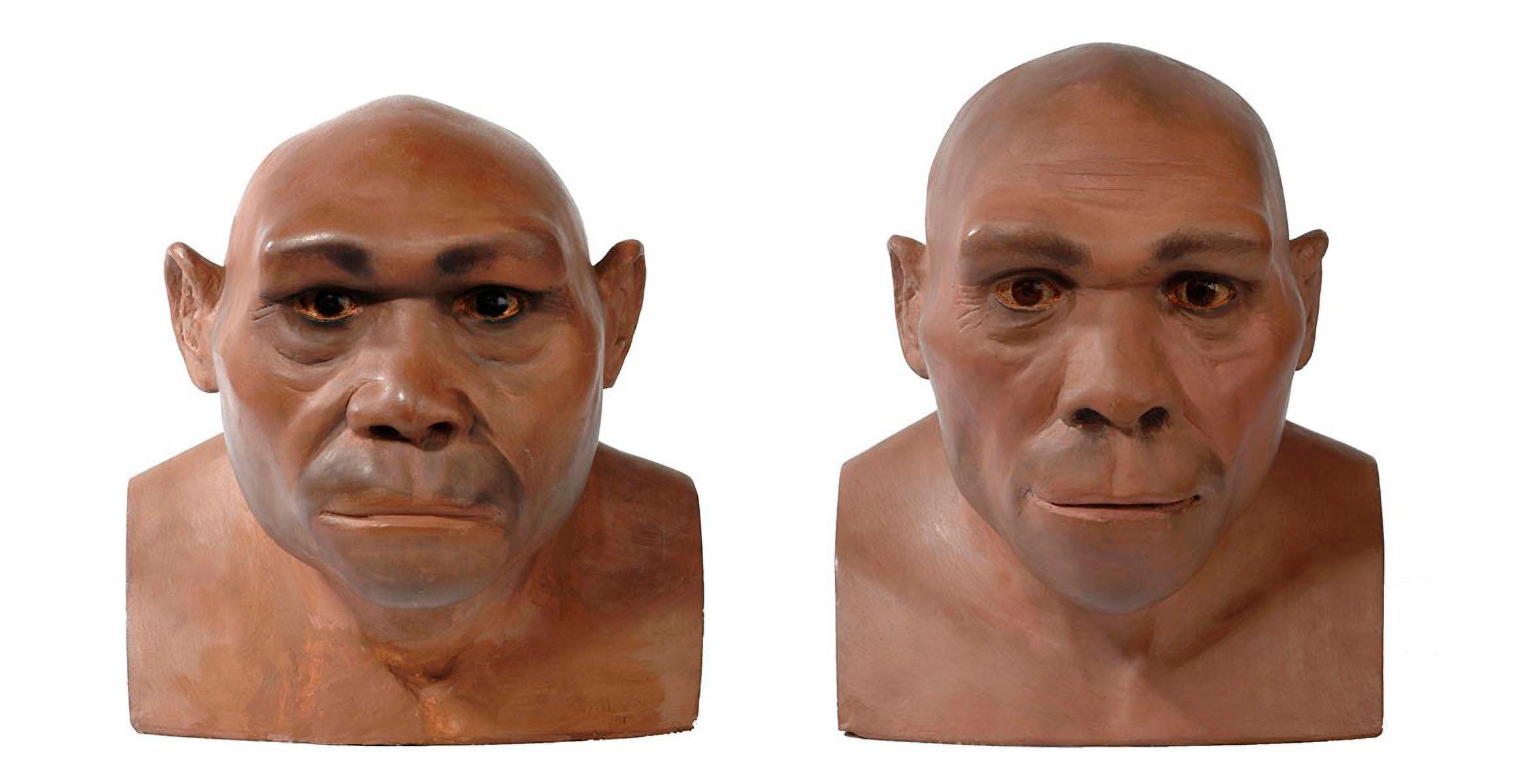
Since humans developed the ability to study DNA extracted from fossils, we have uncovered a mystery that until now had no answer. In the DNA of some human species, including our own, Homo sapiens, there were “super-archaic” markers, vestiges of older, unknown species with which we had interbred and produced offspring. Unable to determine who these genomic intruders were, some scientists called them ghost populations.
A study published on Wednesday provides the first molecular evidence of interbreeding between human species — a concept that would have been unthinkable just a few decades ago — showing that the human evolutionary tree is porous. This means that, although each known human species is a unique adaptation to its environment, we nonetheless retained the ability to reproduce and interbreed, perhaps even giving rise to another group or species better suited to its surroundings.
Researchers in China have analysed proteins from the tooth enamel of six fossils dating back around 400,000 years — five men and one woman — found at sites across much of the country from north to south. They were able to recover two proteins, and one of them — the M273V variant of the enamel protein ameloblastin — is key. The results show that this protein is present in all the fossils analyzed, which belonged to our ancestor Homo erectus. The same compound had previously been identified in the teeth of another human group, the Denisovans — close relatives of Neanderthals, themselves the species most closely related to our own.
The finding implies that, at some point around 400,000 years ago, Homo erectus, which originated in Africa, and the Denisovans, a human population adapted to Eurasia, encountered one another, had sex, and produced fertile offspring. It is the oldest known episode of interbreeding between human groups, and the first to feature Homo erectus, a species that until recently had been largely overlooked. The results were published on Wednesday in Nature.
Homo erectus was the first human to walk fully upright in a way very similar to us. It emerged in Africa around two million years ago, but its already sizeable brain, its ability to make tools, and its agile two-legged gait allowed it to become the first human species to leave its African cradle. Homo erectus spread into Asia and Oceania and, in some places, survived until as recently as 100,000 years ago, making it the longest-lasting human species — by comparison, Homo sapiens have existed for only about 200,000 years.
Although we already knew that modern humans descend from Homo erectus, and that this species was the leading candidate behind the so-called “super-archaic introgressions” in our genome, this is the first conclusive proof. The new evidence adds to what was already known: that Homo sapiens interbred with Neanderthals, who left up to 4% of their DNA in us; and that Neanderthals interbred with Denisovans. Homo sapiens did the same, leaving Denisovan DNA in some present-day populations, with invaluable genetic legacies — such as the traits that allow humans to live at extreme altitudes, including the Himalayas.
Neanderthals, in turn, passed on genetic variants that helped us withstand the cold, strengthened our immune systems, and increased our susceptibility to certain mental disorders, including depression. The tree of human evolution does not change its shape, but at times its branches touch — and even merge.
The new study also reveals a second dental protein that appears to be unique to Homo erectus, a new genetic marker for identifying this species. After the indisputable prominence of Neanderthals at the centre of human evolution research in recent years, Homo erectus could now emerge as the new key player in the search for our origins.
That is the view of paleoanthropologist Antonio Rosas, who was not involved in the study and highlights its significance. “This study confirms what we already suspected, but for the first time with molecular data,” he says. “The work reveals two enamel proteins: one unique to Homo erectus, and another shared with the Denisovans — especially the later ones [the more recent populations] — which is evidence of hybridization. The Denisovans later interbred with Homo sapiens, which is why some modern populations, such as Filipinos, carry Homo erectus DNA. In Africa, we also assume there are people who carry super-archaic DNA that should come from Homo erectus, and which will very likely come to light.”
Rosas underlines the importance of this species in human evolution. “It is the species with the longest history, the longest-lived, and there is still much we don’t know about it. It is very important to obtain more data. It will probably become more important now than Neanderthals and Denisovans thanks to new molecular data,” he concludes.
Geneticist Carles Lalueza-Fox agrees with this assessment: “The pattern of interbreeding is repeated, although this is the first one described from paleoproteomics [the study of ancient proteins preserved in fossil remains],” he writes in a message exchange.
Sign up for our weekly newsletter to get more English-language news coverage from EL PAÍS USA Edition







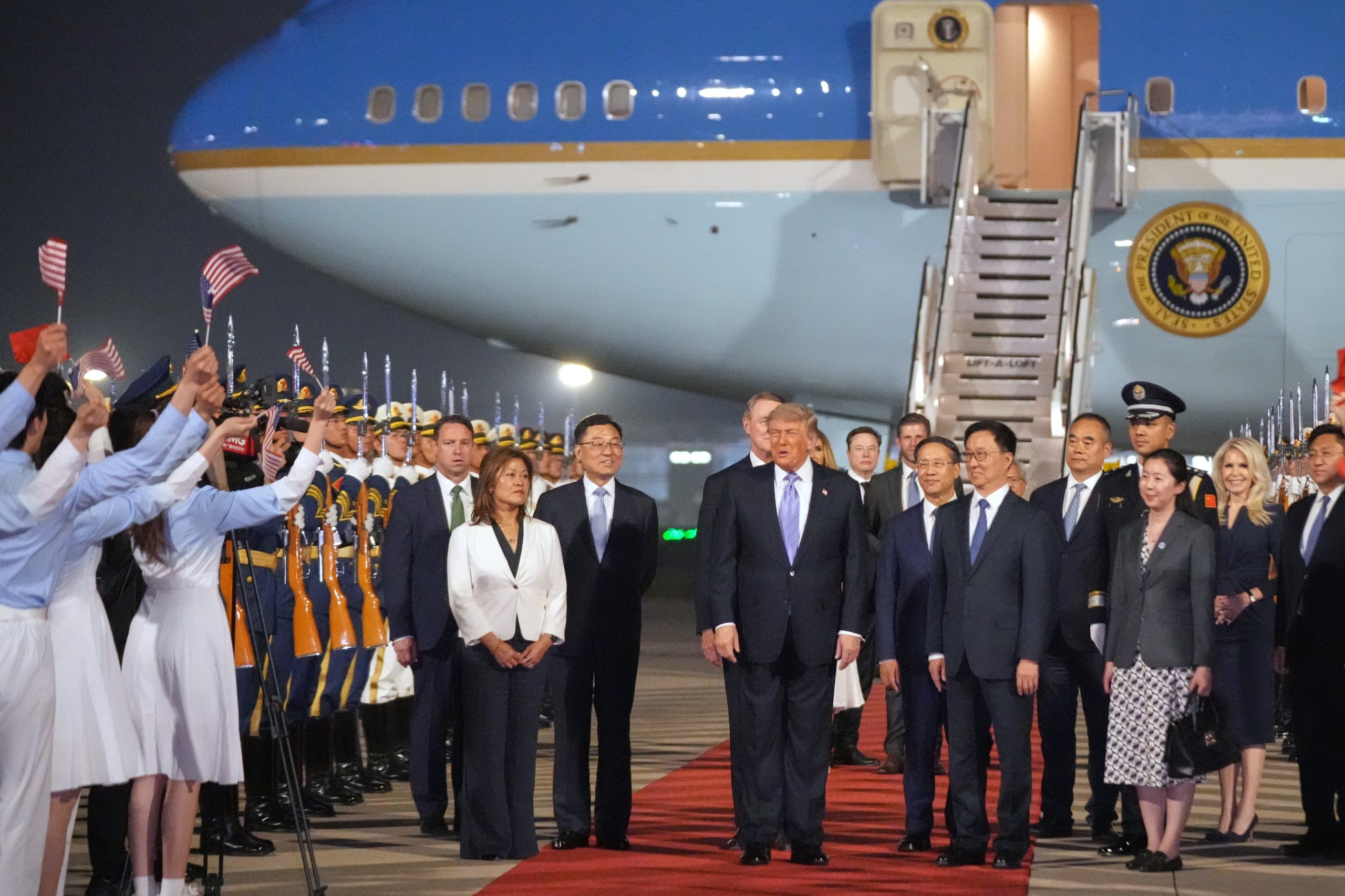
U.S. President Donald Trump landed at Beijing airport on Wednesday evening for a summit with Chinese President Xi Jinping. The visit is expected to be marked by an elaborate reception, judging by the heavy security presence already in place since the morning around the cordoned-off hotels where the Republican leader and his entourage will be staying.
Trump’s visit to China follows years of tensions and marks the first time in almost a decade that a leader of the world’s largest economy has set foot in the second largest. The last time this happened was in 2017, when Trump himself visited China.
The meeting will serve to gauge the balance of power between the two superpowers after a 2025 marked by tariffs, in which the two leaders pushed the trade war to the limit — right to the brink — before sealing a fragile pause last October in Busan, South Korea. After a first night of theoretical calm, with no scheduled agenda, Xi will receive Trump on Thursday morning at the Great Hall of the People, the gigantic building reserved for major political events.
On Wednesday, Trump appeared at the door of the enormous presidential aircraft at exactly 8:08 p.m. in Beijing, in what seems like a highly calculated gesture to start off on the right foot — the number 8 is considered lucky in China — and from the top of the stairway, pumped his fist in his characteristic manner. On the ground, he was received by Chinese Vice President Han Zheng, while 300 Chinese teenagers waved flags from both countries to the rhythm of a military march.
Economic issues are expected to dominate the face-to-face talks, including discussions on trade imbalances, transactions, and investments; Trump and Xi will most likely address the thorny issue of the war in the Middle East; and Trump already said on Monday that he also plans to broach what may be China’s most existential issue — Taiwan — raising some alarm on the self-governed island that Beijing considers an inalienable part of its territory.
With the U.S. attack on Iran still raw and its lightning operation in Venezuela still smoldering, an opening has emerged for China to put its interests regarding Taiwan on the table.
Trump has travelled to China accompanied by a large delegation of multinational executives, underscoring the economic focus of the trip. Trump sees the meeting as an opportunity to expand business and investment, in line with what the two governments’ envoys — Vice Premier He Lifeng and U.S. Treasury Secretary Scott Bessent — set out on Wednesday during a last-minute preparatory meeting in Seoul.

Mid-flight, Trump offered clues about the friendly tone he intends to strike during his visit to the “Great Country of China,” as he called it on his Truth Social platform shortly after departing the United States. In a post, he listed the striking lineup of executives travelling with him: from his rekindled ally Elon Musk (Tesla, SpaceX) to Tim Cook (Apple), as well as Larry Fink (BlackRock, the world’s largest investment fund) and Jensen Huang (Nvidia, the chip designer and the world’s most valuable company by market capitalization).
“I will be asking President Xi, a Leader of extraordinary distinction, to ‘open up’ China so that these brilliant people can work their magic, and help bring the People’s Republic to an even higher level,” Trump wrote. “I promise, that when we are together, which will be in a matter of hours, I will make that my very first request. I have never seen or heard of any idea that would be more beneficial to our incredible Countries!”
In addition to calls for greater openness — a recurring theme in dealings with China — the real estate magnate is also expected to press Beijing to use its influence with Tehran to help stabilize the fraught situation in the Middle East, where the fragile ceasefire is on shaky ground.
For China, the meeting offers a chance to project an image of stability, composure, and cooperation, after standing firm against Washington’s tariff pressure by leveraging its dominance in rare earths.
Beijing sees itself with room to manoeuvre and partly victorious in this latest trade battle. Many analysts expect it to use Washington’s weakness to push for a reduction in arms support for Taiwan and a shift in the long-standing ambiguous language underpinning the delicate balance in the strait.
“China understands that Taiwan independence would change the status quo. That is why it will ask Trump to openly declare that the United States opposes Taiwan independence,” says Wang Yiwei, director of the Institute of International Studies at Renmin University in Beijing.
The issue of arms sales was already made clear by Xi Jinping in a phone call with his counterpart in February, shortly after Washington approved in December the sale of a landmark $11 billion weapons package.
In his readout of what he described as an “excellent” conversation, Trump largely glossed over Taiwan. The official Chinese readout was far more emphatic: Xi told him that the U.S. position on Taiwan “is the most important issue in China-U. S. relations,” and stressed that China “will never allow Taiwan to be separated from China.” Xi issued a warning: “The U.S. must handle arms sales to Taiwan with extreme caution.”
Wang summed up Beijing’s position this way: “China has asked that the U.S. not sell arms to Taiwan; otherwise, we cannot purchase the so-called three Bs,” he said, referring to soybeans, beef, and Boeing aircraft— three of the economic demands Trump is bringing to the meeting. He believes the upcoming midterm elections, and Trump’s need to shore up part of his electorate, will tilt the balance in Beijing’s favour: “I don’t think he will sell [the arms].”

A change in the language of any statement “would probably be considered Xi’s biggest victory,” noted George Chen, an analyst at The Asia Group, on Wednesday during an online discussion about the summit. Evan Medeiros, also from The Asia Group and a former Obama adviser on China and Asia affairs, listed among the “risks” to watch — not only Taiwan, but also China’s “reluctance” to help on Iran.
But there are signs it may step up. Late on Tuesday, China’s top diplomat, Wang Yi, held a phone call with Pakistan’s foreign minister — the country leading the peace talks — and urged him to “step up mediation efforts, and contribute to properly addressing issues related to opening the Strait of Hormuz.”
At roughly the same time, U.S. Defense Secretary Pete Hegseth revealed he would join the delegation heading to China. U.S. Secretary of State Marco Rubio has also traveled to China, along with more than a dozen senior officials, but Hegseth’s presence is unusual: defence chiefs rarely take part in state visits.
Sign up for our weekly newsletter to get more English-language news coverage from EL PAÍS USA Edition

When the street siren sounded outside Mr. Kofi’s tailoring shop in Ikeja, Lagos, it meant only one thing: the grid was back. His team had been sitting in the dark for most of the day. They had run out of generator fuel. Mr. Kofi joked that NEPA — local shorthand for the long-defunct agency that once ran the national grid — must have known a visitor was coming, and that’s why they “brought back the light.” He has been running his tailoring business for 25 years. His shop sits in Band A, Nigeria’s highest-priority electricity zone, promised 20 hours of power a day under the tariff reform introduced in April 2024. The fuel to bridge the gaps now costs around ₦1,300 per liter — up from a national average of ₦1,034 in January, according to the Nigerian Bureau of Statistics.
The proximate cause of the latest spike is a war being fought thousands of kilometres away. Iran’s closure of the Strait of Hormuz in late February sent global crude prices surging. Between April 27 and April 29 alone, Brent crude rose from $105 to $118 per barrel — prompting the Dangote Petroleum Refinery to adjust its petrol loading price from ₦1,200 to ₦1,275 per liter. Pump prices at filling stations across the country followed swiftly. But for most Nigerians the current crisis is less a new emergency than a fresh layer on top of a very old one.
Nigeria extracts approximately 1.4 million barrels of crude oil per day and is Africa’s largest petroleum producer. Yet for decades it has lacked the refining capacity to meet its own fuel needs, importing refined petrol priced against global markets. “Why is the fuel expensive here if we are the ones supplying oil to other countries?” asked Vanessa Aguda, a cosmetic chemist and personal care brand founder based in Lagos. “Those are the little questions I keep asking. It’s not aligning properly for us.”
We’ve been sitting here working in the heat and without light all day
Kofi, owner of a tailoring shop in Lagos
The explanation lies in decades of refinery neglect. Nigeria’s four state-owned refineries — in Port Harcourt, Warri and Kaduna — have operated far below capacity for years, crippled by underinvestment and mismanagement. For most of the past decade, the country processed virtually none of its own crude, exporting it raw and importing refined petrol at international prices — a cycle that left consumers exposed to every fluctuation in global oil markets. The long-awaited Dangote refinery, which began petrol production in 2024 and has ramped up significantly since, was supposed to break this dependency. But while it has increased domestic supply, its pricing remains anchored to global crude benchmarks. “Nigerian authorities, since the liberalization policy came on board, have adopted global pricing,” explained Paul Alaje, an independent economist based between Lagos and Abuja. “So whatever the global oil trade is, the price Nigerians pay — even in naira — is still set at the global rate.”

The dysfunction isn’t limited to gas pumps. For years, Nigeria had subsidized electricity at a huge cost. The International Monetary Fund estimated in May 2024 that combined fuel and electricity subsidies were on track to consume 3% of the country’s GDP that year, describing them as “costly and mistargeted, with higher-income groups benefiting more than the most vulnerable.” The new system created five customer tiers: Band A customers are entitled to a minimum of 20 hours per day; Band B, a minimum of 16; Band C, 12; Band D, eight; and Band E, just four. Those who pay more receive more.
Band electricity
In practice, the grid has not cooperated. Uzoma Okey-Ibiam, a civil servant in Abuja, was classified as Band B in her previous neighbourhood of Gaduwa and was supposed to receive at least 16 hours a day. In reality, it was about 12 on average. In Ibadan, Kelvin Oritsetimeyin, a freelance software engineer also in Band B, described having had roughly an hour of grid electricity across an entire two-week period in April. “We could be in Band Z for all I know. It’s terrible,” he joked. “Today is an exception where we’ve had six hours of light. We’ve not had this much in three months.”
Nigerian authorities, since the liberalization policy came on board, have adopted global pricing
Paul Alaje, economist
Even those averages obscure the reality of supply, which rarely arrives in continuous blocks. Power often comes in bursts — an hour on, several hours off, sometimes minutes at a time. “The power can go on and off about 20 times in a week,” Oritsetimeyin said. In Lagos, Aguda said that the only electricity she’d gotten that day came at about 3 a.m. and “lasted for no more than 15 minutes.”
These experiences reflect a broader pattern. The average grid-connected Nigerian household receives only 6.6 hours of supply on a typical day and consumes just 144 kilowatt hours of electricity per year — compared to 351 in Ghana and 4,198 in South Africa. The problem, analysts say, is not simply uneven distribution but a system that often fails altogether. “When the national grid collapses, both Band A and Band D are in zero output,” said Alaje. “It really does not matter anymore because power cannot be transmitted.”
The Nigeria that has emerged from decades of this failure is one that has privatized its own power infrastructure, household by household. Aguda runs her home on solar but her cosmetics manufacturing business on a generator costing around ₦150,000 a month in fuel, on top of ₦48,000 to ₦50,000 in grid electricity charges. “Everything comes up to 200 and something thousand naira every month on electricity alone,” she said. “For a small business here, that expense is quite high.”
When costs force price increases, the competitive consequences are immediate. “When we increase the price of our products, our competitors tend to get more clients. People who were our expected customers move over, because it’s cheaper.” She has watched other manufacturers in her sector go to China or South Korea to produce goods and import them back — not because Nigerian craftsmanship is inferior, but because keeping the lights on in a Nigerian factory makes local production cost-prohibitive. Aguda has considered following suit, but for now is committed to producing locally in line with her brand ethos. “We want to make sure that we are aiming for Nigerian-manufactured products for people of color”, she explained.
For smaller businesses, the margin is thinner still. Tailors, hairdressers and other micro-enterprises operate on narrow daily income, with little buffer when costs rise. “We’ve been sitting here working in the heat and without light all day,” said Mr Kofi on the latest power cut. “I have a generator, but it’s empty. At ₦1,300 a liter, I can’t afford to run it right now.” Economists describe this as a shutdown point — the moment when the cost of operating exceeds what a business can earn. “When small businesses cannot cover their average variable costs, they will have to shut down if those costs continue to grow and revenue is not growing with it,” said Alaje. Mr. Kofi, in Band A, is already past that point on some days.
For those with capital, solar power has become the rational exit. In February, Oritsetimeyin bought a ₦400,000 portable solar station that can run his household of three for 10 hours a day. He subsequently ditched his fuel-guzzling generator, which needed 12-20 litres of petrol per week to run for about four hours a day during work hours.
Meanwhile, Okey-Ibiam spent around ₦5 million on a full inverter system and has been living entirely off-grid since moving to Lugbe in September 2025. “Solar is supposed to be an alternative for the grid. But no, the grid is going to be an alternative for my solar,” she said. “Since I installed it, I don’t think about light anymore,” Uzoma said.
But this stability comes at a cost few can afford. “Minimum wage in Nigeria is about 35 pounds a month,” Alaje said. “How do you think people living on one pound a day can afford to buy solar panels?”
Alaje has been urging the government since February to cap domestic prices at pre-war levels. “If this is done, the impact of global shocks, whether now or in the near future, will be very minimal on our economy.” The government has not acted.
For Aguda, the waiting has a limit. “If by next year nothing gets better, we’ll start looking at moving manufacturing to China or Korea. And as a resident of this country, if things do not get better on time, I will really start thinking of relocating.” She paused. “That would mean starting afresh, starting life a new way, doing something I have never done before.”
Sign up for our weekly newsletter to get more English-language news coverage from EL PAÍS USA Edition


SIPS First Foray Onto The Costa Del Sol

Mijas II Festival Somos Uno 2026
Today In Spain: A Roundup Of The Latest News On Thursday


-

 New Developments4 weeks ago
How To Get A Tourist Rental Licence In Andalusia (Spain) – Step-By-Step Guide 2025
-

 Uncategorized4 weeks ago
Max Verstappen Nurburgring LIVE: NLS5 Schedule, start times and free live streams
-

 Competiciones2 weeks ago
E
-
Costa Blanca South4 weeks ago
Fire forces evacuation of six-storey building in Torrevieja
-

 Uncategorized4 weeks ago
Lando Norris unleashes F1 2026 criticism after Nurburgring test
-
Costa del Sol2 weeks ago
Why home care is the new gold standard for living well in Spain
-
Illegal building4 weeks ago
Mallorca’s building amnesty: A route out of legal limbo for rustic homes
-
Bullfighter injured3 weeks ago
Second serious injury in Spain’s La Maestranza bullring reignites controversy