Connect with us

ElPais

Gold Falls Below $4,000 An Ounce For The First Time Since November

Published

on

gold-falls-below-$4,000-an-ounce-for-the-first-time-since-november

Legend has it that at the end of the rainbow there is a pot of gold, but reality suggests that the yellow metal is in free fall, with no bottom in sight. Gold has lost a quarter of its value in just five months since reaching record highs in late January, when an ounce surpassed $5,400. After two days of sharp declines, it fell below $4,000 an ounce on Wednesday for the first time since last November, although it recovered the $4,000 mark by the close of European trading. It is the metal’s biggest correction since the financial crisis, and the situation bears some similarities.

“Gold is expected to trade toward the lower end of its recent ranges while markets await greater clarity on the outcome of the conflict in the Middle East,” analysts at UBP estimate. In that context, it has lost ground against the greenback, as the dollar has strengthened, backed by its role in oil trade and by the United States’ position as a major energy exporter.

Over the past century, gold has built its reputation as a safe-haven investment— meaning it tends to resist stock market downturns — based on its physically limited supply. Traditionally, investors buy gold (in bullion or financial contracts) as a hedge against inflation or volatility in other assets: when the world turns turbulent, gold holds steady.

However, this pattern has shifted in recent years. Both retail investors and large financial institutions have increasingly accessed the metal through simple products such as exchange-traded funds (ETFs), causing it to move more in line with equities and risk assets: gold is no longer bought because it doesn’t fall, but in the expectation that it will rise. That dynamic initially helped fuel a tripling in prices over the past three years, to their peak last January; now, however, it is backfiring.

The outlook for gold is further complicated by rising expectations of interest rate hikes in the United States, in response to rising inflation, which is at 4.2%, its highest level in three years. Last week, the Federal Reserve left rates unchanged in its first decision under new Fed chair Kevin Warsh, but the market is beginning to price in a more hawkish turn. Futures on federal funds rates — which reflect investors’ expectations for U.S. interest rates — now assign a probability of over 50% to a hike after the summer, compared with less than 30% just a week ago.

A tighter monetary policy would strengthen the dollar — historically a headwind for gold — and raise bond yields, another asset that competes directly with gold for the attention of more conservative investors. “The apparent end to the conflict in the Middle East, combined with a more hawkish Fed, has caused prices to retreat as gold’s safe haven appeal fades together with the prospect of higher interest rates and a stronger USD, with a Fed rate hike in Q4 now fully priced in,” analysts at investment bank Macquarie Group said in a note published this week.

Now weighed down by rate-hike expectations, the outlook for gold is gradually cooling. Investment banks Deutsche Bank and Goldman Sachs have lowered their year-end forecasts for the metal in recent days, although they still see potential for a recovery in the coming months, supported by steady demand from central banks, the world’s largest buyers of gold. A survey by the World Gold Council, the industry’s main association, shows that 45% of institutions plan to increase their holdings.

Even so, analysts have made significant downward revisions to their year-end price forecasts. Goldman Sachs cut its outlook by $500 to $4,900 per ounce. Bank forecasts tend to be cautious, however, so price movements over the period could be more pronounced than those targets suggest.

Sign up for our weekly newsletter to get more English-language news coverage from EL PAÍS USA Edition

Donald Trump

Supreme Court Sides With Trump And Blocks Asylum Claims At The Mexican Border

Published

on

supreme-court-sides-with-trump-and-blocks-asylum-claims-at-the-mexican-border

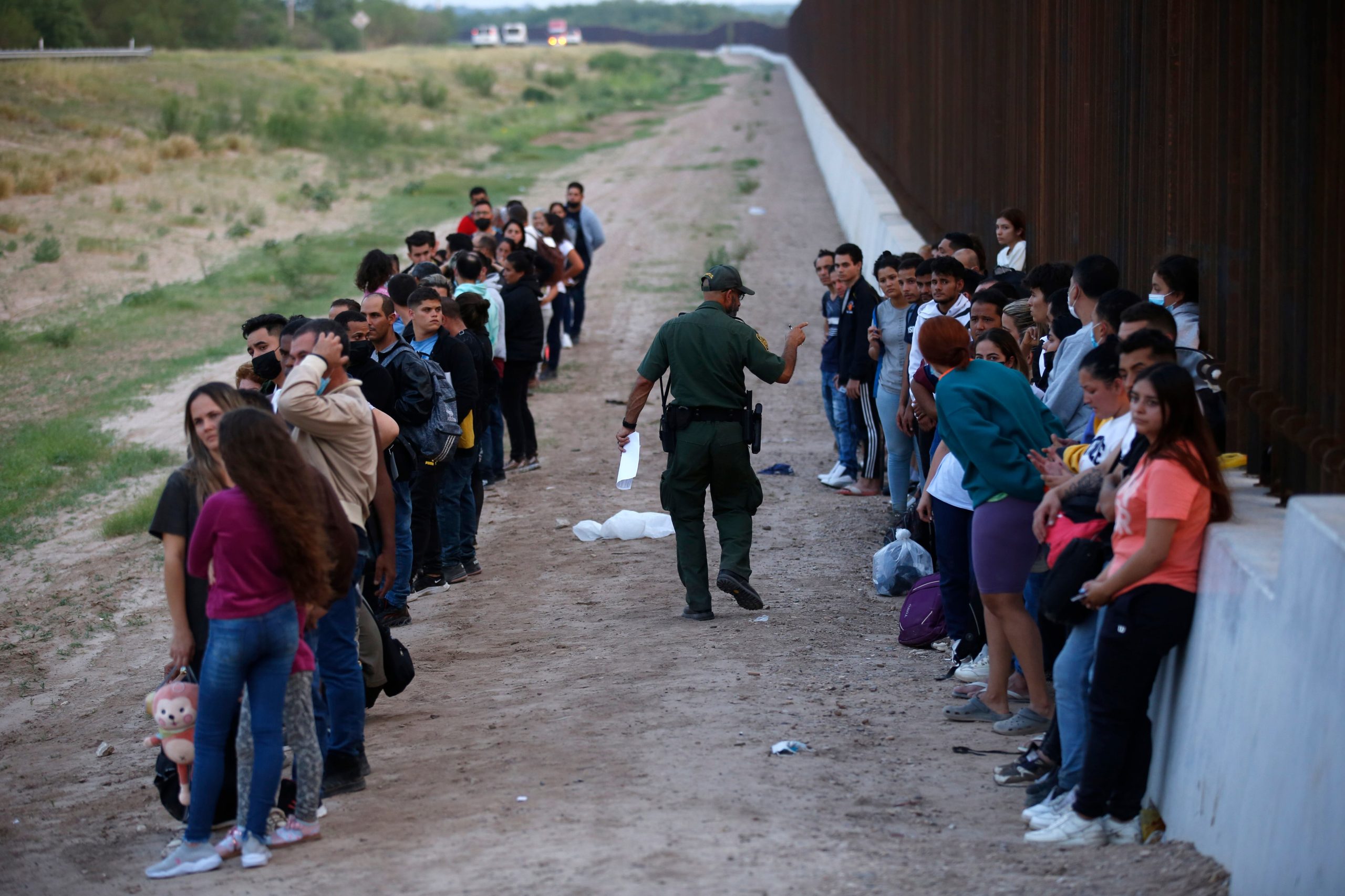
The Supreme Court of the United States has upheld the policy approved by the Donald Trump administration that bars migrants who arrive at the border with Mexico from applying for asylum. The six conservative justices — Samuel Alito, Chief Justice John Roberts, Clarence Thomas, Neil Gorsuch, Brett Kavanaugh and Amy Coney Barrett — voted in favor of denying migrants entry. Justices Elena Kagan, Ketanji Brown Jackson and Sonia Sotomayor dissented.

As a result of the ruling, border officials will be able to turn migrants away before they physically cross the border from Mexico into the United States, thereby preventing them from seeking asylum. “In ordinary speech, no one would say that a person ‘arrives in’ a place — for example, a house, a city, or a country — before the person enters that place,” Justice Samuel Alito wrote in the ruling.

The Ninth Circuit Court of Appeals had determined that noncitizens who were turned away before they could enter the country had “arrived in” the United States for purposes of federal immigration law and therefore could apply for asylum, a finding the Supreme Court has now overturned.

In a separate ruling, the U.S. Supreme Court also sided with the Trump, allowing it to end Temporary Protected Status (TPS) for Haitians and Syrians. As a result, around 350,000 Haitians and 6,000 Syrians will lose protection from deportation. The Supreme Court ruled that the decision to terminate TPS is largely not subject to judicial review and rejected claims that ending Haiti’s status was based on racial discrimination.

The move could affect up to one million migrants from other countries whose protections have also been revoked as part of Trump’s broader push to expand deportations.

Sign up for our weekly newsletter to get more English-language news coverage from EL PAÍS USA Edition
Continue Reading

Cuba

Cuba Releases 16-Year-Old Jonathan David Muir, The Castro Regime’s Youngest Political Prisoner

Published

on

cuba-releases-16-year-old-jonathan-david-muir,-the-castro-regime’s-youngest-political-prisoner

The Cuban government on Wednesday released Jonathan David Muir Burgos, a 16-year-old being held at the high-security Canaleta prison in Ciego de Ávila, who was the youngest political prisoner of the Castro regime. Human rights organizations have confirmed Muir Burgos’s release. The teen was detained after the March 13 protests in Morón; authorities charged him with “sabotage,” and he spent more than three months behind bars.

“It is extremely worrying that the state uses criminal procedures to deprive minors of their liberty and send them to closed penitentiary centers,” says Laritza Diversent, a prominent human rights lawyer and activist exiled in the United States.

Muir Burgos’s case starkly exposes one of the most alarming realities of contemporary Cuba: the systematic criminalization of minors who take part in social protests. Detained after joining the March demonstrations in Morón — sparked by crippling blackouts and widespread food shortages — Muir has become a symbol of a generation trapped in the island’s worst economic crisis in three decades. Diversent, the founder of Cubalex, an organization that monitors human rights on the island, says the group had identified four minors who were imprisoned for taking part in the Morón protest, including Muir Burgos.

The release of Muir Burgos has been received with deep caution by human rights organizations. Diversent warns from exile that this step does not represent the end of the Cuban regime’s repressive policy against citizen demonstrations, but rather a recurring tactic of political survival and controlled prisoner releases.

For Diversent, the main concern is the vulnerability of minors amid the current cycle of social unrest. “It is important, especially in the context of protests over the deterioration of the country’s conditions, to note that minors are often the ones taking on the role of demonstrating and that the state responds without regard for the legal and social characteristics of these youths,” the lawyer explains.

Muir Burgos’s detention was not an isolated incident, but part of a punitive pattern that took shape following the historic protests of July 11, 2021 (known as 11J). Since then, the government of Miguel Díaz-Canel has used the judicial system to quell social unrest through harsh, exemplary sentences, even targeting adolescents who, under the Cuban Penal Code revised in 2022, are held criminally responsible from the age of 16. Organizations such as the Cuban Observatory for Human Rights (OCDH) and Justicia 11J report that hundreds of minors have undergone pretrial proceedings or have been sentenced to detention, in violation of international conventions on the protection of children’s rights.

Diversent insists that Muir Burgos’s release from the Canaleta detention center should not be interpreted as an act of justice or a definitive relief. In fact, she prefers the technical term “release from custody” rather than “freedom,” since the minor remains under the state’s punitive control.

“They have not held a trial yet, but they may have replaced pretrial detention with bail or a formal obligation on record, which means the minor will continue to be monitored by police authorities in his community. This is sometimes even more counterproductive, because it involves constant summonses and threats,” Diversent states, warning of the psychological, potentially irreversible harm and the social stigma that such harassment generates in an adolescent.

The case also takes on a highly sensitive diplomatic dimension due to the timing. The teenager’s detention occurred amid discreet but complex bilateral negotiations between Havana and Washington, in which the U.S. administration maintains as a non-negotiable demand the release of the 1,000-plus political prisoners on the island. The Trump administration has also intensified sanctions and economic pressure on the regime in an effort to force a change of course in the Cuban government.

Diversent directly links releases from custody to internal pressure on the island and the regime’s need to send diplomatic signals to Washington at a moment of peak tension. “All the releases we’ve seen — in 2025, 2026 — have been under pressure,” she insists.

She adds that the government is facing a severe prison overcrowding crisis and is using detainees as bargaining chips. “Releases have always taken place under pressure, and what the government has tried to do is use them as a bargaining tool, which is what we may be seeing here. These releases are meant to tell the U.S. government: ‘Look, we are changing our position.’ Because having minors in prison already looks quite bad,” she explains.

The lawyer recalls that the island’s judicial system lacks independence and follows political directives to hand down harsh sentences aimed at social control: “Charging people with sabotage for protesting against government symbols is incorrect; it is not a crime of sabotage but rather a politically motivated act framed as a threat to state security. This is becoming a pattern for the state,” she explains.

Cubalex’s main concern, therefore, remains unchanged. While Jonathan David Muir Burgos leaves his cell under restrictions, the “revolving door” mechanism, Diversent says, ensures that the flow of detainees in Cuba continues unabated.

Sign up for our weekly newsletter to get more English-language news coverage from EL PAÍS USA Edition

Continue Reading

Andrés Manuel López Obrador

Sheinbaum Puts Her Own Stamp On Mexico’s Diplomatic Peace With Spain

Published

on

sheinbaum-puts-her-own-stamp-on-mexico’s-diplomatic-peace-with-spain

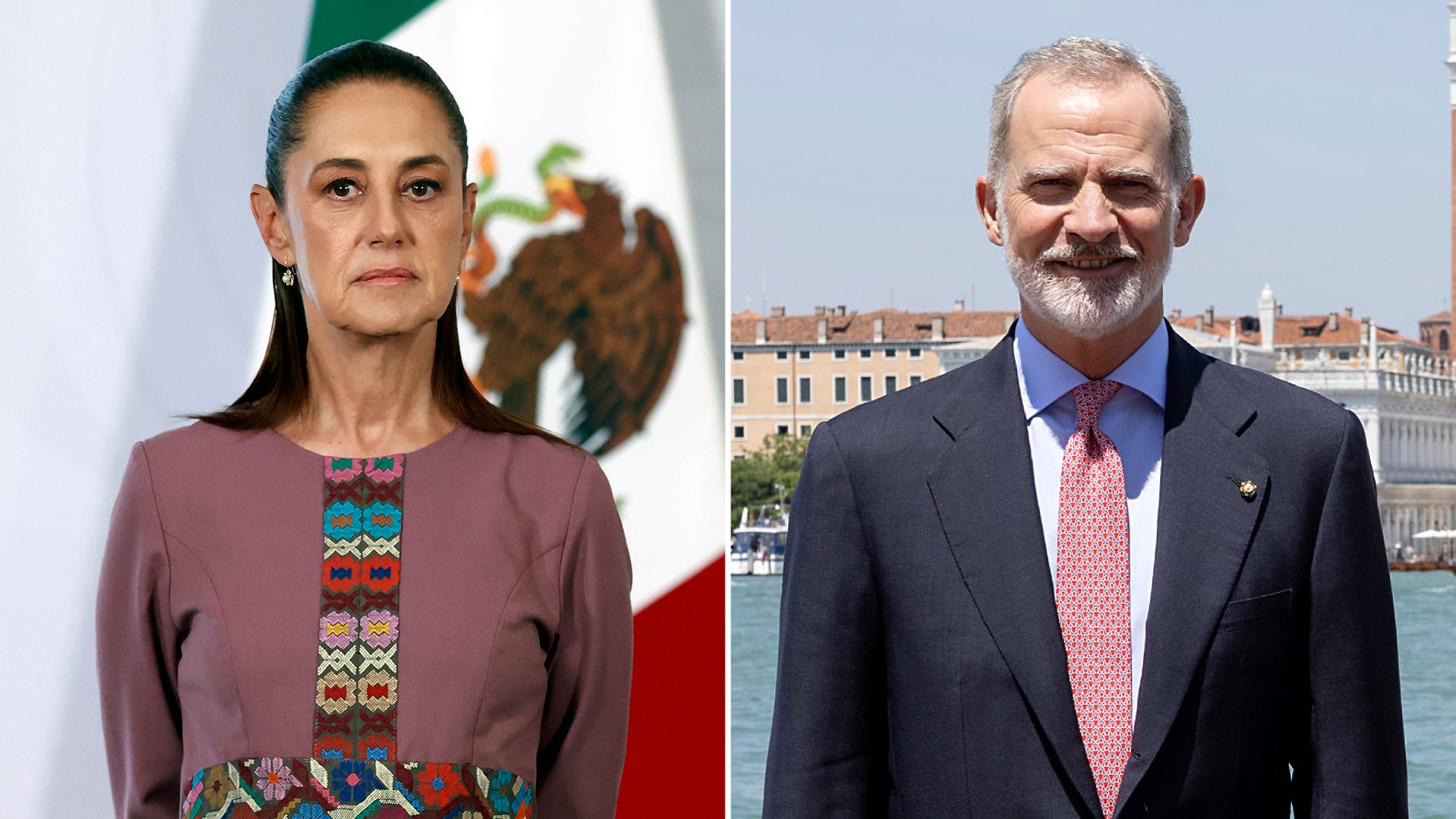
The meeting scheduled at Mexico City’s National Palace on Thursday will not only seal the diplomatic reconciliation between Spain and Mexico after seven years of tension. The long-awaited photo of concord between President Claudia Sheinbaum and King Felipe VI also marks the continuation of the path that the Mexican president is forging for herself. Sheinbaum inherited the bilateral dispute from her predecessor Andrés Manuel López Obrador, and without changing the substance of the matter—the request to the Spanish Crown to acknowledge the violence perpetrated during the colonial era—she began building bridges as soon as she took office. That rapprochement, beyond the obvious cultural and economic ties and interests between both nations, has also become a strategic political alliance following the relentless pressure on Mexico from Donald Trump.

Without fanfare, and relying above all on cultural diplomacy, Sheinbaum has been repairing the broken communication channels with gestures from both sides following the controversial letter that López Obrador sent the Spanish royals in 2019, and whose request for a public apology was ignored. Reconciliation with Spain has not been the only pivot of the Mexican president. In just over a year and a half in office, Sheinbaum has taken steps to consolidate her own project, asserting her style across nearly all centers of power. Most evident among these are a more active security strategy and a relaunch of foreign policy, two of the areas where López Obrador was the weakest. The latter’s habitual reluctance to look beyond Mexico’s borders was summed up in one of his favorite slogans: “The best foreign policy is domestic policy.” Another of his phrases embodied his softer stance on confronting crime head-on: “Abrazos, no balazos (Hugs, not bullets).”

It has not been an easy path. The former president, who is the founder of the political party Morena and linchpin of the Mexican left, still commands formidable political capital. He left the presidency with his popularity hovering near 70%. Aware of his influence, he announced he would withdraw from the public spotlight so as not to condition the new president, whom he had been grooming as his heir during the turbulent internal succession in the party. “The figure of López Obrador is unusual because of his great popularity and because, for now, he is observing the principle of non-interference, which has no precedent in recent Mexican history,” says international relations expert Gabriel Guerra Castellanos, who also notes that “the president has been carving out her territory day by day, with symbolic gestures and substantive policies.”

The channel was advancing but, as in so many other cases, the Trump whirlwind ended up shaping it. Since his return to the White House, the Republican leader has deployed the most aggressive version of his policy. Beyond economic threats (over non-renewal of the USMCA free trade agreement or the imposition of tariffs), the U.S. president repeats every month his desire to intervene militarily in Mexico to fight organized crime. The tension has even led the U.S. Department of Justice to accuse Morena governor Rubén Rocha of working for the Sinaloa Cartel. “This level of pressure hadn’t been seen in a century,” says Abelardo Rodríguez, professor of international studies at the Ibero-American University, “and, of course, President López Obrador hadn’t experienced it either, given that he even had a good relationship with Trump.”

That shift in the external environment has reconfigured Sheinbaum’s playing board. “Mexico’s foreign-policy axis in the world runs through the United States,” Rodríguez adds, arguing that the challenge with its northern neighbor has forced the president into “strategic repositionings.” This includes the change of ambassador in Washington, the signing of Mexico’s treaty with the European Union, the latest rapprochement with the United Kingdom and, of course, building bridges with Spain. This thaw is also ideologically useful for both countries after recent setbacks for the left in Peru and Colombia, emphasizes Mexican historian Alfredo Ávila: “Both Pedro Sánchez’s government and Claudia Sheinbaum’s know they are increasingly isolated. That they could shake hands, first, and that the president will now meet the king, are steps toward trying to form a progressive alliance at a moment when the far right is sweeping elections everywhere.”

It is in this same context that Sheinbaum’s presence at the progressive summit Sánchez organized in April in Barcelona should be viewed. It was the first trip by a Mexican president to Spain since 2018 and, moreover, the first trip by a Morena president to Europe. The alliance appears likely to continue consolidating. In November, Madrid will host another summit that Spain hopes will reaffirm the role of the Ibero-American community in the face of White House pressure.

Thus, although specialists believe the upcoming photo of Felipe VI at the National Palace could not have taken place under López Obrador, it is not so much because the presidents have major differences in how they understand history, but because of the external whirlwind. “López Obrador’s and Sheinbaum’s views of history are very similar. It is the traditional view taught in Mexico at the end of the last century: a heroic bronze-age history, as we call it in reference to bronze monuments, with great heroes and villains. Of course, the heroes are the nationalist Mexican patriots and the villains are those who submit to foreign interests, the elites and the oligarchies,” Ávila adds.

Colmex historian Lorenzo Meyer agrees that the emphasis on pre-Hispanic peoples connects with one of the theoretical pillars of Obradorismo, the so-called Mexican humanism. “While many on the left look to the future, he turns to the past and finds characteristics in pre-Hispanic cultures worthy of praise.” Thus, in the Morena imagination, the struggle against the colonizer and against large landowners would be “a struggle in favor of a different Mexico, and therein lies the legacy of the Spaniards.”

That is why Sheinbaum continues to insist she wants Spain to learn another version of the Conquest. The only thing the president has revealed about her meeting with the king is that it will be “very brief” and that she will speak to him about Mexico’s indigenous peoples. “That idea of convincing Spain of the true history of the Conquest sounds more like a pretext to justify the fact that it is distancing itself from the previous administration’s position while the relationship is actually thawing,” assesses international relations expert Pía Taracena, who adds that three elements had to align for Thursday’s meeting: “the change of the person leading Mexico, the way the king acknowledged the abuses that occurred during the Conquest and the president’s willingness to open the channel more.”

When Sheinbaum won the election two years ago, she did not invite the Spanish king to her inauguration, and no delegation from the Spanish government attended either. But something changed. Contacts to explore a potential major exhibition on Indigenous art in Spain began in her first days in office. At that Madrid exhibition, in March, Felipe VI made the gesture of acknowledging the “abuses” of the Conquest. Previously the Spanish monarch had referred in that same setting to “injustice and pain” during colonization. Sheinbaum responded to those “gestures” by inviting the king to the World Cup. A seemingly routine protocol step, it gained relevance with the later formal invitation to Thursday’s heads-of-state meeting at the official residence and seat of Mexican power.

Sign up for our weekly newsletter to get more English-language news coverage from EL PAÍS USA Edition
Continue Reading
Advertisement
Advertisement

Spanish Real Estate Agents

Tags

Trending

Copyright © 2017 Spanish Property & News