
Donald Trump
Enriched Uranium, The Latent Threat At The Center Of The Dispute Between The US And Iran

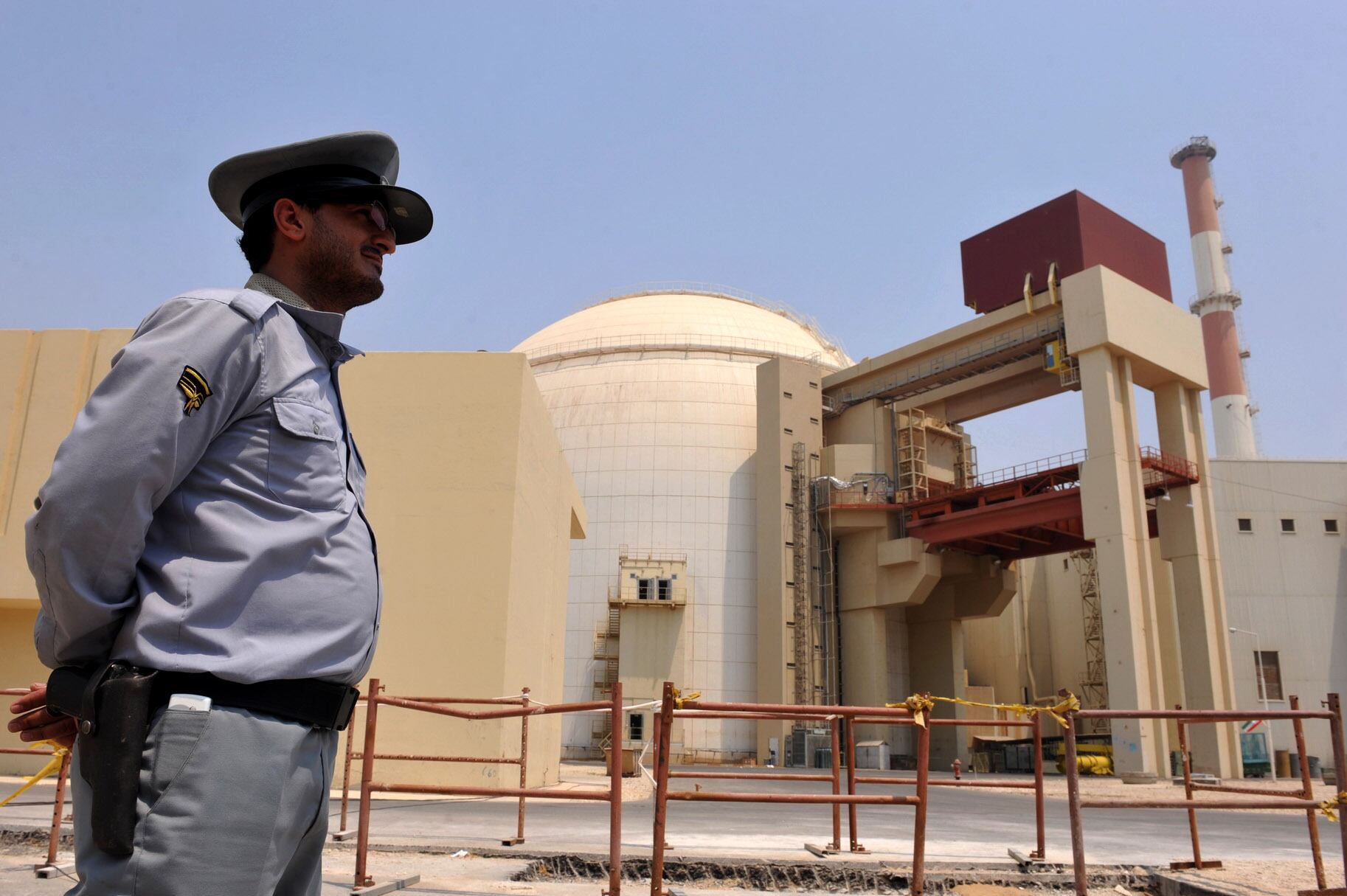
Satellite images released in March show a flatbed truck carrying several suspicious blue barrels in a desert area. It is escorted by three security vehicles to the entrance of the underground tunnel complex in Isfahan, the bunkers that are part of Iran’s nuclear facilities. “Not time to get excited? Transfer of large load precious high enriched uranium in daylight?” Olli Heinonen, the former head of the Safeguards Department at the International Atomic Energy Agency (IAEA), quipped on social media after the French newspaper Le Monde published the photographs.
Since the U.S. and Israeli strikes against Iran’s nuclear and military facilities in June 2025, inspectors from the UN nuclear agency have only set foot in Iran to monitor sites that were not targeted. And since February of this year, after the start of the full-scale war, not even that. The IAEA has lost the physical access that for decades underpinned verification of Iran’s nuclear program. “Although analysis of satellite imagery of the nuclear sites around Natanz, Fordow and Isfahan is important,” Heinonen explains from New York, “supply chains for equipment and materials are geographically dispersed. Much of the actual research and experimental work is being carried out elsewhere, including at unknown locations.”
Heinonen is known in U.S. Department of Energy laboratories as the “Sherlock Holmes of nuclear detection.” He worked for 27 years at the IAEA in Vienna and personally inspected nuclear facilities in Iran. Although he led the agency’s efforts to implement analytical models to complement traditional verification activities, he speaks with the caution expected of someone trained as a safeguards inspector. “Satellite imagery has its limitations. It is not a continuous monitoring system that can determine, for example, a vehicle’s origin or the contents of packages. When we look at the Isfahan nuclear center, we see it houses many other activities, such as production of zirconium tubes, hafnium, etc. Additional information is needed to reach a credible, professional conclusion about the possible material those containers hold.”
U.S. President Donald Trump claimed the June 2025 bombings had caused “the total destruction” of Iran’s nuclear program. Contradicting his own boast, eight months later, on February 28, 2026, he launched Operation Epic Fury, telling the world that “Iran will never have a nuclear weapon.” The White House embarked on a large-scale war that was supposed to last a few weeks but stretched into months — with the current uncertainty over a ceasefire agreement hanging in the balance; it began with the bombing of a school in Minab that killed nearly 200 people, mostly girls, and has caused more than 7,000 deaths and 37,000 injuries in Iran and Lebanon; it has brought the Middle East to a boil, and has given Iranian leaders a new superweapon they did not know they possessed: control of the Strait of Hormuz, a key route for oil transport.
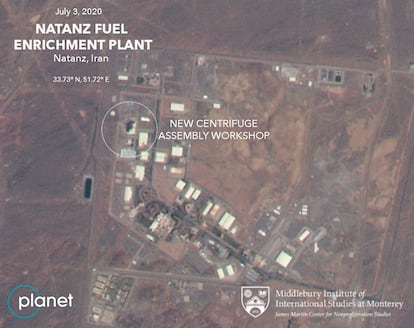
The UN agency responsible for safety and nonproliferation sees more nuclear risk in Iran today than before the war. Three days after the start of the bombings, Rafael Grossi, director general of the IAEA, said: “While there has been no evidence of Iran building a nuclear bomb, its large stockpile of near-weapons grade enriched uranium and refusal to grant my inspectors full access are cause for serious concern.” “For these reasons,” he added, “the Agency will not be in a position to provide assurance that Iran’s nuclear program is exclusively peaceful.”
Grossi is in the midst of a campaign to be appointed the new UN secretary-general. He balances leadership of the IAEA with publishing articles in U.S. international affairs journals that set out his proposal to save the organization from “irrelevance,” as he stated in a column for Foreign Affairs. The veto power of one of the five permanent members of the UN Security Council could block his candidacy. Among them is the country that attacked Iran, the United States.
Robert Kelley, former chief inspector for the IAEA in Iraq, South Africa, Libya and Syria, with extensive experience in technical analysis of Iran’s nuclear program, distinguishes between the Agency’s ability to measure nuclear material — which he says remains excellent — and its capacity to judge whether that material points to a weapons program, something he considers politicized.
“Its inspectors verify declared nuclear material,” Kelley tells this newspaper from Klosterneuburg, near Vienna. “They are the only ones, outside Iran, who can do that, and they have done an excellent job. We would be blind without the IAEA’s routine inspections.” However, the expert cautions, “making superficial judgments about ‘peaceful’ intent is a slippery slope that [Grossi] may regret taking. He himself is technically rather weak, as are his advisers, when it comes to a [nuclear] program and its content.”
The fate of Iran’s uranium
The 440 kilograms of uranium, enriched to 60%, whose exact whereabouts no one can confirm today, would fit “in 50 barrels the size of scuba tanks. That’s it,” says the U.S. nuclear engineer who, before becoming IAEA director, worked on defense nuclear programs at the Los Alamos National Laboratory — the origin of the Manhattan Project that built the first atomic bomb during World War II — and the Lawrence Livermore National Laboratory.
Hence Heinonen’s disdain for speculation about the blue drums in the satellite images, and the warning about the risks of physical inspection being replaced by remote monitoring. “The enriched uranium has not disappeared,” Kelley reminds us. “Iranian leaders know exactly where it is, and the ambiguity keeps them laughing all night.” That is, the Revolutionary Guard retains its value as a bargaining chip and latent threat. Meanwhile, Iran’s ambassador to the IAEA, Reza Najafi, denies that his country resumed enriching uranium after the Israeli and U.S. bombings of its nuclear facilities in 2025.
Kelley proposes an unconventional negotiated solution, not just a diagnosis of the crisis: that Iran give up all its 60% uranium in exchange for being allowed to continue enriching to 20%, a level for civilian use that is currently scarce on the international market, and export it as fuel. In this way, it would preserve its centrifuge program and gain a real industrial niche, while the IAEA maintains verification. A swap inspired by the “Megatons to Megawatts” precedent, which under U.S. supervision turned Soviet weapons-grade uranium into civilian fuel for two decades. “Why bomb Iran?” Kelley asks. “Just buy the material and remove it, like in Operation Sapphire in Kazakhstan.”
Days after the Memorandum of Understanding signed by the presidents of Iran and the United States on June 17, 2026, Grossi spoke at the Fukushima Daiichi nuclear plant in Japan. “The agreement explicitly states nuclear activities that are going to be carried out with regards to nuclear material facilities will be supervised by the IAEA.” He added: “Obviously, to do that, we will have to inspect. Whether this happens today, after tomorrow, or in one week, or in 10 days, it’s important but not essential. This is going to happen.” As yet, no date has been set.
Sign up for our weekly newsletter to get more English-language news coverage from EL PAÍS USA Edition










China
China Tacha De “invenciones” Las Acusaciones De Trump Sobre Su Supuesta Injerencia En Las Elecciones De 2020

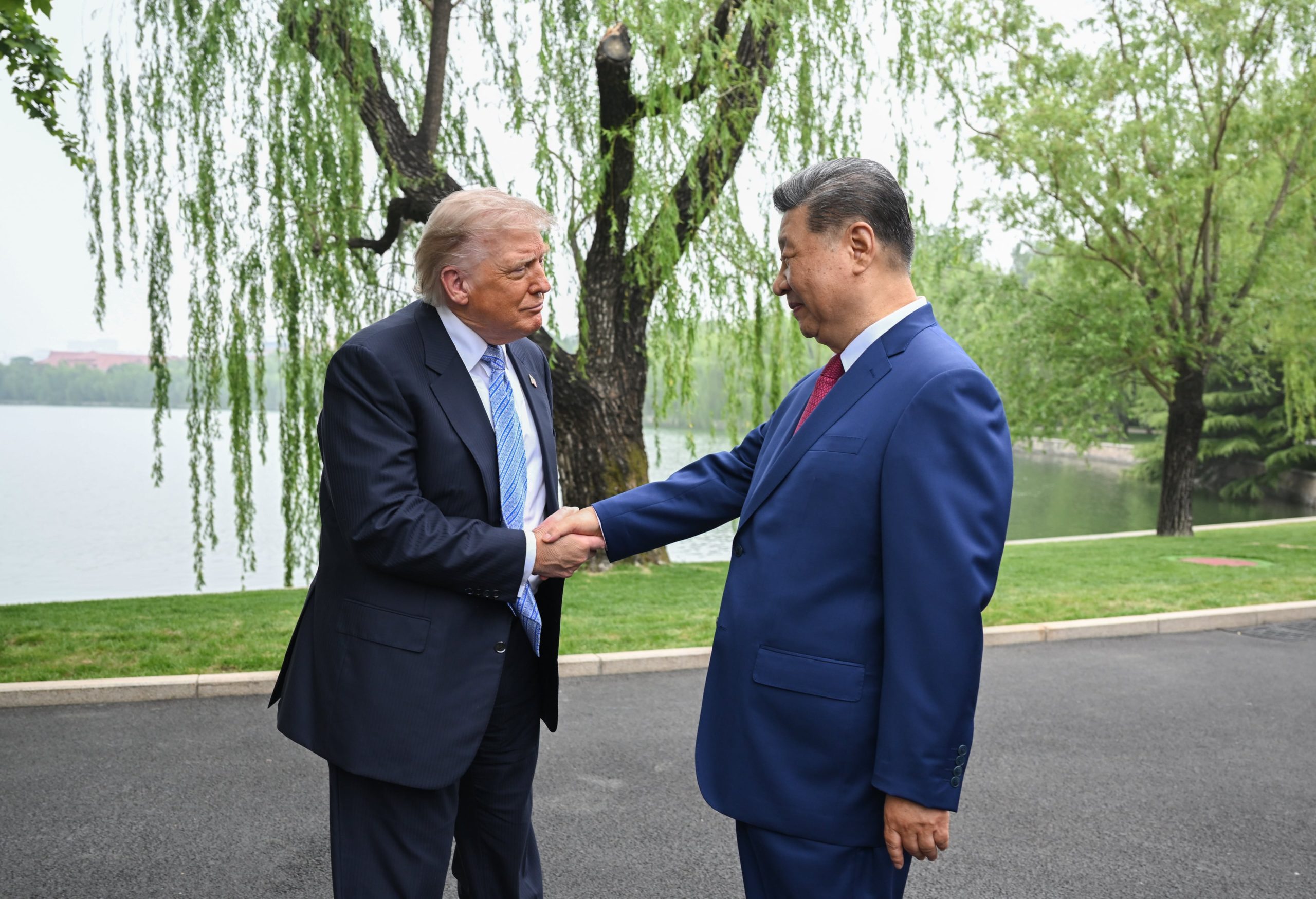



Flags flying at half-staff at the entrance to Biddeford signal that this small Maine city, located 15 miles south of Portland, is in mourning. On Monday, one of its residents, 26-year-old Colombian Johan Sebastián Durán Guerrero, died after being shot by an agent of U.S. Immigration and Customs Enforcement (ICE) during an operation carried out as part of President Donald Trump’s anti-immigration agenda.
“It has been an absolute tragedy for the city; you can feel people here in Biddeford are mourning, and I am too. We deeply regret what happened: for the person, for the family, for the city and the community,” Biddeford Mayor Liam LaFontaine told EL PAÍS.
The community of Biddeford is mostly working class. That becomes clear once you cross the Saco River, which separates it from the city of Saco. Houses become more modest and so do the people walking the streets. It’s a different atmosphere from nearby Saco and, even more so, from the resort town Old Orchard Beach, five miles away. Only Biddeford Pool, a beachside neighborhood on the outskirts of town, is an exception. The divide dates back to the 19th century, when the first textile mills were established in the area. The factory owners lived in Saco, while the workers settled in Biddeford.
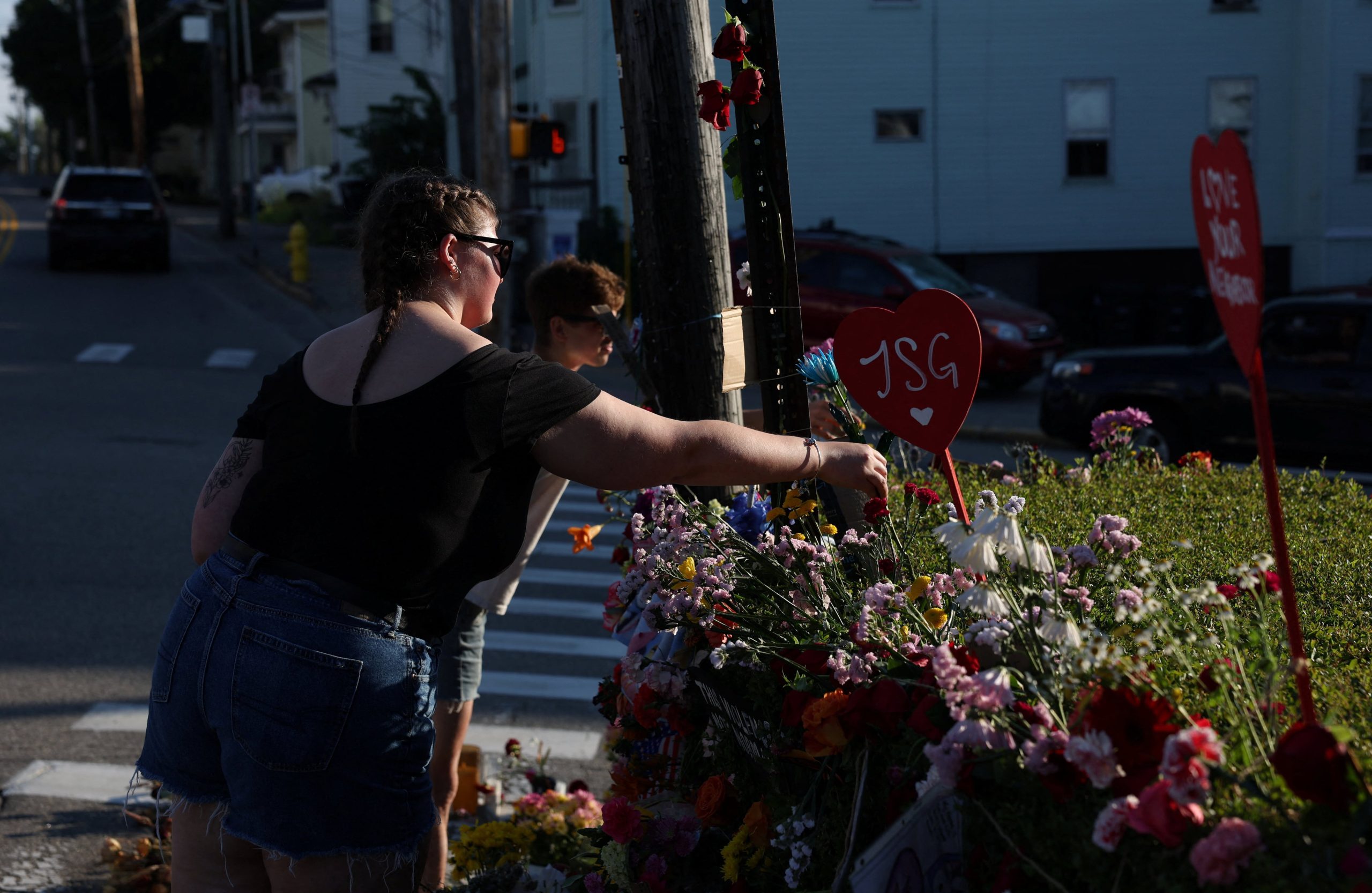
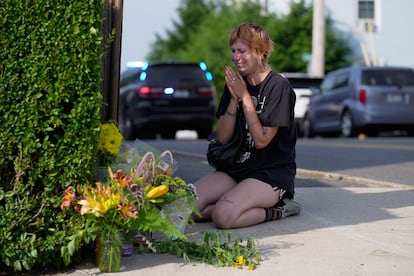
This week, the mood in this city of just over 22,000 people has been darkened by the tragedy. At the intersection of Hill and Pool streets, where Durán Guerrero lost his life, a small memorial of flowers, photographs and messages of mourning has sprung up. A similar tribute has appeared just across the river, where motorists honk their horns in support of people who gather there several times a day to protest against ICE.
‘Another notch on the president’s belt’
Anita, who prefers not to give her last name, fights back tears as she speaks about the incident. She has come to the site to leave flowers and a note reading: “God will judge the people who killed you. Rest in peace.” “It’s not normal to see people riddled with bullets in the streets; it breaks my heart. It’s shocking. What has the country become? It should be a peaceful, beautiful place,” she laments. “This is simply another notch on our new president’s belt,” she adds before heading to the Hill and Pool intersection to leave more flowers.
Anita, who appears to be in her sixties, explains that the city was built by immigrants like her grandparents, who came to work in the factories, much as many Europeans did 150 years ago. Around six decades ago, 26 flags flew at the entrance to the mills, representing the workers’ countries of origin. Biddeford is also said to have been home to the first mosque in the United States, not a formal building, but a space that served the functions of a place of worship.
In this city, migrants are still an important part of the community. “Currently 23 languages are spoken in the schools in the district, which reflects that people keep arriving here from everywhere,” says Delilah Poupore, executive director of Heart of Biddeford, an organization dedicated to revitalizing the city center. “Our school department works hard to ensure the safety of students and their families during waves of ICE raids,” she says.
Poupore, who knows the city’s history and character well, says immigrants are well integrated into the community. “People from all over the world end up living in the same neighborhoods,” she notes. Heart of Biddeford helps residents, businesses and the city work together to boost the economy and community. The organization also hosts events such as Shared Stories, which in June brought together people from different backgrounds to share a traditional family dish and talk about their culture.
Many of the migrants who settle in Biddeford do so because housing is more affordable than in neighboring communities or in Portland. The city’s relative affordability has also attracted young people and, in fact, it has the youngest population of any municipality in Maine. The textile mills that shut down in the 1990s have found a new lease on life as housing developments and commercial spaces. New apartment buildings have gone up downtown, most of them rentals. Many house several families, including the building where Durán Guerrero lived.
Biddeford already felt the impact of ICE enforcement in January, when the Trump administration launched Operation Catch of the Day in Maine, a darkly named crackdown that brought a large influx of immigration agents and led to the detention of more than 200 people over the course of just a few days.
“Many of our patients were afraid to come to our services at a vulnerable time when they should have been receiving medical care. Many were alone or their partners had been detained by ICE,” says Michaela Schwartz, a young woman who provides childbirth education to migrants.
School attendance dropped in the aftermath of the operation, and many immigrants, including some who had work authorization, stopped going to their jobs for fear of being randomly detained.
Conflicting information
Schwartz was at work when she received the news on her phone about Durán Guerrero’s death. She ran home — close to the scene — to find out what had happened. “When I learned he had a three-year-old daughter, I broke down crying; it was horrible,” she recalls. On Wednesday she left a bouquet at the memorial at the city’s entrance. The sadness remains, she says, but what she feels most strongly is anger. “I’m not even interested in hearing about the investigation or the details that will come to light. Simply put, there is no justification for that… for killing someone in cold blood,” she says.
Official information about what happened that fateful Monday morning was sparse and contradictory from the start. At first it was said Durán Guerrero was an undocumented migrant and that ICE had a removal order for him, while those who knew him insisted he was in the country legally and had a work permit. Later reports said he was not the person ICE was looking for.
The agency then followed the same pattern seen in other deaths involving its agents, including those of Renée Good and Alex Pretti in Minneapolis in January and Mexican migrant Lorenzo Salgado Araujo in Houston on July 7, arguing that the agent had opened fire because he felt threatened. Witnesses dispute that account. They believe Durán Guerrero had already been shot when the vehicle he was driving spun around in what the agent has described as an assault.

ICE’s presence had declined in recent months, but activity has picked up again over the past two weeks, coinciding with new Department of Homeland Security (DHS) directives aimed at increasing arrests to meet a target of 2,000 detentions a day.
“Not everyone sees immigration the same way; it’s not that in Biddeford everyone thinks exactly the same. But I think anyone can recognize that nobody should be shot just for existing,” says Poupore, from Heart of Biddeford, noting some 600 people gathered to protest and more than 1,000 attended the vigil on Monday.
Biddeford’s working-class character, forged through hardships such as the closure of its mills in the 1990s, has given the city a combative streak. “They stand up for what they believe. It’s not a city of overly refined manners or anything like that; rather, it’s a place full of life and very engaged people,” she explains.
On the sidewalks of Main Street, the city’s main artery and nerve center, anti-ICE messages are chalked on the pavement. The mark left by ICE’s presence in Biddeford will not be forgotten soon.
“In the five years I’ve been here, everything has revolved around community. It’s a small, beautiful city with very close ties,” Schwartz says. “You see this happening in the country and it’s devastating, but to see it happen right in front of you… I feel we’re going to feel the consequences for a very long time. People who witnessed it will be traumatized for the rest of their lives. It’s beautiful to see how it brings us together, but the reason it’s happening is very sad.”
Sign up for our weekly newsletter to get more English-language news coverage from EL PAÍS USA Edition

El Incendio Del Municipio Aragonés De Orés Arrasa 14.000 Hectáreas Amenazando Uncastillo
Buyers are pushing back against high house prices in Spain

Inside The Most LUXURIOUS Apartment Building In Spain!

How To Get A Tourist Rental Licence In Andalusia (Spain) – Step-By-Step Guide 2025

Dutch Demand For Spanish Property Keeps Rising As Others Cool
Spain travel chaos as Cataluña wildfires close major roads and suspend trains


-
 New Developments2 weeks ago
How To Get A Tourist Rental Licence In Andalusia (Spain) – Step-By-Step Guide 2025
-
 Dutch demand2 weeks ago
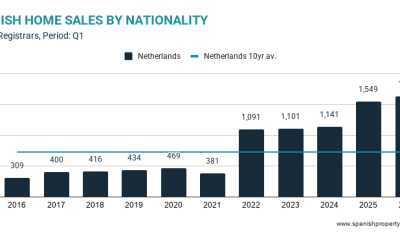
Dutch Demand For Spanish Property Keeps Rising As Others Cool
-
Cataluña wildfire2 weeks ago
Spain travel chaos as Cataluña wildfires close major roads and suspend trains
-

 New Developments7 days ago
Luxury Villas For Sale, Estepona – ProjectL1
-

 New Developments6 days ago
Stylish 3-Bedroom Apartment With Panoramic Sea Views – Benalmádena
-
contact lenses2 weeks ago
Heading To The Beach This Summer? Here’s Why You Should Never Take A Dip In The Sea While Wearing Contact Lenses
-
 %2 weeks ago
Could Holidaymakers In Spain Soon Pay More Than Locals?
-
Cheap food options1 week ago
Public supermarkets could be coming to Spain. Could they make food cheaper?