
Donald Trump
Enriched Uranium, The Latent Threat At The Center Of The Dispute Between The US And Iran

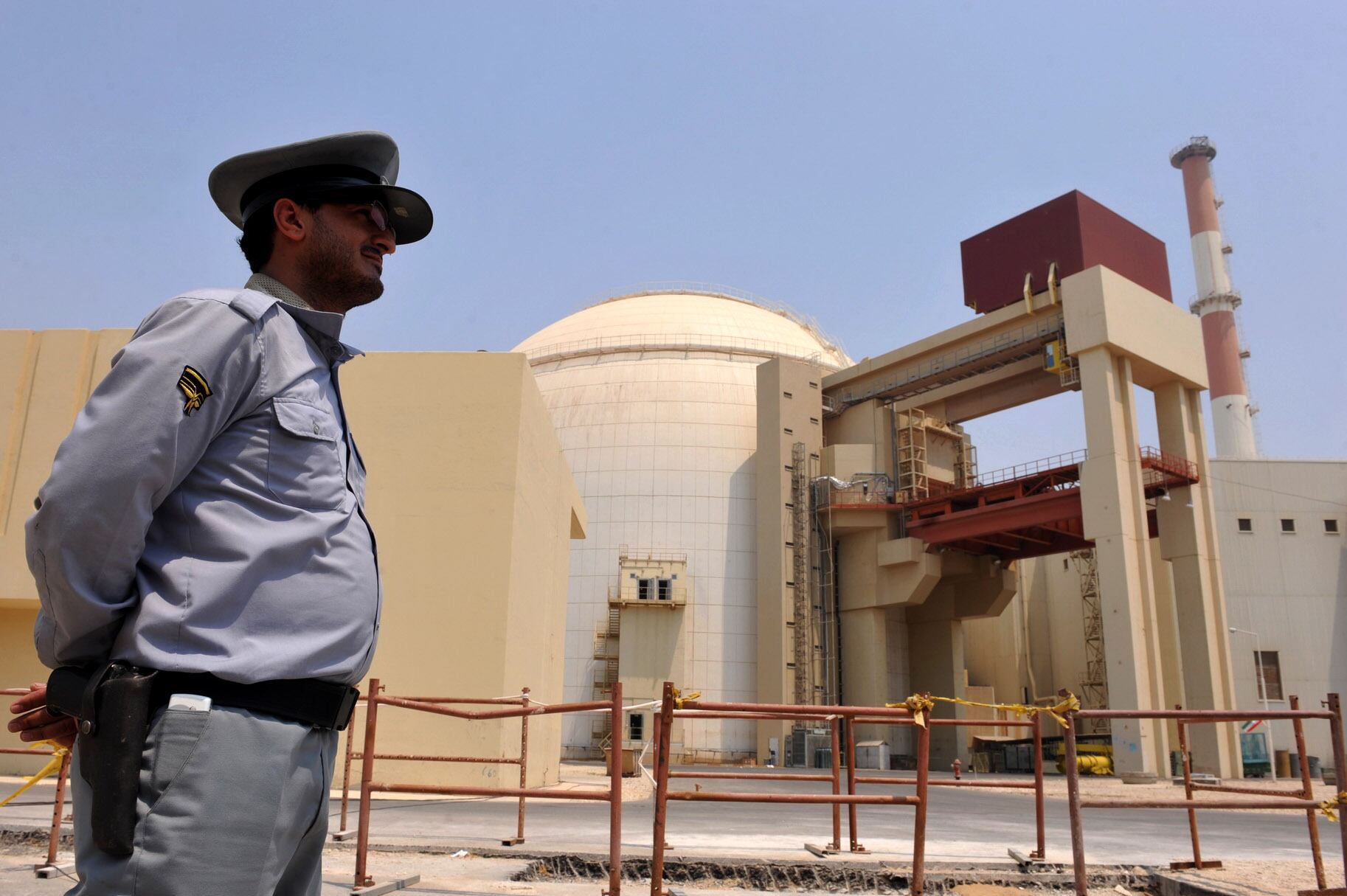
Satellite images released in March show a flatbed truck carrying several suspicious blue barrels in a desert area. It is escorted by three security vehicles to the entrance of the underground tunnel complex in Isfahan, the bunkers that are part of Iran’s nuclear facilities. “Not time to get excited? Transfer of large load precious high enriched uranium in daylight?” Olli Heinonen, the former head of the Safeguards Department at the International Atomic Energy Agency (IAEA), quipped on social media after the French newspaper Le Monde published the photographs.
Since the U.S. and Israeli strikes against Iran’s nuclear and military facilities in June 2025, inspectors from the UN nuclear agency have only set foot in Iran to monitor sites that were not targeted. And since February of this year, after the start of the full-scale war, not even that. The IAEA has lost the physical access that for decades underpinned verification of Iran’s nuclear program. “Although analysis of satellite imagery of the nuclear sites around Natanz, Fordow and Isfahan is important,” Heinonen explains from New York, “supply chains for equipment and materials are geographically dispersed. Much of the actual research and experimental work is being carried out elsewhere, including at unknown locations.”
Heinonen is known in U.S. Department of Energy laboratories as the “Sherlock Holmes of nuclear detection.” He worked for 27 years at the IAEA in Vienna and personally inspected nuclear facilities in Iran. Although he led the agency’s efforts to implement analytical models to complement traditional verification activities, he speaks with the caution expected of someone trained as a safeguards inspector. “Satellite imagery has its limitations. It is not a continuous monitoring system that can determine, for example, a vehicle’s origin or the contents of packages. When we look at the Isfahan nuclear center, we see it houses many other activities, such as production of zirconium tubes, hafnium, etc. Additional information is needed to reach a credible, professional conclusion about the possible material those containers hold.”
U.S. President Donald Trump claimed the June 2025 bombings had caused “the total destruction” of Iran’s nuclear program. Contradicting his own boast, eight months later, on February 28, 2026, he launched Operation Epic Fury, telling the world that “Iran will never have a nuclear weapon.” The White House embarked on a large-scale war that was supposed to last a few weeks but stretched into months — with the current uncertainty over a ceasefire agreement hanging in the balance; it began with the bombing of a school in Minab that killed nearly 200 people, mostly girls, and has caused more than 7,000 deaths and 37,000 injuries in Iran and Lebanon; it has brought the Middle East to a boil, and has given Iranian leaders a new superweapon they did not know they possessed: control of the Strait of Hormuz, a key route for oil transport.
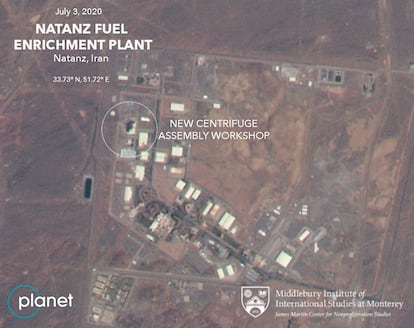
The UN agency responsible for safety and nonproliferation sees more nuclear risk in Iran today than before the war. Three days after the start of the bombings, Rafael Grossi, director general of the IAEA, said: “While there has been no evidence of Iran building a nuclear bomb, its large stockpile of near-weapons grade enriched uranium and refusal to grant my inspectors full access are cause for serious concern.” “For these reasons,” he added, “the Agency will not be in a position to provide assurance that Iran’s nuclear program is exclusively peaceful.”
Grossi is in the midst of a campaign to be appointed the new UN secretary-general. He balances leadership of the IAEA with publishing articles in U.S. international affairs journals that set out his proposal to save the organization from “irrelevance,” as he stated in a column for Foreign Affairs. The veto power of one of the five permanent members of the UN Security Council could block his candidacy. Among them is the country that attacked Iran, the United States.
Robert Kelley, former chief inspector for the IAEA in Iraq, South Africa, Libya and Syria, with extensive experience in technical analysis of Iran’s nuclear program, distinguishes between the Agency’s ability to measure nuclear material — which he says remains excellent — and its capacity to judge whether that material points to a weapons program, something he considers politicized.
“Its inspectors verify declared nuclear material,” Kelley tells this newspaper from Klosterneuburg, near Vienna. “They are the only ones, outside Iran, who can do that, and they have done an excellent job. We would be blind without the IAEA’s routine inspections.” However, the expert cautions, “making superficial judgments about ‘peaceful’ intent is a slippery slope that [Grossi] may regret taking. He himself is technically rather weak, as are his advisers, when it comes to a [nuclear] program and its content.”
The fate of Iran’s uranium
The 440 kilograms of uranium, enriched to 60%, whose exact whereabouts no one can confirm today, would fit “in 50 barrels the size of scuba tanks. That’s it,” says the U.S. nuclear engineer who, before becoming IAEA director, worked on defense nuclear programs at the Los Alamos National Laboratory — the origin of the Manhattan Project that built the first atomic bomb during World War II — and the Lawrence Livermore National Laboratory.
Hence Heinonen’s disdain for speculation about the blue drums in the satellite images, and the warning about the risks of physical inspection being replaced by remote monitoring. “The enriched uranium has not disappeared,” Kelley reminds us. “Iranian leaders know exactly where it is, and the ambiguity keeps them laughing all night.” That is, the Revolutionary Guard retains its value as a bargaining chip and latent threat. Meanwhile, Iran’s ambassador to the IAEA, Reza Najafi, denies that his country resumed enriching uranium after the Israeli and U.S. bombings of its nuclear facilities in 2025.
Kelley proposes an unconventional negotiated solution, not just a diagnosis of the crisis: that Iran give up all its 60% uranium in exchange for being allowed to continue enriching to 20%, a level for civilian use that is currently scarce on the international market, and export it as fuel. In this way, it would preserve its centrifuge program and gain a real industrial niche, while the IAEA maintains verification. A swap inspired by the “Megatons to Megawatts” precedent, which under U.S. supervision turned Soviet weapons-grade uranium into civilian fuel for two decades. “Why bomb Iran?” Kelley asks. “Just buy the material and remove it, like in Operation Sapphire in Kazakhstan.”
Days after the Memorandum of Understanding signed by the presidents of Iran and the United States on June 17, 2026, Grossi spoke at the Fukushima Daiichi nuclear plant in Japan. “The agreement explicitly states nuclear activities that are going to be carried out with regards to nuclear material facilities will be supervised by the IAEA.” He added: “Obviously, to do that, we will have to inspect. Whether this happens today, after tomorrow, or in one week, or in 10 days, it’s important but not essential. This is going to happen.” As yet, no date has been set.
Sign up for our weekly newsletter to get more English-language news coverage from EL PAÍS USA Edition

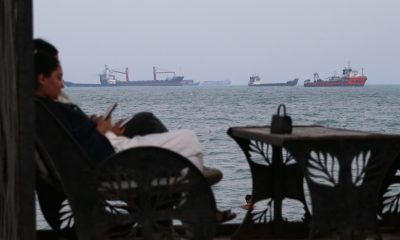



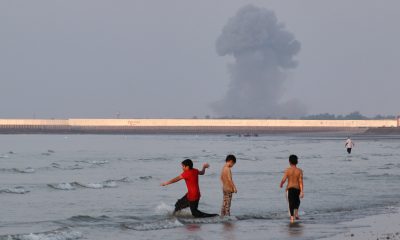




Tuesday, June 23. U.S. Secretary of State Marco Rubio lands in Abu Dhabi with a clear message: the Strait of Hormuz, he says, is an “international waterway” and, as such, “no country is allowed to charge tolls or fees” there. “That’s existing international law. That’s the way it is in international waterways all over the world, and that’s the way we expect it’ll be here.” His words were directed at several addressees: the United Arab Emirates, the friendly country he is visiting, and the other hydrocarbon exporters of the Persian Gulf, which should be able to export without hindrance. And, of course, Iran, which — in his words — will not be able to cash in on the ships transiting the crucial artery for the transport of oil, gas, and their derivatives.
Monday, July 13. All the hopes raised by the ceasefire agreement evaporate. Donald Trump has just notified Congress that his country is back at war, and his rhetoric on Hormuz takes a radical turn: “The U.S.A… will be reimbursed, at the rate of 20% on all cargo shipped, for any and all costs necessary to do the job of providing safety and security to this very volatile section of the World.” Shortly before, in an interview with Fox News, his favored network, he had called the U.S. the “guardian angel” of the strait.
Tuesday, July 14. As the clock ticks down toward the entry into force of a new U.S. blockade of Hormuz, effective only for Iranian ships, Trump doubles down… and then retreats in his own way: “I have decided to replace the 20% United States Reimbursement Fee with Trade and Investment Deals that the various Gulf States will be making into the United States,” he wrote on his social network, Truth, only to say later at a White House appearance that he does not believe “anyone should be able to charge a fee for the use of the strait.”
The damage, however, has already been done.
Despite how far-fetched the idea is — and despite the fact that the Republican magnate has made a habit of not keeping his word, his promises, or his threats — an administration source had assured on Monday that Trump’s position on this point was “very serious.” “This is what he’s always wanted to do, but people tried to talk him out of it. To him, this was his instinctual decision always, and he’s sort of just come back around to it,” the source told the news site Semafor.
Among those who publicly opposed that “instinctual decision” were Rubio, the vice president of the United States, J. D. Vance, and the secretary of defense, Pete Hegseth. A review of the archive turns up several statements against the idea of charging a toll… when it was supposed to come from Tehran.
Iran — which has been discussing the matter with its neighbor Oman for weeks — has repeatedly tabled an option that this Monday changed sides. It is Trump —who, together with Benjamin Netanyahu, launched the war that led to the closure of Hormuz — who now sees a possibility to charge for transiting those waters.
On either side, the mere idea wipes out any hint of security in an area critical to the global economy. It lends legitimacy to tolls that have “no legal basis,” as the International Maritime Organization (IMO, part of the United Nations) pointed out on Tuesday, but which increasingly seem closer to reality.
With this U-turn, yet another by Trump, the Republican also hands his opponents a powerful argument: Tehran can only see its proposal to charge for crossing Hormuz vindicated. “The president of the United States is completely right. Whoever guarantees the safe passage of merchant ships through the strait must be compensated for this service,” Iran’s foreign minister, Abbas Araghchi, wrote after the Republican’s proposal. He added his own interpretation immediately after: “Iran has always been the guardian of the strait and will remain so forever. Twenty percent is, of course, excessive. We will be fair.”
Trump’s outburst and subsequent backtrack in fact bring Iran and Oman even closer. This Monday, hours after listening to the White House, Omani authorities reaffirmed that their “priority” remained reaching an agreement “with Iran to guarantee freedom of navigation.” Even countries that initially wavered between the two contenders seem to be drifting further from Washington. No Middle Eastern capital was consulted by the Trump administration before it launched its proposal, according to reports by the Qatari outlet Al Jazeera and the U.S. site Axios.
From Trump’s Truth post on Tuesday, it is also unclear whether the “Trade and Investment Deals that the various Gulf States will be making into the United States,” announced ostensibly to mask his latest reeling in of threats and, according to Washington analysts, to avoid their unwanted effect on gasoline prices in an election year, are new pacts. Or whether the Republican was simply referring to deals sealed after his visit to the region last year, from which he returned with, among other gifts for him and his family, a plane donated by Qatar that the president hopes to use as Air Force One and that has already raised initial security concerns.
The Schrödinger strait
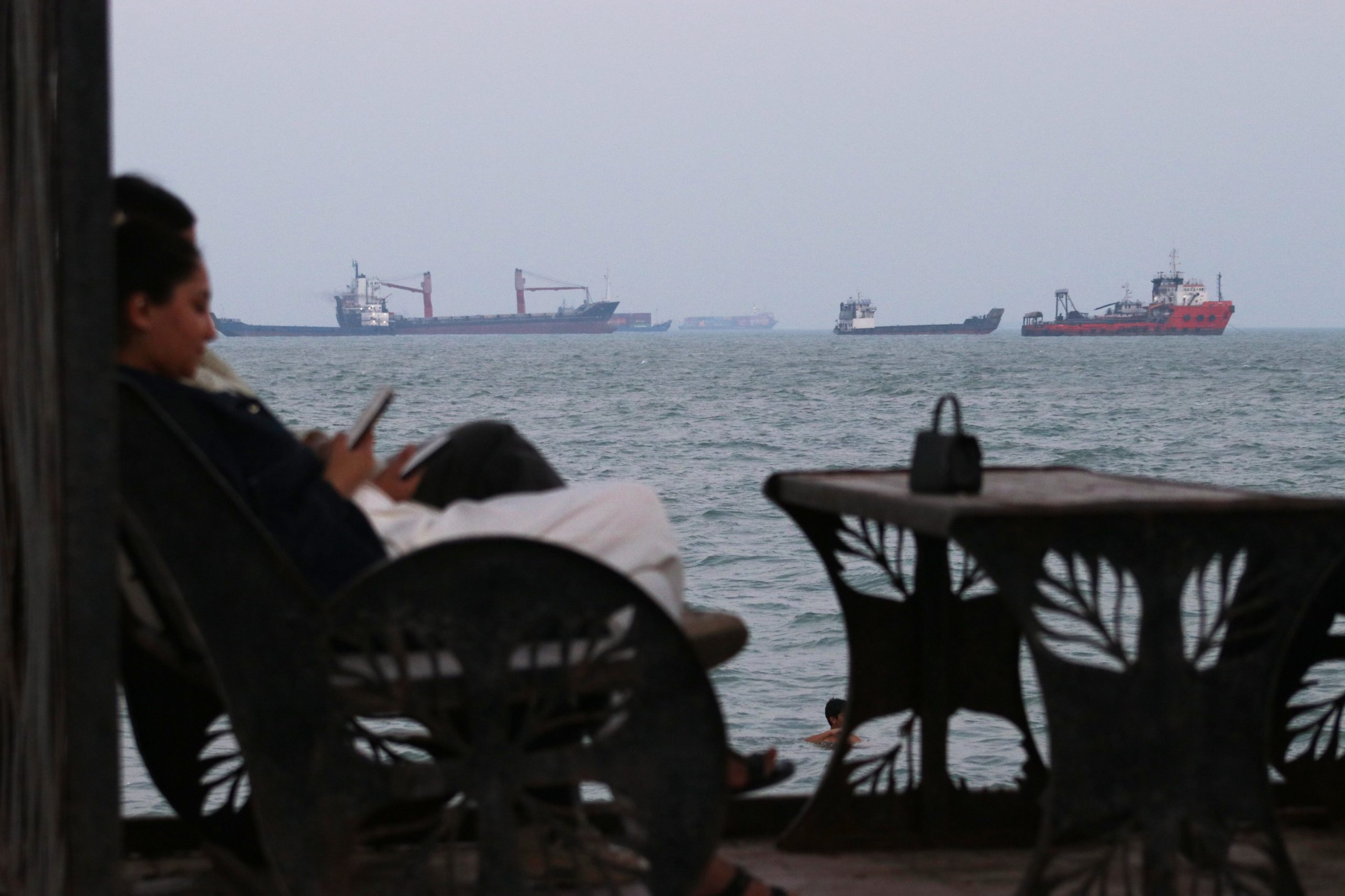
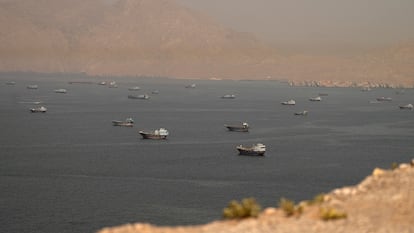
In recent days Hormuz has again been the Schrödinger strait: open according to the United States, closed according to Iran. On the ground, the reality is much more nuanced: some ships are still crossing, yes, but in dribs and drabs compared both with prewar transit volumes and with the weeks immediately after the memorandum of understanding was signed. Those who dare do so under cover, with their transponders switched off, to go as unnoticed as possible and avoid being attacked.
Transits have collapsed especially on the southern route, a lane that runs in Omani waters and which, on paper, is under the protection of the U.S. Navy. That, according to the specialist outlet Lloyd’s List, indicates that “shipowners’ confidence in that protection is eroding.”
In the last week alone, at least seven vessels have been attacked by Iran, mostly large tankers linked to Emirati, Saudi, and Qatari hydrocarbon companies that participate in a scheme in which these vessels, escorted by U.S. warships or monitored by aircraft, assume the risk of transiting Hormuz to then transfer their cargo to smaller ships off the port of Fujairah (United Arab Emirates).
“It is unlikely that ships will steam ahead full speed to assume the same risks while also paying a high tax,” warns Paul Donovan, chief economist at Swiss investment bank UBS, in an analysis published on Tuesday. “A 20% fee would be about 15 times higher than the levy Iran had considered and, as a proportional tax, would amplify fluctuations in the price of oil,” he notes.
The Baltic and International Maritime Council (Bimco), the largest shipowners’ association by membership, estimates that supertankers — which carry between one and two million barrels of crude — would have to pay about $27 million per voyage, while container ships would owe between $65 million and $260 million, depending on their cargo capacity. “While some cargo owners and operators might decide to absorb these additional costs, in most cases this expense will be passed along the supply chain and reflected in higher costs for consumers,” the analysis sent to this newspaper explains.
The shipping industry, which had already opposed the possibility of an Iranian fee or toll, is furious at Trump’s notion. “Charging tolls for passage through international waters would be fundamentally wrong,” Hapag-Lloyd told EL PAÍS in a comment sent by email. “Tolls for infrastructures like the Suez or Panama canals are different because they reflect significant investments in infrastructure. That is not the case in Hormuz.”
The UN Convention on the Law of the Sea (UNCLOS), the foundational text for governing global relations in this key area, prohibits imposing “tolls” in exchange for the passage of merchant ships through natural straits, although some, like the Turkish straits, do levy pilotage fees due to their greater navigational difficulty (the Bosphorus has a minimum width of 700 meters compared with Hormuz’s 30 kilometers).
Even harsher was Brazil’s president, Luiz Inácio Lula da Silva, who compared Trump to privateers: “He says he will clear the strait, but for every ship the oil owner must pay him 20%. This used to be called piracy. An important country like the U.S., which long fought against piracy, cannot now become a pirate.”
Price increases
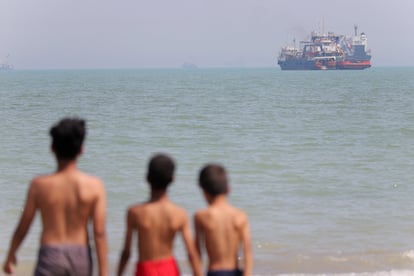
Joining the toll proposal was the decision to reimpose the U.S. blockade in the Gulf of Oman to prevent trade to and from Iranian ports, a move that also raises tensions in the area and which, according to Jakob Larsen, Bimco’s head of security, will lead Iran to “increase its threats” against maritime traffic. Trump’s proposal, which raises transport costs and represents an “additional disincentive” for transiting the strait, would only make sense if it contributed to a “significant reduction of the Iranian threat,” something Larsen says “is unclear how it is intended to be achieved.” For that reason, he believes all this entails “a grave risk of escalation” in Hormuz which, combined with the restriction of Iranian crude exports that the U.S. naval blockade seeks, “will put further upward pressure on oil prices.”
The fragile peace promised by the June agreement “has come to an end,” declare Gregory Brew, Clayton Allen, and Firas Maksad of the risk consultancy Eurasia Group. It has happened, moreover, more than a month earlier than planned: the original agreement had been a cessation of hostilities until August 17, with Hormuz open throughout that period and the world finally getting a breather after the sequence of convulsions. “Although for now it is unlikely that the U.S. will resume large-scale bombings against Iran similar to those in the March war, the volume transported through the strait will fall from between 30% and 50% [of prewar levels, in recent weeks] to between 5% and 15% until both sides reduce tensions.” In plain terms: oil, gas, and fertilizers will be more expensive, until further notice.
Bridges and power plants
“Next week it gets really bad for them,” Trump declared. “We’re going to knock out all their power plants. We’re going to knock out all their bridges unless they get to the table and negotiate,” he added, repeating earlier threats that were at the time condemned by UN officials.
Sign up for our weekly newsletter to get more English-language news coverage from EL PAÍS USA Edition


Joan Sebastián Durán Guerrero, a 26-year-old Colombian and father, was unarmed and not the target of the operation. Still, an agent from U.S. Immigration and Customs Enforcement (ICE) who stopped him on a street in Biddeford, Maine, opened fire and killed him. The magazine The Atlantic has reported that the officer who fired had only recently joined the agency, a detail that has renewed scrutiny of the accelerated training given to new recruits in the deportation apparatus, which now numbers about 22,000 officers and has been pushed by President Donald Trump.
The Department of Homeland Security (DHS) has not explained a detail that seems crucial: why the agent concluded Durán Guerrero posed a threat that justified lethal force. While it initially said the victim had used his vehicle “as a weapon,” a later DHS statement said only that the officer fired because he “feared for public safety” while the Colombian “was attempting to flee the scene.” Several videos of the incident that have emerged and circulated on social media cast doubt on that account. So far, the government has not revealed the officer’s identity or confirmed The Atlantic’s reporting.
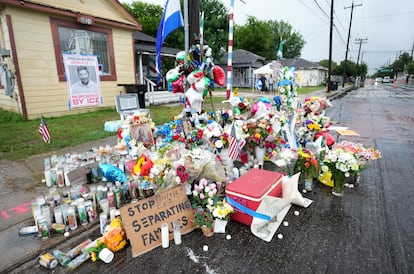
Last week, Lorenzo Salgado Araujo, a 52-year-old Mexican immigrant, died after being shot by another ICE officer during a traffic stop in Houston, Texas. Neither the officer involved in that case nor the one who killed Durán Guerrero was wearing a body camera, even though the devices were supposed to be part of the standard equipment for most immigration officers conducting street operations, under a DHS commitment following the killings of Renee Good and Alex Pretti in Minneapolis in January. In the recent cases, the absence of those recordings makes it harder to reconstruct precisely what happened; nearby security camera footage, which is often partial, and witness accounts are the only elements so far helping to clarify events.
Amid a growing wave of questions and protests over these deaths, ICE ordered agents in its Enforcement and Removal Operations (ERO) division to temporarily suspend vehicle stops as a method for detaining immigrants, according to press reports citing federal officials. The instruction was to replace that tactic with other methods of locating and arresting people. Traffic-stop arrests had become one of ERO’s main tools to increase the number of detentions as people learned, for example, that they can refuse to open the door of their home to officers who do not show a warrant. In recent months the Trump administration had accelerated arrests, and ICE reached roughly 2,000 detentions per day.
A third incident on Tuesday intensified criticism on this issue. A 28-year-old man died after being struck by a tractor-trailer while fleeing immigration agents and other federal officers in Florida. The man was one of four occupants of a vehicle that stopped at a gas station in St. Augustine. According to authorities, when agents tried to detain them, all four ran. During the chase the man crossed a highway and was hit by a commercial truck, causing his death. While ICE is not directly responsible for this death, the climate of fear generated by its agents’ actions hangs over it.
Questions over training
In February, Ryan Schwank, a former ICE attorney and the agency’s former head of deportation officer training, publicly confirmed what many critics had warned about: that the instruction at the agency’s academy was insufficient. “I am here because I am duty-bound to report the legally required training program at the ICE academy is deficient, defective and broken,” he said during a forum organized by two federal lawmakers.
What he revealed next was even more alarming: “On my first day, I received secretive orders to teach new cadets to violate the Constitution by entering homes without a judicial warrant. For the last five months, I watched ICE dismantle the training program, cutting 240 hours of vital classes from a 584-hour program.” He was referring to the Trump administration’s plan to recruit, train and deploy new immigration officers at an unprecedented pace, with the goal of doubling in a single year the number of officers dedicated to arrests and deportations, to about 22,000 personnel. During that time, recruits were expected to complete an intensive 42-day course.

It was not until June that DHS ordered that incoming agents — many of whom had joined through the accelerated training process — receive additional instruction. From that month, according to the directive, new cadets at the ICE academy in Georgia were to complete a roughly 71-day training program. It was not specified when that process would conclude.
“The training policy is going to change a bit, as we are going to address crowd control and adapt to current needs,” Homeland Security Secretary Markwayne Mullin said during his testimony before Congress on June 2. “Nevertheless, all training is always subject to changes and adjustments,” he added.
Body cameras
After the recent deaths of immigrants in encounters with ICE officers, DHS again blamed Democratic lawmakers for the lack of body cameras among some of the officers involved in fatal shootings. In a statement the department said the absence of those devices occurred “due to the consecutive government shutdowns caused by the Democrats.” The first ended on February 3 and the second on April 30.
Even before the public commitment by former Homeland Security secretary Kristi Noem that immigration agents would wear body cameras, ICE had established a policy in January 2024, during the Biden administration, that requires most of its officers to wear them during “all aspects of law enforcement activity.” However, in practice, implementation remains uneven: many agents still do not wear them.
The changes announced by DHS have not eased criticism from those who question the use of force by immigration officers. “The pattern is always the same,” Democratic Representative Sylvia García of Houston told CNN, referring to explanations offered after the two recent shootings. “If ICE has the option to shoot anyone for public safety reasons, what does that mean?” the lawmaker asked. “If you drive recklessly and violate public safety laws, could they decide to shoot you?”
Sign up for our weekly newsletter to get more English-language news coverage from EL PAÍS USA Edition
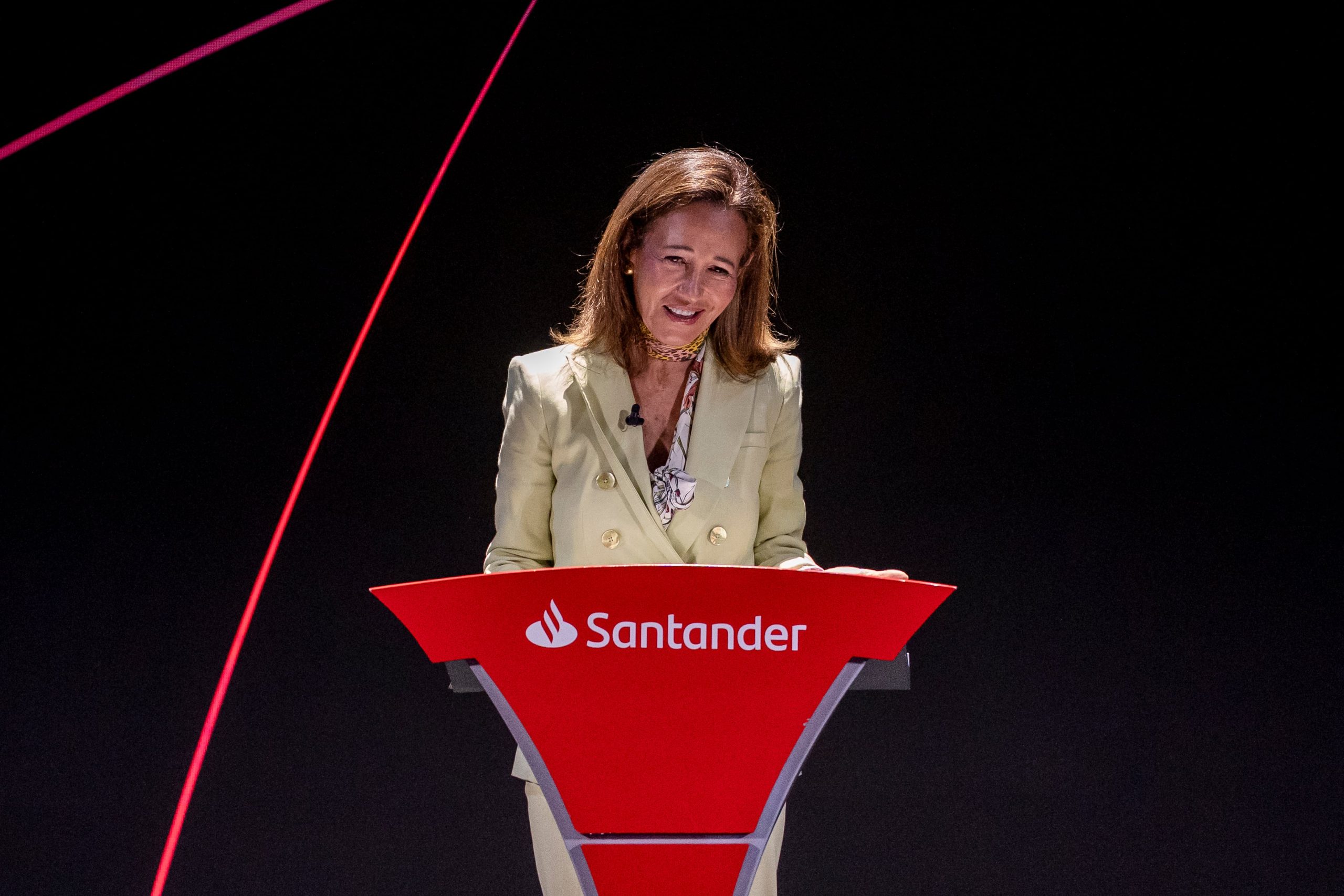
Ana Patricia Botín
Botín Defiende La Compra De Webster En EE UU Frente A Las Tensiones De Trump Con España


Red Bull told to replace Max Verstappen with F1

Inglaterra – Argentina, Las Semifinales Del Mundial En Directo | Tuchel Hace Tres Cambios En El Once Y Scaloni Apuesta Por Giuliano Simeone En Lugar De De Paul

Francia Aprueba Definitivamente La Ley Que Legaliza La Eutanasia Y El Suicidio Asistido
Alhaurin el Grande and Coin launch historic 1.5 million kilo season for premium tomato

Los Aficionados Al Ciclismo En Barcelona: “Que Venga El Tour De Francia Es Como Ir Al Mundial De Fútbol”

Cheap Flights And Mass Tourism Are Adding €3,800 To The Cost Of The Average Spanish Home, New Report Warns


-
Alhaurin El Grande2 weeks ago
Alhaurin el Grande and Coin launch historic 1.5 million kilo season for premium tomato
-
 Antoni Gaudi2 weeks ago
Los Aficionados Al Ciclismo En Barcelona: “Que Venga El Tour De Francia Es Como Ir Al Mundial De Fútbol”
-
 Business & Finance2 weeks ago
Cheap Flights And Mass Tourism Are Adding €3,800 To The Cost Of The Average Spanish Home, New Report Warns
-

 Barcelona2 weeks ago
Spain Is Set To Be Swarming With Rock Legends This Weekend – Here’s What You Need To Know
-
4 billion fine2 weeks ago
Google loses €4.1bn EU fight over the apps Android users see first
-
 Dutch demand2 weeks ago
Dutch Demand For Spanish Property Keeps Rising As Others Cool
-
Barcelona2 weeks ago
Gang Horror In Barcelona As Gunmen Shoot Dead 15-Year-Old Boy Hanging Out In A Park
-
 Ahmed al Shara2 weeks ago
Al Menos Seis Muertos En Un Atentado En Un Céntrico Café De Damasco