
ElPais
Vlaada Chvátil, Inventor Of The Hit Game Codenames: ‘I’m A Perfectionist’


Whenever he is working on a new board game, Vlaada Chvátil thinks about it constantly. “Every spare minute,” he says. Whether he is in the shower or awake at 3 a.m. That is how his creative process works.
It is, inevitably, a very personal way of working. After all, there probably are not many co-designers willing to wake up in the middle of the night to debate cards or strategies. “I couldn’t call them at those moments to share my thoughts, but I also can’t stop thinking about them and then not develop them later,” he reflects.
That is why he usually develops at least the core of his games on his own. Not that the approach has hurt his career. The Czech designer is widely regarded as one of the industry’s leading creators.
His creations include Through the Ages, a game capable of condensing the entire history of civilization into a single board, and Codenames, the family-friendly bestseller built around deciphering clues, which has now spawned a Harry Potter-themed edition. And, more broadly, Chvátil’s body of work is defined by its variety and originality: some of his games differ so radically from one another that the only thing they seem to have in common is his name.
That signature is a guarantee of a challenge for thousands of players. It is also the result of the time he usually takes and the countless rounds of testing he puts his creations through. Some critics, however, complain that his games are too long and overly complex. Indeed, a game of Through the Ages requires reading a 23-page rulebook and takes at least two hours to play.
Codenames, by contrast, represents the opposite approach: conceived in a flash during a convention, it can hook anyone without much preamble or planning. “Sometimes, before releasing a substantial game, I’ve worried that I may have gone too far: ‘This is too much, nobody is going to play it.’ But players always surprise me,” Chvátil explains.
Even his critics, in any case, acknowledge his effort and ambition. The designer has at times rejected the idea of describing himself as a “true artist,” believing that his work is closer to craftsmanship. There is, however, another label he readily accepts: “I’m a perfectionist.”
So much so that he asks for the interview to be conducted in writing. He is currently working on a “really huge” new project, and says that the workload and deadlines have left him “exhausted.” He admits that his first instinct was to reply, “Not now.” In the end, he agrees because exchanging messages allows him to answer when he feels “comfortable.”
“I remember the moment I realized this had become my job,” he says. “A journalist once asked me about my career. I thought: ‘Wait a second, is this my career?’ I never wanted to become a game designer. I just wanted to create games.”
His first creations date back to his childhood in Jihlava. Gradually, however, it became clear that this was more than just a childhood passion. Then, in 1997, Arena: Morituri te Salutant marked his market debut.
Amid gladiators and fights, one could already glimpse what was to come. Chvátil explains that at the time he played many role-playing games and wanted to create a realistic combat system. But he became so absorbed in the idea that he ended up creating a completely original game. It was so unusual that one publisher asked him: “I don¡t understand it. If there’s a die, why is it never rolled?”
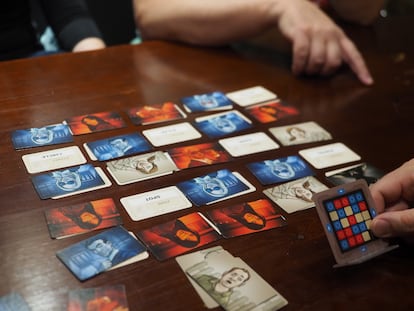
He says ideas come to him whenever he spots “untapped potential.” And that he likes to experiment so as not to get bored: by putting players on a team forced to cooperate in order to survive in Space Alert; by imagining a competition among imps to run the best pet shop in Dungeon Petz; or by creating a vast fantasy war epic in Mage Knight.
Two decades ago, Chvátil also became a publisher, taking the helm of Czech Games Edition. There, he learned to rein in his creative impulses when another designer was leading the project. So he is constantly testing, designing and publishing. At the same time, he may draw inspiration from other cultural fields: he reads, watches films and television series, goes to the theater and concerts, enjoys video games, and develops them as well.
“What makes a good game? One with a large audience, strong sales, high ratings or one that stays in people’s minds? I don’t want to decide what is or isn’t a good game. There are no particular elements that it has to include, as long as there are people who enjoy it,” he says.
In Chvátil’s case, there are plenty. Devir, his publisher in Spain, boasts that he has “no fewer than 10 major titles” to his name. Codenames, released in 2015, is probably the most famous. Apparently, that project finally helped his mother understand what her son did for a living.
But the Czech designer says the milestone that transformed his career happened a decade earlier. It required hundreds upon hundreds of hours of work. He play-tested it relentlessly throughout the process. There was no other way to make it possible to play through the entire course of civilization.
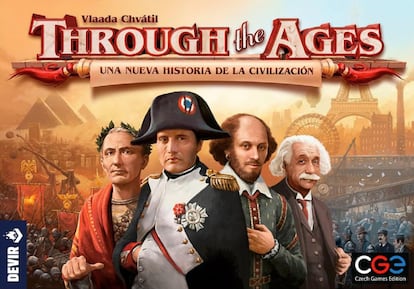
Because a game of Through the Ages takes players from the dawn of humanity to the triumph of computing. There are dozens of cards and hundreds of possible choices: figures such as Julius Caesar, Albert Einstein, Johann Sebastian Bach and Maximilien Robespierre appear alongside developments such as the printing press, nationalism, corruption and the scientific method. Universal history, essentially, packed into a box.
Two decades later, its scale is still daunting. But this contemporary perspective also reveals certain absences: women are underrepresented, aside from figures such as Joan of Arc and Angela Merkel, and the game takes a distinctly Western-centric approach.
“I realized it was something special when one of my friends, who never liked long games, spent five hours playing it and wanted to start again. It was an important turning point in my life: a few friends and I decided that designing board games would become our way of making a living,” says Chvatil.
He is still at it today, and still faithful to his method. Chvátil is now fully focused on making sure every aspect of his new game is “the best it can be.” And, he says, this time he is co-designing it: “At first there were many calls and brainstorming meetings, but it was fun, and I’m happy with the result.”
He claims the project could “easily take 30 hours a day,” if such a thing were possible. Because every spare minute counts.
Sign up for our weekly newsletter to get more English-language news coverage from EL PAÍS USA Edition




23 fotos
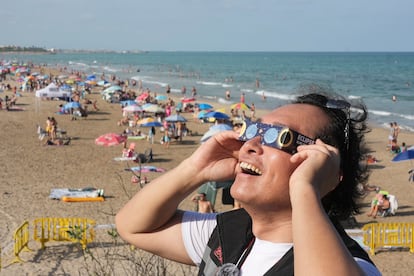
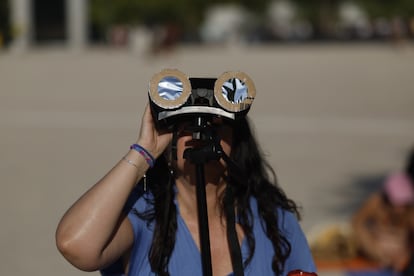
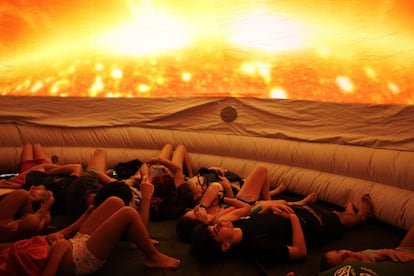
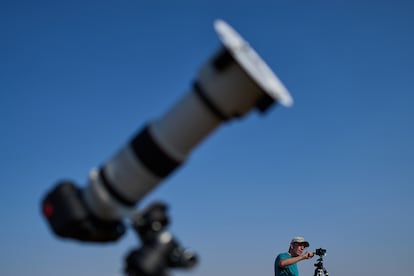
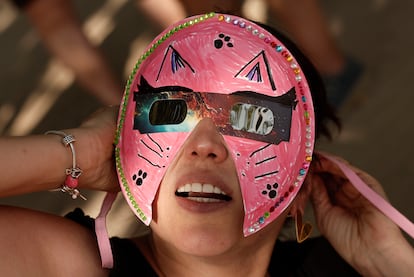
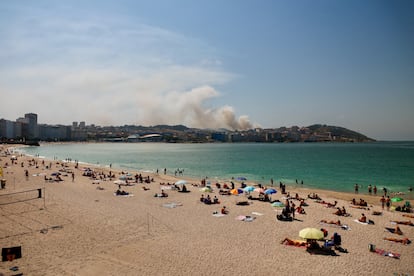
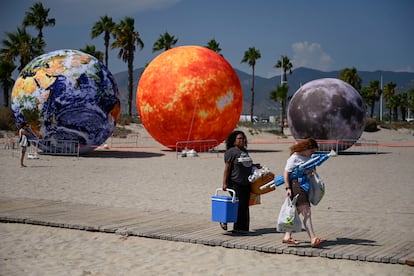
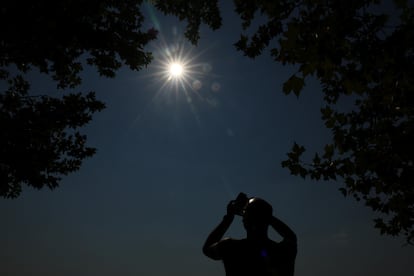
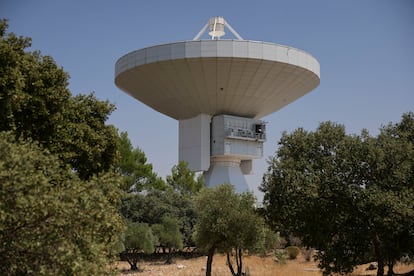
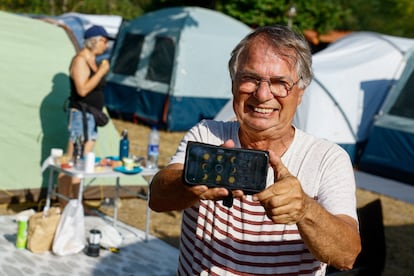
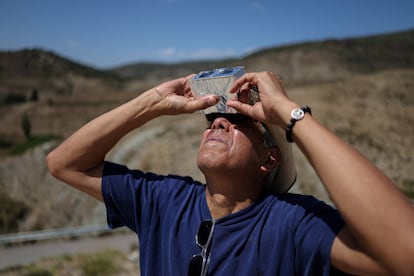
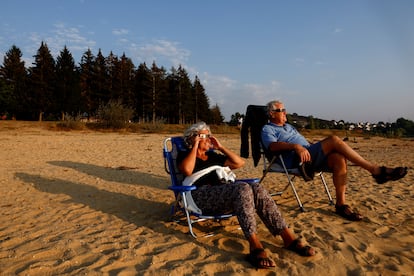
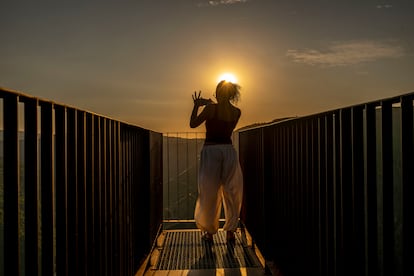
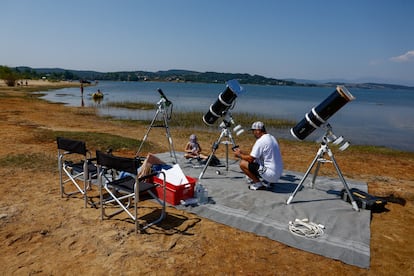
The astronomical event crossed the Iberian Peninsula on Wednesday, with totality visible only along a narrow west-to-east corridor











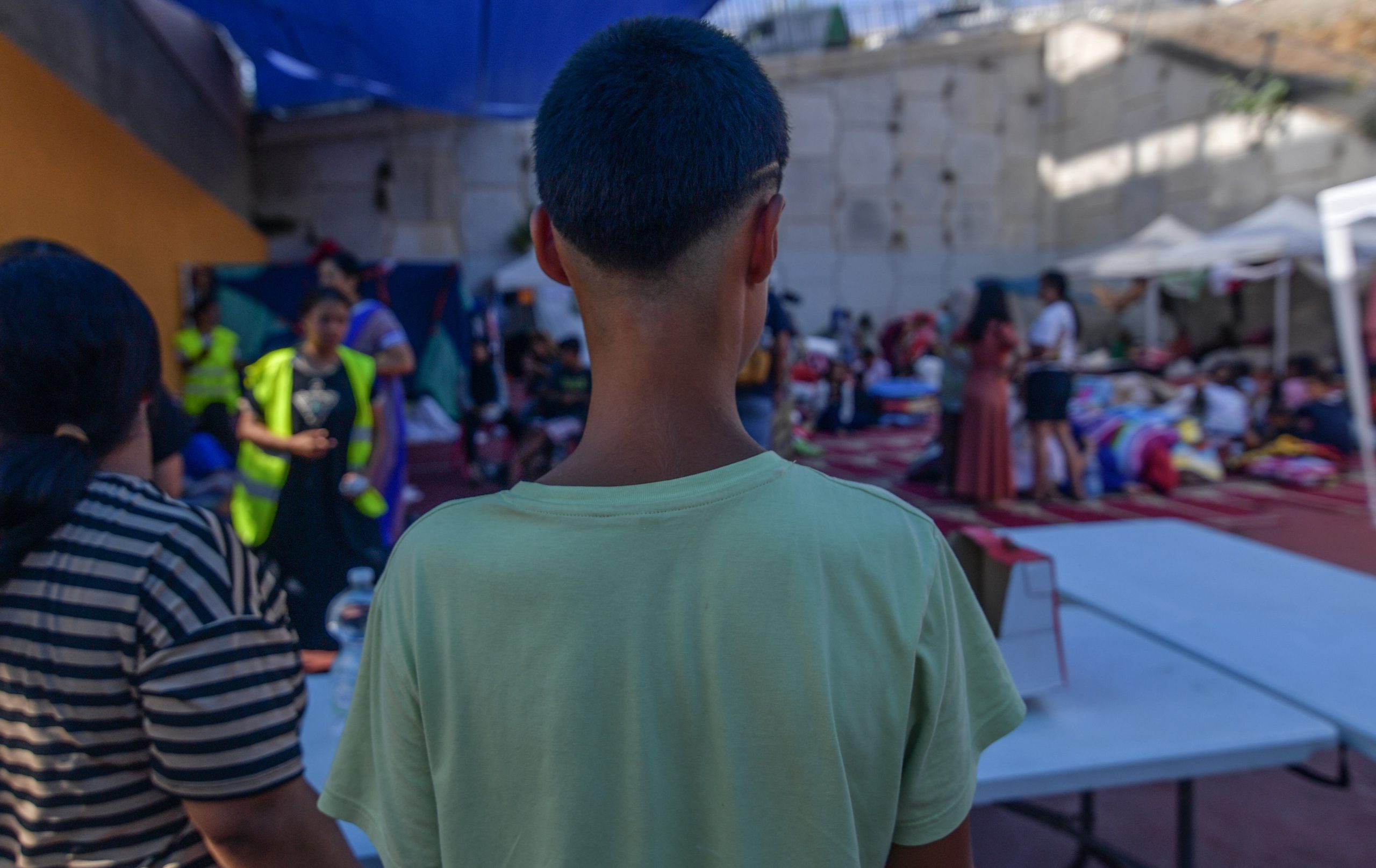
They share their dreams on an outdoor futsal court that’s been fenced off and turned into a makeshift camp by residents of the La Reina neighborhood in Ceuta. Some 350 women and children who arrived in the Spanish enclave city after swimming from Morocco 11 days ago sleep in the camp every night. They sit here waiting, on the ground, or, if they are lucky, on a rug.
They are waiting because, beyond these four fences and the two men guarding the entrance through the night, the world seems a safer place. Among them are children who dream of becoming footballers, studying technology or training as nurses. Children who have crossed the sea and who, without realizing it, have become the subject of a political debate before anyone has taken the time to listen to them.
EL PAÍS asked them to write letters so that politicians, especially those who say they do not want them in Spain, could learn about their aspirations. They do not write about borders or laws. They write about their dreams, because sometimes behind the word “migrant” there is a child who has not yet stopped imagining who they want to become.
Hello:
My name is Ismaíl. I want to stay in Spain to fulfill my dream of becoming a great footballer. If you let me stay in your country, you would help me a lot. With a bit of luck and a lot of hard work, one day I could become a talented player and represent Spain in the national team.
Ismaíl is 12 years old and completely alone in an unfamiliar country where he does not speak the language. Even so, he smiles often, proudly revealing the gaps where some of his teeth have yet to grow in. He arrived in Ceuta by swimming alongside his 20-year-old brother. He has not seen him since.
He sleeps on the ground. To wash, he goes to the vacant lot beside the camp and pours water over himself, fully clothed, using a pink beach bucket. Afterwards, the bucket passes from hand to hand among the women and children living there.
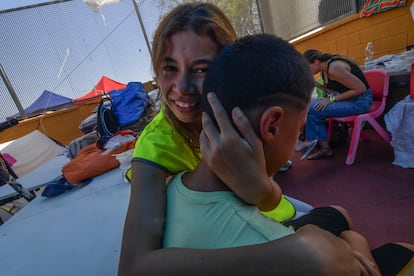
The little boy knows nothing about the controversy sparked by the arrival in Ceuta of hundreds of unaccompanied minors. He does not know that the Spanish Minister of Youth and Childhood, Sira Rego, has convened a meeting this Thursday to address the crisis in Ceuta. He also does not know that the far-right political party Vox is against receiving them. He knows nothing of the political arguments, the borders or the language others have chosen to use when discussing his future. But despite his young age, he is not surprised this is the case. He says he “knows very well that politicians in Spain do not want Moroccans to enter their country.”
Beside him sits 15-year-old Maryam. Her dark hair is tied back in a braid and she is still wearing the clothes she arrived in. With a ballpoint pen, she writes in Arabic in a notebook:
I wanted to come to Spain to work and help my family. I dream of finishing high school and becoming a nurse so I can help other people. Please regularize my status so we can build a better country together. We will show that we are worthy of your trust. We only want a better future.
She had been thinking about coming for three years. On July 30, at 4 a.m., she decided to try. She left Tetouan with a cousin and two friends. She was frightened because she is not a strong swimmer and knew that leaving her mother behind would not be easy. When she reached Spain, the first thing she did was log on to Instagram to talk to her mother. She had not warned her she was leaving and wanted to apologize. “She was very worried, but when I told her I was okay, she wished me all the success in the world because she understands that coming here had always been my dream,” says Maryam, smiling shyly when asked why she did not tell her mother about her plans.
Samia, 20, was a teacher in Morocco. Now, after arriving in Ceuta by swimming, she acts as a translator for Maryam. She explains that there are far-right parties that oppose relocating migrant minors to other regions in Spain. Maryam opens her eyes, surprised. “But why don’t they want to give us papers?” The question comes out plainly, without any understanding of political parties or political rhetoric. Samia laughs.
The hours drag on beneath the scorching heat. The ground burns when someone tries to sit down. In the vacant lot just outside the enclosure, two workers are attempting to install a portable toilet. It will be only the second for the more than 350 people taking refuge here.
The city council has just provided it after repeated appeals from the neighborhood association president, Abdellah Mustafa, who also spearheaded the idea of turning the soccer pitch into a safe haven for migrants.
Next to the toilets, a woman washes clothes beside a stroller while her baby crawls across the ground. When the mid-afternoon sun becomes unbearable, the child bursts into tears. Nearby, several girls sit exhausted on the curb, shaking out their clothes.
Despite everything, they are the lucky ones; at least they have a place to spend the night. More women continue to arrive asking whether there is any space left, but the enclosure is full. There is no room for anyone else. The volunteers guarding the site cannot take them in, and they will have to spend another night out in the open. Save the Children estimates that more than 1,000 minors in Ceuta are sleeping on the streets outside the official protection system.
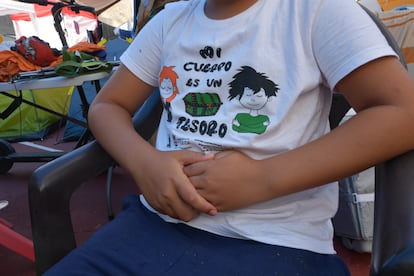
Mohamed and his mother watch the scene unfold while playing clapping games to pass the time. The boy is eight years old, with large, dark-brown eyes. Whenever someone asks him a question, he falls silent for a few seconds, thinking carefully about his answer, mouth slightly open and cheeks flushed, before finally speaking.
Until they found shelter here, Mohamed and his mother were sleeping on the street, outside a house. He says he felt terrified every time he saw the soldiers deployed across Ceuta.
Like Ismaíl and Maryam, Mohamed also writes his dream on a piece of paper:
I want to be a police officer and work to help my mom. I want to get the documents I need because I deserve a chance to prove myself.
In the meantime, he waits. He cannot explain why, but he is convinced this limbo will last another two weeks. Until then, he will follow the same routine every day: have breakfast, find another child to play with, eat lunch and wait for another day to pass. “And then the same again,” he says
Sign up for our weekly newsletter to get more English-language news coverage from EL PAÍS USA Edition


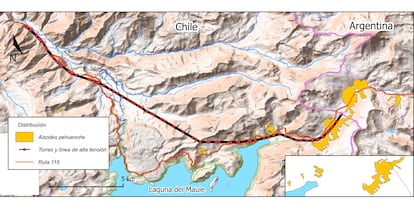
Actor and environmental activist Leonardo DiCaprio has come out in defense of the Pehuenche frog (Alsodes pehuenche), an amphibian listed as critically endangered, amid concerns that the Los Cóndores-Río Diamante power transmission project in Chile’s Maule region could threaten the species’ survival.
In an Instagram post on Sunday, in which he tagged the Chilean Herpetological Network and shared photographs of the frog and its habitat, the Titanic star warned that fewer than 1,000 individuals remain. He said Chile could approve “ a catastrophic plan to destroy the heart of their only known habitat.”
DiCaprio stressed, however, that his appeal is not aimed at halting the project altogether. “Conservationists are not asking for the transmission project to be stopped,” he wrote, but rather for it to be built in a location that would not expose the species to greater risk.
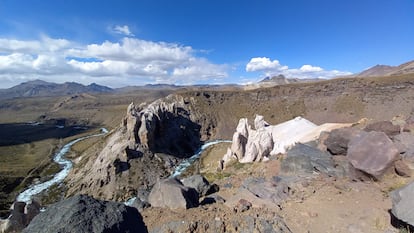
The project referenced by DiCaprio, developed by Enel Generación Chile, involves the construction of a 500-kilovolt power transmission line designed to interconnect the energy grids of Chile and Argentina. On the Chilean side alone, the plan calls for a 26.6-kilometer overhead transmission line and 72 high-voltage towers, infrastructure that would cut directly through the habitat of the Pehuenche frog.
A key milestone for the project had been scheduled for Monday, when the Environmental Assessment Commission (COEVA) was due to rule on a report by the Environmental Assessment Service (SEA) recommending its approval. However, following DiCaprio’s message, the session was suspended. No public explanation has been given for the postponement, nor has a new date been announced, Claudio Azat, director of the One Health Institute and co-chair of the International Union for Conservation of Nature’s (IUCN) amphibian specialist group, told EL PAÍS.
The Chilean government of José Antonio Kast responded to the actor’s comments. Environment Minister Francisca Toledo told Radio ADN that DiCaprio’s message referred to a project that remains under environmental review and therefore declined to comment on its merits while the process is ongoing. Instead, she defended Chile’s environmental institutions, saying: “Chile has a robust environmental framework in which all the evidence is examined and weighed as part of environmental assessments.”
The Pehuenche frog exists nowhere else in the world except the high Andes of Chile and Argentina. The person who helped bring the species’ plight to the attention of Re:wild, the conservation organization co-founded by DiCaprio, was Chilean biologist Claudio Azat.
“It is a little-known species. It was described by science about three or four decades ago,” Azat explained. “We know it has a very restricted distribution and that its main threat is the international highway that connects the Chilean city of Talca with Malargüe in Argentina.”
This amphibian is distinguished by the fact that, during the breeding season, males develop patches of gelatinous spines on their chests and fingers. They are also known as “Popeye frogs” after the famous cartoon character because their forearms become enlarged, allowing them to hold onto females during mating.
The species was classified as critically endangered in 2018 and has yet to recover from that status. “It is a species found only in the Alto Maule region, in the Pehuenche Valley, inhabiting small streams and wetlands fed by snowmelt and glaciers high in the central Andes, at elevations above 2,000 meters [6,500 feet],” Azat explained. “Its population numbers around 1,000 individuals.”
The conservationist acknowledges that, although campaigners had been raising concerns about the frog’s plight for years, the visibility generated by DiCaprio’s message has provided a decisive boost. “This is the second time he has supported a species in Chile. In 2019, he posted about the campaign to save the Loa frog, which was very positive because it changed the situation for that species,” Azat concluded.
Sign up for our weekly newsletter to get more English-language news coverage from EL PAÍS USA Edition

British Tourist Arrested For Assaulting Police Officer After Magaluf Confrontation

El Brillo De Jaël Bestué, Un Relámpago, Eclipsa El Apagón De Enrique Llopis Y Asier Martínez En Los Europeos De Atletismo

Un Truco De Brahim Le Da El Triunfo Al Madrid En El Teresa Herrera


-
easyJet2 weeks ago
First EasyJet passenger from UK refused entry to Gibraltar after new treaty
-

 New Developments2 weeks ago
Inside The Most LUXURIOUS Apartment Building In Spain!
-
Latest2 weeks ago
Trump And Far Right Seize On Spanish Migration Crisis
-

 Uncategorized1 week ago
Lewis Hamilton hits gold with $10bn jackpot but British star snubs Monaco move: F1 News Recap
-
Latest2 weeks ago
Thousands Of Migrants Swim From Morocco To Spain’s Ceuta Territory
-
 Latest2 weeks ago
Suspect In Murder Of Hungarian Woman In Benahavis Attempts To Slit His Own Throat As Guardia Civil Make Arrest
-
Costa Blanca beaches2 weeks ago
Tragedy at Jávea beach as 68-year-old swimmer dies despite hour-long rescue attempt
-
2 wheel case2 weeks ago
To push, pull or carry? Which luggage option is best for your posture and journey.