
Alan Cumming
Russell T. Davies: “I’m Glad That ‘Heated Rivalry’ And ‘Heartstopper’ Give LGBTQ+ Stories Happy Endings. I Just Can’t Write Them”

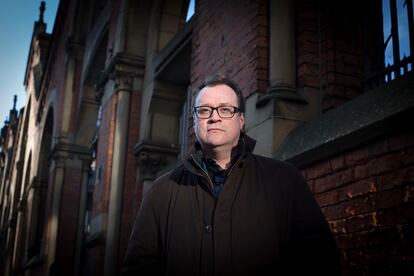
Screenwriter Russell T. Davies, 63, has lost count of the number of times a member of the LGBTQ+ community has approached him over the past 25 years to tell him that one of his series changed their life. “I never get tired of it happening. I appreciate it every time someone says that,” the British writer tells EL PAÍS in a video interview.
Several generations of viewers have now thanked him. The first barely knew how to use the internet when they were pirating Queer as Folk (1999), before streaming platforms existed. The series occupied a groundbreaking space on television, portraying a gay community that was imperfect, vibrant, and unapologetic about its existence. Later, the dual narrative of his companion series Banana and Cucumber (2015) added new layers, including the challenges of middle age, to characters who were far from likable or angelic. Meanwhile, It’s a Sin (2021) chronicled the AIDS crisis through a group of young people in 1980s London. Other works with broader themes, such as the new Doctor Who and Years & Years, have also explored diversity.
“I don’t spend much time on social media because I’ve received death threats since I began including trans characters in my scripts. But I also get complaints from the trans community, which believes a gay man should not be the one telling their story. That’s when you think, God, everyone’s angry,” says Davies, just days after HBO Max’s international release of his latest work, Tip Toe, which is precisely about that widespread sense of hostility.
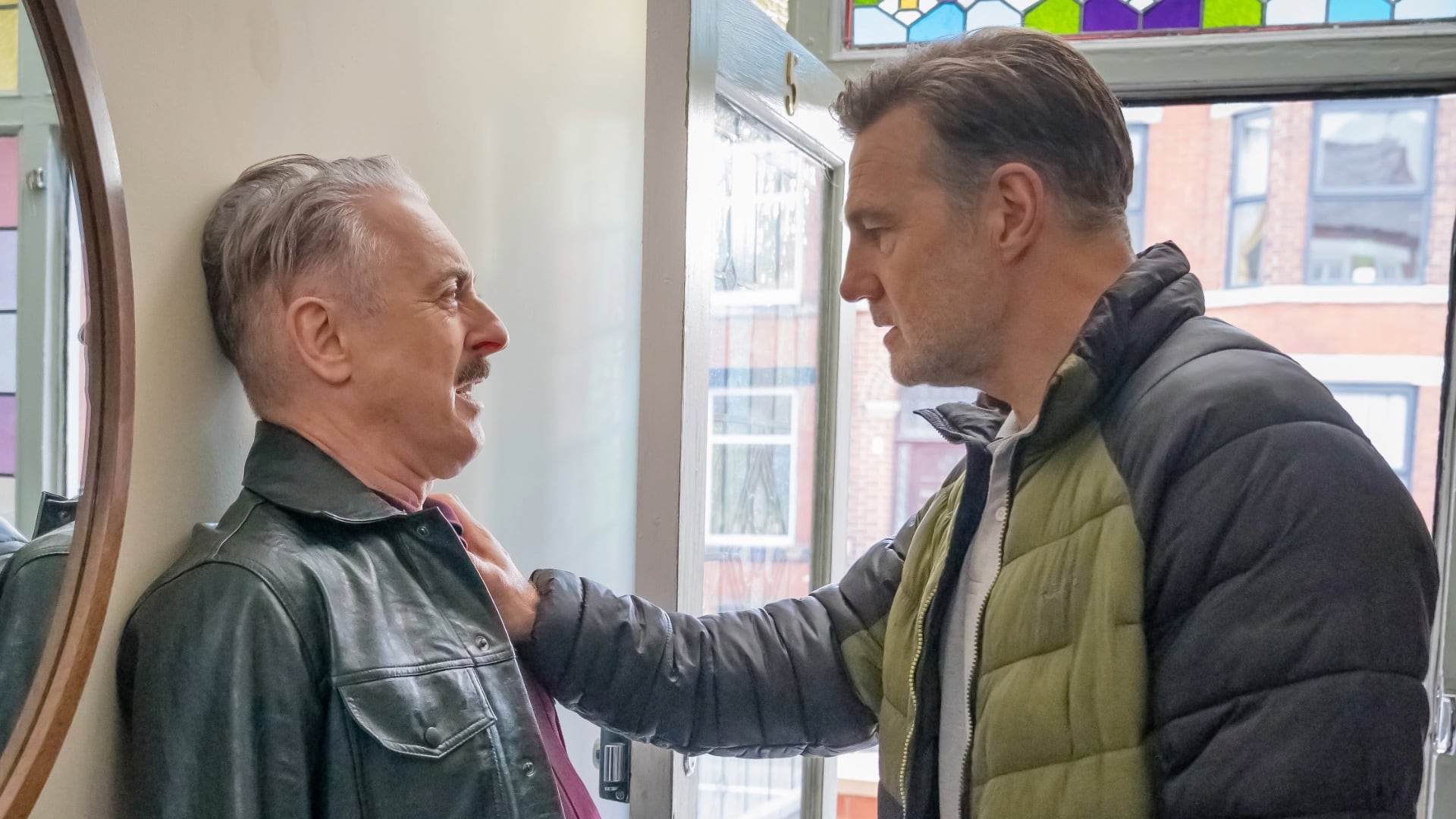
The story begins with Leo (played by Alan Cumming), a gay man who is open about his sexuality and owns the Spit & Polish bar on Canal Street, the heart of Manchester’s LGBTQ+ district. It is a safe haven for many of the city’s young people and a familiar setting in Davies’s television work.
In the opening minutes of the series, Leo finds himself in a situation straight out of a classic comedy. After a one-night stand, he ends up stranded in the street wearing only his underwear and is forced to ask his next-door neighbor for help. Clive (David Morrissey), the man who has shared a wall with him for 14 years, could not be more different: an electrician struggling financially, with two young children and trapped in an unhappy marriage. Before the first of the series’ five episodes is over, however, Davies makes it clear to viewers what lies ahead. This is not a comedy, but a tragedy.
Tip Toe originated in Davies’s mind from a similar situation, though one completely opposite to the one depicted in the show. “My neighbor Mike was a wonderful man who sadly passed away last year. He had a key to my house. He was a lovely neighbor, a big, tough man. But giving your front door key to someone suddenly makes your house a bit porous and open. And he would sometimes walk in without saying,” the screenwriter recalls.
That anecdote sparked his storyteller’s imagination, leading him to explore possibilities far removed from reality. “What if something went wrong between us? What if we fell out? What if my neighbor or his family were homophobic?” Davies found himself wondering.
At the same time, the British writer was increasingly concerned by the growing wave of anger and violence in society. “These elements have always existed in some shape or form, but now they are being driven by the digital environment, by our phones and by algorithms. As a gay man, I was getting more and more alarmed by this,” he admits.
It is a theme he had already explored in the dystopian Years & Years. The series enjoyed major success around the world, though less so in the United Kingdom. “I was wondering how to tell a story about where we’re heading, but make it more popular, more watchable,” he says.
That is how Tip Toe was born. Ultimately, the series examines how toxic masculinity permeates society regardless of gender or sexual orientation, much as it does in another of HBO Max’s major releases of the year, Richard Gadd’s Half Man. “Toxic masculinity is also awful for straight men,” Davies argues.
David Morrissey and Alan Cumming, the lead actors in Tip Toe, have been friends for more than 40 years. Paradoxically, that on-screen chemistry helped build the gradual rift between the series’ two protagonists.
“It was a huge advantage that we didn’t have to wait for them to build trust. They know each other so well that they could try things other actors would never dare,” the showrunner says enthusiastically. “I’m glad that LGBTQ+ stories like Heated Rivalry and Heartstopper have happy endings. But I can’t seem to write them… Thanks to those shows, I don’t necessarily need to.”
In many of Davies’s series, the enemies confronting his characters are invisible monsters that no one quite knows how to defeat. In Tip Toe, those forces are the algorithm and vulture funds.
“The economy feels like a ghost. TV shows don’t usually explain how their characters manage to pay for their homes. In this series, I wanted all of that to be part of the story. Prices keep going up because of a ridiculous war like the one in Iran, sparked by his tantrums and outbursts of the U.S. president. And that really drives people to despair and makes them feel trapped,” he concludes.
Sign up for our weekly newsletter to get more English-language news coverage from EL PAÍS USA Edition






El Gran Favorito, Marcell Jacobs, Se Lesiona A Los 40 Metros Y Deja Al Británico Romell Glave La Victoria En Los 100m De Los Europeos De Atletismo

Polish Swimmer Conquers Baltic After 55 Hours Then Doctors Make Strange Request

Russell T. Davies: “I’m Glad That ‘Heated Rivalry’ And ‘Heartstopper’ Give LGBTQ+ Stories Happy Endings. I Just Can’t Write Them”


-
easyJet2 weeks ago
First EasyJet passenger from UK refused entry to Gibraltar after new treaty
-
Latest2 weeks ago
Trump And Far Right Seize On Spanish Migration Crisis
-
Latest2 weeks ago
Thousands Of Migrants Swim From Morocco To Spain’s Ceuta Territory
-

 New Developments2 weeks ago
Inside The Most LUXURIOUS Apartment Building In Spain!
-

 Uncategorized2 weeks ago
Ex-Sky Sports star teases tell-all after shock F1 exit
-

 Banca2 weeks ago
CaixaBank Gana Un 8,5% Más En El Primer Semestre Y Pulveriza Su Récord De Beneficios
-

 Latest2 weeks ago
Suspect In Murder Of Hungarian Woman In Benahavis Attempts To Slit His Own Throat As Guardia Civil Make Arrest
-
2 wheel case1 week ago
To push, pull or carry? Which luggage option is best for your posture and journey.