Connect with us

%

Raisin Grape Heat Wipes Out Harvest

Published

on

raisin-grape-heat-wipes-out-harvest

Weeks of punishing temperatures have dealt a heavy blow to one of Andalucia’s most treasured traditions, and local growers are now pleading for help before it’s too late.

What are raisin grapes and why do they matter here

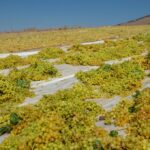
Moscatel grapes grown across the Axarquia, are dried in the sun to produce Spain’s famous sun-dried raisin grapes, a variety quite different from the small, dark raisins found on British supermarket shelves. Whole, plump and intensely sweet, these grapes are laid out on woven mats until they shrivel naturally in the heat, a tradition passed down through generations of local families and central to the region’s food culture, tourism and rural economy.

Heat means devastating losses

Almachar’s mayor, Antonio Yuste Gamez, has written a formal letter to Laura Soto Garcia, the newly appointed territorial delegate for Andalucia’s Ministry of Agriculture, Fisheries, Water and Rural Development, warning that more than 60 per cent of this year’s raisin grape harvest has been lost. Extreme heat throughout July and August, with little relief even overnight, has left vines suffering severe water and thermal stress, according to the letter.

Grapes have failed to mature and dehydrate naturally as a result, sharply cutting both yield and quality compared with a typical season. Yuste has asked regional authorities to send technicians urgently to inspect the affected land, certify the damage and explore financial support or compensation schemes for struggling families.

A globally recognised crop under threat

Losses of this scale threaten more than just this year’s income. Raisin grape cultivation in the area holds Globally Important Agricultural Heritage System status, granted by the United Nations’ Food and Agriculture Organisation, reflecting its cultural and historical value across generations. Farmers now face serious difficulty covering basic maintenance costs for vineyards that have supported local families for centuries.

Neighbouring villages are reporting similarly grim figures, with some vineyards elsewhere in the region facing losses of around 45 per cent of their moscatel grape production this year. Farming groups have called for an official damage assessment to determine what support might follow.

Growers demand action before autumn festivities

Initial forecasts for 2026 had actually pointed to a better season than 2025, making the sudden downturn even harder to accept for producers who depend heavily on late-summer conditions. Almachar is due to host its Ajoblanco Festival on September 2, a celebration that traditionally features the town’s raisin grapes, wine and produce, adding pressure on officials to respond quickly.

Farmers across the area say repeated heatwaves over recent weeks, combined with ongoing drought, have pushed an already fragile sector towards crisis, with many now waiting anxiously to see whether regional authorities will step in with financial relief.

%

Mallorca’s Stunning Summer Concert Series Ends

Published

on

mallorca’s-stunning-summer-concert-series-ends

One of Palma’s most atmospheric summer cultural events is preparing for a spectacular finale, with the music of Gustav Mahler set to fill the ancient courtyard of Bellver Castle under the stars.

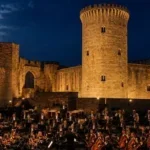
The 2026 edition of Nits a Bellver will draw to a close on Saturday, August 29, when the Orquestra de Cambra de Mallorca takes centre stage for La Primera de Mahler, an ambitious closing concert devoted to one of classical music’s most influential composers.

Beginning at 9pm, the performance will bring together two works from opposite ends of Mahler’s creative life, creating a fittingly dramatic farewell to almost three months of music, opera, jazz and dance at one of Mallorca’s most distinctive landmarks.

From youthful energy to a final masterpiece

Conducted by Bernat Quetglas, the Orquestra de Cambra de Mallorca will perform Mahler’s Symphony No.1, known as the “Titan”, alongside the Adagio from his unfinished Symphony No.10.

The pairing promises an emotional journey through the composer’s life.

Mahler’s First Symphony is bursting with youthful ambition, vitality and inspiration drawn from the natural world. Completed when the Austrian composer was still a young man, it went on to become one of his best-known works.

The Adagio from Symphony No.10 comes from a very different point in his life. Written during Mahler’s final months, it belongs to the unfinished symphony he was working on before his death in 1911 and offers a far more introspective conclusion to the evening.

Together, the works will take audiences from the optimism of Mahler’s early career to the intensity of his final musical reflections.

A spectacular setting

Few venues could provide a more memorable backdrop.

Perched above Palma and surrounded by pine forest, the 14th-century Castell de Bellver has once again been transformed into an open-air performance space throughout the summer.

Nits a Bellver began on June 10 and has featured an eclectic programme spanning classical music, jazz, opera, gospel, dance and contemporary performances. Highlights have included Belén Aguilera, Rigoletto, the Harlem Gospel Travellers, the Gala de Ballarins Mallorquins and a series of concerts forming part of the Palma Jazz Festival.

The Mahler concert will provide the grand finale on August 29, bringing the curtain down on the third edition of the summer series.

Tickets for the finale

Tickets are priced at €25 for the arcades, €30 for the central courtyard and €40 for the first floor. Advance online sales remain available until two hours before the performance, while the Bellver Castle box office opens one hour before the concert.

With a summer night, a centuries-old castle and one of classical music’s most powerful symphonies coming together, the final Nits a Bellver concert promises an appropriately stirring end to Palma’s summer of music.

Continue Reading

%

Car Plunges From Bridge Onto Madrid Train Tracks

Published

on

car-plunges-from-bridge-onto-madrid-train-tracks

Car topples off bridge and into way of trains. Credit: Fernando Madrid X

A car dropped from a road bridge straight onto the railway lines next to Fuenlabrada Cercanias station, on the outskirts of Madrid on Saturday morning, bringing services to a stop between Madrid suburbs.

Emergency services confirmed the incident happened around 10.30am at number 1 Calle Grecia. Luckily, the driver managed to climb out of the car unaided before SUMMA 112 medics assessed him at the scene. They later took him to Hospital Universitario 12 de Octubre as a potentially serious case because of the force of the fall, though no specific injuries have been detailed as of yet.

Madrid regional firefighters then faced a tricky job extracting the car from the tracks. Crews carried out a careful, precise operation so the railway infrastructure itself stayed undamaged.

El obstáculo🤐🤐🤐 #Fuenlabrada #Coche https://t.co/jI49NHxioS pic.twitter.com/xRolgmc4Eg

— FernandoMadrid. (@FernandoMadridd) August 22, 2026

C-5 services stopped while crews clear the line

Adif, the railway operator, reported that Cercanias C-5 trains, plus some Media Distancia services, could not run through the Fuenlabrada stretch. One commuter train sat stopped just before the station and its passengers got fed up of waiting and decided to walk off under their own steam.

Operators advised travellers to switch to buses or other routes while the recovery continued. Power was cut to the relevant tracks during the clearance work.

Un turismo se precipita por un puente hacia las vías junto a la estación de cercanías de

📍Fuenlabrada.

El conductor y único ocupante sale por sus propios medios y es atendido y trasladado por #SUMMA112 al hospital.

Los #BomberosCM realizan un trabajo muy complejo para… pic.twitter.com/h8RXo6Vioq

— 112 Comunidad de Madrid (@112cmadrid) August 22, 2026

Traffic restarts after careful recovery

Once the vehicle was lifted clear, teams restored power and checked the line. Circulation on the line restarted later that morning with average delays of about 12 minutes across the affected services. Local police are examining exactly how the car left the bridge.

This sort of disruption adds to the regular headaches on Madrid’s busy southern commuter routes, where engineering works and incidents often force last-minute changes.

On how the accident happened in the first place, the local authorities have not yet explained, but considering the heavy traffic in that area on a Saturday morning due to the local shopping centre, a collision with another vehicle is not yet ruled out.

Commuters heading through southern Madrid stations should keep an eye on apps and station boards for any knock-on effects over the rest of the we

Continue Reading

%

MERCOSUR Collapsing? EU Blocks Brazilian Meat Over Sanitary Rules

Published

on

mercosur-collapsing?-eu-blocks-brazilian-meat-over-sanitary-rules

Spanish farmers protesting in Brussels. Credit: agroinformacion FB

Brazilian meat, chicken, eggs and other animal products face a full ban from entering the European Union from September 3 after Brussels ruled the South American giant cannot prove it meets strict rules on antibiotic use in its livestock.

European Commission officials have confirmed Brazil has been struck off the list of countries authorised to export these goods to the EU. The move comes from long-running worries that Brazilian producers still use antibiotics to boost animal growth, which is a practice banned across the EU because it adds to antimicrobial resistance, which the World Health Organization calls one of the biggest threats to human health. Officials say they lack solid guarantees that Brazilian cattle and poultry stay free of restricted drugs throughout their lives.

Trade in these products currently runs to around $1.8 billion a year for Brazil. Other Mercosur members, including Argentina, Paraguay and Uruguay,  keep their export rights for now.

Mercosur deal already under fire from farmers

This decision arrives just months after the EU-Mercosur trade agreement provisionally took effect on May 1. That pact cuts tariffs and opens preferential quotas for South American beef and poultry, something many European farmers have fought tooth and nail against.

Spanish producers led some of the loudest protests. Tractors rolled through Madrid and as far as Brussels and other cities earlier this year as ranchers and growers warned that cheaper imports produced under looser sanitary and environmental rules would undercut local farms. Groups such as ASAJA, COAG and UPA repeatedly argued that European standards on animal health, antibiotics and animal welfare should apply equally to anything crossing the border. “We are not against competition,” one Castilla y Leon farmer told protesters, “but the rules have to be the same for everyone.”

French, Polish and Italian farmers voiced similar fears. Brussels always insisted that sanitary rules stay in force no matter what the trade deal says. The Brazilian delisting proves that point in practice, even if the timing has left Brazilian officials furious and promising to reverse the decision.

Where Spanish beef comes from, and why quality counts

Spain produces more than 700,000 tonnes of beef a year. Volume leaders sit in the north-east and centre:

Region Share of national production (approx.) Notes
Catalonia 20 to 22 % Strong feedlot and slaughter activity
Castilla y Leon 17 to 18 % Major breeding and finishing area
Galicia 12 to 13.5 % High number of farms, quality focus
Valencia region 12 to 13 % Growing slaughter volumes

Suckler-cow herds are still the strongest in Castilla y Leon, Extremadura and Galicia, where extensive and semi-extensive systems still dominate.

Quality is a different story. Protected Geographical Indications (IGPs) and native breeds give Spanish beef a clear edge for many consumers and chefs.
Galicia’s Ternera Gallega, based largely on the Rubia Gallega breed, ranks as the best-known and highest-volume quality label. Meat from these animals, especially older “vaca” or ox, earns high praise around the World for its marbling, tenderness and deep flavour. Asturias offers Ternera Asturiana from mountain pastures. Castilla y Leon brings Carne de Avila (Avileña-Negra Iberica raised on dehesa systems) and Carne de Salamanca (Morucha). Extremadura’s Ternera de Extremadura, mainly Retinta cattle, also carries strong recognition.

Regions renowned for the best quality

Quality reputation is driven by native breeds, traditional extensive or semi-extensive rearing (pastures, dehesas), and official quality labels (mainly IGPs). The stars of the show are usually:

Region Key IGP / Label Main Breeds Notes on Reputation
Galicia Ternera Gallega Rubia Gallega (and crosses) Widely regarded as Spain’s top or most prestigious beef. Excellent marbling, tenderness and flavour; highly valued (including aged “vaca” or ox). Strong consumer recognition.
Asturias Ternera Asturiana Asturiana de los Valles Excellent tenderness and flavour from mountain pastures.
Castilla y Leon Carne de Avila; Carne de Salamanca; Ternera de Aliste Avilena-Negra Iberica; Morucha Dehesa and extensive systems. Carne de Avila is one of the oldest and most classic high-quality labels.
Extremadura Ternera de Extremadura Retinta Lean, flavourful meat from dehesa systems.
Others Carne de Cantabria; Carne de Vacuno del Pais Vasco; Carne de la Sierra de Guadarrama, etc. Local mountain and native breeds Strong regional reputations, especially in northern mountain areas.

These labels demand specific breeds, feeding regimes and traceability. They deliver the kind of product European shoppers increasingly seek when they want guarantees on how animals were raised.

Spanish ranchers now point to the Brazilian ban as proof that sanitary standards matter. With MERCOSUR quotas still in play for other countries and domestic production already under pressure from costs and weather, many see the September cutoff as a chance to push local quality harder in shops and restaurants across Spain and the wider EU.

Brazil continues talks with Brussels and has introduced new protocols for antibiotic-free export chains. Whether those steps arrive in time remains unclear. For now, the message from European farms is simple: rules are rules, and Spanish beef definitely already meets them.

Continue Reading

Trending

Copyright © 2017 Spanish Property & News