Connect with us

%

Wimbledon Finalist Suspended From Tennis After Cocaine Found In Mallorca Drug Test

Published

on

wimbledon-finalist-suspended-from-tennis-after-cocaine-found-in-mallorca-drug-test

Nick Kyrgios said he made a “huge mistake.” Credit: Leonard Zhukovsky / Shutterstock

A doping check taken during a grass-court event in Mallorca in June came back positive for cocaine for the tennis star. Nick Kyrgios says he takes full responsibility, and now faces a tennis suspension that could run for months or years.

The sample was taken just weeks before Wimbledon

Kyrgios’s sample was collected on June 22 during the Mallorca Championships, an ATP 250 tournament played on the grass courts of the Mallorca Country Club in Santa Ponça. It is the only grass-court event in southern Europe and one of the last warm-ups before Wimbledon. A WADA-accredited laboratory (World Anti-Doping Agency) confirmed on July 17 that the sample contained benzoylecgonine, the substance the body produces when it breaks down cocaine. The International Tennis Integrity Agency (ITIA), which runs anti-doping testing across the sport, imposed a mandatory provisional suspension from August 4, barring Kyrgios from playing, coaching or attending any event run by the ATP, WTA, the Grand Slams or a national tennis association.

‘I made a huge mistake,’ Kyrgios tells fans

The 31-year-old Australian broke the news himself on Instagram rather than waiting for an official statement, writing: “I recently failed a drug test in Mallorca after testing positive for cocaine. I made a huge mistake and I take full responsibility for it.” He apologised to his family, sponsors and fans, saying he was especially sorry to the children who follow his career, and described the result as a wake-up call. He also announced he would step back from social media and public life for 28 days.

Injuries, a fading career and a past he says doesn’t excuse it

Kyrgios said the positive test followed years of physical setbacks and difficulty accepting that his playing career is winding down. He referred to ongoing knee and wrist injuries and said he had struggled with depression, self-harm and substance abuse in the past, while stressing that none of it “excuses what I did.”

Once ranked as high as world number 13 and a Wimbledon singles finalist in 2022, Kyrgios has barely played this year, appearing in only four ATP singles matches. His last match, a first-round doubles defeat at Wimbledon on July 1, prompted him to say it would “probably” be his final appearance there. 

The Australian who once said dopers ‘should be gone’ 

The case carries an unfortunate piece of irony. In 2024, Kyrgios repeatedly criticised the sport’s handling of Jannik Sinner’s doping case, arguing that a finding of no fault which let the world number one keep playing was wrong, and saying at the time that Sinner “should be gone” from the tour.

Under the Tennis Anti-Doping Programme, cocaine is treated as a substance of abuse, which can carry a lighter sanction than the standard ban if a player shows the use happened outside competition and completes an approved treatment programme. Even so, the ITIA says the possible penalty ranges from three months to four years, and Kyrgios’s case has yet to be decided. 

His Instagram statement gave no date for a return, saying only that he wanted to use the time away to focus on his recovery.

%

Macron Signs Assisted Dying Into Law: Who Actually Qualifies In France

Published

on

macron-signs-assisted-dying-into-law:-who-actually-qualifies-in-france

President Emmanuel Macron, who signed France’s assisted dying law this week. Credit: Gints Ivuskans / Shutterstock

Emmanuel Macron has signed assisted dying into law after four years of fierce debate, but the right exists only on paper for now. Patients will not be able to request it until the government finalises the practical rules early next year.

Macron signs the law after four years of debate

President Emmanuel Macron signed France’s assisted dying law on Wednesday August 19, formally publishing it in the Journal Officiel, France’s official gazette, and closing a process that began in 2023. The National Assembly adopted the final text on Wednesday July 15, and France’s Constitutional Council validated the law on Friday August 14 after Prime Minister Sébastien Lecornu, Senate President Gérard Larcher and around 60 senators tried to have parts of it struck down.

The Élysée Palace called the law “an essential safeguard for our fellow citizens” and said it completed “an exemplary democratic debate”. It has been described as one of France’s biggest social reforms since same-sex marriage was legalised in 2012.

Who qualifies for assisted dying in France

The law grants a right to aide à mourir, or aid in dying, to adults who are French nationals or settled legal residents. Applicants must have a serious and incurable illness in its terminal or advanced phase, causing physical suffering that cannot be relieved, and must keep full mental capacity to make a free and conscious choice until the final moment. Psychological suffering alone cannot qualify someone for the procedure under the law.

A single doctor leads the assessment alongside other health professionals and must give a reasoned answer within 15 days of a written request. Patients then face a minimum two-day reflection period before confirming their decision, and may withdraw consent at any point. Patients are expected to administer the lethal substance themselves, except where a physical disability prevents this. Healthcare workers, pharmacists and private or Catholic-run clinics can still refuse to take part on grounds of conscience, provided the clinic is not the only facility available locally.

Why nobody can actually access it before 2027

Despite the promulgation, no patient can request the procedure yet. The Health Ministry must still write the decrees that set out the practical mechanics, including which substances can be used, and the government has committed to publishing them within six months of the law being signed.

France’s Haute Autorité de Santé, the national health authority, is due to give its own opinion on prescriptions and complications by November, before any decree can be finalised. Officials are targeting early 2027 for the law to become usable in practice.

Spain has already granted the same request more than a thousand times

The debate is not new for readers in Spain, where a similar law, the Ley Orgánica de Regulación de la Eutanasia (Spain’s organic law regulating euthanasia), has applied since June 25 2021, open to Spanish nationals and anyone with legal residency, including British nationals settled here. Read EWN’s essential guide to assisted suicide in Spain for the full picture.

Spain’s Health Ministry recorded 2,432 requests between the law’s introduction and the end of 2024, of which 1,123, or 46 per cent, ended in an assisted death. In 2024 alone, 426 people used the law, and more than 550 did so in 2025, according to ministry figures reported in June.

The right that collapsed in the House of Lords

Britain came close to a similar law of its own. The Terminally Ill Adults (End of Life) Bill passed the House of Commons in June 2025 in a historic vote but stalled in the House of Lords, where opponents tabled more than 1,200 amendments.

Because backbench bills can only be debated on Fridays, the delay ran out the parliamentary clock, and the bill fell on Friday April 24 2026. Labour peer Lord Falconer called it “an absolute travesty of our processes”, and Kim Leadbeater, the MP who introduced the original bill, said supporters would try again in the next parliamentary session.

For now, British nationals wanting an assisted death have a legal route in Spain, will have one in France from next year, and still have none at home.

Continue Reading

%

Local Mar Menor Charity Receives Generous €1,300 Donation From La Serena Golf

Published

on

local-mar-menor-charity-receives-generous-e1,300-donation-from-la-serena-golf

Golf group donates €1,300 to local charity supporting community initiatives. Photo Credit: HELP Murcia Mar Menor

Local charity HELP Murcia Mar Menor has received a significant boost to its community initiatives following a generous €1,300 donation from Club 25 at La Serena Golf. The donation was officially announced on Wednesday, August 19, when two representatives from the club, Carole and Val, visited the charity’s office in person to hand over the funds. The contribution was warmly welcomed by volunteers and staff, who expressed their gratitude for the golf group’s continued community spirit.

A vital donation for local charitable services

HELP Murcia Mar Menor relies heavily on contributions from local organisations, businesses, and individuals to maintain its broad variety of support services across the Region of Murcia. The non-profit organisation works tirelessly to assist residents, expatriates, and visitors in need, offering essential aid ranging from medical equipment loans, including for wheelchairs, to support for vulnerable individuals and local charitable efforts.

A message of gratitude: Supporting vulnerable residents and visitors

Representatives from the charity highlighted how vital contributions like this are to keeping their services running, and how grateful they were for the sizable donation. “Your generosity will help us continue our work supporting local good causes and people in our community, and we really couldn’t do what we do without the incredible support of local clubs, groups, businesses and individuals,” the organisation shared in a statement. “So, from all of us at HELP Murcia Mar Menor, thank you, Club 25, Carole and Val! We really appreciate your support and everything you do to help make a difference.”

Community spirit at La Serena Golf

La Serena Golf, located near Los Alcazares along the shores of the Mar Menor saltwater lagoon, is home to an active community of local residents and avid golf fans. Groups like Club 25 regularly organise social events and charity initiatives, aimed at giving back to vulnerable neighbours in the surrounding area.

The €1,300 raised will go directly toward funding HELP Murcia Mar Menor’s active community projects and equipment loan programme, ensuring essential care remains accessible to those who need it most in the community.

Continue Reading

%

British Woman Hospitalised After Severe 7-Metre Fall From Abandoned Property

Published

on

british-woman-hospitalised-after-severe-7-metre-fall-from-abandoned-property

British tourist hospitalised following severe drop from an abandoned building. Photo Credit: The Government of the Canary Islands

Locals in Lanzarote got a fright when a 32-year-old British woman was injured after a seven-metre fall, from the terrace of an abandoned property in Puerto del Carmen. The incident occurred late on the evening of Sunday, August 16.

A difficult midnight rescue

The fall happened at around 11:54pm on Calle Princesa Guayarmina on Sunday evening. After receiving a call about the incident, officers from the local police as well as the Guardia Civil, Civil Protection officers, and Emergency Services rushed to the scene.

Once there, first responders faced an additional challenge: she had fallen into a difficult-to-access area, and the teams needed to navigate around a two-metre wall, on the terrace of the house adjacent to where the woman had fallen.

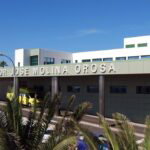
The woman sustained various injuries due to the fall, but medical personnel were able to stabilise her condition before transferring her to an ambulance, along with the help of emergency services. She was transported to the Dr. José Molina Orosa Hospital, located in Arrecife.

Circumstances remain under investigation

The full extent and severity of the woman’s condition have not yet been reported to the public. Authorities have also not clarified how the woman entered the abandoned property, nor the exact circumstances that led to her fall. Investigation into the incident is ongoing.

The dangers of abandoned properties for tourists

The Canary Islands, a Spanish autonomous community that is popular with tourists especially in peak season, is no stranger to unexpected falls and injuries on abandoned properties. One of the most infamous abandoned buildings in the community is the Añaza hotel, an unfinished luxury hotel located on a clifftop in Tenerife. This hotel has been responsible for multiple injuries and deaths, as thrill-seekers and urban explorers frequently visit the abandoned property despite numerous signs warning them not to.

Most recently, in December 2025, a 13-year-old girl fell to her death while exploring the abandoned property with her friends.

At the end of January 2026, two British tourists were heavily fined (€575) after visiting the hotel and taking photos on its rooftop, claiming it had appeared online as a “place of tourist interest.”

In May, another British tourist was injured after a fall onto a Lanzarote breakwater.

An unfortunate spike in holiday incidents

During peak season, as tourists visit places like the Canary Islands to unwind and have fun on holiday, the number of incidents, including falls and injuries in hotel and holiday hotspots where night-time events and alcohol consumption is often involved, unfortunately spikes.

Continue Reading

Trending

Copyright © 2017 Spanish Property & News